
A pimple on your lip sits right where everyone looks, hurts when you eat or talk, and is hard to stop touching. The good news is that most lip pimples are ordinary acne spots that clear up within a week or so. The catch is that a cold sore can look very similar in the first day or two, and the two need different care.
Here is what causes pimples on and around the lips, how to tell a pimple from a cold sore, what helps it heal, and when a bump on the lip should be checked by a doctor.
What Is a Lip Pimple?
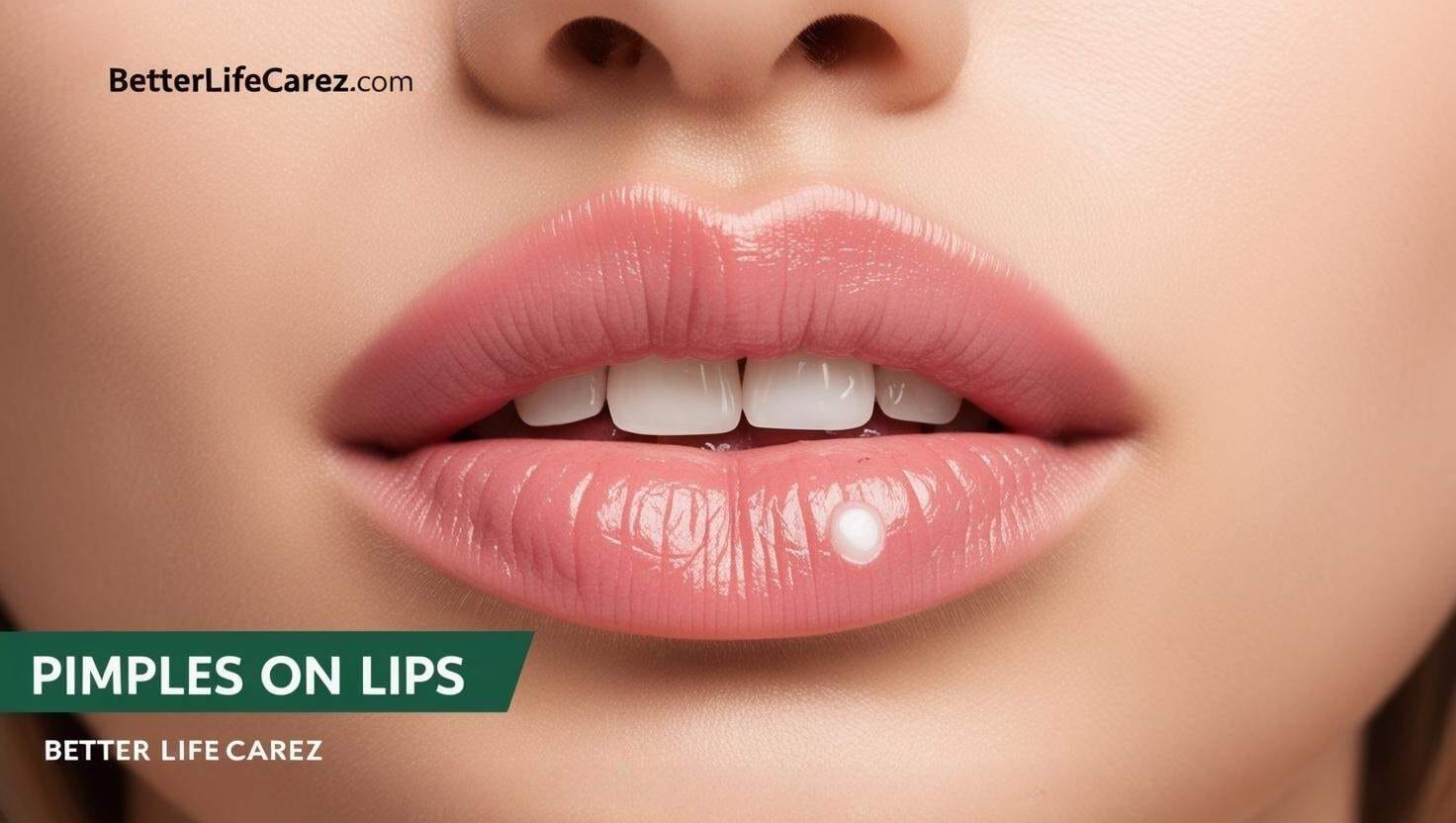
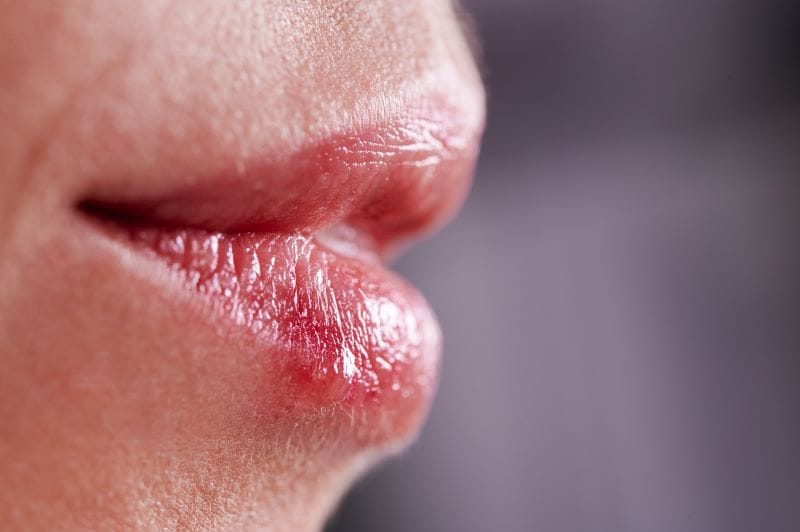
The pink part of your lips has no oil glands or hair follicles, so true pimples do not form in the middle of the lip. They form on the lip line (the border where lip meets skin) and the skin just around it, which is full of small oil glands and fine hairs.
A pimple starts when a pore gets clogged with oil (sebum) and dead skin cells. Bacteria that normally live on the skin can then multiply inside the blocked pore, causing redness and swelling. Depending on how deep the blockage is, you might get:
- Whiteheads: small closed bumps with a white or yellow top
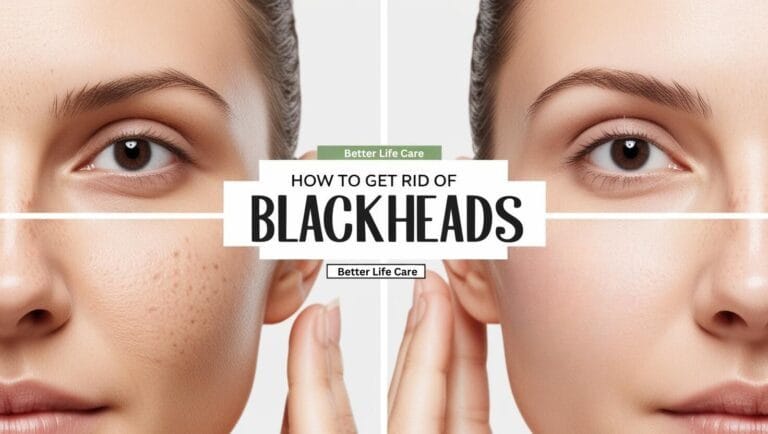
- Blackheads: open pores with a dark surface, explained in our guide on how to get rid of blackheads
- Papules and pustules: red, tender bumps, sometimes with a pus-filled head
- Cysts or nodules: deeper, painful lumps that are more likely to scar
What Causes Pimples on Your Lips?
Lip pimples have the same basic causes as acne anywhere else, plus a few that are specific to the mouth area.
- Hormones. Changes around periods, during the teenage years, with polycystic ovary syndrome or when starting or stopping hormonal contraception can increase oil production. Breakouts around the mouth and jaw are common in adult women. Our article on adult acne covers this in more depth.
- Lip and face products. Thick lip balms, glosses and lipsticks can spread onto the skin around the lips and clog pores. Heavy, oily ingredients are the usual suspects.
- Touching and friction. Resting your chin on your hand, picking at dry lips, or a phone pressed against your face all transfer oil and bacteria.
- Food and drink residue. Greasy food left on the skin around the mouth may irritate pores. Washing your face after a greasy meal is a sensible habit.
- Shaving and facial hair. In people who shave around the mouth, ingrown hairs and inflamed hair follicles (folliculitis) can look exactly like pimples.
Not every red bump around the mouth is acne. Perioral dermatitis causes clusters of small red bumps around the mouth, often with a clear strip of skin right next to the lip. It is often linked to steroid creams, and it tends to get worse with acne products, so it needs a different approach from a doctor or dermatologist.
Cold Sore vs Pimple on Lip: How to Tell the Difference
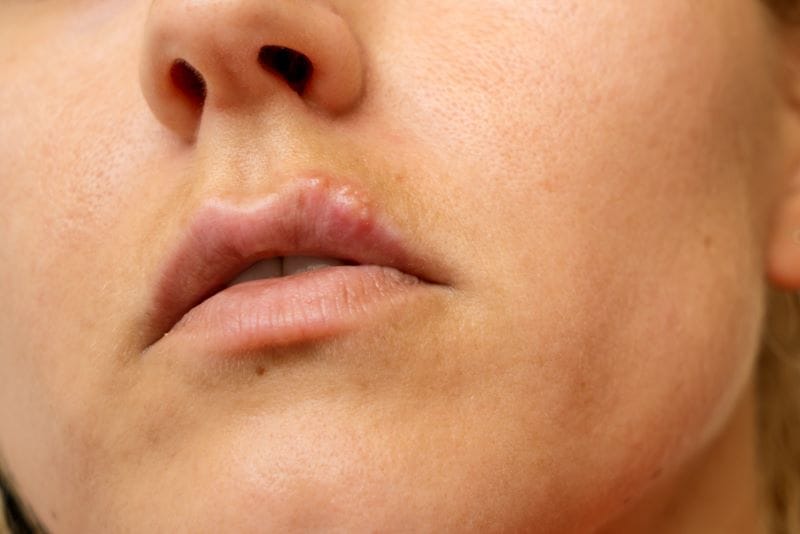
Cold sores are caused by the herpes simplex virus, usually type 1. They are contagious, especially when blisters are present, and they should never be squeezed. This table shows the main differences.
| Feature | Pimple | Cold sore |
|---|---|---|
| Early warning | Tenderness as the bump forms | Tingling, itching or burning a day or so before anything appears |
| Look | Single red bump, may have one white or yellow head | Cluster of small fluid-filled blisters |
| Location | Lip line or skin around the lips | Lip line, edge of the lip, sometimes on the lip itself |
| Over the next few days | Comes to a head or slowly flattens | Blisters burst, weep, then crust over |
| How long | Usually a few days to a week | Usually 7 to 10 days |
| Contagious | No | Yes, from the first tingle until fully healed |
| Comes back in the same spot | Not usually | Often, triggered by colds, sun, stress or periods |
If you are not sure which it is, treat it like a cold sore until you know: do not squeeze it, avoid kissing and sharing cups or lip balm, and wash your hands after touching it. A pharmacist can often tell the difference at a glance and can recommend antiviral cream for cold sores, which works best when started at the first tingle.
How to Get Rid of a Pimple on Your Lip
Most lip pimples settle within a week with simple care. The skin around the mouth is sensitive, so go gently.
- Do not squeeze or pick it. Popping pushes bacteria deeper, makes swelling worse and raises the risk of a scar or dark mark. Our guide on whether to pop a pimple explains why dermatologists advise against it.
- Wash the area twice a day with a mild cleanser and lukewarm water. Pat dry.
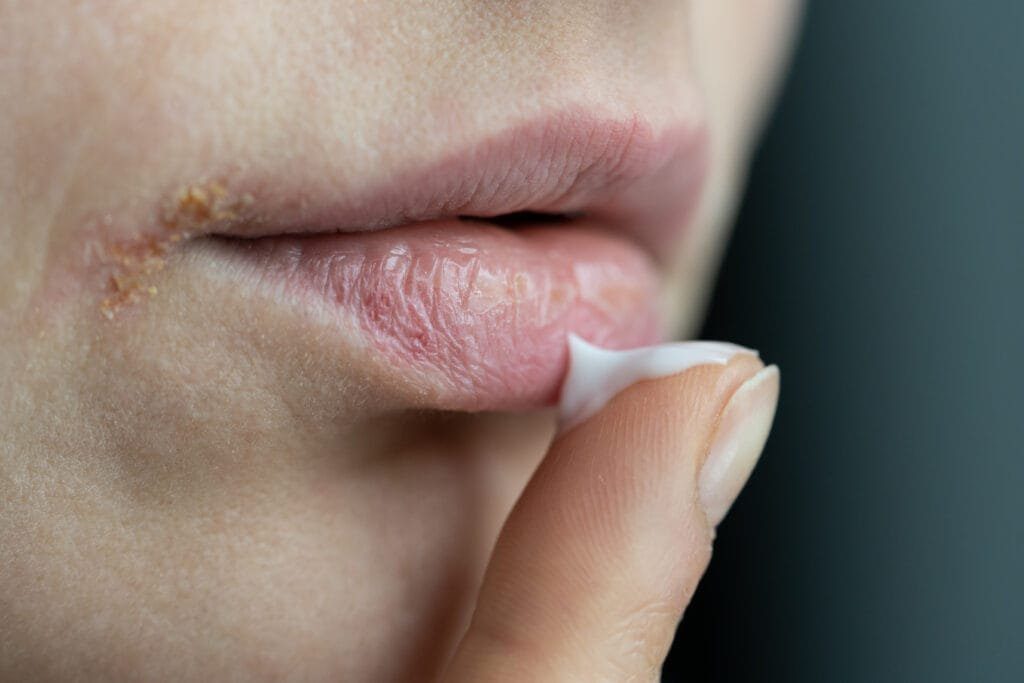
- Use a warm compress. A clean cloth soaked in warm water, held on the spot for 10 minutes a few times a day, can ease pain and help a pimple come to a head on its own.
- Try a spot treatment, carefully. Benzoyl peroxide (2.5 to 5 percent) or salicylic acid can help. Use a tiny amount on the bump only, keep it off the pink of your lip, and stop if your lips become very dry or sore.
- Consider a hydrocolloid patch. These small stickers absorb fluid from a pimple that has a head and stop you touching it.
- Use a light, non-comedogenic lip balm only on the lips themselves, not spread onto the skin around them.
Skip toothpaste, lemon juice and undiluted essential oils. They irritate thin skin and can cause redness or a rash that lasts longer than the pimple would have.
When to See a Doctor or Dermatologist
Most lip pimples need no medical care. Some lumps on the lip are not acne, and a few need prompt attention.
It is also worth booking an appointment if you get frequent painful breakouts around your mouth, you have deep cysts, spots leave scars or dark marks, or you think you have perioral dermatitis or recurring cold sores. Prescription creams, oral treatments and antiviral tablets can all make a real difference.
A few harmless lip bumps are often mistaken for pimples. Fordyce spots are tiny pale yellow or white dots on the lip line, which are normal oil glands. A mucocele is a soft, painless, fluid-filled bump inside the lower lip, usually after biting it. Neither is acne.
How to Prevent Pimples on Your Lips
- Wipe away lip balm or gloss that has spread onto the skin, and remove lipstick fully before bed.
- Choose products labeled non-comedogenic or oil-free.
- Keep your hands, phone and hair away from your mouth.
- Wash your face after eating greasy food or after exercise.
- Change pillowcases regularly.
- If you get regular breakouts, a nightly retinoid or other treatment from your doctor works better than chasing each spot. Our skincare order guide shows how to fit treatments into a routine.
For general advice on shrinking a spot quickly, see how to get rid of a pimple fast.
FAQ
How long does a pimple on the lip last?
Usually three to seven days. Deeper, cystic spots can take a couple of weeks, especially if they are picked.
Can you get a pimple on the inside of your lip?
Not a true pimple, because the inside of the lip has no hair follicles. Bumps inside the lip are more often mouth ulcers, mucoceles or small injuries from biting.
Is it dangerous to pop a pimple on your lip?
Serious complications are rare, but popping often leads to more swelling, infection or a scar. If it turns out to be a cold sore, squeezing can also spread the virus.
Can lip balm cause pimples?
Yes. Thick, waxy or oily balms that spread beyond the lip line can clog pores on the surrounding skin.
Can I use toothpaste on a lip pimple?
It is better not to. Toothpaste can irritate and dry the skin, and some ingredients are linked to rashes around the mouth.
The Bottom Line
A pimple on the lip is usually a clogged pore on the lip line that heals in under a week if you leave it alone, keep the area clean and use a gentle spot treatment. Tingling, clusters of blisters and spots that keep coming back in the same place point to a cold sore instead. See a doctor for spreading redness, fever, or any sore on the lip that has not healed in three weeks.
This article is for general information and is not a substitute for advice from your doctor or dermatologist.
Sources
- American Academy of Dermatology: Pimple Popping, Why Only a Dermatologist Should Do It
- NHS: Cold Sores
- NHS: Acne
- Cleveland Clinic: Fordyce Spots
Medical disclaimer: This article is for general information only and is not a substitute for advice, diagnosis or treatment from a qualified health professional. If your symptoms are severe, sudden or getting worse, contact a doctor or emergency services.

Skin and Beauty
Browse every related article on this topic in one place.