
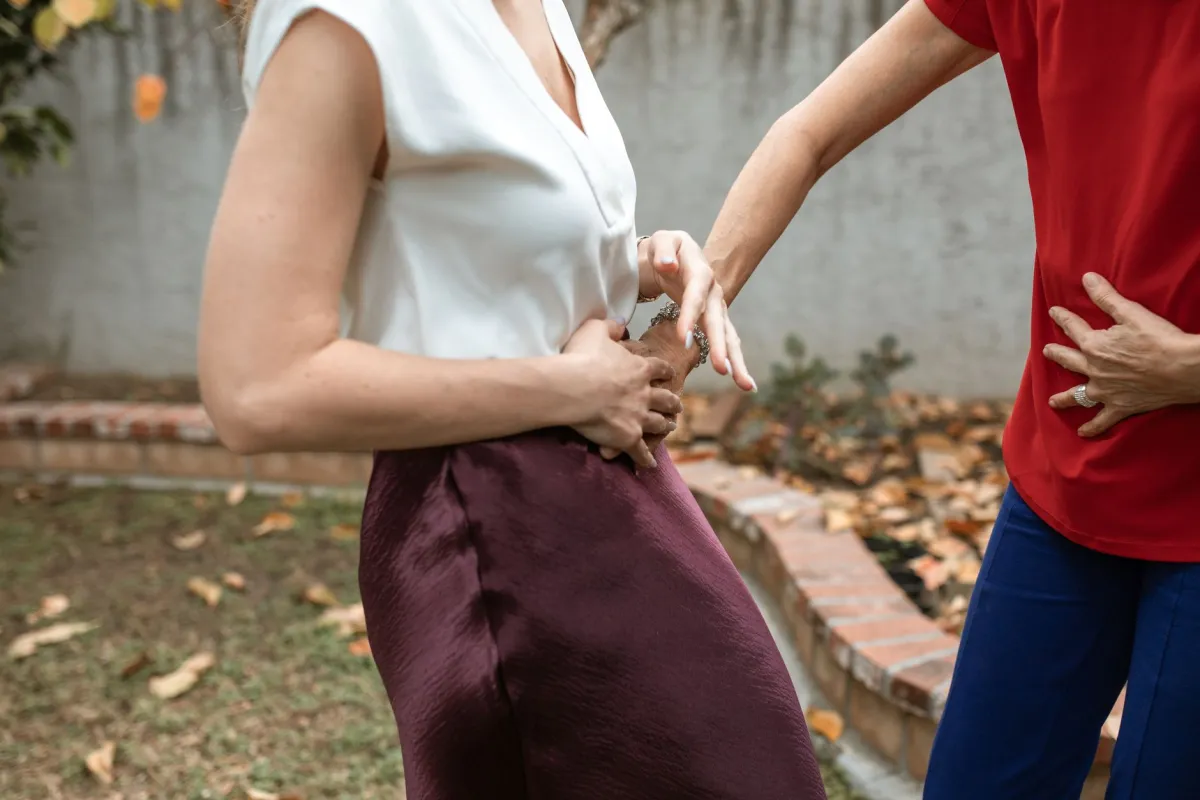
Breast pain before period is one of the most searched premenstrual complaints for good reason: if your chest feels swollen, heavy, or almost too tender to touch in the days before your period arrives, you’re not imagining things, and you’re definitely not alone. Breast pain before your period is one of the most common premenstrual symptoms there is, yet most women still wonder: is this normal, or should I be worried?
- What Is Cyclical Breast Pain?
- Why Does Breast Pain Before Your Period Happen?
- Breast Pain Before Your Period: Normal vs. Not Normal
- What Actually Helps With Cyclical Breast Pain?
- Common Myths About Breast Pain Before Your Period
- When Does Breast Pain Before Your Period Need Medical Attention?
- Other Causes of Breast Pain That Aren't Cycle-Related
- Breast Pain Before Your Period and Stress: Is There a Connection?
- What to Expect: A Month-by-Month Outlook
- FAQ
- The Bottom Line
What Is Cyclical Breast Pain?
Cyclical mastalgia (mass-TAL-jee-ah) is the medical term for breast pain that follows a predictable monthly pattern, tied to your menstrual cycle. It’s called “cyclical” because it comes and goes with your hormones, rather than staying constant. According to the Cleveland Clinic, cyclical breast pain accounts for the majority of breast pain cases in people who still have regular periods.
The discomfort usually shows up in the one to two weeks before your period, peaks in the day or two right before bleeding starts, and then fades fairly quickly once your period begins. For many women it feels like fullness, heaviness, or a dull ache across both breasts. Some describe it as a soreness that makes wearing a bra, sleeping on their stomach, or even a light hug uncomfortable.
Non-cyclical breast pain is different. It doesn’t follow the cycle, may affect only one breast or one specific area, and tends to have other causes entirely. That distinction matters, and we’ll come back to it.
Why Does Breast Pain Before Your Period Happen?
The short answer is hormones. Breast pain before period is largely driven by the rise and fall of estrogen and progesterone in the second half of your cycle.
After ovulation (roughly the midpoint of your cycle), progesterone levels climb sharply. This hormone prepares the breast tissue for a potential pregnancy by causing the milk glands and ducts inside the breast to temporarily swell. Even when pregnancy doesn’t happen, that swelling has already started. The result is tender, sometimes noticeably larger-feeling breasts in the days leading up to your period.
Estrogen also plays a role. It stimulates breast duct growth and can make tissue more sensitive to pressure. When both hormones drop in the days just before your period, the swelling starts to resolve, which is why most women feel relief once bleeding begins.
Fluid retention also contributes. Hormonal shifts cause your body to hold on to more water in the days before your period, which adds to the feeling of fullness and swelling. Some women notice their bra feels tighter even when the scale hasn’t moved.
There’s also some evidence that caffeine sensitivity and dietary salt intake may amplify breast tenderness in people who are already prone to it, though research on this is mixed and individual responses vary quite a bit.
Breast Pain Before Your Period: Normal vs. Not Normal
Most premenstrual breast pain before period is completely benign. But there are patterns worth paying attention to.
| Feature | Likely Normal (Cyclical) | Worth Checking Out |
|---|---|---|
| Timing | 1-2 weeks before period | Doesn’t match cycle pattern |
| Location | Both breasts, often upper outer area | One breast only, or one fixed spot |
| Feel | Dull ache, heaviness, tenderness | Sharp, burning, or stabbing |
| Resolution | Improves when period starts | Persists after period ends |
| Other symptoms | None besides PMS | Lump, skin changes, nipple discharge |
| Age pattern | Reproductive years, often 30s-40s | New onset after menopause |
If your pain fits neatly into the left column, it’s very likely cyclical mastalgia doing its usual thing. If anything in the right column sounds familiar, that’s your cue to make an appointment with your healthcare provider, not because it’s definitely something serious, but because it deserves a proper look.
What Actually Helps With Cyclical Breast Pain?
The good news is that several approaches can ease breast pain before period for many women. None of them are magic, but the evidence is real enough to be worth trying.
Wear a Well-Fitting, Supportive Bra
A properly fitted, supportive bra is often the single most practical step you can take. During the days when tenderness peaks, breast tissue movement can make pain significantly worse. A firm sports bra worn during exercise, and even to sleep on the worst nights, may reduce discomfort. Many women are wearing the wrong bra size, so if yours feels tight across the band or the underwire is digging in, it’s worth getting re-measured.
Try Over-the-Counter Pain Relief
Non-prescription anti-inflammatory medicines like ibuprofen (a nonsteroidal anti-inflammatory drug, or NSAID) are commonly used to ease breast pain before a period. Several small trials suggest topical NSAIDs (gels applied directly to the skin) may also provide localized relief with fewer stomach side effects than oral tablets. Always follow the dosage instructions on the package, and check with a pharmacist if you have any conditions that affect whether NSAIDs are right for you.
Look at Your Caffeine Intake
This one is debated in the research, but many women report that cutting back on coffee, tea, and energy drinks in the week or two before their period reduces breast tenderness. The theory is that caffeine-related compounds called methylxanthines may increase the sensitivity of breast tissue. The science is not conclusive, but if you’re a heavy coffee drinker and your symptoms are significant, a low-stakes experiment of swapping to half-caf for one cycle is worth trying.

Reduce Sodium and Processed Foods
High sodium intake encourages water retention, which can worsen the bloating and breast fullness that come before a period. Easing back on salty snacks, canned soups, and processed foods in the week before your period may help reduce overall puffiness, including in your chest. The effect won’t be dramatic for everyone, but it’s a low-risk habit with broader health benefits anyway. You can find practical ideas for eating well without feeling deprived in the weight loss and nutrition guide.
Evening Primrose Oil: The Real Evidence
Evening primrose oil is one of the most widely discussed supplements for cyclical breast pain. It contains gamma-linolenic acid (GLA), a fatty acid that may influence how the body processes hormones. Some small studies have suggested modest benefit, but the overall body of evidence is mixed and the effect, when present, tends to be modest. The Mayo Clinic notes that evidence for evening primrose oil in breast pain is limited. If you choose to try it, keep in mind that supplements are not tightly regulated by the FDA and can interact with certain medications, including blood thinners. Talk to your pharmacist before starting.
Gentle Exercise
It sounds counterintuitive when your breasts ache, but light exercise may actually help. Movement supports lymphatic circulation, your body’s drainage system for fluid and waste, which could reduce some of the swelling-related tenderness. Gentle yoga, walking, or cycling in a good sports bra are reasonable options. If you’re new to yoga and looking for a starting point, the yoga for complete beginners at home guide covers the basics without any equipment needed.
Common Myths About Breast Pain Before Your Period
A lot of what circulates online about breast pain before your period is either exaggerated or outright wrong. Here’s what the evidence actually says about a few common claims.
Myth: Breast pain before your period means you have a hormonal disorder. Fact: Some degree of hormone fluctuation is normal and expected across every menstrual cycle. Having cyclical mastalgia does not mean your hormones are “out of balance” in a pathological sense. It just means your breast tissue is responding to changes that happen in every cycle.
Myth: Breast pain means you have a lump or need a mammogram right away. Fact: Pain alone, especially predictable cyclical pain, is not a standard indication for urgent imaging. If a lump, skin dimpling, or nipple changes are also present, that changes things. But pain without other findings is usually evaluated clinically first.
Myth: You just have to put up with it. Fact: For women with severe cyclical breast pain that significantly affects daily life, there are medical treatment options. Prescription options exist, though they come with side effects, and a doctor can help weigh the options. You don’t have to white-knuckle every cycle.
When Does Breast Pain Before Your Period Need Medical Attention?
Cyclical breast pain, or mastalgia, is benign in the vast majority of cases, but there are specific signs that mean you should see your healthcare provider rather than managing symptoms at home.
Make an appointment if you notice:
- A new lump or thickening in the breast or armpit area at any point in your cycle
- Breast pain that doesn’t improve once your period starts, or continues for more than two to three weeks
- Pain in only one specific spot, rather than a general ache across both breasts
- Nipple discharge that is spontaneous, bloody, or coming from one breast only
- Skin changes such as redness, dimpling, puckering, or a rash on the breast
- New breast pain after menopause, since this is no longer cyclical by definition and needs evaluation
These symptoms don’t automatically mean something serious is happening. But they do mean a real medical evaluation is the right next step, not more home remedies. If you’re also experiencing irregular periods or unusual spotting alongside breast changes, this overview of spotting before your period may also be helpful context before your appointment.
Other Causes of Breast Pain Before Period or at Other Times in Your Cycle
Not all breast pain before your period, or at any other point in your cycle, originates from hormones. Non-cyclical breast pain has a different set of causes worth knowing about.
Musculoskeletal pain is more common than most people realize. The chest wall muscles, ribs, and the cartilage connecting them can all produce pain that feels like it’s coming from inside the breast. Costochondritis, inflammation of the cartilage where the ribs meet the breastbone, is one common culprit. Poor desk posture over years can contribute to this kind of chest wall tension as well. If your pain seems to worsen with certain movements or pressing on the chest wall itself, this is worth mentioning to your doctor.
Certain medications, including some antidepressants, blood pressure drugs, and hormonal contraceptives, can also cause or worsen breast pain as a side effect. If your pain started around the same time as a new medication, that’s a connection worth raising with your prescriber.
Fibrocystic breast changes, where the breast tissue feels lumpy or rope-like, are also extremely common and benign. These changes can make premenstrual breast tenderness feel more pronounced. If you’re concerned about lumpy or dense-feeling breast tissue, that’s worth discussing with your doctor at your next routine visit.
Breast Pain Before Your Period and Stress: Is There a Connection?
There’s a plausible link, though the evidence is still building. Chronic stress affects the body’s hormone regulation through a cascade involving the hypothalamic-pituitary-adrenal, or HPA, axis. This is basically the signaling chain that controls your body’s stress response and interacts with your reproductive hormones. Elevated cortisol, your primary stress hormone, can disrupt the precise timing of estrogen and progesterone shifts across your cycle, potentially amplifying symptoms like breast pain, mood changes, and cramping.
This doesn’t mean stress is the cause of cyclical mastalgia. But for women whose symptoms seem to worsen during particularly stressful periods of their lives, addressing sleep and stress may be a useful supporting strategy rather than purely a lifestyle nice-to-have. The broader women’s health section covers several of these connections if you want to explore further, and looking at how conditions like endometriosis and mental health interact is a useful read if your symptoms are more complex.
What to Expect: A Month-by-Month Outlook
If you’ve just started noticing breast pain before your period, here’s a rough sense of how things typically unfold for most women.
Breast pain before period often eases naturally in the years approaching menopause, as hormone fluctuations gradually decrease. That’s not always the case, but many women do find their symptoms improve over time without intervention.
FAQ
The Bottom Line
Breast pain before your period is normal for most people with regular menstrual cycles, driven by the natural rise and fall of estrogen and progesterone in the second half of the cycle. It typically appears in both breasts, feels like a dull ache or heaviness, and clears up once your period begins. Practical steps like wearing a supportive bra, reducing salt and caffeine, and using over-the-counter anti-inflammatories may offer real relief for many women. What you should watch for are the signs that break the cyclical pattern: pain in only one spot, a new lump, skin changes, nipple discharge, or pain that outlasts your period. Those warrant a medical evaluation, not to cause alarm, but because catching anything unusual early is always the smarter move. If your symptoms are severe or affecting your quality of life each month, talk to your doctor. You don’t have to just live with it.
This article is for informational purposes only and is not a substitute for professional medical advice, diagnosis, or treatment. Always consult a qualified healthcare provider about your specific situation. If you experience severe or sudden symptoms, seek medical care immediately.

Women's Health
Browse every related article on this topic in one place.