

You notice it in the shower drain. Then in the bristles of your brush. Then, on a bright morning, in the mirror, your part looks a little wider than it used to. Hair thinning rarely announces itself loudly. It creeps in quietly, and by the time most people start looking for answers, it’s been happening for a while.
- What Is Hair Thinning, Exactly?
- Why Does Hair Thinning Happen? The Main Causes
- Myths vs. Facts: What the Research Actually Says
- What You Can Do Early: Practical Steps That Are Actually Supported
- Clinically Supported Treatments Worth Knowing About
- What to Expect in the First Few Months of Early Action
- When Should You See a Doctor About Hair Thinning?
- FAQ
- The Bottom Line
What Is Hair Thinning, Exactly?
Hair thinning is not the same as going bald overnight. It’s a gradual process in which either fewer hairs grow at any given time, individual strands become finer in diameter, or both happen at once. The result is hair that looks less full, sits flatter, and may break more easily.
Each hair on your head grows from a tiny structure called a hair follicle, a small pocket in your scalp. Follicles cycle through three phases: a growth phase, a transition phase, and a resting phase, after which the hair sheds and a new one begins. When something disrupts that cycle, hormones, nutrition gaps, stress, genetics, more follicles spend time resting instead of growing. Over months, that imbalance adds up.
The American Academy of Dermatology notes that losing 50 to 100 hairs a day is completely normal. It’s when shedding consistently exceeds regrowth, or when new hairs come back thinner than the ones that fell, that thinning begins to show.
Why Does Hair Thinning Happen? The Main Causes
There’s rarely just one reason, and that’s actually useful to know. It means there are usually several things you can actually address.
Genetics
Pattern hair loss, commonly called male- or female-pattern baldness, is the most common cause of progressive thinning in both men and women. According to the American Academy of Dermatology, it affects roughly 80 million people in the United States alone. In this condition, a hormone called DHT causes hair follicles to shrink gradually over time, producing shorter, finer strands until the follicle eventually stops producing hair at all. The key word there is “gradually”, which is exactly why early action matters so much.
Hormonal Shifts
Thyroid imbalances, polycystic ovary syndrome (PCOS), postpartum hormonal changes, and perimenopause can all push follicles into the resting phase too soon. Many women first notice thinning in their late 30s or 40s as estrogen levels begin to shift, since estrogen helps keep follicles in the growth phase longer.
Nutritional Gaps
Low iron (especially common in women who menstruate), low ferritin (the protein that stores iron), insufficient protein, and deficiencies in zinc, vitamin D, and B vitamins are all linked to increased shedding. The Mayo Clinic lists poor nutrition as one of the frequently overlooked drivers of hair loss. Your hair is not a vital organ, so when your body is short on nutrients, the follicles are among the first to feel it.
Stress and Temporary Shedding
Severe physical or emotional stress can trigger a type of temporary shedding where more follicles enter the resting phase at once. This typically shows up two to four months after the stressor, which makes it confusing to trace. The good news is that it’s often reversible once the underlying cause is addressed.
Myths vs. Facts: What the Research Actually Says
The internet is full of hair-loss advice. A lot of it is wrong, some of it is harmless, and a small portion is genuinely useful. Here’s where the evidence actually lands.
| The Myth | What Research Actually Shows |
|---|---|
| Wearing hats causes hair loss | No credible evidence supports this claim |
| Washing hair daily makes it fall out faster | Washing removes shed hairs already detached; it doesn’t cause loss |
| Biotin supplements fix thinning hair | Only helps if you have a true biotin deficiency, which is rare |
| Stress causes permanent hair loss | Stress-related shedding is usually reversible |
| Frequent trims make hair grow back thicker | Trims improve appearance but don’t affect the follicle at all |
| Castor oil regrows lost hair | No strong clinical evidence; may improve scalp moisture marginally |
The biotin myth deserves a bit more space because it’s everywhere right now. Biotin is a B vitamin, and it genuinely is involved in hair structure. But unless blood tests show you’re actually deficient, which most Americans aren’t, taking extra biotin is unlikely to make a real difference for your hair. Harvard Health has noted that biotin deficiency is uncommon in people eating a reasonably varied diet. Spending money on high-dose biotin gummies mostly means spending money.

What You Can Do Early: Practical Steps That Are Actually Supported
Early intervention genuinely matters here. The follicle is not dead when hair starts thinning, it’s struggling. That’s a window. Here’s how to use it.
Clinically Supported Treatments Worth Knowing About
Beyond lifestyle changes, several treatments have meaningful clinical backing. They’re not magic, but they’re real.
| Treatment | What It Does | Evidence Level | Key Caveat |
|---|---|---|---|
| Minoxidil (topical) | Prolongs growth phase of follicles | Strong (FDA-approved) | Must be used continuously |
| Finasteride (oral) | Blocks DHT conversion | Strong (FDA-approved for men) | Prescription only; not for women of childbearing age |
| Low-level laser therapy | Stimulates follicle activity via light energy | Moderate (FDA-cleared devices) | Results vary; expensive devices |
| Platelet-rich plasma (PRP) | Injected growth factors may stimulate follicles | Emerging (promising early data) | Expensive; not yet standardized |
| Ketoconazole shampoo | Reduces scalp inflammation; may have mild anti-DHT effect | Moderate | Best used as an addition, not a primary treatment |
Supplements marketed for hair growth, including collagen powders, marine-based capsules, and proprietary hair-vitamin blends, are not tightly regulated by the FDA. The evidence behind most of them is either weak or funded by the companies selling them. Some supplements can also interact with medications, so always check with a pharmacist or doctor before adding anything new to your routine.
What to Expect in the First Few Months of Early Action
Here’s something nobody tells you upfront: things might look slightly worse before they get better. When you start a new treatment like minoxidil, an initial shedding phase in the first four to eight weeks is common and is actually a sign the follicle cycle is resetting. Don’t panic and stop, because that’s the single most common mistake.
A realistic rough timeline for lifestyle-based changes looks like this:
- Weeks 1-4: No visible change. You’re building the foundation: nutrient stores, scalp circulation, reduced stress load.
- Months 2-3: Shedding may slow. You might notice slightly less hair in the drain or on your pillow.
- Months 4-6: Visible density changes become possible, especially if a nutritional deficiency was addressed or a medically proven treatment was started.
- Month 6 and beyond: This is the realistic window for assessing what’s working. Hair growth is slow. Patience isn’t optional.
Consistent action over months beats action over days. Anyone promising dramatic regrowth in four weeks is selling something that the evidence doesn’t support. Your hair follicles genuinely do respond to better conditions. They just work on their own timeline, not yours.
If you’re also looking at the bigger picture of your skin health as part of a beauty routine refresh, the guide to anti-aging basics that actually outperform expensive creams covers similar principles: consistency, evidence, and skipping the hype. The same philosophy applies whether you’re working on your hair or your complexion. And if a disrupted skin barrier is part of your current concern, the approach detailed in repairing your skin barrier after over-exfoliating runs parallel in useful ways.

When Should You See a Doctor About Hair Thinning?
See a dermatologist sooner rather than later if your shedding is sudden, significant, or paired with other symptoms. Hair loss that comes on rapidly over a few weeks, appears in patches rather than diffusely, or arrives alongside fatigue, unexplained weight changes, or skin changes on the scalp warrants a proper medical evaluation, not more blog-reading.
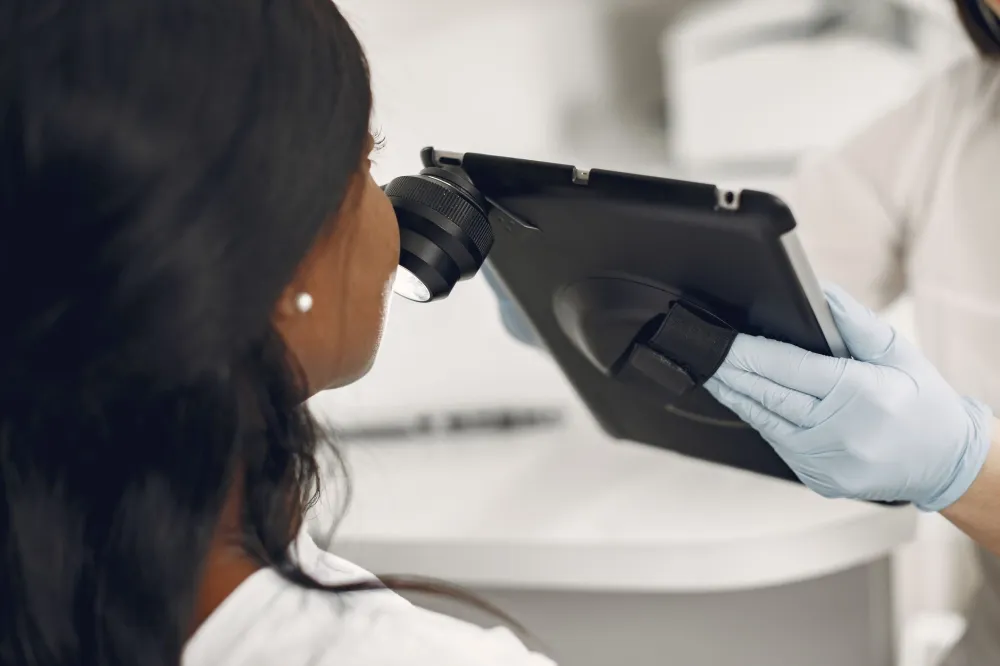
A dermatologist can use a tool called a dermoscopy (basically a magnified look at your scalp) to assess follicle health directly, and can run or interpret the bloodwork that pinpoints nutritional or hormonal causes. Getting that clarity early means your treatment plan is actually targeted, not just hopeful. Women navigating the specific intersection of hormonal changes and hair health may also find the coverage of what research shows about women and the hidden work of navigating healthcare useful context for those appointments.
A few signs that shouldn’t wait for a routine appointment:
- Patchy hair loss: Smooth, coin-shaped bald spots may indicate alopecia areata, an autoimmune condition that responds well to treatment when caught early.
- Scalp scaling, redness, or itching: These suggest inflammation or infection that needs diagnosis, not just a different shampoo.
- Shedding more than 200-300 hairs daily for more than three months: That level of sustained loss deserves professional evaluation.
- Hair loss plus fatigue, cold sensitivity, or unexpected weight changes: These combinations point toward thyroid issues that need blood testing.
For a broader picture of what the Better Life Carez team covers across health and beauty topics, the blog is a good starting point for finding what connects your individual concerns.
FAQ
The Bottom Line
Hair thinning is common, starts earlier than most people realize, and responds best to action taken before it becomes dramatic. Start with bloodwork to rule out nutritional or hormonal causes; that single step shapes everything else. Add consistent scalp care, prioritize protein and iron in your diet, protect your hair from unnecessary mechanical stress, and take sleep and chronic stress seriously as biological factors. If a medically proven treatment like topical minoxidil fits your situation, starting early keeps more options open. And if your thinning is rapid, patchy, or paired with other symptoms, see a dermatologist rather than experimenting alone.
This article is for informational purposes only and is not a substitute for professional medical advice, diagnosis, or treatment. Always consult a qualified healthcare provider about your specific situation. If you experience severe or sudden symptoms, seek medical care immediately.