
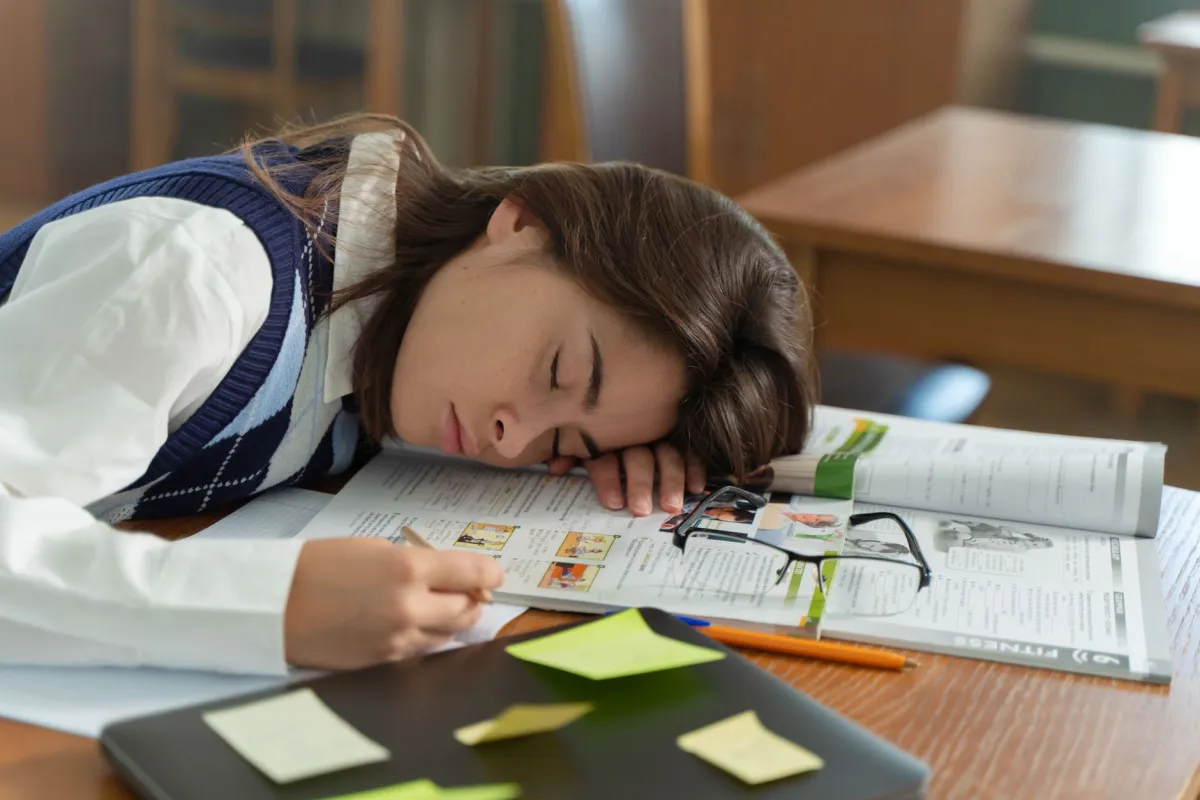
Your teenager can barely open their eyes at 6:30 AM, and honestly, that’s not laziness. It’s biology. A growing stack of research on later school start times suggests the school system may be working directly against how the adolescent body actually functions.
- Why Teen Sleep Deprivation Is a Real Health Problem
- What Does the New California Study Actually Suggest?
- What the Broader Research Actually Shows
- Why the Teen Body Clock Is Different From Yours
- Common Myths About Later School Start Times
- What Parents Can Do Right Now
- Is This Just a Teen Issue, or Does It Affect Younger Kids Too?
- FAQ
- The Bottom Line
Why Teen Sleep Deprivation Is a Real Health Problem
Chronic sleep deprivation in teenagers is not a minor inconvenience. It’s a public health issue. According to the CDC, about three in four US high school students get less than 8 hours of sleep on an average school night, based on its Youth Risk Behavior Survey. That’s most kids walking into classrooms already running on empty.
Sleep loss in adolescents has been linked to lower academic performance, worse mood regulation, increased risk of anxiety and depression, and physical health consequences like a weakened immune response. Their bodies genuinely need more sleep than adults, and they need it at a different time of day.

During puberty, a shift in the body’s internal clock, called the circadian rhythm, causes teens to feel naturally sleepy later at night and want to wake later in the morning. Asking a 15-year-old to be alert at 7 AM is, biologically speaking, like asking an adult to perform well at 4 AM. The Sleep Foundation explains that this isn’t a choice or a preference. It’s hormonal.
What Does the New California Study Actually Suggest?
A 2026 study examines real-world effects of California's later school start time law (SB 328), which since 2022 has required most public middle schools to start no earlier than 8:00 AM and high schools no earlier than 8:30 AM. California was the first state to mandate this change statewide, and researchers have been watching the results closely.
The working paper, published by the National Bureau of Economic Research, found that the share of students sleeping at least 8 hours a night rose by about 13% after the law took effect. Boys reported less sadness and hopelessness, and eighth grade math and English scores rose modestly. Like earlier research, it suggests students in schools that shifted to later start times are getting more sleep and showing measurable improvements in daytime functioning. Researchers report these outcomes as promising, though real-world implementation brings complications, from bus schedules to after-school sports and working parents’ routines.
One study doesn’t settle a debate. But this new data adds to substantial evidence pointing in a consistent direction.

What the Broader Research Actually Shows
The science on later school start times has been building for well over a decade. Studies published in peer-reviewed journals have found associations between later start times and longer total sleep duration, reduced tardiness and absenteeism, and improvements in student mood and mental health. Some research has also pointed toward lower rates of car accidents among teen drivers, which makes sense given how heavily sleep deprivation impairs reaction time and decision-making.
Here’s what research generally suggests changes when schools shift their start times:
| Outcome Area | Early Start Times | Later Start Times (8:30 AM or later) |
|---|---|---|
| Average sleep duration | Often under 7 hours | Closer to 8+ hours on average |
| Daytime alertness | Frequently low, especially first period | Generally improved in studies |
| Mood and mental health | Higher rates of reported anxiety and low mood | Some improvement noted in research |
| Tardiness and absences | More frequent | Reduced in multiple studies |
| Teen driver accident rates | Higher in some state-level data | Lower per some observational studies |
These are associations, not guarantees. Observational studies, the kind that look at what happens after a real-world policy change, can’t control for every variable. But when multiple studies across different states and countries show similar patterns, the signal becomes harder to ignore.

Why the Teen Body Clock Is Different From Yours
During adolescence, the body’s production of melatonin, the hormone that makes you feel sleepy, naturally shifts to later in the evening. This is called a circadian phase delay, and it happens to virtually every teenager regardless of how much screen time they get or how late their parents let them stay up.
In practical terms, a 16-year-old who goes to bed at 10 PM may not actually feel sleepy enough to fall asleep until 11 PM or midnight. Their body just isn’t ready. If school starts at 7:15 AM, they’re waking at 6 AM having gotten maybe 6 hours of sleep. Do that five days a week for years, and the cumulative effect on cognitive function, emotional regulation, and physical health is significant.
If you’re building a healthier sleep routine alongside your teenager, this guide on sleep hygiene habits that can transform your nights can help the whole household.
Common Myths About Later School Start Times
This policy debate comes with a lot of assumptions that don’t always hold up to scrutiny.
Myth: Teens will just stay up later if school starts later.
This sounds logical, but the research doesn’t consistently support it. Multiple studies have found that when start times shift later, students tend to go to bed at roughly the same time but wake up later, resulting in a net gain in sleep. They don’t reliably compensate by staying up an extra hour.
Myth: It only benefits lazy kids.
The circadian phase shift during puberty affects virtually all adolescents. High-performing students, athletes, and early risers are subject to the same biology. Sleep deprivation doesn’t care about your GPA.
Myth: Parents and families can’t adapt.
Changing school schedules genuinely disrupts childcare arrangements, bus routes, and after-school employment for teens. These are legitimate challenges that need thoughtful planning. But “difficult” and “impossible” are different things, and many districts have worked through these issues successfully.
Myth: Later start times hurt athletic performance.
Some coaches worry about after-school practices running too late. In reality, many schools that have made the shift report that schedules adjust and students actually perform better when they’re properly rested.
What Parents Can Do Right Now
Policy change takes time. School board votes, state legislation, logistical planning, none of that happens overnight. But there are things families can do today to reduce the sleep debt their teenagers are carrying.

Is This Just a Teen Issue, or Does It Affect Younger Kids Too?
Most of the research and most of the policy debate focuses on middle and high school students, because that’s where the biological circadian shift is most pronounced. Elementary school children tend to have an earlier natural sleep-wake rhythm, so very early school starts are less physiologically disruptive for younger kids than for teenagers.
That said, adequate sleep matters deeply for children of all ages. The CDC recommends that school-age children between 6 and 12 years old get 9 to 12 hours of sleep per night, and teenagers between 13 and 18 need 8 to 10 hours. Many kids across both age groups fall short of those targets.
Sleep quality, not just quantity, matters too. If your child struggles with falling asleep or staying asleep regardless of the school schedule, it may be worth exploring other factors: room temperature, noise, anxiety, or screen habits. The Mayo Clinic notes that consistent bedtime routines remain one of the most effective tools for improving sleep in both children and adolescents.
The connection between sleep and broader health is also something adults shouldn’t overlook. If you find that stress is affecting your own sleep or physical wellbeing, the research on stress and gut health and the relationship between rest and daily habits is worth reading. If you’re building small habits that support long-term health, this piece on small daily habits linked to longevity covers several that directly involve sleep.
FAQ
The Bottom Line
The evidence is consistent enough to take seriously: later school start times, particularly those at or after 8:30 AM, are associated with teenagers getting more sleep, feeling more alert during the day, and experiencing better mental health outcomes. A 2026 study of California's statewide law adds to this picture, finding more students reaching 8 hours of sleep along with modest gains in mood and test scores. Implementation is genuinely complicated, and no policy fixes everything overnight. But the biology is clear: teenagers are not built to thrive at 7 AM. If your family is navigating this right now, protecting sleep in the hours you can control and staying informed about what the research supports are both good places to start.
This article is for informational purposes only and is not a substitute for professional medical advice, diagnosis, or treatment. Always consult a qualified healthcare provider about your specific situation. If you experience severe or sudden symptoms, seek medical care immediately.
Sources
- CDC: Youth Risk Behavior Survey, sleep (2025 data)
- EdSource: Do later school start times help California students? (Sept 2026)

Everyday Health and Wellness
Browse every related article on this topic in one place.