
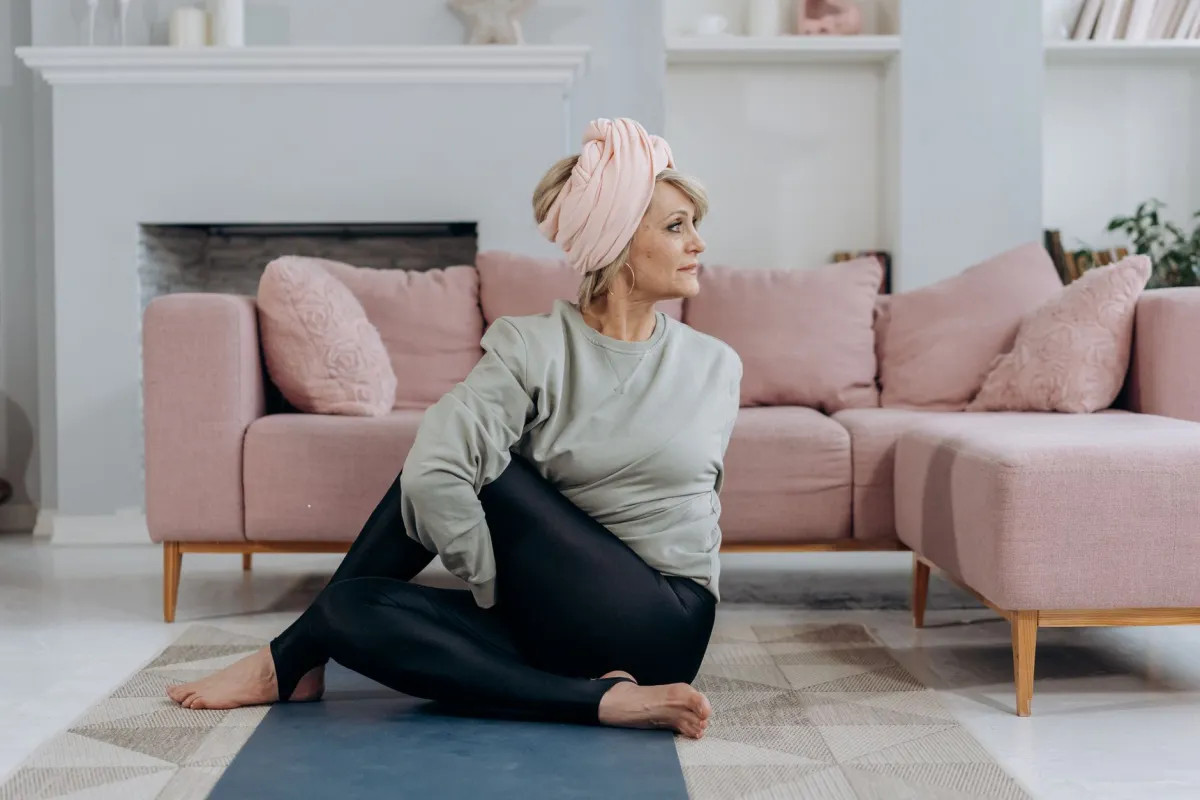
Why Starting Yoga at Home Is Easier Than You Think
You don’t need to be flexible to do yoga. You don’t need a studio, a fancy mat, or clothes from a boutique athletic brand. And you definitely don’t need to already look like you do yoga.
- Why Starting Yoga at Home Is Easier Than You Think
- What Yoga Actually Is (and What It Isn't)
- What Does the Research Actually Say?
- Yoga Myths vs. Facts: Setting the Record Straight
- What You Actually Need to Start
- Your First Two Weeks: A Realistic Timeline
- The 6 Beginner Poses Worth Learning First
- How to Build a Home Practice That Actually Sticks
- What to Do When Something Hurts
- When Should You See a Professional First?
- Yoga's Connection to the Bigger Picture of Daily Wellbeing
- FAQ
- The Bottom Line
The biggest reason people never start? They think they have to be ready. They don’t. Yoga meets you exactly where you are: stiff hips, tight shoulders, zero experience and all. And starting at home removes every last excuse the gym version tends to create. No drive. No class schedule. No self-consciousness about looking around at people who’ve been doing this for years.
Here’s what a real beginner’s home practice actually looks like, what the research supports, and how to build one that sticks.
What Yoga Actually Is (and What It Isn’t)
Yoga is a mind-body practice that combines physical postures, controlled breathing, and focused attention. That’s it. The word itself comes from Sanskrit and is broadly translated as “union” or “connection,” but for beginners, the practical definition is simpler: you move, you breathe, you pay attention to how your body feels.
There are dozens of yoga styles, but for complete beginners at home, only two really matter to start. Hatha yoga is slow-paced, holding poses for several breaths at a time, and it’s widely considered the most accessible entry point. Yin yoga is even slower, with poses held for two to five minutes, targeting the connective tissue around joints. Both work perfectly well in a living room with no prior experience.
What yoga is not: a flexibility competition, a spiritual requirement (though some people do find it meaningful in that way), or a replacement for cardio or strength training. Think of it as one useful tool in a bigger movement picture. If you’re curious about how movement in general affects weight and health, the comparison between strength training vs. cardio for weight loss is worth reading alongside this.
What Does the Research Actually Say?
The evidence base for yoga has grown considerably in recent years, and the findings are genuinely encouraging, though worth reading carefully. Research suggests yoga may help reduce perceived stress and anxiety, improve flexibility and balance, support better sleep, and ease mild to moderate lower back discomfort. Harvard Health reviewed the data and found that yoga’s breathing and mindfulness components appear to lower activity in the body’s stress-response system over time.
For back pain specifically, Mayo Clinic notes that yoga is among the movement-based approaches that may help manage chronic low back pain, though it works best as part of a broader care plan rather than as a standalone treatment. If you already deal with back tension, our guide to yoga poses that ease lower back tension goes deeper on that specific topic.
Here’s the honest part: most yoga studies involve small sample sizes and short durations, so sweeping claims about yoga “curing” conditions aren’t supported by the evidence. What research does consistently show is that regular, gentle movement combined with mindful breathing produces real and measurable benefits for most healthy adults.
Yoga Myths vs. Facts: Setting the Record Straight
| Common Myth | What’s Actually True |
|---|---|
| You need to be flexible first | Flexibility builds through practice, not before it |
| Yoga is only for women | Research shows equal benefits across all genders |
| Harder poses mean better results | Gentle poses done consistently outperform advanced poses done rarely |
| You need an hour-long session | 15 to 20 minutes several times a week is genuinely effective |
| Pain during a pose is normal | Discomfort and sensation are normal; sharp or joint pain is a signal to stop |
What You Actually Need to Start
The short list is genuinely short. A non-slip yoga mat is the one item worth buying, typically 20 to 40 dollars at most big-box stores. If you’re not ready to commit yet, a folded blanket or a thick rug works fine for your first few sessions.
Beyond that, you need floor space roughly 6 feet by 4 feet (about 1.8 meters by 1.2 meters), comfortable clothes that let you move freely, and a free video or a simple written sequence. YouTube has hundreds of genuinely good beginner yoga channels. Look for instructors who specifically use the words “beginner” and “no experience required” in their video titles, because those sessions are paced very differently from intermediate classes.
Props like yoga blocks (foam bricks that bring the floor closer to your hands) and a strap (a long belt used to reach your feet in seated poses) are optional but helpful. Many beginners use stacked books as blocks, and that works perfectly well.
Your First Two Weeks: A Realistic Timeline
Beginners often expect to feel transformed after one session. The reality is more gradual, and honestly more interesting than that.
After four to six weeks of consistent practice, research suggests meaningful improvements in flexibility and self-reported stress levels for most people. Strength gains, especially in the core and shoulders, often become noticeable around the six to eight week mark.
The 6 Beginner Poses Worth Learning First
You don’t need twenty poses. You need six good ones, practiced well. These cover every major muscle group, teach the foundational breathing patterns, and appear in almost every beginner sequence you’ll ever encounter.
- Mountain Pose (Tadasana): Standing tall, feet hip-width apart, arms at sides. Sounds too simple. It’s the foundation of every standing pose and teaches body awareness.
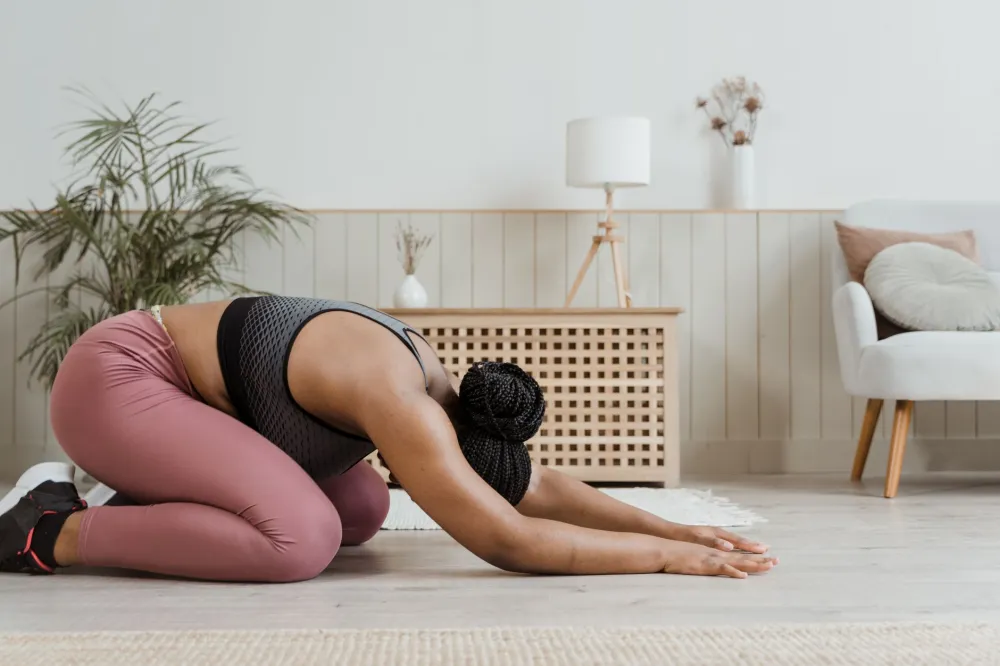
- Child’s Pose (Balasana): Kneel, sit back toward heels, arms stretched forward or resting by your sides. This is your rest position, and you can come back to it any time during a session.
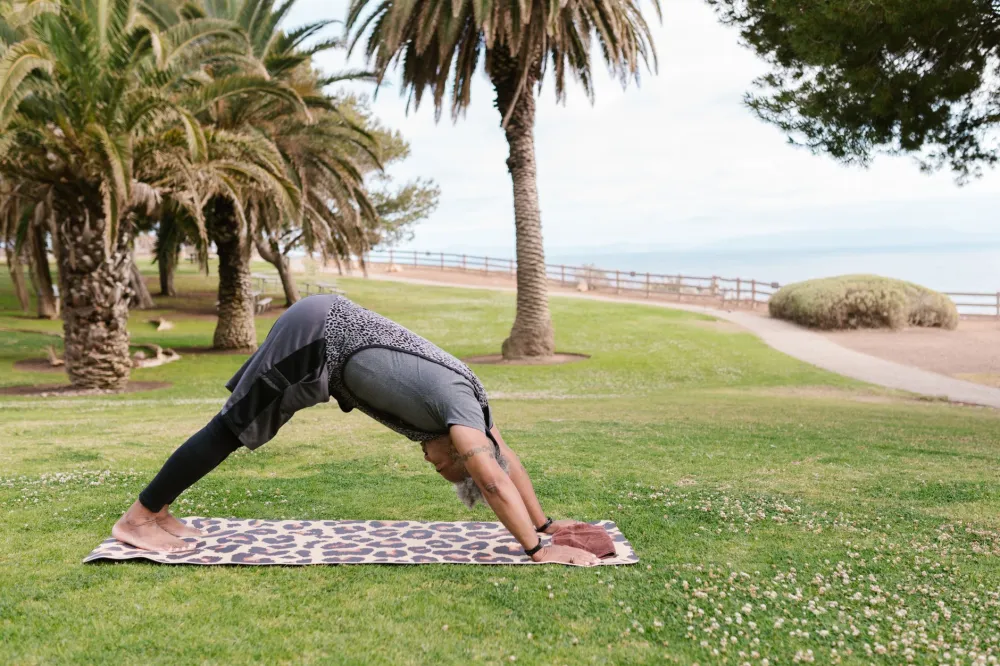
- Downward-Facing Dog (Adho Mukha Svanasana): Hands and feet on the floor, hips up, forming an inverted V shape. Bend your knees as much as you need to. The straight-leg version comes with time.
- Warrior I (Virabhadrasana I): A wide-legged lunge with arms raised overhead. Builds leg strength and opens the hips and chest simultaneously.
- Cat-Cow Stretch (Marjaryasana-Bitilasana): On hands and knees, alternating between arching the back upward and letting it drop toward the floor while breathing in sync. Exceptional for spinal mobility and often recommended for people who sit all day. If you deal with desk-related back tension, our guide on desk posture and back pain from sitting all day pairs well with this one.
- Corpse Pose (Savasana): Lying flat on your back, completely still, for two to five minutes at the end of your session. Non-negotiable. This is when the nervous system processes everything that just happened.
How to Build a Home Practice That Actually Sticks
Consistency beats intensity every single time. Three 20-minute sessions per week done reliably will produce far better results than one ambitious hour-long session followed by two weeks of nothing.
The simplest structure for a beginner home practice looks like this: spend two to three minutes lying quietly and breathing before you begin, run through your six foundational poses for 12 to 15 minutes, then close with two to three minutes of Savasana. That’s a complete session. You can build from there.
Timing matters for habit formation. Morning practice tends to stick better for most people because there’s less competition from the day’s demands. But evening yoga, particularly slower Yin-style sequences, may support sleep quality, which connects to broader research on sleep hygiene habits and their downstream effects on energy and mood. Pick whatever time you’ll actually keep, yes, even on weekends.
One genuinely useful tip: lay your mat out the night before. That small act of preparation removes the friction moment that derails most new habits. If the mat is already on the floor, you’re far more likely to use it.
What to Do When Something Hurts
There’s an important difference between two types of sensation in yoga. Stretch sensation is the mild pulling feeling when a muscle is lengthening. It’s uncomfortable in a productive way and fades as you breathe through it. Pain is sharp, sudden, or joint-based, and it means stop immediately.
Never push through pain to get deeper into a pose. Modify instead. Blocks under your hands, a bend in the knees, or simply backing off ten percent are always the right choice. Yoga injuries almost always happen when beginners force a pose their body isn’t ready for yet.
Certain areas deserve extra attention. If you have a history of lower back issues, avoid deep forward folds and intense twists until you’ve built some foundational core strength. If your knees are sensitive, place a folded blanket underneath them in any kneeling poses. And if you experience pain that’s persistent, radiates down an arm or leg, or comes with numbness or tingling, that’s worth a conversation with your doctor before continuing.
When Should You See a Professional First?
For most healthy adults, starting a gentle beginner yoga practice at home is safe without any medical clearance. That said, some situations genuinely call for a conversation with your doctor or a qualified yoga therapist before you begin.
Check in with a healthcare provider first if you have been diagnosed with osteoporosis (thinning bones), have had a recent surgery or fracture, are managing a cardiovascular condition, or are currently pregnant. A qualified yoga teacher, even for a single in-person session, can also help you understand modifications specific to your body in a way no article can fully replicate.
And if at any point during practice you experience chest pain, shortness of breath, sudden severe dizziness, or numbness in your limbs, stop and seek medical care right away. Those are not yoga-related sensations and they need a real evaluation.
If you’re over 40 and especially curious about how yoga can specifically address the flexibility losses that come with age, the guide on rebuilding flexibility after 40 with yoga covers that angle in useful detail.
Yoga’s Connection to the Bigger Picture of Daily Wellbeing
Yoga works best when it’s part of a life that’s also reasonably well-slept, reasonably well-nourished, and not running entirely on stress. That’s not a judgment; it’s just how the human body works. The calming effects of yoga may be amplified when other stress inputs are also being managed.
Many regular yoga practitioners also find that the mindfulness, the quality of paying deliberate, non-judgmental attention, that yoga teaches carries over into other habits. You eat more slowly. You sleep more intentionally. You move more often throughout the day. Harvard Health research has linked mind-body practices broadly to reduced levels of the stress hormone cortisol over time.
For a complementary mind-body practice that shares yoga’s emphasis on breathing and present-moment attention, beginner meditation without the mysticism is a natural next step once your yoga habit is established. The two practices reinforce each other in ways that are hard to overstate.
You can read more practical health guides like this one at Better Life Carez, where the goal is always to translate what the research actually says into something you can use on a Tuesday morning in your living room.
FAQ
The Bottom Line
Yoga for complete beginners at home is genuinely accessible, low-cost, and backed by a solid body of research showing real benefits for flexibility, stress, sleep, and mild back discomfort. You need a mat, a small amount of floor space, and about 15 to 20 minutes. Start with six foundational poses, breathe steadily throughout, and end every session with Savasana. Practice three times a week and give it four to six weeks before judging results. The only requirement is that you show up, imperfectly and often.
This article is for informational purposes only and is not a substitute for professional medical advice, diagnosis, or treatment. Always consult a qualified healthcare provider about your specific situation. If you experience severe or sudden symptoms, seek medical care immediately.