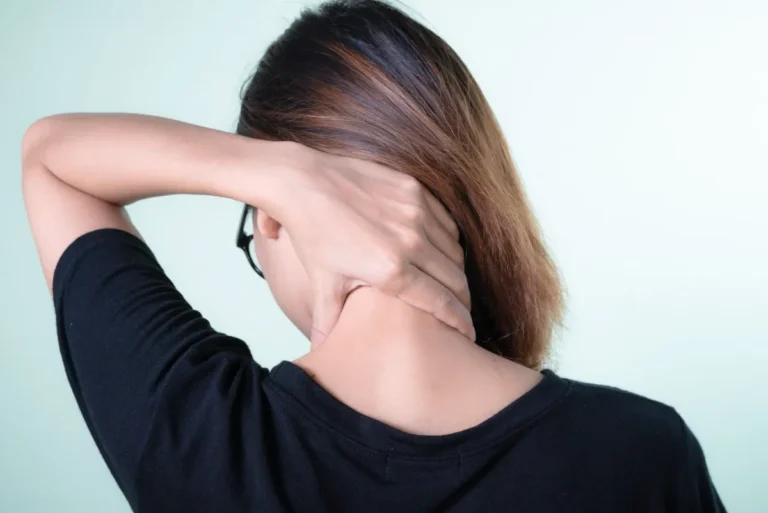
It’s 3 PM, you’ve been hunched over a laptop since lunch, and a dull band of pressure is creeping from the base of your skull toward your eyes. You rub your neck and roll your shoulders, and it barely budges. Here’s what’s likely going on, and what tends to help.
- What Is a Neck Tension Headache?
- Why Does Neck Tension Cause Headaches?
- What Triggers Headaches That Start in the Neck?
- How Can You Tell Which Headache You Have?
- How Do You Relieve a Neck Tension Headache Right Now?
- A Daily Routine That May Prevent Neck Headaches
- What Does the Research Say About Treatments?
- Myth vs Fact: Headaches That Start in the Neck
- What to Expect in the First Two Weeks
- When Is a Neck Tension Headache Serious?
- FAQ
- The Bottom Line
What Is a Neck Tension Headache?
This is head pain that begins in the upper neck, or gets fed by tight muscles and irritated joints there, and then travels toward the back of the head, the temples, the forehead or the eyes. Most people describe it as pressure or a squeezing band rather than a throbbing pulse.
Doctors don’t use “neck tension headache” as an official diagnosis. It’s the phrase people type into a search bar when their headaches seem to start at the neck. In a medical office, that description usually points to one of two recognized headache types, and the two overlap more than most people expect.
Tension-type headache vs cervicogenic headache
A tension-type headache is the most common kind of headache in adults. According to the Mayo Clinic, it typically causes a dull ache with a feeling of tightness or pressure across the forehead or on the sides and back of the head. The scalp, neck and shoulder muscles are often tender. It’s a “primary” headache, meaning another condition isn’t causing it.
A cervicogenic headache works differently. The word simply means “coming from the neck.” The Cleveland Clinic describes it as pain referred to the head from the cervical spine, the seven small bones of your neck, especially the top few joints and the nerves around them. It’s usually one-sided, starts in the neck, and tends to flare with certain movements or after long stretches in one position.
Plenty of people have features of both, and that’s fine. The self-care that helps looks pretty similar either way. A clear diagnosis still matters if the headaches keep coming back.
Why Does Neck Tension Cause Headaches?
Nerves from your upper neck and nerves from your face and head feed into the same relay station in the brainstem. Your brain doesn’t always know where a pain signal started, so irritation in the neck may be felt as pain in the head.
That relay station is called the trigeminocervical nucleus. The trigeminal nerve, the main nerve that carries feeling from your face and forehead, shares this hub with the top three spinal nerves of your neck. When signals from tight muscles or cranky joints near the top of the spine pour in, the brain may map that pain to your temple or behind your eye. Doctors call this referred pain.
Muscles add another layer. Trigger points are small tender knots in a muscle that send pain somewhere else when pressed. They’re common in the upper trapezius (the muscle running from your neck to the top of your shoulder), the suboccipitals (tiny muscles tucked under the base of your skull) and the sternocleidomastoid (the rope-like muscle on the side of your neck). Each has a known pattern of pain that travels up into the head.
What Triggers Headaches That Start in the Neck?
The usual suspects are positions that load the upper neck for hours at a time, plus stress, poor sleep and jaw clenching. Most people with a recurring neck tension headache are dealing with more than one of these at once.
Your head weighs roughly 10 to 12 pounds (about 4.5 to 5.5 kg). When it drifts forward toward a laptop or phone, the muscles at the back of your neck have to work much harder to hold it up. Keep that up through a full workday and those muscles start complaining by mid-afternoon.
- Forward head posture: your chin poking toward a low laptop screen or a phone in your lap.
- Stress shrugging: many people carry stress by hiking their shoulders toward their ears without noticing.
- Jaw clenching or grinding: jaw and neck muscles work as a team, so a tight jaw can feed neck and temple pain.
- Your sleep setup: a pillow that’s too high or too flat, or stomach sleeping with your head twisted, can leave you waking up sore.
- Long drives and late screens: a long road trip or a night of catching up on email both lock your neck in one spot.
If your headaches tend to arrive with morning stiffness, our guide to waking up with a stiff neck walks through the overnight causes. And if you notice clicking or soreness near your ear when you chew, it’s worth reading about jaw pain on one side. Jaw problems and neck-driven headaches often show up together.

How Can You Tell Which Headache You Have?
You can often sort headache types by where the pain sits, how it feels and what makes it worse. Only a clinician can confirm a diagnosis, though. Tension-type headaches usually squeeze both sides, cervicogenic headaches usually favor one side and start in the neck, and migraines tend to throb and bring nausea or light sensitivity.
| Feature | Tension-type | Cervicogenic | Migraine |
|---|---|---|---|
| Where it hurts | Both sides, band-like | One side, neck to head | Often one side |
| How it feels | Pressure or tightness | Dull ache that spreads | Throbbing or pulsing |
| Neck connection | Tender neck muscles | Triggered by neck positions | Neck pain is common |
| Daily activity | Usually not worse | Worse with certain postures | Often worse with activity |
| Other symptoms | Nausea is uncommon | Less neck motion | Nausea, light sensitivity |
Here’s the catch. Migraine often brings neck pain too, sometimes before the head pain even starts. A sore neck doesn’t automatically mean the neck is the source. If your “neck headaches” come with nausea, sensitivity to light or sound, or visual changes, they may be migraines, which usually respond to different treatment. That’s a good reason to get checked instead of guessing.
How Do You Relieve a Neck Tension Headache Right Now?
When a neck tension headache has already started, many people get relief by combining gentle heat, a few minutes of slow movement and a real break from the screen. An over-the-counter pain reliever, taken exactly as the label directs, may help when those steps fall short.
Start with warmth. A hot shower aimed at the back of your neck, or a heating pad on a low setting for 15 to 20 minutes, may help tight muscles let go. Some people prefer a cold pack on the forehead or temples. Neither is wrong, so use whichever feels better, and keep a cloth between your skin and the pack.
Next, move gently. Slow chin tucks and shoulder rolls usually feel better than holding perfectly still, which tends to make stiff muscles stiffer. Then stand up, drink a glass of water, and take five slow breaths while letting your shoulders drop away from your ears.
Over-the-counter options such as acetaminophen, ibuprofen or naproxen can ease an occasional tension-type headache. Follow the package directions, and ask a pharmacist first if you take other medications or have kidney, liver, stomach or heart concerns.
A Daily Routine That May Prevent Neck Headaches
A short daily routine of neck exercises and posture resets may reduce how often neck-driven headaches show up. Research on cervicogenic headache suggests that exercises training the deep neck muscles, the small stabilizers along the front of your spine, are among the more helpful self-care options.
The whole routine takes about 10 minutes, spread across your day. Move slowly, stay in a comfortable range, and stop anything that causes sharp pain, dizziness or tingling.
If you want more options, our roundup of neck stretches for desk workers adds a few gentle moves you can do without leaving your chair. For the bigger picture, this guide to desk posture when you sit all day covers chair and keyboard setup. The piece on choosing the right pillow for neck pain tackles the eight hours you spend lying down.

What Does the Research Say About Treatments?
Exercise therapy and hands-on manual therapy from a trained clinician are reasonable first options for headaches that start in the neck. Relaxation training has support for tension-type headache. The evidence for many popular gadgets and supplements, though, is thin.
For cervicogenic headache, several randomized trials suggest that combining deep neck muscle training with manual therapy may reduce how often headaches happen and how much they hurt. Randomized trials assign people to different treatments by chance, which makes the comparisons fairer. In some studies, the benefit lasted for months. A physical therapist can tailor this to your neck.
For tension-type headache, stress-focused approaches have reasonable support. These include relaxation training, biofeedback (using a sensor to learn to relax specific muscles) and cognitive behavioral therapy. For frequent tension-type headaches, doctors sometimes prescribe preventive medications, such as certain low-dose antidepressants. That’s a conversation for your doctor, not a decision to make on your own.
| Option | Best evidence for | What to expect |
|---|---|---|
| Neck exercise program | Cervicogenic headache | Gradual change over weeks |
| Manual therapy | Cervicogenic headache | Usually paired with exercise |
| Relaxation or biofeedback | Tension-type headache | Needs regular practice |
| Acupuncture | Tension-type headache | Mixed study quality |
| OTC pain relievers | Occasional headaches | Short-term relief only |
| Nerve block injections | Stubborn cervicogenic cases | Specialist procedure, results vary |
For a stubborn cervicogenic headache that doesn’t improve with therapy, specialists may try injections such as an occipital nerve block, which numbs a nerve at the back of the head. Results vary from person to person. These are usually considered after conservative care, not before.
What the research does not support
Posture-correcting shirts and braces have little good evidence behind them for headaches. Wearing one all day can also leave your supporting muscles with less to do. No single specialty pillow has been proven best for everyone. Botox is FDA-approved for chronic migraine, not tension-type headache, and studies in tension-type headache have been mixed.
Supplements tell a similar story. Magnesium and riboflavin have been studied mostly for migraine, and the evidence for neck-driven headaches is limited. Supplements aren’t tightly regulated in the US, and some can interact with medications. Check with a pharmacist or doctor before adding one.
Myth vs Fact: Headaches That Start in the Neck
A few popular beliefs about neck headaches fall apart when you look at the evidence. Clearing them up can save you money and frustration.
Myth: Bad posture is the whole problem. Fact: Research linking posture alone to neck pain is mixed. Staying locked in any single position for hours seems to matter more than having “perfect” posture. Many physical therapists like to say your best posture is your next one.
Myth: Rest your neck until the pain is gone. Fact: For most everyday neck pain, gentle movement tends to help more than keeping still. A rigid neck can make stiff muscles even tighter.
Myth: Cracking your neck fixes the headache. Fact: That satisfying pop may bring brief relief, but it doesn’t strengthen anything or address the underlying cause. Forceful self-cracking isn’t a great habit. Our guide on how to crack your back and neck safely explains when to stop.
Myth: Every headache with neck pain is a tension headache. Fact: Migraine commonly involves neck pain, and, rarely, neck pain with headache signals something serious. The pattern matters, which is why the warning signs below are worth knowing.
What to Expect in the First Two Weeks
In the first two weeks of a neck routine, most people notice small changes rather than dramatic ones. Exercises feel easier, you get better at catching your triggers, and some people notice headaches that are a little less frequent or milder. Bigger changes usually take several weeks.
During days one to three, chin tucks may feel awkward. Mild muscle soreness is common when you start using muscles in new ways. This is a good time to start a simple headache diary: when the headache started, where it hurt, and what you were doing.

By days four to seven, the movements usually feel more natural. Many people start spotting patterns, like headaches on days with long video calls or after a night of poor sleep. That awareness is half the battle.
In the second week, some people notice fewer afternoon headaches, or ones that fade faster. Others don’t see much change yet, and that’s normal. Many physical therapy programs for neck-related headaches run six weeks or longer. If nothing has budged after two to four weeks of steady effort, or things are getting worse, it’s time to see a professional.
Quick self-check: is your neck part of the problem?
Your neck may be contributing to your headaches if several of these sound familiar. This list is for spotting patterns, not for diagnosing yourself.
- Neck first: the ache starts at the base of your skull or upper neck before it spreads.
- Position-linked: headaches follow long stretches at a screen, behind the wheel or reading in bed.
- Tender spots: pressing on your upper neck or shoulders recreates the headache.
- Stiffness: turning to check your blind spot feels harder on one side.
- Better with movement: heat or gentle stretching takes the edge off.
When Is a Neck Tension Headache Serious?
Most neck tension headaches aren’t dangerous. Certain symptoms, though, mean you should get medical care promptly instead of waiting it out. Call 911 or go to an emergency room for a sudden, severe headache or any sign of stroke, such as weakness, numbness, confusion or trouble speaking.
Seek urgent care if your headache comes with any of these:
- Sudden, explosive pain: a headache that peaks within about a minute or feels like the worst of your life.
- Fever with a stiff neck: especially with a rash, confusion or vomiting.
- Recent injury: a headache after a fall, car accident or blow to the head or neck.
- Nervous system changes: numbness, weakness, double vision, a drooping face, slurred speech or trouble walking.
- Problems after neck manipulation: new dizziness, severe neck pain or vision changes after a neck adjustment or a hard twist.
Book a regular appointment if you’re over 50 and getting new headaches, if your headache pattern changes, if headaches wake you from sleep, or if you need pain relievers more than a couple of days a week. A primary care doctor is a good first stop. In many states you can also see a physical therapist directly. A neurologist or headache specialist can help with frequent or complicated cases.
FAQ
The Bottom Line
A neck tension headache usually starts with tight muscles or stiff joints in your upper neck that send pain up into your head. Everyday habits like screen posture, stress and poor sleep often keep it going. Start today with warmth, a few chin tucks and a raised screen, then build a short daily routine and track your headaches for two weeks. Use pain relievers sparingly to avoid rebound headaches, and see a doctor if headaches are frequent, keep changing, or come with any red-flag symptom.
This article is for informational purposes only and is not a substitute for professional medical advice, diagnosis, or treatment. Always consult a qualified healthcare provider about your specific situation. If you experience severe or sudden symptoms, seek medical care immediately.

Back and Neck Pain
Browse every related article on this topic in one place.