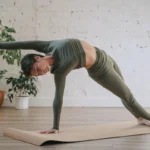

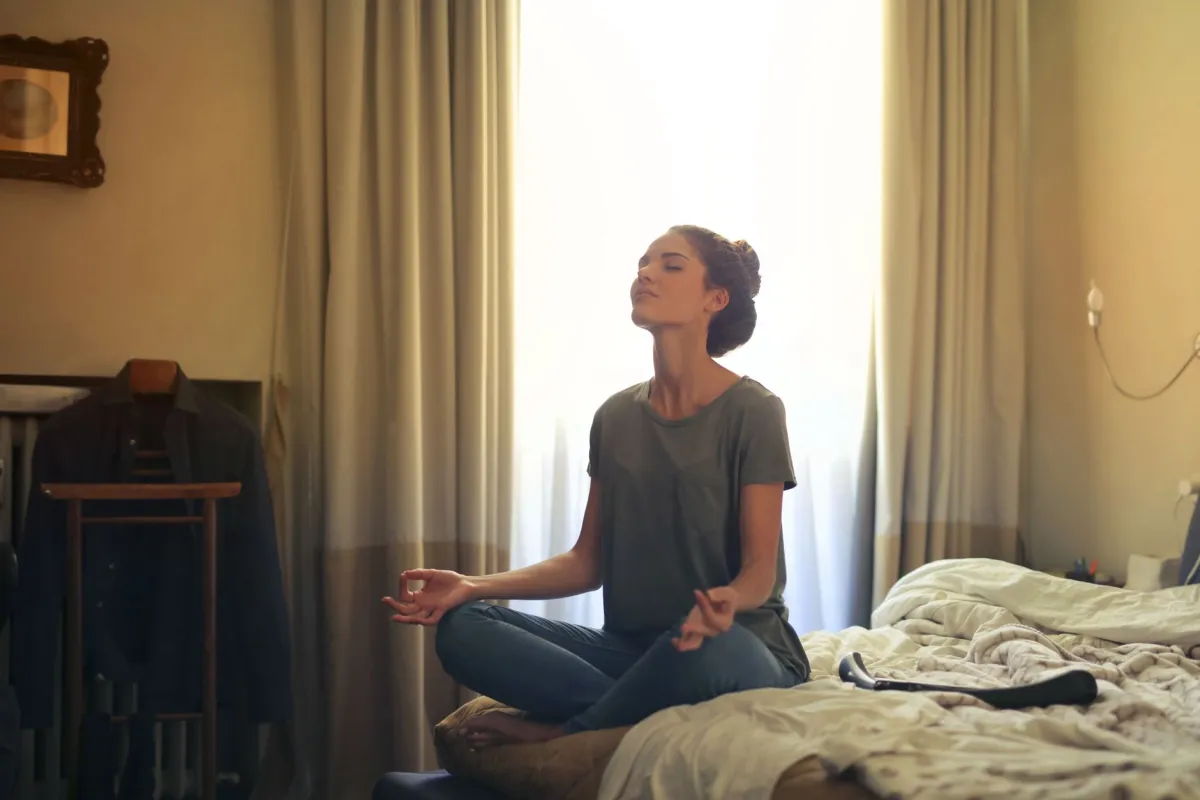
If you’ve tried yoga for sleep, you probably pictured drifting off like the people in the app ads, not lying there rewriting tomorrow’s to-do list at 11 PM. The good news is that slow, floor-based yoga may help quiet the stress response that keeps your brain buzzing. The trick is picking the right poses and pairing them with the right breathing.
- What Is Yoga for Sleep, and How Does It Ease Stress?
- Does Yoga for Sleep Work? What the Research Says
- Which Type of Yoga Is Best Before Bed?
- A Simple Bedtime Yoga Routine (10 to 15 Minutes)
- How Should You Breathe During Bedtime Yoga?
- How Long Until Yoga Helps You Sleep Better?
- Can Yoga for Stress Help During the Day, Too?
- Yoga and Sleep: Myths vs Facts
- Is Bedtime Yoga Safe for Everyone?
- When Should You See a Doctor About Stress or Sleep?
- FAQ
- The Bottom Line
What Is Yoga for Sleep, and How Does It Ease Stress?
Yoga for sleep is a slow, low-effort style built on gentle stretches, supported poses and long exhales. Its goal is to nudge your body out of “alert mode” and into “rest mode” before bed. It isn’t a workout, and nobody is grading you on touching your toes. Think of it as a wind-down signal your nervous system can actually feel.
For a lot of adults, the problem isn’t a lack of tiredness. It’s being exhausted and wired at the same time, with a body ready for bed attached to a mind replaying every email from the day.
Your body’s stress switch, in plain words
Your autonomic nervous system, the part of you that runs things without you having to think about them, has two main branches. The sympathetic branch is your “fight or flight” side. It speeds up your heart, tightens your muscles and releases stress hormones such as adrenaline and cortisol, the latter a hormone that keeps you alert and ready to act.
The parasympathetic branch handles the “rest and digest” side. It slows your heart rate and helps your body settle. A major player here is the vagus nerve, a long nerve that runs from your brainstem down through your chest and belly.
Here’s the useful part. Slow breathing with a longer exhale is one of the few ways to nudge that system on purpose. Your heart rate dips a little each time you breathe out, so a stretched-out exhale may help tilt the balance toward calm. Gentle yoga gives you a structured way to practice exactly that.
Why stress and poor sleep feed each other
Stress and sleep run in a loop. A rough day can leave you in a state sleep researchers call hyperarousal, where your brain and body stay too revved up to drift off. A short night then makes tomorrow’s stress feel heavier, and the cycle starts over.
Breaking that loop at bedtime is where stress relief and sleep overlap. A calm 10 to 15 minutes before lights-out won’t erase a hard week. It can, though, turn the volume down enough for sleep to slip in.
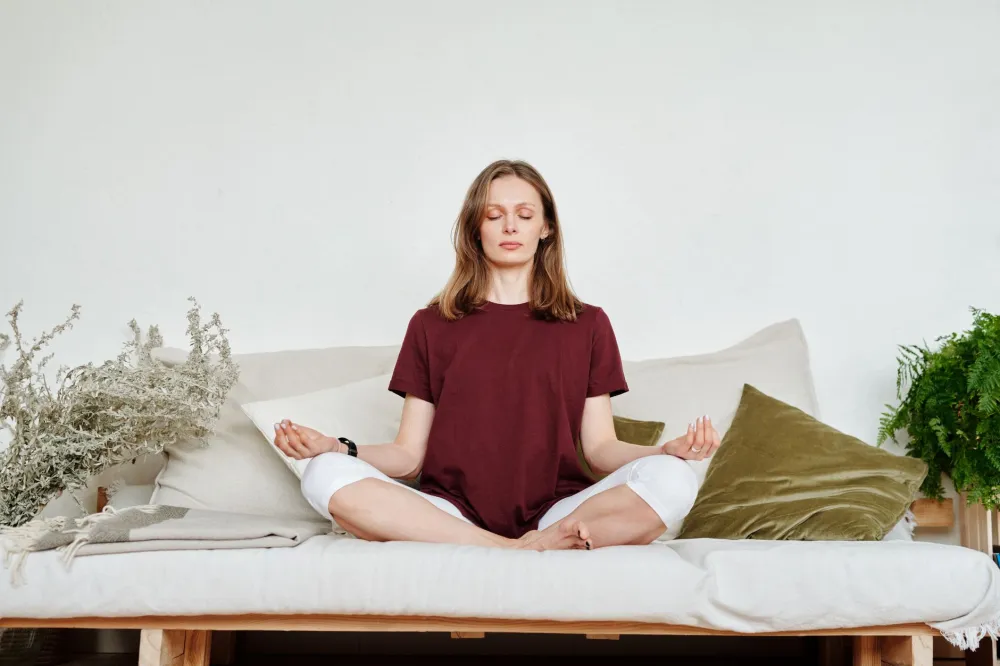
Does Yoga for Sleep Work? What the Research Says
The short answer? Yes, with limits. Many small randomized trials and several research reviews have linked regular yoga to better self-reported sleep and lower stress. The studies are often small, short and hard to compare, so the fairest read is “promising and low-risk,” not “proven cure.”
A randomized controlled trial, by the way, is a study where people are randomly sorted into groups, such as yoga or no yoga, so researchers can compare results fairly. Yoga is tricky to study this way. People know whether they’re on the mat, and expectations can shape how rested they say they feel.
Even so, the overall pattern holds up fairly well. Benefits have shown up in studies of older adults, people dealing with anxiety, and people living with long-term health conditions. There is no solid evidence that slow, mindful styles help sleep more than other types of exercise, but they are gentle and easy to start, which is good news if your flexibility currently tops out at “can reach my knees.”
What the research does not support
Let’s be clear about the limits. There’s no good evidence that a specific pose boosts melatonin, detoxes stress hormones or cures chronic insomnia on its own. For long-term insomnia, the American College of Physicians recommends cognitive behavioral therapy for insomnia (CBT-I) as the first treatment to try. CBT-I is a structured, short-term program that retrains your sleep habits and the worried thoughts that build up around bedtime.
Yoga fits well alongside that kind of care. It doesn’t replace it.
Which Type of Yoga Is Best Before Bed?
Slow and quiet wins at bedtime. Restorative yoga, yin yoga and yoga nidra are the most sleep-friendly styles because they keep your heart rate low and spend most of the time holding still. Faster styles like power yoga or hot yoga can still support sleep over time, but they’re better saved for earlier in the day.
Here’s how the common styles compare if sleep is the goal:
| Yoga style | Pace | Best time of day | Sleep-friendly at night? |
|---|---|---|---|
| Restorative | Very slow, uses props | Evening | Yes, a top pick |
| Yin | Slow, long holds | Evening | Yes, usually |
| Yoga nidra | Lying still, guided | Bedtime, even in bed | Yes, a top pick |
| Gentle hatha | Slow to moderate | Early evening | Often |
| Vinyasa or power | Fast, flowing | Morning or afternoon | Not right before bed |
| Hot yoga | Vigorous, heated room | Earlier in the day | Usually not |
Restorative yoga uses pillows, blankets or bolsters so your body is fully supported, and you hold each pose for a few minutes. Yin yoga also uses long holds, with a bit more stretch sensation. Yoga nidra, sometimes called “yogic sleep,” is a guided practice done lying down while a voice walks you through relaxing each part of your body.
New to yoga? Our guide to yoga for complete beginners at home covers mats, props and free classes. For bedtime, though, a pillow and a patch of carpet are plenty.
A Simple Bedtime Yoga Routine (10 to 15 Minutes)
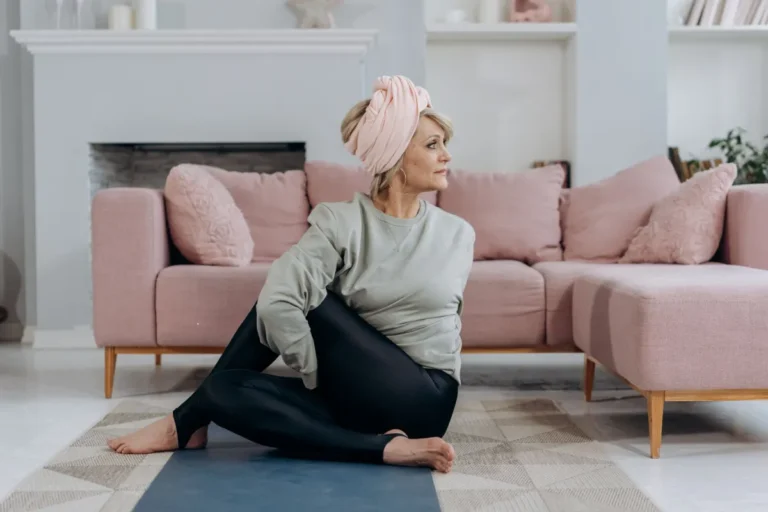
A good bedtime routine takes about 10 to 15 minutes and uses six gentle, mostly floor-based poses. Hold each one for one to five minutes while you breathe slowly through your nose. You can do the whole sequence on your bedroom floor or on a firm mattress.
Dim the lights first, and park your phone in another room or face down. Then work through the poses in order. Move slowly, and if anything pinches or hurts, ease out or skip it.
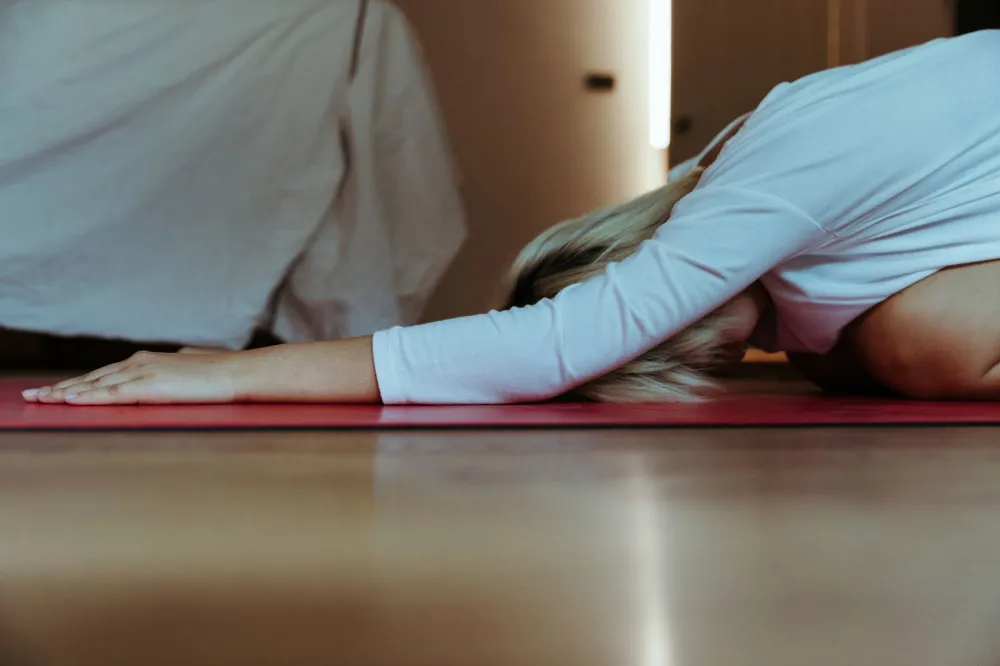
Each pose folds you inward, releases the spots stress tends to grab, like your shoulders, hips and low back, and then lets you lie completely still. You don’t need a perfect shape. Comfortable beats pretty every time.
Once the last pose is done, roll onto your side, take a breath or two, and get into bed without flipping on the overhead light or checking your phone. That transition is part of the routine. Many people find the sequence becomes a cue that tells their brain sleep is next, much like brushing your teeth does.
If low back tightness keeps you shifting around at night, our roundup of yoga poses that ease lower back tension pairs well with this sequence.
How Should You Breathe During Bedtime Yoga?
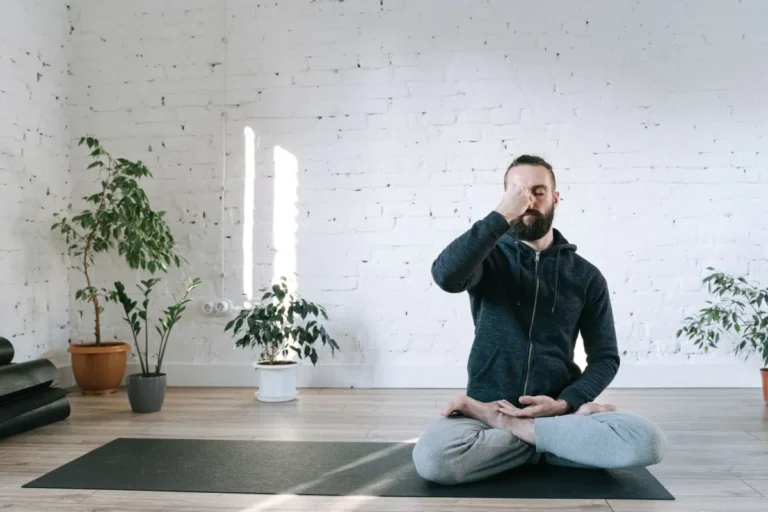
Breathe slowly through your nose and make each exhale longer than the inhale, say in for a count of 4 and out for a count of 6. This long-exhale pattern is the heart of stress relief at night, and it probably matters more than any single pose you pick.
Many breathing studies focus on slowing down to roughly six breaths per minute, which is close to where a 4-in, 6-out rhythm lands. You don’t need an exact number. Slower and smoother is the goal.
- Long exhale: Breathe in for 4, out for 6. Start with 5 rounds and build from there.
- Belly breathing: Put one hand on your chest and one on your belly, and let the belly rise first. Your diaphragm, the dome-shaped muscle under your lungs, does most of the work.
- Humming exhale: Called bhramari, or “bee breath,” you hum softly as you breathe out. Many people find the vibration soothing, though research on this exact technique is limited.
You may have also heard of 4-7-8 breathing, which Dr. Andrew Weil popularized. It uses the same long-exhale idea, though solid research on that exact count is thin.
But there’s a catch. Counting can make some people more anxious, especially if they’re already worried about not sleeping. If that sounds like you, drop the numbers and let each breath out be a little slower and softer than the last.
How Long Until Yoga Helps You Sleep Better?
Some people feel calmer after one session, but real changes in sleep usually take a few weeks of regular practice. Many yoga and sleep studies run roughly 8 to 12 weeks, often with several sessions a week, so give it at least a month before you judge it.
Here’s a realistic picture of what the first couple of months may look like:
The first few nights: You may feel looser and a little calmer, while your mind still wanders. That’s normal. Noticing the wandering and coming back to your breath is the practice.
Weeks 1 to 2: The routine starts to feel familiar instead of awkward. Some people fall asleep a bit faster. Others notice nothing yet, which is common too.
Weeks 3 to 4: The sequence itself may start working as a sleep cue. Many people report fewer nights staring at the ceiling, though progress is rarely a straight line.
Weeks 6 to 8 and beyond: This is roughly the window where studies tend to measure benefits. Keep practicing most nights, and add a short daytime session if stress is still running high.

Consistency beats length. Ten minutes on five nights a week is likely more useful than one 90-minute class on Sunday. Pair your practice with a steady wake-up time and other sleep hygiene habits (the everyday routines that set you up for good sleep), like a cool, dark bedroom and cutting off caffeine by early afternoon.
Can Yoga for Stress Help During the Day, Too?
Yes. Short yoga and breathing breaks during the day can keep stress from piling up by bedtime, which may make falling asleep easier later. You don’t need a mat or workout clothes. Two to five minutes at your desk counts, and that 3 PM slump is a good moment to try it.
Try a few rounds of seated cat-cow, arching and rounding your spine in your chair. Add slow shoulder rolls, or stand and let your upper body hang in a soft forward fold for a few breaths. Before a tense meeting, or in the car before you walk into the house after work, take five long exhales.
If the word “meditation” makes you picture incense and chanting, our take on beginner meditation without the mysticism keeps things practical.
Timing matters for harder workouts. A brisk vinyasa class or a long walk in the morning or afternoon may help you sleep more deeply that night. If you exercise hard in the evening, give yourself time to cool down before you try to sleep.
Yoga and Sleep: Myths vs Facts
Most myths about yoga for sleep make it sound harder than it is. The facts are simpler: a short, gentle routine done often tends to beat a long, intense one done rarely.
- Myth, you need to be flexible: Fact, bedtime poses are supported and mild. Stiff people may notice the biggest relief.
- Myth, any yoga before bed helps: Fact, fast or heated classes can leave you revved up. Save them for earlier in the day.
- Myth, yoga can cure insomnia: Fact, it may ease stress and improve sleep quality, but chronic insomnia usually needs CBT-I or other care.
- Myth, you need a full hour: Fact, many people benefit from 10 to 15 minutes done consistently.
- Myth, falling asleep in Savasana means you failed: Fact, in bed at night, that’s pretty much the point.
Is Bedtime Yoga Safe for Everyone?
Gentle yoga for sleep is low risk for most healthy adults, but it isn’t automatically right for everyone. Talk to your doctor first if you’re pregnant, recovering from surgery or an injury, or living with conditions like glaucoma (a condition that raises pressure inside the eye), uncontrolled high blood pressure, or serious back or neck problems.
Pay attention to how things feel. A mild stretch is fine. Sharp pain, numbness or tingling means stop and ease out. Poses with your legs raised above your heart, like legs up the wall, are gentle, but check with your doctor first if you have glaucoma or blood pressure concerns.

Some people stack yoga with sleep supplements. If you’re curious, our look at magnesium for sleep explains what the evidence does and doesn’t show. Supplements aren’t tightly regulated by the FDA the way prescription drugs are, and some can interact with medications, so check with your doctor or pharmacist before adding one.
One more practical note: hot yoga in the evening can leave you overheated and dehydrated, and your body needs to cool down a bit to fall asleep well. If you love heated classes, schedule them earlier in the day.
When Should You See a Doctor About Stress or Sleep?
See a doctor if trouble sleeping happens at least three nights a week for three months or more, if you snore loudly or wake up gasping, or if stress makes it hard to work, eat or enjoy life. These can point to chronic insomnia, a sleep disorder, anxiety or depression, and all of them have real treatment options.
Use this quick self-check. If any of these sound familiar, yoga alone probably isn’t enough:
- Persistent insomnia: Trouble falling or staying asleep most weeks for three months or longer.
- Breathing signs at night: Loud snoring, choking, gasping or heavy daytime sleepiness, which can be sleep apnea symptoms.
- Restless legs: An uncomfortable urge to move your legs in the evening that eases when you move.
- Mood changes: Low mood, constant worry or panic attacks on most days.
- Relying on aids: Needing alcohol or sleep aids most nights just to drift off.
Some symptoms need prompt medical care, not a breathing exercise. Chest pain, trouble breathing, a sudden severe headache, or new numbness or weakness mean seeing a doctor right away or calling 911. If stress has turned into thoughts of harming yourself, call or text 988 to reach the Suicide and Crisis Lifeline any time.
A primary care doctor is a good first stop. They can rule out medical causes, such as thyroid problems or medication side effects, and refer you to a sleep specialist or mental health professional if needed.
FAQ
The Bottom Line
Yoga for sleep won’t fix every bad night, but research suggests it may calm your stress response and improve sleep quality when you practice regularly. Start tonight with a routine of 10 to 15 minutes made up of slow, supported poses and long exhales, and stick with it for at least a month. Save fast or heated classes for earlier in the day. If sleep trouble lasts for months or comes with loud snoring, gasping or low mood, see your doctor, since effective treatment exists.
This article is for informational purposes only and is not a substitute for professional medical advice, diagnosis, or treatment. Always consult a qualified healthcare provider about your specific situation. If you experience severe or sudden symptoms, seek medical care immediately.

Back and Neck Pain
Browse every related article on this topic in one place.