

You wake up, the ceiling is too bright, your mouth feels like sandpaper, and the idea of standing up seems genuinely ambitious. IV drips for hangovers promise to fix all of that in about 45 minutes. But before you book a nurse to your door, here’s what the science actually shows.
- What Is a Hangover IV Drip, Exactly?
- Why Does a Hangover Feel So Awful?
- Do IV Drips for Hangovers Actually Work? What the Research Says
- Hangover IV Therapy: Myths vs. Facts
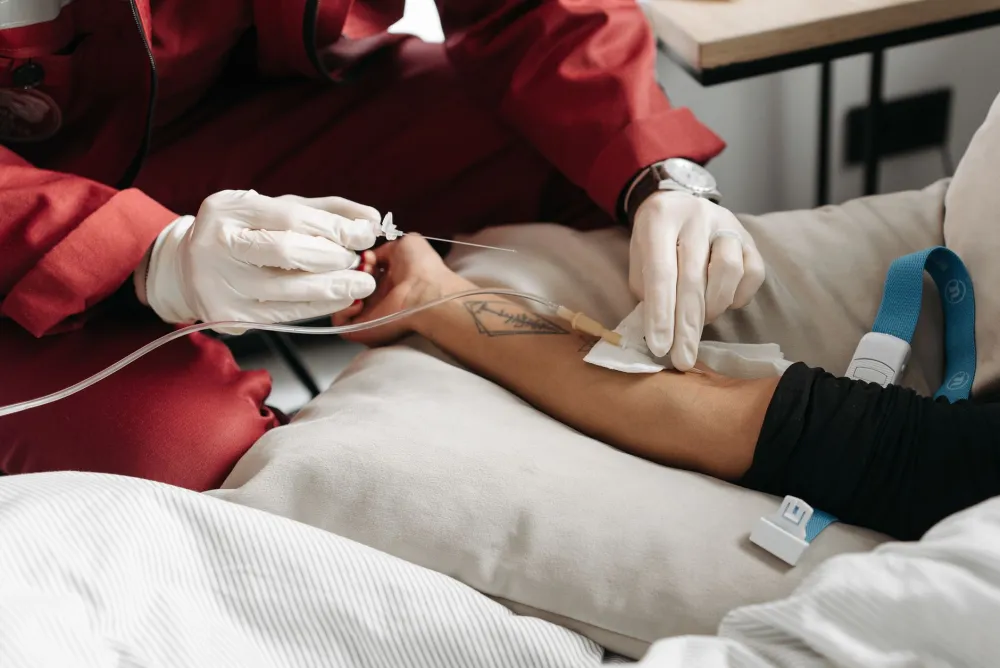
- What a Typical Hangover IV Session Looks Like
- Are IV Drips for Hangovers Safe?
- When Should You Seek Real Medical Attention After Drinking?
- What Actually Helps a Hangover: Practical Steps
- FAQ
- The Bottom Line
What Is a Hangover IV Drip, Exactly?
A hangover IV drip is an intravenous infusion, meaning fluid flows directly into a vein through a small needle, usually in the arm or hand. The base of almost every hangover drip is a saline solution, which is sterile salt water similar to what’s already in your blood. That base fluid restores fluid volume quickly.
On top of the saline, clinics typically add extras. The specifics vary by provider, but common additions include:
- Electrolytes: Potassium, magnesium, and sometimes calcium to replace minerals lost through frequent urination and vomiting.
- B vitamins: Particularly B1 (thiamine), B6, and B12, which alcohol depletes and which are involved in energy metabolism.
- Vitamin C: An antioxidant that some providers add to combat oxidative stress (cellular damage caused by unstable molecules called free radicals) that alcohol produces.
- Anti-nausea medication: Drugs like ondansetron (Zofran) are sometimes included, though this requires a prescription and a qualified medical provider to administer.
- Pain relievers: Some drips include ketorolac, an IV anti-inflammatory, for headache relief.

The whole setup takes roughly 30 to 60 minutes and costs anywhere from around $100 to over $300, depending on the add-ons and whether a mobile nurse comes to you or you visit a clinic. That’s a steep price for feeling better after a night out, so the real question is whether the biology backs up the bill.
Why Does a Hangover Feel So Awful?
Understanding what’s actually happening in your body makes it much easier to judge whether an IV can fix it. A hangover is not just dehydration. That’s one of the most persistent myths about alcohol recovery, and it matters a lot here.
When you drink alcohol, several things happen at once. Alcohol is a diuretic, meaning it signals your kidneys to flush out more water than usual, which is why you use the bathroom so often. That does cause dehydration and electrolyte loss. But alcohol also triggers inflammation throughout the body. Your immune system releases signaling molecules called cytokines (proteins that communicate between cells to coordinate an immune response), and those cytokines are responsible for the foggy-brain feeling, the fatigue, and the general sense that everything is terrible.
Alcohol is also metabolized, broken down, into a compound called acetaldehyde, which is toxic and accumulates before your liver can convert it into the harmless acetic acid. Acetaldehyde is a major driver of nausea, flushing, and that pounding headache. On top of all that, alcohol disrupts your sleep architecture, meaning you may have slept eight hours but skipped the deep, restorative stages your brain needs.
Why does this matter for IV therapy? Because an IV drip addresses dehydration and electrolyte loss very efficiently. It does almost nothing to speed up the breakdown of acetaldehyde, quiet cytokine-driven inflammation, or give you back the deep sleep you missed. That puts a natural ceiling on how much better a drip can make you feel.
Do IV Drips for Hangovers Actually Work? What the Research Says
The honest answer is: somewhat, for some symptoms, but not as dramatically as the marketing suggests. High-quality clinical trials specifically on hangover IV therapy are scarce. Most of what we know comes from how IV fluids and vitamins work in other medical contexts, applied to the hangover setting by inference.
Here’s what the evidence does support:
- Rapid rehydration: IV saline restores fluid volume faster than drinking water because it bypasses the gut entirely. If you’re genuinely dehydrated and struggling to keep liquids down, this is a real advantage.
- Electrolyte restoration: Replacing lost potassium and magnesium through an IV can ease muscle cramps and contribute to reducing headache severity for some people.
- Anti-nausea medications: When included, these have solid evidence behind them. Ondansetron is a legitimate, FDA-approved anti-nausea drug that works well regardless of how it’s delivered.
- Pain relief: IV anti-inflammatories like ketorolac work for headaches. Again, this is the medication doing the work, not the IV format specifically.
What the research does not support is the idea that megadoses of B vitamins or vitamin C delivered intravenously speed up hangover recovery in a meaningful, measurable way in otherwise healthy, well-nourished people. Your body can only use so much of these vitamins at once, and the excess is filtered out by your kidneys. Several trials in other contexts suggest that intravenous vitamin supplementation benefits people who are actually deficient, not people who are simply recovering from a single heavy night.
IV Drips vs. Oral Rehydration: How Do They Compare?
One of the most useful things to know is how IV therapy actually stacks up against simpler options. Here’s a side-by-side look:
| Factor | Hangover IV Drip | Oral Rehydration (Sports Drink + Water) | Rest + Food + OTC Pain Reliever |
|---|---|---|---|
| Speed of rehydration | Fast (bypasses gut) | Moderate (30-60 min) | Slow but steady |
| Addresses nausea | Yes, if meds included | Partially | Partially |
| Addresses headache | Yes, if pain meds included | Partially | Yes, with ibuprofen or acetaminophen |
| Fixes fatigue and brain fog | Partially at best | Partially | Partially; sleep helps most |
| Cost | $100 to $300+ | Under $5 | Under $10 |
| Medical risk | Low but nonzero | Negligible | Negligible |
The table tells an honest story. An IV drip has a real edge when you genuinely cannot keep fluids down, or when the clinic includes prescription medications that you couldn’t otherwise get over the counter. For most people with a typical hangover, though, drinking fluids, eating something, and taking an appropriate over-the-counter pain reliever gets you to roughly the same place for a fraction of the cost.
Hangover IV Therapy: Myths vs. Facts
The market for hangover IV drips has grown quickly, and the marketing has not always kept pace with the science. A few myths worth clearing up:
Myth: The IV vitamins supercharge your recovery.
Fact: For a healthy person who eats a reasonably balanced diet, IV vitamin infusions are unlikely to offer meaningful benefits beyond what oral vitamins and food provide. Your body’s ability to use B vitamins and vitamin C has a ceiling, and anything above that is excreted. If you’re interested in supporting your body’s nutritional balance day-to-day, the Weight Loss and Nutrition Guide covers practical everyday approaches.
Myth: It cures a hangover completely.
Fact: No treatment cures a hangover. Time is the only thing that fully resolves one, because your body needs to finish metabolizing alcohol and acetaldehyde, calm the inflammatory response, and catch up on restorative sleep. An IV drip can ease some symptoms. It cannot fast-forward the underlying biology.
Myth: It’s totally risk-free.
Fact: IV therapy is a medical procedure. Risks are low when performed by a qualified provider, but they include bruising and pain at the insertion site, infection, air embolism (a rare but serious complication where air enters the bloodstream), and fluid overload in people with certain heart or kidney conditions. Anyone with underlying health issues should talk to their doctor before trying IV therapy.
Myth: More add-ins mean better results.
Fact: There’s no clinical evidence that premium drip packages with glutathione, NAD+, or other expensive add-ons produce measurably better hangover recovery than a plain saline drip with a basic electrolyte mix.

What a Typical Hangover IV Session Looks Like
If you’re considering trying one, here’s a realistic picture of what to expect. The experience varies slightly by provider, but the basic process follows a predictable path.
Are IV Drips for Hangovers Safe?
For most healthy adults, hangover IV therapy carries a low risk when administered by a licensed medical professional using sterile technique. The saline and vitamins in a standard drip are not dangerous in typical doses.
That said, a few cautions are worth knowing. People with heart failure, kidney disease, or high blood pressure need to be careful about IV fluids, because pushing in extra fluid volume can strain those systems. If you’re on prescription medications, some IV add-ins could interact with them. And any time you’re putting a needle in a vein, infection is a nonzero risk if proper sterile technique isn’t followed, which is why provider credentials matter.
The broader concern many physicians raise is more systemic: the hangover IV market in the US is largely unregulated as a wellness service. Some providers operate under medical supervision; others exist in a grayer area. If you’re going this route, look for a provider who has a licensed physician or nurse practitioner overseeing the protocols, not just a registered nurse working independently without a supervising clinician.
When Should You Seek Real Medical Attention After Drinking?
A hangover is unpleasant, but it’s generally not a medical emergency. There are exceptions. Alcohol poisoning, which is different from a hangover, is a serious and potentially life-threatening condition.
According to the CDC, signs of alcohol poisoning that require emergency care include confusion, vomiting, seizures, slow or irregular breathing, blue-tinged or pale skin, and unconsciousness you cannot wake someone from. If you or someone around you has any of these symptoms, call 911. Do not wait to see if they sleep it off.
For a regular hangover, see a doctor if symptoms are severe, persist beyond 24 hours, or include chest pain, heart palpitations, severe abdominal pain, or any neurological symptoms like numbness, weakness, or a sudden severe headache unlike any you’ve had before. These are not hangover symptoms. They deserve a real medical evaluation, not a drip clinic.

What Actually Helps a Hangover: Practical Steps
Whether or not you choose to try IV drips for hangovers, there are evidence-supported strategies that genuinely move the needle on recovery. None of them are glamorous, but they work.
- Hydrate steadily: Drink water or an oral rehydration solution (like Pedialyte, which has a better electrolyte ratio than most sports drinks) before bed and when you wake up. Sipping slowly is more effective than chugging if you’re nauseous.
- Eat something: A meal before drinking slows alcohol absorption. After drinking, bland carbohydrates like toast or crackers help stabilize blood sugar, which alcohol depletes. Eggs contain cysteine, an amino acid that may help break down acetaldehyde, though the evidence is modest.
- Sleep: Your body does most of its repair work during sleep. Even a nap helps. The fatigue you feel is partly your brain demanding recovery time it didn’t get overnight.
- Pain relief with caution: Ibuprofen can help with headaches and inflammation, but take it with food and not on an empty stomach, and avoid it if you have a history of stomach ulcers. Acetaminophen (Tylenol) and alcohol are a combination to treat carefully; ask your pharmacist about safe timing and dosing for your situation.
- Avoid the “hair of the dog”: Drinking more alcohol temporarily delays hangover symptoms but doesn’t resolve them. Mayo Clinic notes this approach can contribute to problematic drinking patterns over time.
For those thinking about the bigger picture of nutrition and daily energy, the guide to afternoon energy crashes covers how hydration, blood sugar, and sleep combine to affect how you feel throughout the day, principles that apply directly to recovery days too.
If you find hangovers are a recurring issue, it may be worth thinking about overall drinking patterns rather than optimizing recovery. That’s not a judgment. It’s just that no IV bag addresses the root cause. The science-backed daily habits for immunity article is a useful resource for anyone trying to build a stronger baseline so their body recovers from anything, alcohol or otherwise, more efficiently.
FAQ
The Bottom Line
IV drips for hangovers can provide genuine, faster-than-oral rehydration and electrolyte replacement, and the prescription medications some drips include for nausea and pain are legitimately effective. But no hangover IV drip cures a hangover, because dehydration is only one piece of the puzzle. The inflammation, acetaldehyde toxicity, and sleep disruption that make hangovers feel so brutal simply need time. For most people, water, food, rest, and an appropriate over-the-counter pain reliever accomplish most of what a $200 drip does. If you genuinely cannot keep fluids down, or you want a faster route to feeling functional for something important, an IV drip from a qualified provider is a reasonable option, just go in with realistic expectations and make sure the person inserting the needle has proper credentials.
This article is for informational purposes only and is not a substitute for professional medical advice, diagnosis, or treatment. Always consult a qualified healthcare provider about your specific situation. If you experience severe or sudden symptoms, seek medical care immediately.

Everyday Health and Wellness
Browse every related article on this topic in one place.