

Your skin started burning after a Tuesday night exfoliation session. By Wednesday morning it was tight, pink, and weirdly shiny. That’s a compromised skin barrier, and it happens to way more people than the skincare industry wants to admit.
- What Is the Skin Barrier, Exactly?
- How Does Over-Exfoliating Damage the Barrier?
- What Does a Damaged Skin Barrier Look and Feel Like?
- How to Repair Your Skin Barrier After Over-Exfoliating
- What Ingredients Actually Help During Barrier Recovery?
- Myths About Skin Barrier Repair: What the Research Doesn't Support
- What to Expect Week by Week During Recovery
- How to Reintroduce Exfoliants Without Breaking Your Barrier Again
- When Should You See a Dermatologist?
- FAQ
- The Bottom Line
What Is the Skin Barrier, Exactly?
The skin barrier, formally called the stratum corneum, is the outermost layer of your skin. Think of it as a brick wall: skin cells are the bricks, and a mix of lipids (fats), including ceramides, cholesterol, and fatty acids, act as the mortar holding everything together. According to the American Academy of Dermatology, this layer is your body’s first line of defense against bacteria, pollution, UV rays, and water loss.
When that mortar breaks down, gaps appear. Moisture escapes. Irritants sneak in. Your skin starts acting out: stinging, flaking, turning red, or feeling weirdly tight even right after you slather on moisturizer.
How Does Over-Exfoliating Damage the Barrier?
Over-exfoliating strips away those protective lipids faster than your skin can replace them, leaving the underlying layers naked and vulnerable. It’s one of the most common skin mistakes, partly because the immediate payoff feels amazing. Your face looks bright and smooth, so you figure more exfoliation equals more brightness. Then you cross a line you didn’t know existed.
Physical exfoliants like scrubs and brushes cause damage through friction. Chemical exfoliants, including alpha-hydroxy acids (AHAs) like glycolic and lactic acid, beta-hydroxy acids (BHAs) like salicylic acid, and retinoids, work by speeding up cell turnover. Use any of them too often or combine them too aggressively, and the skin simply can’t rebuild its defenses fast enough.
What Does a Damaged Skin Barrier Look and Feel Like?
Catching the signs early makes recovery faster. A compromised barrier usually shows up as a cluster of symptoms rather than just one.
- Persistent redness or pink flush: skin looks irritated even when you haven’t touched it.
- Burning or stinging: products that never bothered you before suddenly hurt on contact.
- Tight, uncomfortable feeling: especially noticeable after cleansing or in air-conditioned rooms.
- Flaking or peeling: not the controlled peeling of a chemical peel, but random dry patches.
- Shiny or waxy appearance: the skin looks almost raw and overly smooth in an unnatural way.
- Breakouts or small bumps: a disrupted barrier lets bacteria and irritants in, triggering acne-like reactions.
If you’re also dealing with persistent breakouts alongside barrier damage, the cycle of adult acne can become a frustrating loop that’s hard to break without addressing the barrier first.
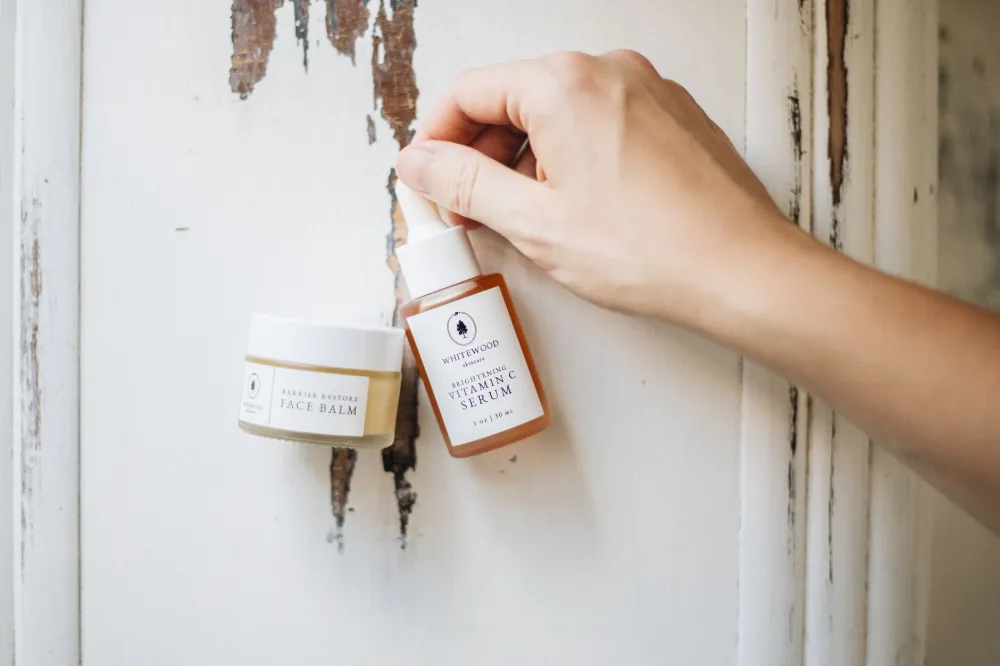
How to Repair Your Skin Barrier After Over-Exfoliating
The recovery process isn’t complicated, but it does require patience and the willingness to do less than you want to. Here’s the step-by-step approach dermatologists broadly support.

What Ingredients Actually Help During Barrier Recovery?
Not all moisturizing ingredients are equal when you’re in repair mode. Some actively support the barrier. Others are just pleasant-feeling fillers.
| Ingredient | What It Does | Evidence Level | Best Used As |
|---|---|---|---|
| Ceramides | Directly replenish lost barrier lipids | Strong dermatology support | Moisturizer, twice daily |
| Niacinamide | Boosts ceramide production, calms redness | Good research base | Serum or moisturizer (2-5%) |
| Hyaluronic acid | Draws and holds water in skin cells | Well supported for hydration | Serum or moisturizer (on damp skin) |
| Petrolatum (Vaseline) | Occlusive: seals moisture in, blocks irritants | Extensively studied, very safe | Overnight occlusive layer |
| Colloidal oatmeal | FDA-recognized skin protectant, anti-itch | FDA-approved for skin protection | Lotion or bath soak |
| Panthenol (Vitamin B5) | Promotes skin regeneration, soothing | Good supporting evidence | Moisturizer ingredient |
One ingredient worth knowing about is niacinamide, a form of vitamin B3. Research suggests it may actually stimulate the skin’s own ceramide synthesis, making it one of the rare ingredients that’s gentle enough for recovery and actively helpful at the same time. Start at a low concentration (2%) and see how your skin responds.

Myths About Skin Barrier Repair: What the Research Doesn’t Support
A lot of well-meaning but wrong advice is circulating online. Following it can slow your recovery considerably.
Myth: Your skin needs to “purge” through more exfoliation to get better. Fact: This is backwards. Purging is real and can happen when you start retinoids, but it occurs on intact skin, not broken skin. More exfoliation on a damaged barrier will extend your recovery, not speed it up.
Myth: Facial oils will fix everything. Plant oils, especially those high in linoleic acid, may support barrier function over time. During acute inflammation, though, they can clog pores or trigger reactions. Simple, plain emollients are safer right now.
Myth: You need expensive “barrier repair” serums. The truth? A drugstore ceramide moisturizer and plain petrolatum do what many $80 barrier serums claim to do. In many cases they’re better studied too. The Mayo Clinic consistently recommends simple, fragrance-free formulas for sensitive and reactive skin over complex multi-ingredient products.
Myth: Drinking more water will fix your skin barrier. Staying hydrated matters for overall health, and there’s some evidence it supports skin suppleness. Drinking extra water alone won’t repair the lipid layer, though. Topical moisturizers that seal hydration in are what actually move the needle.
What to Expect Week by Week During Recovery
Recovery timelines vary depending on how damaged the barrier is, your age, your skin type, and how consistently you stick to a gentle routine. Here’s a reasonable general picture based on what dermatologists typically describe.
- Days 1 to 3: Redness and stinging often peak, then start to calm down once irritants are removed. Your skin may look dull or feel drier than usual. This is normal.
- Days 4 to 7: Burning and stinging usually reduce noticeably. Tightness starts to ease. Some flaking may begin as the skin sheds damaged cells.
- Week 2: Redness fades for many people. Skin starts to feel more comfortable with moisturizer applied. You’ll probably feel tempted to restart actives. Don’t.
- Weeks 3 to 4: Most mild to moderate barrier damage resolves around this point. Skin feels more resilient, less reactive to temperature and products.
- Weeks 4 to 6: Full recovery for more significant damage. If symptoms persist beyond this window, a dermatologist visit is genuinely worthwhile.
If you’ve struggled with dry, reactive skin beyond an exfoliation incident, the guide on fixing your routine for dry winter skin covers longer-term barrier maintenance strategies that complement recovery.

How to Reintroduce Exfoliants Without Breaking Your Barrier Again
Once your skin feels comfortable, calm, and resilient, you can start bringing actives back. Slowly. Most people return to the same routine that caused the problem in the first place, which is the quickest way to repeat the damage.
Start with one exfoliant, used once a week only. A low-concentration lactic acid (around 5%) is generally gentler than glycolic acid and a good starting point. Give it two to three weeks at that frequency before considering bumping up to twice weekly. Reintroduce retinol separately, not at the same time as acids. Our beginner’s guide to retinol without irritation has a full reintroduction framework if that’s your next step.
The goal is to use the minimum effective frequency, not the maximum tolerable dose. Your skin doesn’t need daily exfoliation to look good. Most dermatologists suggest one to three times per week as a reasonable upper limit for most skin types, and less than that for sensitive or dry skin.
When Should You See a Dermatologist?
Most cases of over-exfoliation resolve with the approach described above. Some situations genuinely need professional input.
See a dermatologist if your skin hasn’t improved after four to six weeks of a consistent gentle routine, if you develop spreading redness or warmth that could suggest infection, if you notice weeping or crusting, or if burning and stinging are severe and interfering with daily life. Persistent skin problems sometimes signal an underlying condition like rosacea or contact dermatitis that looks similar to barrier damage but needs a different treatment approach.
A board-certified dermatologist can also prescribe low-dose topical corticosteroids for short-term use when inflammation is severe. Never self-prescribe steroid creams, and never apply over-the-counter hydrocortisone for extended periods without medical guidance, as overuse carries its own risks. If you’re unsure whether what you’re experiencing is a simple exfoliation reaction or something more, getting a professional opinion is always reasonable. You can find more general health guidance at Better Life Carez.
FAQ
The Bottom Line
Skin barrier repair after over-exfoliating comes down to one clear principle: stop doing what broke it, and give your skin the simple building blocks it needs to fix itself. Pause all exfoliants and actives immediately, switch to a fragrance-free cleanser, apply a ceramide-rich moisturizer twice daily, and use mineral SPF every morning without fail. Most people see meaningful improvement within one to two weeks and full recovery within four to six weeks. When you’re ready to reintroduce exfoliants, go slower than you think you need to, stick with one product at once-weekly frequency, and let your skin earn back each step up.
This article is for informational purposes only and is not a substitute for professional medical advice, diagnosis, or treatment. Always consult a qualified healthcare provider about your specific situation. If you experience severe or sudden symptoms, seek medical care immediately.