Most keto snacks look harmless. The trouble tends to show up around 3 PM, when the slump has you grabbing whatever’s closest, and that’s when a “healthy” bar can quietly pull you out of ketosis. This guide sorts the snacks that hold up from the ones that only look the part, and shows you how to check a label in about ten seconds.
- What Is Ketosis, and Why Do Snacks Matter?
- What Makes Keto Snacks Keep You in Ketosis?
- 15 Keto Snacks That Keep You in Ketosis
- Are Packaged Keto Snacks Worth It?
- Can One Snack Kick You Out of Ketosis?
- Keto Snack Myths vs Facts
- How Can You Make Keto Snacking Easier?
- Who Should Talk to a Doctor Before Keto?
- FAQ
- The Bottom Line
What Is Ketosis, and Why Do Snacks Matter?
Ketosis is a metabolic state, meaning a shift in how your body fuels itself. When carbs run low, your body starts burning fat for energy and makes ketones, small fuel molecules from fat that your brain and muscles can use. Snacks matter because they’re where many people overspend their daily carb allowance without noticing.
Cleveland Clinic describes the ketogenic diet as a very low-carb, high-fat way of eating. Most standard keto plans keep carbs somewhere around 20 to 50 grams a day, though the exact number that keeps a given person in ketosis depends on body size, activity level and genetics.
That’s not much room. A granola bar or a medium banana can eat up half of a 50-gram day before lunch.
Here’s the thing: your body doesn’t flip in and out of ketosis with every bite. But carb-heavy snacks repeated across a day add up, and that pattern is usually what pulls people out. New to keto? Our 14-day keto diet starter plan for beginners walks through the first two weeks step by step.
What Makes Keto Snacks Keep You in Ketosis?
A keto snack earns its place when it’s low in net carbs, moderate in protein and sized to fit your daily limit. A practical rule of thumb is about 5 grams of net carbs or fewer per snack, which leaves most of your budget for vegetables at meals.
What are net carbs?
Net carbs are total carbohydrates minus fiber, and on some labels, minus certain sugar alcohols too. Fiber passes through your gut mostly undigested, so it has little effect on blood sugar. That’s why half an avocado, with around 8 grams of total carbs, works out to only about 2 grams of net carbs.
Why pairing fat and protein works
Fat and protein digest slowly and tend to keep you full longer than refined carbs do. Pairing them is the trick: cheese with olives, eggs with avocado, tuna on cucumber rounds. You get staying power without the blood sugar spike that often sets up the next craving.
Portions still count, and nuts are the classic example. A small handful of pecans is a solid snack. Half a bag eaten straight from the pantry at 9 PM is a different story, for carbs and calories alike.
15 Keto Snacks That Keep You in Ketosis
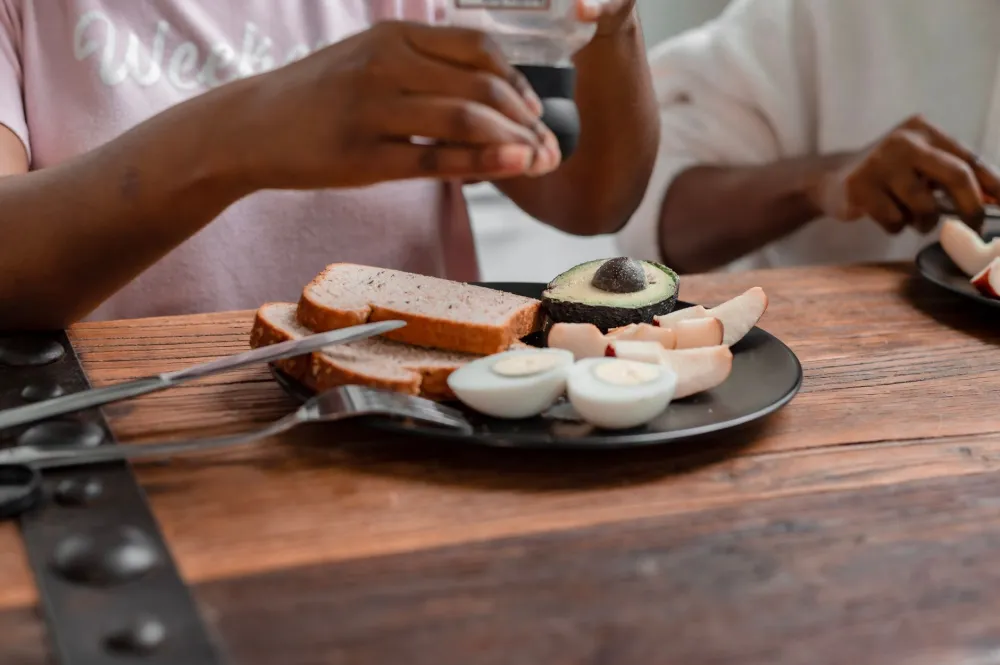
The best keto snacks are ordinary whole foods you can find at any American grocery store: eggs, cheese, nuts, olives, avocados, canned fish and crunchy low-carb vegetables. The 15 picks below are grouped by the craving they satisfy. Net carb counts are rough estimates since brands and serving sizes vary, so check labels where you can.
When you want something filling
- Hard-boiled or deviled eggs: under 1 gram of carbs per large egg. Boil a dozen on Sunday and they’ll be ready all week.
- Cheese: string cheese, cheddar cubes or baked cheese crisps are close to zero carbs. Watch shredded blends with added starch.
- Canned tuna or salmon: zero carbs and plenty of protein. Mix with mayo and eat it on cucumber slices.
- Sugar-free meat sticks: handy in a bag or glove box. Many jerky brands use sugar or teriyaki glaze, so read the label.
- Plain whole-milk Greek yogurt: roughly 3 to 5 grams per half cup (about 120 ml). Flavored versions can carry several times that.
These protein-forward options are the ones most likely to carry you from lunch to dinner without another trip to the kitchen.
When you want something crunchy or salty
Crunch is one of the things people miss most on keto, since chips and crackers are off the table. These five fill the gap well.
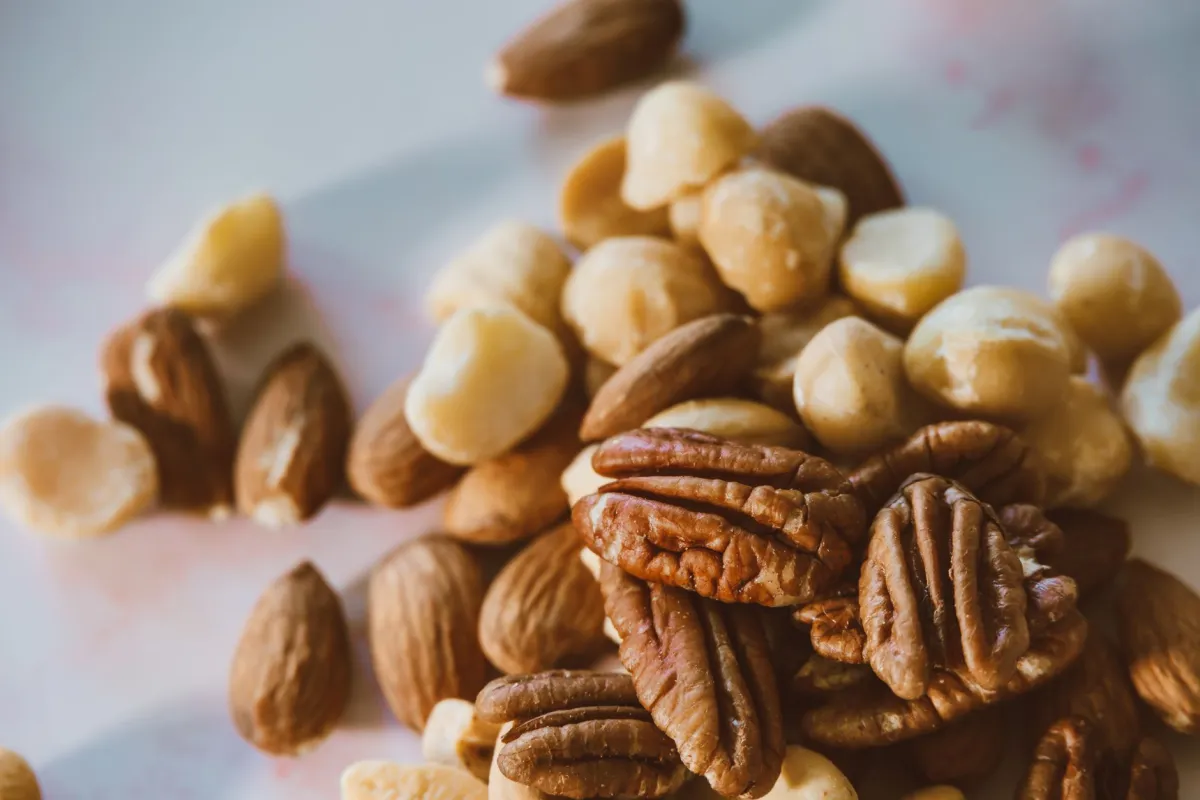
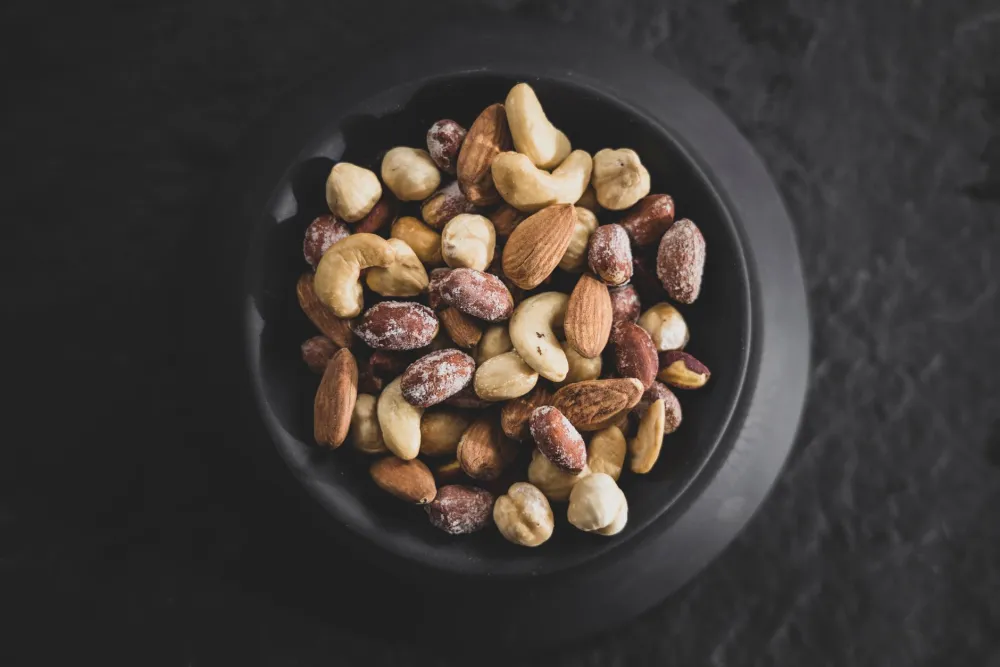
- Pecans or macadamias: about 1 to 2 grams of net carbs per ounce (28 g), among the lowest-carb nuts.
- Almonds: about 3 grams per ounce, roughly 23 nuts. Cashews and pistachios run noticeably higher.
- Pork rinds: zero carbs and satisfyingly crunchy. Some flavored versions add sugar, so pick plain or simply seasoned.
- Olives: about 1 gram for 10 large green olives, plus heart-friendly fats.
- Roasted seaweed snacks: usually about 1 gram per pack, light and salty.
When you want something fresh or sweet
Sweet cravings are real, and fighting them with willpower alone rarely lasts. A small, planned sweet snack is usually easier to live with than white-knuckling through the afternoon.
- Half an avocado: about 2 grams of net carbs. Add salt, lime and chili flakes.
- Celery with almond butter: about 4 grams for two stalks and 2 tablespoons of unsweetened nut butter.
- Cucumber with cream cheese: about 3 grams. Add smoked salmon or everything bagel seasoning.
- Raspberries with whipped cream: about 3 to 4 grams for half a cup with a dollop of unsweetened heavy cream.
- Dark chocolate (85% cacao or higher): about 2 to 5 grams for one or two squares. Lower-cacao bars climb fast.
Here’s how all 15 compare at a glance, so you can screenshot it for your next grocery run.
| Snack | Serving | Approx. net carbs | Best for |
|---|---|---|---|
| Hard-boiled egg | 1 large | Under 1 g | Staying full |
| String cheese | 1 stick | Under 1 g | Grab and go |
| Canned tuna | 3 oz (85 g) | 0 g | High protein |
| Sugar-free meat stick | 1 stick | 0 to 2 g | Travel |
| Whole-milk Greek yogurt | 1/2 cup | 3 to 5 g | Creamy craving |
| Pecans or macadamias | 1 oz (28 g) | 1 to 2 g | Crunch |
| Almonds | 1 oz (28 g) | About 3 g | Desk drawer |
| Pork rinds | 1/2 oz (14 g) | 0 g | Chip swap |
| Green olives | 10 large | About 1 g | Salty fix |
| Seaweed snacks | 1 small pack | About 1 g | Light crunch |
| Avocado | 1/2 fruit | About 2 g | Healthy fats |
| Celery and almond butter | 2 stalks, 2 tbsp | About 4 g | Afternoon slump |
| Cucumber and cream cheese | 1/2 cup, 2 tbsp | About 3 g | Fresh and cool |
| Raspberries and cream | 1/2 cup | 3 to 4 g | Dessert swap |
| 85% dark chocolate | 1 to 2 squares | 2 to 5 g | Sweet tooth |
Want these on a shopping list instead of a screen? Our keto grocery list for beginners groups them by store aisle.
Are Packaged Keto Snacks Worth It?
Packaged keto snacks can save you on travel days, but many lean on sugar alcohols, added starches and generous net carb math. That means they deserve a closer look than whole foods do. “Keto-friendly” on a box is a marketing phrase, not a regulated claim.
Sugar alcohols are sweeteners like erythritol, maltitol and sorbitol that your body only partly absorbs. They’re not all alike. Maltitol tends to raise blood sugar more than erythritol does, and it’s a common reason for bloating and diarrhea after a few too many “sugar-free” treats.
Erythritol has its own question mark. Observational research led by Cleveland Clinic scientists linked higher blood levels of erythritol with a greater risk of heart attack and stroke. Observational studies can’t prove the sweetener caused those problems, but they’re a fair reason to treat erythritol-sweetened bars as an occasional convenience, not a daily habit.
There’s a bigger picture, too. A diet built on processed keto bars and fat bombs may keep carbs low on paper while crowding out vegetables and fiber. Our breakdown of dirty keto vs clean keto explains why that difference matters for how you feel day to day.
So how do you check a package fast? Run these five checks in the snack aisle.
Packaged options aren’t forbidden. They just work best as a backup for airports and road trips, while whole-food snacks handle the daily heavy lifting.

Can One Snack Kick You Out of Ketosis?
One small, higher-carb snack usually won’t push you out of ketosis for long. A large carb load can, though, and how much it takes varies from person to person. Activity level, body size and how long you’ve been eating keto all seem to play a role.
Many people find that a single slip, like a handful of tortilla chips at a party, shows up as a dip in ketone readings for a day or so. A stack of pancakes is more likely to reset the clock entirely. Neither is a moral failure. It’s just chemistry.
Does protein kick you out of ketosis?
Moderate protein doesn’t appear to stop ketosis for most people. Your liver can make glucose (sugar) from protein, a process called gluconeogenesis, but research suggests the body regulates this based on what it needs rather than ramping up with every chicken thigh. Very large protein portions are a different matter, so moderate servings make the most sense.
How to tell if you’re still in ketosis
There are three common ways to test, and they differ in accuracy and cost:
- Blood ketone meters: the most accurate home option. Nutritional ketosis is commonly described as roughly 0.5 to 3.0 millimoles per liter (mmol/L).
- Breath meters: convenient and reusable, though readings can be less precise.
- Urine strips: cheap and useful in the first weeks, but they often become less reliable as your body adapts to using ketones.
Testing isn’t required to do keto well. Still, checking an hour or two after a new snack, a few times, can show you how your body responds to it.
Keto Snack Myths vs Facts
Most keto snack myths come from marketing, not research. The biggest one is that you need extra fat, like fat bombs or butter coffee, to stay in ketosis. In reality, ketosis mainly comes from keeping carbs low.
| Myth | Fact |
|---|---|
| “Keto” on a label means it’s safe | Label claims aren’t regulated; check carbs |
| You need fat bombs for ketosis | Low carbs drive ketosis, not extra fat |
| Any protein kicks you out | Moderate protein usually fits fine |
| Front-of-box net carbs are exact | It’s manufacturer math, not FDA-defined |
| You must snack to stay in ketosis | Snacking is optional; eat when hungry |
| Sugar-free means zero blood sugar impact | Some sweeteners still raise blood sugar |
Fat bombs, in particular, are overhyped. If you’re adding spoonfuls of coconut oil just to hit a fat percentage, you’re likely adding calories without much payoff. Eat enough fat to feel satisfied, and let the low carb count do the work.
How Can You Make Keto Snacking Easier?
The easiest way to stick with low-carb snacking is to plan a few go-to options, keep them where hunger usually strikes, and snack only when you’re physically hungry. A little prep takes most of the willpower out of the equation.
Start by asking whether you need a snack at all. Many people notice that once meals include enough protein, fat and vegetables, between-meal hunger fades on its own after a couple of weeks. If you’re snacking out of boredom or habit, a glass of water and a short walk may solve it.
When you do want a snack, set yourself up:
- Sunday prep: boil eggs, wash celery and cucumbers, and portion nuts into small containers for the week.
- Desk drawer stash: keep single-serve nut packs, pork rinds or seaweed snacks at work for the afternoon slump.
- Car or bag backup: a sugar-free meat stick or cheese crisps beat a gas station stop.
- Party strategy: at holiday gatherings like Thanksgiving, head for the cheese board, olives and shrimp cocktail (skip the sweet sauce).
Some people find that a week-by-week plan takes the guesswork out of the first month, which is often the hardest stretch.
Who Should Talk to a Doctor Before Keto?
Anyone with diabetes, kidney disease, liver or gallbladder problems, or a history of eating disorders should talk with a doctor before starting keto. So should anyone who is pregnant or breastfeeding. A registered dietitian can also help you plan snacks around your health needs.
Diabetes deserves special care. If you take insulin or other blood sugar-lowering medicines, cutting carbs sharply can drop your blood sugar too low. Some diabetes medicines, such as the SGLT2 inhibitor class, carry a risk of ketoacidosis that may rise on a very low-carb diet. Never change or stop a prescription on your own. Learn more in our overview of type 2 diabetes symptoms and treatment, then take your questions to your care team.
Some people see their LDL cholesterol, the type often called “bad” cholesterol, climb on keto, especially with lots of butter and processed meat. A simple blood test a few months in can show how your body is responding. The long-term effects of keto are still being studied, and Harvard Health offers a useful overview of the trade-offs worth weighing with a professional.
Ketosis and ketoacidosis are not the same thing. Ketoacidosis is a dangerous buildup of acid in the blood that mostly affects people with diabetes. Seek medical care promptly if you notice nausea or vomiting, stomach pain, confusion, fruity-smelling breath, rapid or difficult breathing, or chest pain. Those symptoms call for a doctor, not a snack swap.
FAQ
The Bottom Line
The keto snacks that best support ketosis are simple whole foods, like eggs, cheese, nuts, olives, avocado and canned fish, with roughly 5 grams of net carbs or fewer per serving. Check labels yourself instead of trusting a “keto” badge, and go easy on bars sweetened with maltitol or erythritol. Start today by prepping two or three go-to snacks and keeping them where hunger usually hits. If you have diabetes or another health condition, talk with your doctor before making big changes to how you eat.
This article is for informational purposes only and is not a substitute for professional medical advice, diagnosis, or treatment. Always consult a qualified healthcare provider about your specific situation. If you experience severe or sudden symptoms, seek medical care immediately.

Weight Loss and Nutrition
Browse every related article on this topic in one place.