You’ve probably seen the ads: firming creams, ice-water rinses, herbal pills promising a lift in a few weeks. Here’s what most of them skip. Your breasts contain no muscle at all, and that one fact decides what can work and what’s just marketing.
- What Keeps Breasts Lifted in the First Place?
- What Really Causes Breast Sagging?
- Can You Get Perky Breasts Naturally?
- Do Chest Exercises Lift Your Breasts?
- How Much Does Posture Change How Breasts Look?
- Does Wearing a Bra Keep Breasts Perky?
- Can Skin Care and Diet Help Breasts Stay Firm?
- A Simple 4-Week Plan for Perkier-Looking Breasts
- Perky Breast Myths the Research Doesn't Support
- When Should You See a Doctor About Breast Changes?
- FAQ
- The Bottom Line
What Keeps Breasts Lifted in the First Place?
Breasts stay lifted mainly because of skin and thin bands of connective tissue called Cooper’s ligaments, not muscle. Each breast is made of fat and glandular tissue (the lobules and ducts that make and carry milk), resting on top of the pectoralis major, the large fan-shaped muscle across your chest.
Cooper’s ligaments are fibrous strands that weave through the breast and anchor it to the skin and the tissue over your chest wall. Think of them as an internal hammock. Once they stretch over the years, they don’t bounce back the way a tired muscle recovers after a workout.
Breast ptosis is the medical term for sagging, meaning the breast and nipple sit lower on the chest than they used to. Surgeons grade it by where the nipple sits compared with the crease under the breast. It’s very common and a normal part of how bodies change, not a health problem in itself.
So natural methods aren’t trying to rebuild ligaments. They aim to strengthen what sits underneath, protect the skin on top, and ease up on the forces that stretch everything out.
What Really Causes Breast Sagging?
Sagging is driven mostly by age, gravity, hormonal shifts, and anything that repeatedly stretches the skin and ligaments, such as pregnancy and big weight swings. You can influence some of these. Others are simply part of life.
- Age and collagen loss: Your skin makes less collagen and elastin, the proteins that keep it firm and springy, as you get older.
- Menopause: As estrogen falls, glandular tissue tends to give way to softer fat, so breasts often feel less full.
- Pregnancy: Breasts enlarge during pregnancy and shrink afterward, and multiple pregnancies add up.
- Weight changes: Repeated gaining and losing stretches skin and changes how much fat fills the breast.
- Smoking: Tobacco smoke damages collagen and elastin throughout your skin.
- Breast size: Larger, heavier breasts put more constant strain on their supporting tissue.
Genetics matters too. Skin quality, breast shape, and the way tissue ages tend to run in families, which is why two friends with similar habits can look quite different at 45.
Can You Get Perky Breasts Naturally?
You can make breasts look perkier without surgery, but you can’t truly lift sagging breast tissue that way. That’s the line most products quietly blur.
Natural approaches work on everything around the breast: the muscle underneath, the posture that changes how your chest sits, the support you wear, and the health of your skin. Together, these may give a firmer, more lifted look and may help slow future sagging. They won’t move a nipple back up two inches.
Think of perky breasts as partly tissue and partly presentation. You can’t change the first much, but you have real control over the second. Here’s how the main options compare, based on what the evidence supports.
| Approach | What it may do | Evidence strength | Realistic result |
|---|---|---|---|
| Chest exercises | Build muscle under breasts | Limited, few direct trials | Slightly fuller, lifted look |
| Better posture | Raises chest position | Reasonable | Visible change right away |
| Supportive sports bra | Cuts bounce and pain | Good | Comfort, less strain |
| Sunscreen, no smoking | Protects skin collagen | Strong for skin aging | Slower skin sagging |
| Firming creams | Hydrates skin surface | Weak | Temporary smoothness at best |
| Breast pills or herbs | Claim growth or lift | Very weak | Not worth the risk |
| Surgical breast lift | Repositions tissue, removes skin | Strong | Real lift, with surgical risks |
Notice the pattern. The cheapest options on that list are also among the best supported, while the products with the boldest packaging have the least behind them.
Do Chest Exercises Lift Your Breasts?
Chest exercises can’t tighten breast tissue, but they can build the pectoral muscles underneath, which may make your chest look firmer and a little fuller. Strengthening your upper back adds a second payoff by pulling your shoulders back.
The breast rests on the pectoralis major, so a stronger, slightly thicker muscle can push the tissue forward a bit. You’re improving the shelf, not the books on it. Results tend to be subtle, and they’re easiest to notice in people with small to medium breasts.
The CDC recommends that adults do muscle-strengthening activities that work all major muscle groups at least two days a week. That’s a sensible target for chest work too, with a rest day between sessions so your muscles can recover and grow.
Moves worth adding to your week
- Incline push-ups: Start with your hands on a wall or kitchen counter, then work lower toward the floor as you get stronger.
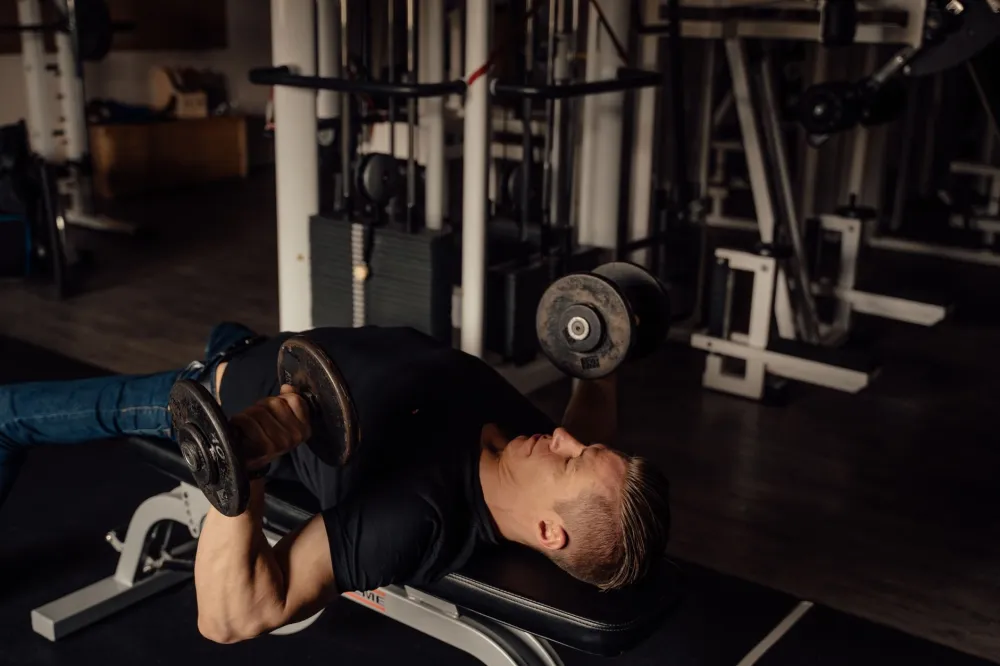
- Dumbbell chest press: Lie on the floor or a bench and press weights up from chest level until your arms are nearly straight.
- Chest fly: With a slight bend in your elbows, open your arms wide, then bring the weights together over your chest like hugging a tree.
- Dumbbell pullover: Lying down, lower one weight behind your head with your arms nearly straight, then bring it back over your chest.
- Rows: Bent-over dumbbell rows or resistance-band rows strengthen the upper back for better posture.
Aim for 2 to 3 sets of 8 to 15 reps, using a weight that feels hard by the last few reps but still lets you keep good form. New to lifting? Our breakdown of strength training vs cardio explains why muscle work deserves a regular spot in your routine.
Don’t skip your upper back
A routine that only trains the chest can slowly pull your shoulders forward, which works against the lifted look you want. Pair every pushing move with a pulling move, like rows or reverse flys, and your posture stays balanced.
No workout creates perky breasts on its own. Exercise is one piece of the puzzle, and it works best alongside posture and good support.
How Much Does Posture Change How Breasts Look?
Posture can change how perky your breasts look almost instantly. Rounded shoulders drop the whole chest lower and forward, while standing tall lifts your rib cage, and your breasts rise with it.
Try it in front of a mirror. Let your shoulders slump the way they do by mid-afternoon at a laptop, then gently draw your shoulder blades back and down and lift your breastbone about an inch. Most people see a difference within seconds, and no gym membership is required.
The hard part is holding it. Long hours of sitting tend to tighten the chest and weaken the muscles between your shoulder blades. If your workday has you hunched over a screen, these tips on desk posture and back pain from sitting all day can help you set up a workspace that works with your body.
There’s a back pain connection, too. Larger breasts add weight to the front of the body, and many people with heavy breasts feel it as an ache in the upper back, neck, or shoulders by evening. Strengthening the upper back may ease that load. If the ache settles in one spot, our guide to pain between the shoulder blades covers common causes and relief.
Does Wearing a Bra Keep Breasts Perky?
There’s no good-quality evidence that everyday bras prevent long-term sagging, and no solid proof that going braless makes breasts perkier. Support clearly matters during exercise, though, when a good sports bra reduces bounce and discomfort.
Lab studies of breast movement during running have found that breasts can move a lot, and that a well-fitted sports bra reduces both that movement and the breast pain that can come with it. It’s reasonable to think repeated, unsupported bouncing could strain Cooper’s ligaments over the years, but long-term studies proving that are still missing.
Viral claims that ditching your bra gives you perky breasts usually trace back to small, unpublished observations. Wear a bra if it feels comfortable, skip it if you prefer, and don’t expect either choice to reshape your chest.
Signs your bra doesn’t fit
- Band rides up: The band does most of the supporting, so if it climbs your back, it’s likely too loose.
- Straps dig in: Red grooves on your shoulders suggest the straps are doing the band’s job.
- Cups gap or spill: Wrinkled fabric or tissue bulging over the top means the cup size is off.
- Center lifts away: The middle piece between the cups should sit flat against your breastbone.
Breast size shifts with weight, pregnancy, and menopause, so the size you bought five years ago may not fit now. Fittings at department stores and lingerie shops are often free, and they’re worth repeating every year or two.
Can Skin Care and Diet Help Breasts Stay Firm?
Skin care and diet can’t lift breast tissue, but protecting your skin’s collagen may help the skin over your chest stay firmer as you age. The two biggest wins are sun protection and not smoking.
Ultraviolet (UV) rays from the sun break down collagen and elastin, a major cause of thin, crepey, sagging skin. The American Academy of Dermatology recommends a broad-spectrum sunscreen with a sun protection factor (SPF) of 30 or higher on skin that clothing doesn’t cover. That includes your chest when you wear a V-neck, tank top, or swimsuit.

Smoking speeds up skin aging all over the body by damaging collagen and reducing blood flow to the skin. Quitting is one of those rare changes that helps your skin and nearly every other part of your health at once.
What about firming creams? Moisturizers can make skin look smoother for a few hours. Retinoids, the vitamin A creams dermatologists prescribe, have decent evidence for softening fine lines on the face, but no cream has been shown to lift breasts. Bust-firming lotions mostly sell hope in a pump bottle.
Food plays a supporting role. Your body needs protein and vitamin C to make collagen, so meals with enough protein plus foods like citrus, bell peppers, strawberries, or broccoli support normal skin health. Collagen supplements have mixed, early evidence for skin elasticity and none specific to breast sagging. Supplements also aren’t approved by the FDA before they hit the shelves, so ask a pharmacist before adding one if you take any medications.
Keep your weight steady
Big up-and-down weight swings stretch skin and change how much fat fills the breast. If you want to lose weight, a gradual pace paired with strength training is easier on your skin than rapid loss. Because breasts are partly fat, losing body fat often makes them smaller, which looks perkier on some people and flatter on others.
A Simple 4-Week Plan for Perkier-Looking Breasts
The most realistic route is stacking a few small habits, starting with the ones that pay off fastest. Here’s a four-week starter plan you can begin this week, adding one habit at a time so it sticks.
What should you expect? Posture changes show up the day you practice them. Strength gains often appear first as easier reps over the first few weeks, while visible muscle changes usually take two to three months of steady training. Skin protection is a long game, so think of it as looking after the version of you ten years from now.
Perky Breast Myths the Research Doesn’t Support
Most viral tricks for perky breasts have no scientific support, and a few carry real risks. Here’s what the evidence doesn’t back up.
- Ice-water splashes firm breasts: Cold briefly makes skin and nipples contract, but the effect fades within minutes.
- Massage and oils lift breasts: Massage can feel relaxing, but there’s no evidence it shortens stretched ligaments or tightens skin.
- Herbal enhancement pills work: Products with ingredients like fenugreek or wild yam lack good evidence, may have hormone-like effects, and aren’t tightly regulated.
- Sleeping on your back prevents sagging: No research shows that sleep position changes breast shape over time.
- Exercise can reverse sagging: Building muscle underneath may improve the look, but it can’t reposition breast tissue.
If a product promises a cup-size lift in weeks, that’s your cue to keep your money. A supportive bra and a set of dumbbells will do more for less.
When Should You See a Doctor About Breast Changes?
See a doctor promptly for any new lump, skin dimpling, nipple changes, discharge, or a breast that suddenly looks different from the other. Normal sagging happens slowly over years, while sudden changes deserve a proper exam.
Use this quick self-check. Book an appointment if you notice any of the following:
- A new lump: Any lump or thickening in the breast or armpit.
- Skin changes: Dimpling, puckering, or an orange-peel texture.
- Nipple changes: A nipple that newly turns inward, or discharge, especially if it’s bloody.
- Signs of inflammation: Redness, warmth, or swelling.
- Persistent pain: Pain in one spot that doesn’t come and go with your cycle.
Health organizations, including the Mayo Clinic, advise having any new breast lump checked, even though most lumps turn out to be noncancerous. Chest pain or trouble breathing calls for medical care right away, not more reading.

If sagging simply bothers you, a board-certified plastic surgeon can walk you through your options. A breast lift (mastopexy) is the only approach that physically repositions breast tissue and removes extra skin, though it carries surgical risks and leaves scars. Some clinics market a vampire breast lift using PRP, but the evidence is limited and it doesn’t do what a surgical lift does.
Heavy breasts that cause ongoing back, neck, or shoulder pain, deep strap grooves, or rashes underneath are worth raising with your doctor, since a breast reduction may be an option. For more on breast health at every stage, our women’s health guide is a good next stop.
FAQ
The Bottom Line
Natural methods can’t undo breast sagging, but they may help your breasts look perkier and may slow future changes. The best-supported steps are chest exercises paired with upper-back work, better posture, a well-fitted sports bra, daily sunscreen, and not smoking. Skip the creams, pills, and ice-water tricks. Start with a bra check and a posture reset today, and see a doctor for any sudden or one-sided breast change.
This article is for informational purposes only and is not a substitute for professional medical advice, diagnosis, or treatment. Always consult a qualified healthcare provider about your specific situation. If you experience severe or sudden symptoms, seek medical care immediately.

Women's Health
Browse every related article on this topic in one place.