
Sleep apnea rarely feels dramatic from the inside. It shows up as 3 PM fog at your desk, a dull headache waiting when the alarm goes off, and a partner who keeps nudging you because your snoring stopped, then restarted with a snort. Here’s how to tell which signs deserve a doctor’s visit and which ones are easy to write off.
- What is sleep apnea, exactly?
- What are the most common sleep apnea symptoms?
- Which sleep apnea symptoms should you never ignore?
- Do sleep apnea symptoms look different in women?
- What causes sleep apnea, and who is at risk?
- Is sleep apnea dangerous if left untreated?
- Could it be sleep apnea? A quick self-check
- Sleep apnea myths vs facts
- How is sleep apnea diagnosed?
- What treatment works best for sleep apnea?
- What can you do about sleep apnea symptoms tonight?
- When should you see a doctor about sleep apnea symptoms?
- FAQ
- The Bottom Line
What is sleep apnea, exactly?
Sleep apnea is a sleep disorder in which your breathing repeatedly stops or becomes very shallow while you sleep, sometimes dozens of times an hour. Each pause drops the oxygen in your blood and jolts your brain awake just long enough to restart your breathing. Most people never remember a thing.
The most common form is obstructive sleep apnea (OSA). It happens when the soft tissues at the back of your throat relax and collapse, partly or fully blocking your airway. A less common type, central sleep apnea, starts when the brain doesn’t send the right signals to the muscles that control breathing. Some people have a mix of both.
Doctors rate severity with the apnea-hypopnea index (AHI). That number counts full breathing pauses (apneas) and shallow-breathing episodes (hypopneas) per hour of sleep. For adults, 5 to 14 events an hour is generally considered mild, 15 to 29 is moderate, and 30 or more is severe.
So why does this matter? Those tiny wake-ups chop your night into pieces. You can spend eight hours in bed and still wake up feeling like you never really slept.
What are the most common sleep apnea symptoms?
The most common signs fall into two groups: nighttime symptoms that other people often notice first, and daytime symptoms you feel yourself. The Mayo Clinic lists loud snoring, breathing pauses observed by another person, gasping during sleep, morning headaches, dry mouth on waking and excessive daytime sleepiness among the key signs.
Nighttime signs
You’re asleep for these, so you usually hear about them secondhand. A partner, a roommate or a family member down the hall is often the first to sound the alarm.
- Loud, frequent snoring: Often loud enough to hear through a closed door, and frequently worse when you sleep on your back.
- Pauses someone else sees: Several seconds of silence, sometimes with a still chest, followed by a gasp or snort.
- Waking up choking or gasping: A sudden jolt awake with the feeling that you couldn’t catch your breath.
- Restless, sweaty sleep: Lots of tossing and turning, tangled sheets and night sweats.
- Frequent bathroom trips: Waking more than once a night to urinate, called nocturia, is associated with sleep apnea.
Daytime signs
Daytime signs are the ones most people blame on a busy schedule. You might wake with a dry mouth or scratchy throat from breathing through your mouth all night, or a headache that fades by mid-morning. Excessive daytime sleepiness is the big one: nodding off in meetings, during a show you were enjoying, or at a red light.
Other clues include trouble focusing, memory slips, irritability, low mood and a lower sex drive. If you’ve been fighting afternoon energy crashes with a third cup of coffee and nothing changes, your sleep may be the real culprit.

Here’s a quick way to sort the signs by when they show up and who tends to catch them.
| Symptom | When it shows up | Who usually notices |
|---|---|---|
| Loud, frequent snoring | Night | Bed partner or family |
| Breathing pauses | Night | Bed partner |
| Gasping or choking | Night | You or your partner |
| Frequent nighttime urination | Night | You |
| Dry mouth or sore throat | On waking | You |
| Morning headache | On waking | You |
| Heavy daytime sleepiness | Daytime | You and coworkers |
| Irritability, poor focus | Daytime | You and family |
No single symptom tells the story. A cluster does. Loud snoring, daytime sleepiness and a partner who has watched you stop breathing add up to a pattern worth taking seriously.
Which sleep apnea symptoms should you never ignore?
Three signs deserve prompt attention: witnessed breathing pauses, waking up gasping or choking, and falling asleep when you need to stay alert, especially behind the wheel. Together, they suggest your sleep is disrupted enough to affect both your safety and your heart.
Drowsy driving is the most urgent concern. The CDC warns that drowsy driving can be deadly and lists untreated sleep disorders such as obstructive sleep apnea among the factors that raise the risk. If you’ve drifted out of your lane or missed an exit, stop driving while drowsy and schedule a visit soon.
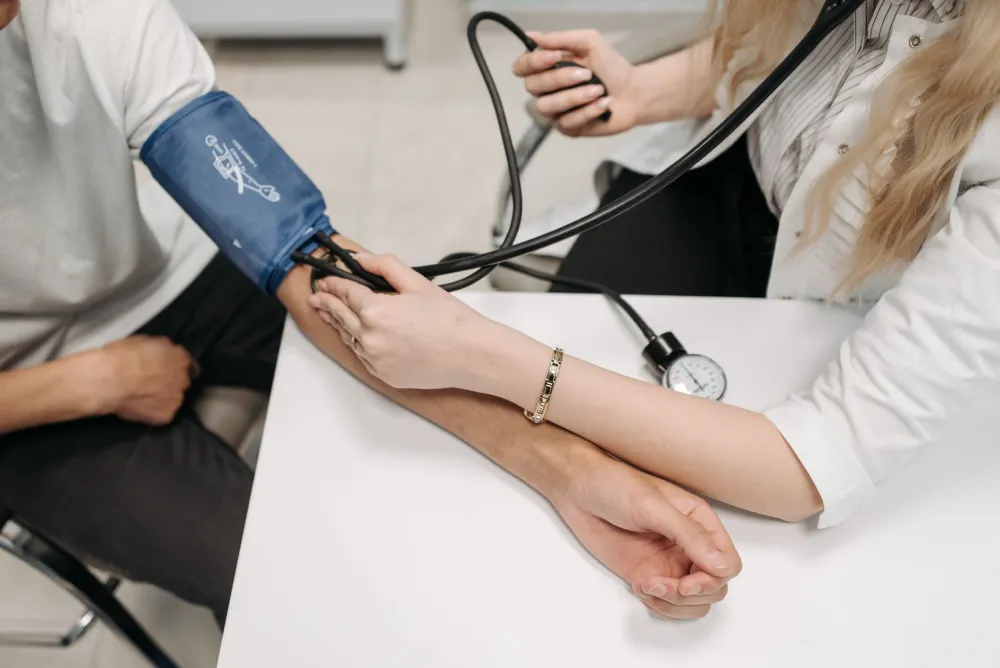
Blood pressure is the other big clue. Pressure that stays high despite medication is a well-known flag, and many doctors screen for sleep apnea when they see it. A diagnosis of atrial fibrillation (an irregular heart rhythm) is another reason to ask.
Do sleep apnea symptoms look different in women?
Yes, and that’s part of the problem. In women, sleep apnea often looks less like the textbook picture. Research suggests women more often report insomnia, fatigue, morning headaches, anxiety or low mood, and less often report loud snoring with witnessed pauses. That can lead to the problem being mistaken for stress or depression.
Risk tends to rise after menopause, when hormone changes may affect the muscles that help keep the airway open. New or louder snoring during pregnancy is also worth raising with your OB-GYN rather than guessing at the cause. Our women’s health guide covers other symptoms that are easy to brush off.
Kids can have sleep apnea too, often linked to enlarged tonsils and adenoids. Watch for snoring, mouth breathing, restless sleep, bedwetting and behavior problems that can look like attention issues. If you notice these, bring them up with your child’s pediatrician.
What causes sleep apnea, and who is at risk?
Obstructive sleep apnea happens when the upper airway is narrow or floppy enough to collapse during sleep. Anything that crowds the throat, relaxes its muscles or blocks the nose can make that collapse more likely.
- Excess weight: Fat around the neck and upper airway can narrow the space air moves through.
- Your anatomy: A thick neck, large tonsils, a large tongue or a smaller, set-back jaw can all crowd the airway.
- Age and sex: Risk climbs with age, and men are diagnosed more often, although women catch up after menopause.
- Nasal congestion: Chronic stuffiness from allergies or a deviated septum may make breathing at night harder.
- Alcohol, sedatives and smoking: Alcohol and sedating medicines relax throat muscles, and smoking can inflame the airway.
- Family history and health conditions: Sleep apnea tends to run in families and often shows up alongside high blood pressure and type 2 diabetes.
None of these factors guarantees you’ll develop sleep apnea, and missing all of them doesn’t rule it out. Plenty of slim, young people have it, often because of the shape of their jaw or airway. That’s why symptoms matter more than appearance.
Is sleep apnea dangerous if left untreated?
Untreated obstructive sleep apnea is associated with serious long-term problems, including high blood pressure, heart disease, atrial fibrillation, stroke and type 2 diabetes. It’s also linked to depression, poor concentration and a higher risk of car and workplace accidents.
Researchers think the repeated drops in oxygen, along with the stress-hormone surge that comes with each mini-awakening, strain the heart and blood vessels over time. Picture your body hitting a panic button dozens of times a night, every night, for years.
The encouraging part? Treatment often improves daytime sleepiness and quality of life, and for some people it may help lower blood pressure. Sleep apnea can also complicate anesthesia, so tell your surgical team if you have it or suspect you might.
Could it be sleep apnea? A quick self-check
The STOP-BANG questionnaire is one of the screening tools doctors commonly use to estimate the risk of obstructive sleep apnea. It’s eight yes-or-no questions you can run through at home in about a minute. Count your yes answers.
| Letter | What it asks |
|---|---|
| S (Snoring) | Do you snore loudly? |
| T (Tired) | Often tired or sleepy by day? |
| O (Observed) | Has anyone seen you stop breathing? |
| P (Pressure) | Treated for high blood pressure? |
| B (BMI) | Body mass index (BMI) over 35? |
| A (Age) | Are you over 50? |
| N (Neck) | Neck over about 16 inches (40 cm)? |
| G (Gender) | Are you male? |
Generally, the more yes answers, the higher the risk, and a score of 3 or more is often where doctors want to look closer. A low score isn’t a free pass if you still have loud snoring and daytime sleepiness. Think of this as a conversation starter for your appointment, not a diagnosis.
Sleep apnea myths vs facts
The biggest myth is that sleep apnea only hits overweight, middle-aged men who snore like a freight train. In reality, it affects women, children and people of every body size. Some people with it barely snore at all.
- Myth: Snoring always means sleep apnea. Fact: Many people snore without having apnea. Loud snoring combined with pauses, gasping or daytime sleepiness is what raises concern.
- Myth: No snoring, no problem. Fact: Some people, especially women and those with central sleep apnea, snore lightly or not at all.
- Myth: A nightcap helps you sleep. Fact: Alcohol relaxes the throat muscles and may make breathing pauses worse, even if it helps you doze off faster.
- Myth: Mouth tape fixes it. Fact: The evidence for mouth taping is limited, and it may quiet the snoring while the breathing problem continues. It can be risky if your nose is blocked.
- Myth: CPAP is the only option. Fact: CPAP is the best-studied treatment, but oral appliances, positional therapy and other approaches work well for some people.
Quieter isn’t the same as safer. Over-the-counter anti-snoring gadgets may reduce noise, but only a sleep study can show whether your breathing is still stopping.
How is sleep apnea diagnosed?
Sleep apnea is diagnosed with a sleep study, either a home test or an overnight test in a sleep lab called polysomnography. Symptoms can point toward the condition, but only measured breathing and oxygen data can confirm it and show how severe it is. Here’s what the process usually looks like.
Many insurance plans cover home testing when symptoms suggest moderate to severe obstructive sleep apnea, though the rules vary, so check with your plan before booking. If a home test comes back normal but symptoms continue, ask whether an in-lab study makes sense, since home tests can miss some milder cases.
What treatment works best for sleep apnea?
For moderate to severe obstructive sleep apnea, continuous positive airway pressure (CPAP) is the best-studied first-line treatment. A bedside machine sends gentle, steady air through a mask to hold your airway open while you sleep. It doesn’t cure the condition, but it can control symptoms on the nights you use it.
Other options work well for the right person. The table shows where each one usually fits.
| Option | Often suited for | What to know |
|---|---|---|
| CPAP | Moderate to severe OSA | Most effective; mask takes adjusting |
| Oral appliance | Mild to moderate OSA | Custom-fit by a dentist |
| Positional therapy | Apnea mainly on your back | Helps you stay on your side |
| Weight loss | OSA with excess weight | May reduce severity, not always cure |
| Tirzepatide (Zepbound) | Moderate to severe OSA, obesity | FDA-approved for OSA with obesity; prescription only |
| Nerve stimulation implant | People who can’t use CPAP | Surgical; strict eligibility rules |
Surgery to remove enlarged tonsils or reshape the airway suits people with specific anatomy, and it’s a common step for many children. Your sleep specialist, an ear, nose and throat (ENT) doctor or a dentist trained in sleep medicine can help match an option to your situation.
What the first two weeks of CPAP often feel like
The first few nights can feel strange. The mask may feel awkward, you might wake to find it pulled off, or you could deal with a dry nose and air leaks. That’s common, and it often gets easier with a better mask fit, a heated humidifier or a lower starting pressure that slowly ramps up.
Many people say they feel more alert during the day by the end of the first couple of weeks, though the timeline varies. If you’re still struggling, don’t quietly give up. Call your sleep team or equipment supplier, because a different mask style often solves the problem.
What can you do about sleep apnea symptoms tonight?
A few habits may ease mild symptoms while you wait for an appointment, but none of them replaces a proper evaluation. Treat these as support, not treatment.
- Gather evidence: Ask your partner to note pauses and gasps, or record a night of audio on your phone to play for your doctor.
- Sleep on your side: Back sleeping lets the tongue and soft tissues fall backward, and a body pillow behind you may help you stay put.
- Skip alcohol close to bedtime: A few alcohol-free hours before bed may reduce throat relaxation.
- Clear your nose: A saline rinse or spray may help, and these sinus congestion remedies cover other options worth trying.
- Keep a steady schedule: Regular bed and wake times, a cool dark room and other sleep hygiene habits support better rest overall.
- Pull over when drowsy: Coffee and a cracked window won’t fix it, so stop somewhere safe and rest.
Weight matters too. For people carrying extra weight, losing even a modest amount may reduce the severity of obstructive sleep apnea, and steady changes tend to stick better than crash efforts. Our weight loss and nutrition guide covers sustainable approaches, and a doctor or registered dietitian can help you set realistic goals.
Check with your doctor or pharmacist before using sleep aids, including over-the-counter ones. Some sedating medicines may relax the airway further and make breathing pauses worse.
When should you see a doctor about sleep apnea symptoms?
See your doctor if you snore loudly most nights and also feel sleepy during the day, or if anyone has seen you stop breathing in your sleep. Those two patterns together are the clearest reason to ask about a sleep study.
Book an appointment soon if you’re falling asleep while driving or at work, waking up gasping, getting morning headaches most days, or seeing blood pressure that won’t come down despite treatment. A diagnosis of atrial fibrillation, heart failure or a past stroke is another reason to raise these symptoms with your care team.
Your primary care doctor is a good place to start. They can order a home test or refer you to a sleep specialist, and they may bring in an ENT doctor or a dentist depending on what they find. Persistent symptoms deserve a real medical evaluation, not months of waiting to see if they fade.
FAQ
The Bottom Line
Sleep apnea often hides in plain sight as loud snoring, morning headaches and a tiredness coffee can’t touch. The signs you shouldn’t ignore are witnessed breathing pauses, waking up gasping and dozing off while driving. Start by asking a partner what they hear at night, running the STOP-BANG check and taking both to your doctor. It’s common and often very manageable, and better sleep may be closer than you think.
This article is for informational purposes only and is not a substitute for professional medical advice, diagnosis, or treatment. Always consult a qualified healthcare provider about your specific situation. If you experience severe or sudden symptoms, seek medical care immediately.

Everyday Health and Wellness
Browse every related article on this topic in one place.