Most love bites fade within one to two weeks, and no viral trick will change that much. How fast yours goes depends mostly on how deep the bruise sits. Got a job interview, Thanksgiving dinner with the relatives, or picture day coming up? Here’s how long a hickey healing time usually runs and what you can actually do about it.
- What Is a Hickey, Exactly?
- How Long Does a Hickey Last?
- Hickey Healing Time, Day by Day
- What Slows Down Hickey Healing Time?
- What Speeds Up Hickey Healing?
- Do Home Remedies for Hickeys Work?
- Hickey Myths That Waste Your Time
- Can a Hickey Be Dangerous?
- When Should You See a Doctor About a Hickey?
- FAQ
- The Bottom Line
What Is a Hickey, Exactly?
A hickey is a bruise caused by suction, not by a bump or a hit. When someone sucks or nibbles on your skin, the pressure breaks tiny blood vessels called capillaries. Blood leaks into the tissue around them, gets trapped, and shows up as a red or purple mark.
That makes it the same basic thing as the bruise you get from walking into a coffee table. Doctors sometimes use the word ecchymosis, which just means blood that has escaped from vessels into the skin. Hickeys often look speckled because suction ruptures many small capillaries at once, leaving tiny dots of blood called petechiae.
The neck is the classic spot for a reason. The skin there is thin, and blood vessels sit close to the surface, so even light suction leaves a mark you can see. Thin skin makes a hickey more noticeable, though it doesn’t necessarily make it heal more slowly.
Like any bruise, a hickey is your body’s cleanup project. The Cleveland Clinic explains that bruises change color as your body breaks down and reabsorbs the trapped blood. That same process sets the pace for your love bite.

How Long Does a Hickey Last?
Most hickeys last somewhere between 5 days and 2 weeks. A faint pink mark may be gone in three or four days. A deep purple one can hang around closer to two weeks, and occasionally a bit longer.
So what sets your hickey healing time? Mostly how much blood ended up under your skin. A quick, gentle love bite leaks a little blood near the surface, and that clears fast. A longer, harder one breaks more capillaries and leaves a bigger pool for your body to mop up.
Here’s the thing: your body doesn’t fade a hickey the way sunlight fades a T-shirt. Immune cells called macrophages act like a cleanup crew. They swallow debris and gradually break down the pooled blood, carrying it away on their own schedule. No product has been shown to reliably speed up that process.
One honest caveat. No solid research has measured hickey healing time on its own. The 5-day-to-2-week range comes from how bruises in general behave, which is the best guide available and matches what most people see in the mirror.
Hickey Healing Time, Day by Day
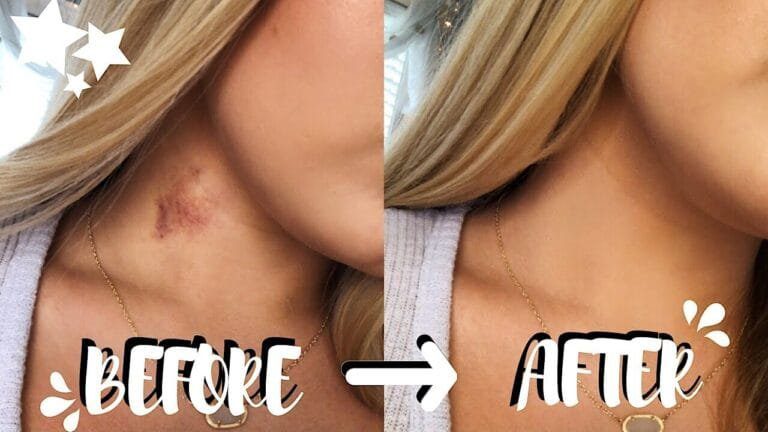
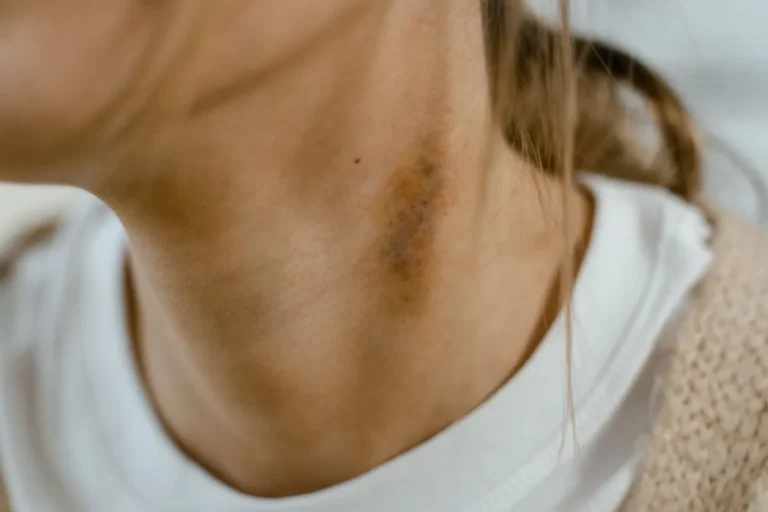
A hickey usually moves through a predictable color sequence: red, then dark purple or blue, then green, then yellow or light brown before it vanishes. Each shade marks a different stage of your body breaking down the trapped blood.
The colors come from hemoglobin, the iron-rich protein that makes blood red. As it loses oxygen, the mark darkens. Your body then converts hemoglobin into biliverdin, a green pigment, and later into bilirubin, a yellow pigment, before clearing it out. MedlinePlus, the National Institutes of Health’s consumer health library, describes this same color progression for ordinary bruises.
Use the timeline below as a rough map. Your own love bite may move faster or slower depending on how deep it goes.
| Timeframe | What it looks like | What’s happening | What helps most |
|---|---|---|---|
| Day 0 to 2 | Red or pink, maybe tender | Blood leaking from capillaries | Cold compress |
| Day 2 to 4 | Dark purple or blue | Blood losing oxygen | Gentle warmth, hands off |
| Day 5 to 8 | Green tinge at edges | Hemoglobin becoming biliverdin | Warmth and patience |
| Day 7 to 14 | Yellow or light brown | Bilirubin being cleared | Usually nothing needed |
The green and yellow stages are good news. They mean your body is well into the cleanup, and the mark is much easier to cover with concealer or a collar at that point.
What Slows Down Hickey Healing Time?
The biggest factors are how much force was involved and how fragile your blood vessels are. Deep suction, repeat marks on the same spot, and certain medications can all stretch out the timeline.
Some of these you can control and some you can’t. If your love bites always seem to stick around longer than a friend’s, one of these is probably part of the reason:
- Intensity: Longer, harder suction breaks more capillaries, which means more blood to clear.
- Age and skin thickness: Skin thins and blood vessels grow more fragile with age, so older adults tend to bruise more easily.
- Medications and supplements: Blood thinners, aspirin, and NSAIDs such as ibuprofen may make bruising more likely, and so may some supplements like fish oil or ginkgo.
- Poking and rubbing: Pressing on the mark to check it, or massaging it hard, can break more capillaries.
- Nutrient gaps: Low levels of vitamin C or vitamin K are uncommon in the US but can make bruising easier.
A quick note on medication: if you take a blood thinner or another prescribed drug, don’t stop it to make a hickey fade faster. If you’re bruising more than you expect on a medication, bring it up with your doctor or pharmacist.
What Speeds Up Hickey Healing?
Cold in the first day or two, gentle warmth after that, and leaving the area alone are the approaches with the most sensible backing. They won’t make a hickey vanish by morning. They may keep it from darkening and help it fade a bit sooner.
Think of these as backing up the cleanup your body is already doing. Here’s a realistic plan that may trim your hickey healing time without causing extra damage:
Realistically, these steps work at the margins. Some people feel the mark looks lighter after a few days of warmth, but this is anecdotal, and a hickey will still move through its color stages. Need it hidden quickly? Our guide to hiding a hickey with makeup and clothing covers color-correcting concealer and the turtleneck strategy.
Do Home Remedies for Hickeys Work?
A few remedies have weak but real research behind them for bruises in general. Most viral hacks have none. None of these has been studied on hickeys specifically, so treat any benefit as modest at best.
Arnica gel
Arnica is a plant extract sold as a gel or cream for bruises. Some small trials, mostly looking at bruising after cosmetic procedures, suggest it may help marks fade slightly faster. Other studies found little difference. Use it only on unbroken skin, and don’t take arnica by mouth unless a professional has told you to, since the plant can be toxic when swallowed.
Vitamin K cream
Topical vitamin K gets a lot of buzz for bruising. The research is small and mixed. Some studies show a modest benefit for bruises after laser treatments, and others show none. It’s unlikely to hurt, but don’t expect a dramatic change.
Aloe vera
Aloe feels soothing on tender skin, and that’s about where the evidence stops. There’s no good research showing it clears trapped blood any faster.
Bromelain and pineapple
Bromelain is an enzyme found in pineapple, studied mostly for swelling after surgery. Evidence for bruises is limited. Supplements aren’t tightly regulated by the Food and Drug Administration (FDA), and bromelain may interact with blood thinners, so check with a pharmacist first. Eating pineapple is fine, but it won’t target a love bite.
Our take: arnica and vitamin K are reasonable to try if you already have them on hand. Cold and warm compresses beat both on cost and simplicity. For a full breakdown of fast fixes, see how to get rid of a hickey fast.
Hickey Myths That Waste Your Time
Most “erase a hickey in five minutes” tricks either do nothing or make the bruise worse. The scraping and hard-rubbing ones cause the most trouble.
These hacks spread fast online because they sound clever. Here’s how they hold up against basic skin biology:
| Myth | Reality |
|---|---|
| Scraping with a coin removes it | Scraping can break more capillaries |
| Toothpaste dries it out | No evidence, and it may irritate |
| A comb spreads the blood away | Combing can add new bruising |
| A frozen spoon erases it | It only works as a cold pack |
| Rubbing alcohol dissolves it | It dries and irritates skin |
| A hickey fades in one day | Most take at least several days |
The logic behind the coin and comb tricks is that you can spread the blood out so the mark looks lighter. The problem is that the same force that spreads blood can rupture fresh capillaries, which may lengthen your hickey healing time. We’d skip those two entirely.
The frozen spoon isn’t harmful, to be fair. It’s just a cold compress in a kitchen-drawer costume. It helps in the first day or two and does little after that.
Can a Hickey Be Dangerous?
For nearly everyone, a hickey is a harmless, temporary bruise that heals on its own. A very small number of medical case reports have linked forceful suction on the neck to blood clots, but this is extremely rare.
Infection is also unlikely unless teeth broke the skin. If there’s a small cut, wash it gently with soap and water and keep it clean like any minor scrape. Our skin and beauty guide has more on caring for minor skin irritation.
There’s one more kind of safety worth mentioning. A hickey given without your consent, or marks that are part of a pattern of rough or controlling behavior, deserve to be taken seriously. Talking to someone you trust, a healthcare provider, or a confidential service such as the National Domestic Violence Hotline is a reasonable first step.
When Should You See a Doctor About a Hickey?
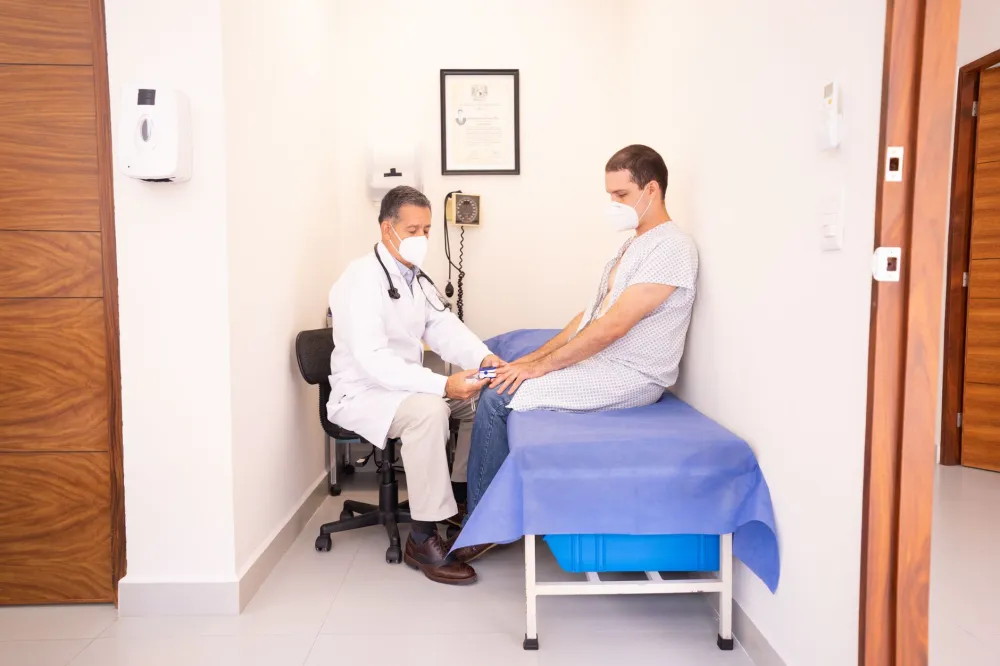
See a doctor if a hickey hasn’t started fading after about two weeks, keeps growing, or comes with other unusual symptoms. These can point to a bleeding or clotting issue that has nothing to do with the love bite itself.
A normal hickey healing time includes steady color changes. If yours is stuck on the same dark shade, or you notice any of the following, get it checked:
- No fading after two weeks: Especially if the mark is getting darker or larger instead of lighter.
- A firm, painful lump: This could be a hematoma, a larger pocket of pooled blood under the skin.
- Easy bruising elsewhere: Frequent unexplained bruises, nosebleeds, or bleeding gums alongside the hickey.
- Signs of infection: Spreading redness, warmth, pus, or a fever.
- Heavy bruising on medication: Particularly if you recently started a blood thinner.
Some symptoms mean you should skip the blog and get emergency care by calling 911. These include a sudden severe headache, neck pain with numbness or weakness on one side of the body, trouble speaking, or sudden vision changes. They’re rare after a hickey, but they need immediate attention whatever the cause.
For marks that are simply slow and stubborn, some dermatologists offer vascular laser treatments that may speed up bruise fading. These are usually paid out of pocket and rarely needed for something that will clear on its own. The American Academy of Dermatology has a directory if you want to find a board-certified dermatologist near you.
FAQ
The Bottom Line
Most hickeys fade within 5 days to 2 weeks, and the shifts from purple to green to yellow mean your body is doing its job. Use a wrapped cold pack for the first 24 to 48 hours, switch to warm compresses after that, and resist the urge to rub, scrape, or poke. Skip the coin, comb, and toothpaste hacks. If a mark isn’t fading after two weeks or you’re bruising easily elsewhere, see a doctor.
This article is for informational purposes only and is not a substitute for professional medical advice, diagnosis, or treatment. Always consult a qualified healthcare provider about your specific situation. If you experience severe or sudden symptoms, seek medical care immediately.

Skin and Beauty
Browse every related article on this topic in one place.