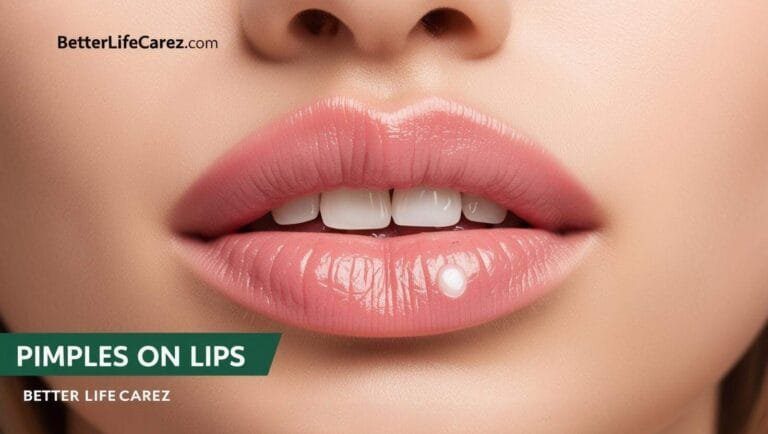

You notice a cluster of tiny pale bumps along your lip line and immediately start spiraling. Is it a pimple? A cold sore? Something worse? Before you reach for a pin or panic-Google yourself into a diagnosis at midnight, take a breath. The two most common culprits are Fordyce spots and regular pimples, and once you know what to look for, you can usually tell them apart in under a minute.
- What Are Fordyce Spots, Exactly?
- What Does a Pimple on the Lip Actually Look Like?
- Fordyce Spots vs Pimples on the Lip: Side-by-Side Comparison
- What About Cold Sores?
- Do Fordyce Spots Need Any Treatment?
- How to Handle a Pimple Near Your Lip
- Common Myths About Fordyce Spots
- When Should You Actually See a Doctor?
- A Quick Self-Check You Can Do Right Now
- FAQ
- The Bottom Line
What Are Fordyce Spots, Exactly?
Fordyce spots are ectopic sebaceous glands – which just means oil glands that ended up in the wrong place. Normally, sebaceous glands sit next to a hair follicle. Fordyce spots form where there is no hair follicle, most often along the border of the lips, the inner cheeks, and sometimes the genitals. They are not caused by an infection, a virus, or anything you did wrong. They are just a normal anatomical quirk.
The American Academy of Dermatology classifies them as a benign condition, not a disease. Research suggests they appear in somewhere between 70 and 80 percent of adults. They tend to become more visible after puberty when sebaceous glands become more active.
What Does a Pimple on the Lip Actually Look Like?
A pimple forms when a pore gets clogged with oil, dead skin cells, and sometimes bacteria. On and around the lip, this can happen just like it does on your chin or forehead. Pimples can show up as a red, raised bump, a whitehead with a visible pus-filled top, or a deeper, more painful nodule that never quite comes to a head.
The key difference from a Fordyce spot is the timeline and how it feels. A pimple appears relatively quickly, often overnight or over a few days. It usually feels tender when you press it. Fordyce spots, by contrast, have likely been there for months or years without changing much. They do not hurt. They do not grow quickly. They just sit there, looking slightly pearlescent against your skin.
Fordyce Spots vs Pimples on the Lip: Side-by-Side Comparison
The fastest way to sort this out is to compare the key features head to head. Use this table as a quick reference, but remember it is not a substitute for a proper medical evaluation if you are genuinely unsure.
| Feature | Fordyce Spots | Lip Pimple |
|---|---|---|
| Color | Pale yellow or white | Red, or red with white top |
| Size | 1-3 mm, very small | Varies; can grow larger |
| Pain or tenderness | None | Usually tender or sore |
| Number | Clusters of many bumps | Usually one or two |
| How fast it appeared | Gradual; often always there | Develops over hours or days |
| Location on lip | On the lip border or inner lip | Near the lip, on surrounding skin |
| Contagious? | No | No (unless infected) |
| Goes away on its own? | Rarely; tends to be permanent | Yes, usually in 1-2 weeks |

What About Cold Sores?
This is the question a lot of people are actually asking, even if they type “Fordyce spots vs pimples” into the search bar. Cold sores, caused by the herpes simplex virus type 1 (HSV-1), are a completely different category from either Fordyce spots or pimples.
Cold sores typically start with a tingling, burning, or itching sensation around the lip before any visible bump appears. Within a day or two, a cluster of small fluid-filled blisters forms, usually right on or just outside the lip border. They then crust over and heal in roughly 7 to 10 days. According to the Mayo Clinic, HSV-1 infection is extremely common, affecting a large proportion of adults worldwide. If the bump came with that telltale tingle, and especially if this has happened before in the same spot, a cold sore is more likely than either of the other two.
Do Fordyce Spots Need Any Treatment?
The honest answer is no, not medically. Fordyce spots are completely harmless. They carry no health risk, they are not contagious, and they will not turn into anything dangerous. Most dermatologists recommend leaving them alone entirely.
That said, some people find them cosmetically bothersome, especially when they are quite prominent. If that is the case, a board-certified dermatologist can discuss options. Treatments that have been studied include laser therapy (specifically CO2 laser and pulsed dye laser), micro-punch surgery, and topical tretinoin (a vitamin A derivative). These are typically elective cosmetic procedures, meaning insurance usually will not cover them, and they come with their own risks and recovery time. A proper in-person consultation is the right starting point if you are curious.
If you are curious about related skin barrier topics, the Better Life Carez skin and beauty guide covers a wide range of dermatology basics in plain language.
How to Handle a Pimple Near Your Lip
Lip-area pimples can be especially annoying because the skin there is sensitive and you use your mouth constantly. Eating, talking, and even smiling can irritate an already inflamed spot. Here is a sensible approach for managing one without making it worse.

Common Myths About Fordyce Spots
There is a surprising amount of misinformation floating around about these spots. Here is what the evidence actually supports.
- Myth: Fordyce spots are an STI. They are not. They are not caused by any virus, bacteria, or sexual contact. They are simply oil glands in an unusual location.
- Myth: Toothpaste will make them disappear. No evidence supports this. Toothpaste contains ingredients like sodium lauryl sulfate and fluoride that can actually irritate the thin skin near your lips and make things look worse.
- Myth: They mean you have poor hygiene. Completely false. Fordyce spots are a structural feature of your skin, not a sign that you need to wash your face more.
- Myth: They are contagious. They are not. You cannot pass Fordyce spots to a partner through kissing or any other contact.
- Myth: Squeezing them clears them up. Squeezing a Fordyce spot does not remove the gland. The spot will return, and you risk creating a small wound that could become infected.
If you are also dealing with acne in other areas, the guide on why adult acne keeps coming back covers underlying triggers worth knowing about. The overview of treatments that actually work for blackheads also offers practical context on pore-related skin issues.
When Should You Actually See a Doctor?
Most of the time, Fordyce spots and lip pimples do not require a trip to the doctor. But there are situations where a professional evaluation genuinely matters.
See a doctor or dermatologist if:
- The bump blisters, weeps fluid, or crusts over. This pattern suggests a cold sore or other infection that may benefit from treatment.
- You notice a sore that does not heal within two to three weeks. A non-healing sore in the mouth area can, in rare cases, warrant evaluation to rule out more serious causes.
- The bump is rapidly growing, bleeding, or painless but firm. These features are not typical of either Fordyce spots or pimples.
- You are frequently getting painful cysts near the lip rather than ordinary pimples, since that pattern may benefit from prescription treatment.
- You are unsure and anxious about it. A five-minute appointment with a dermatologist will tell you definitively what you are looking at, and the peace of mind is worth it.
For broader context on how your skin reflects overall health, the everyday health and wellness guide at Better Life Carez is a good place to keep reading. If you have been wondering whether the bump near your lip is specifically a pimple versus a cold sore situation rather than a Fordyce spot, the dedicated article on pimples on the lip and how they differ from cold sores goes into more detail on that comparison.
A Quick Self-Check You Can Do Right Now
Before you book an appointment or spiral further, run through these five questions about the bump you are looking at.
- Is it painful or tender when you touch it? Yes = more likely a pimple or cold sore. No = could be a Fordyce spot.
- Did it appear in the last few days? Yes = pimple or cold sore territory. No, it has been there for months = likely Fordyce.
- Is it one bump or a cluster of many tiny pale ones? Cluster of pale dots = strong Fordyce indicator. Single red raised bump = pimple.
- Did you feel tingling before it appeared? Yes = see a doctor; HSV-1 is possible. No = cold sore is less likely.
- Is it blistered or weeping fluid? Yes = get a medical evaluation promptly. No = less urgent.
If your answers consistently point toward Fordyce spots, you can likely relax. They are one of the most common and benign skin findings in adults. Taking care of your overall skin with a consistent, gentle routine matters far more than worrying about them. The guide to applying skincare products in the right order is a useful starting point if you want to build a routine that supports healthy skin without causing additional irritation around sensitive areas like the lip border.
Related reading: Tummy Tuck (Abdominoplasty): Types, Recovery, Risks and Results.
Related reading: How to Get Rid of a Pimple Fast: What Works and What Makes It Worse.
FAQ
The Bottom Line
Fordyce spots and pimples on the lip look similar at first glance but are quite different in almost every meaningful way. Fordyce spots are pale, painless clusters of oil glands that have been there a while and pose no health risk whatsoever. Pimples are red, tender, and appear quickly, usually clearing on their own within a week or two. Cold sores are the third option worth knowing about: they tingle before they blister and need to be treated differently. Use the comparison table and self-check questions above to narrow down what you are dealing with. If anything blisters, bleeds, grows fast, or simply does not heal, a dermatologist can give you a definitive answer in one short visit. Most bumps on the lip are nothing to worry about, but your peace of mind is always worth taking seriously.
This article is for informational purposes only and is not a substitute for professional medical advice, diagnosis, or treatment. Always consult a qualified healthcare provider about your specific situation. If you experience severe or sudden symptoms, seek medical care immediately.

Skin and Beauty
Browse every related article on this topic in one place.