

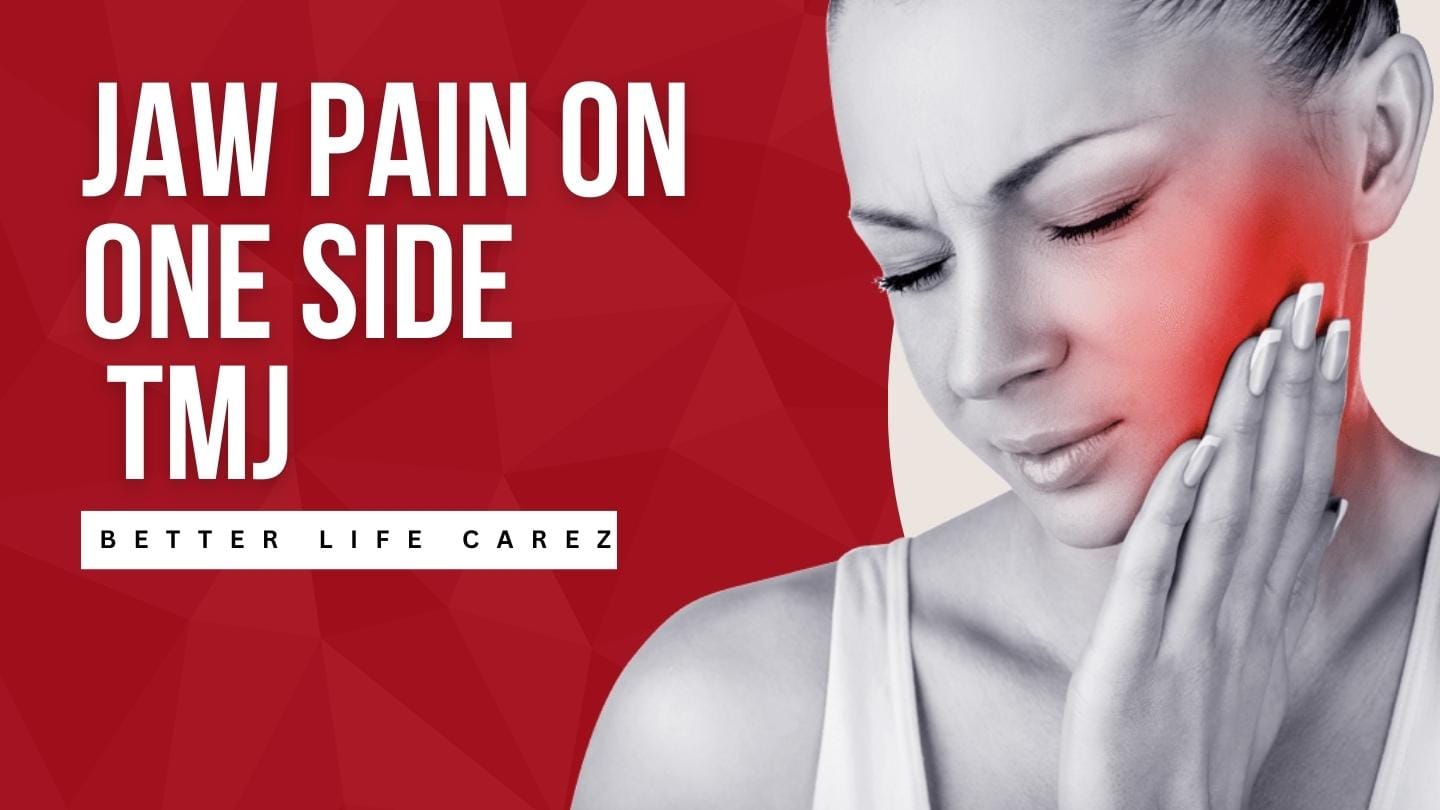
Pain on one side of the jaw is very common, and most of the time the cause is close by: the jaw joint, the chewing muscles or a tooth. Clenching, a cracked filling or an erupting wisdom tooth can all make one side ache while the other feels fine.
Less often, one-sided jaw pain comes from the sinuses, a nerve, or something further away such as the heart. This guide walks through the usual causes, how to tell them apart, what you can do at home, and the warning signs that need prompt care.
Common Causes of Jaw Pain on One Side
Temporomandibular disorders (TMD)
The temporomandibular joints sit just in front of each ear and connect your lower jaw to your skull. Temporomandibular disorders are a group of problems affecting these joints and the chewing muscles around them. They are among the most common reasons for jaw pain, and they often affect one side more than the other.
Typical signs include an ache in front of the ear, pain when chewing or yawning, clicking or popping, a jaw that feels stiff or locks, and headaches around the temples. The National Institute of Dental and Craniofacial Research notes that for many people, TMD symptoms are short-lived and improve with simple self-care.
Teeth grinding and clenching (bruxism)
Grinding or clenching, often during sleep or at times of stress, overworks the chewing muscles. You may wake with a sore jaw, a dull headache or teeth that feel tender. If you tend to sleep on one side or chew mostly on one side, the pain can be lopsided.
Muscle pain (myofascial pain)
Tight, tender spots in the chewing muscles can refer pain to the jaw, ear, teeth and temple. This is closely linked to TMD and bruxism and is often worse at the end of a stressful day.
Dental problems
A tooth problem on one side very often feels like jaw pain. Common culprits are:
- Tooth decay that has reached the nerve. See our guide on how to get rid of cavities.
- A dental abscess, a pocket of pus from a bacterial infection. It causes intense, throbbing pain that can spread to the ear, jaw and neck, sometimes with swelling and fever.
- A cracked tooth, which often hurts sharply when you bite and release.
- Gum disease around a particular tooth.
- A wisdom tooth that is coming through or impacted. Our article on wisdom tooth pain covers this in detail.

Less Common Causes
- Sinusitis. Inflamed sinuses above the upper back teeth can make the upper jaw and teeth ache on one side, often with a blocked nose and pressure in the face. Pain tends to get worse when you bend forward.
- Trigeminal neuralgia. Sudden, severe, electric shock-like pain in the cheek, jaw or teeth, usually on one side, lasting seconds and triggered by touch, eating or brushing.
- Ear problems. An ear infection can cause pain that seems to come from the jaw, and jaw problems can make the ear ache.
- Salivary gland problems. A stone or infection in a salivary gland can cause pain and swelling under the jaw, often worse at mealtimes.
- Giant cell arteritis. In people over 50, jaw pain that comes on while chewing, together with a new headache, scalp tenderness or vision changes, needs urgent assessment because it can threaten sight.
- Injury. A blow to the face can bruise, dislocate or break the jaw.
- Cysts and tumours. These are rare. Most jaw cysts and growths are benign and are often found on routine dental X-rays.
When Jaw Pain Could Be Your Heart
Heart pain can spread to the jaw, neck, shoulder or arm, and in some people, particularly women, jaw or upper body discomfort may be more noticeable than chest pain. It is usually more of a pressure or heaviness than a sharp, local pain, and it often comes with other symptoms.
How to Tell the Causes Apart
Your symptoms give strong clues. This table is a rough guide, not a diagnosis.
| Likely cause | What the pain is like | Other clues |
|---|---|---|
| TMD | Dull ache in front of the ear, worse with chewing or yawning | Clicking, stiffness, jaw locking, temple headaches |
| Teeth grinding | Sore jaw muscles, worst on waking | Worn or sensitive teeth, morning headaches |
| Dental abscess | Severe, throbbing, often keeps you awake | Swelling, bad taste, tooth tender to touch, fever |
| Sinusitis | Pressure in the upper jaw and cheek | Blocked nose, worse when bending forward, recent cold |
| Trigeminal neuralgia | Sudden electric shock-like stabs lasting seconds | Triggered by touch, eating, brushing or wind |
| Heart | Pressure or heaviness, may come with exertion | Chest discomfort, breathlessness, sweating, nausea |
If your upper jaw pain came on with a cold, our guide to sinus congestion remedies may help.
How Jaw Pain Is Diagnosed
Start with a dentist if you suspect a tooth, or a GP or doctor if the cause is unclear. They will ask about when the pain started, what triggers it and any other symptoms, then examine your teeth, gums, jaw joints and chewing muscles. Dental X-rays can show decay, abscesses, impacted teeth and cysts. Scans such as CT or MRI are only needed in some cases, for example if a joint problem is not improving or a growth is suspected.
Treatment and Relief
Self-care for TMD and muscle pain
Most TMD and muscle-related jaw pain improves with simple, low-risk steps:
- Eat softer foods for a while and cut food into small pieces
- Avoid chewing gum, biting nails and very wide yawns
- Apply a warm compress or a wrapped ice pack for 10 to 15 minutes
- Take over-the-counter pain relief such as ibuprofen or paracetamol (acetaminophen) for short periods, following the label
- Rest your jaw with lips together and teeth slightly apart
- Try gentle jaw stretches and ways to manage stress
If self-care is not enough, a dentist may suggest a custom mouthguard or splint for night-time grinding, physiotherapy, or short-term medicines. Surgery for TMD is rarely needed and is usually considered only after other treatments have been tried.
Treating dental causes
Dental pain needs a dentist. A cavity is filled, an abscess is drained and the infected tooth is treated with root canal treatment or removal, and a problem wisdom tooth may need extracting. Antibiotics may be given if infection is spreading, but they do not fix the source on their own.
Other causes
Sinusitis usually settles with time and simple measures. Trigeminal neuralgia is treated with specific nerve medicines, not standard painkillers. Suspected heart pain or giant cell arteritis needs emergency or same-day assessment.
FAQ
Can stress cause jaw pain on one side?
Yes. Stress makes many people clench or grind their teeth, which strains the jaw muscles and joint. The pain can be worse on the side you chew or sleep on.
Why does my jaw hurt near my ear?
The jaw joint sits right in front of the ear, so TMD often feels like earache. An ear infection or dental problem in a back tooth can also cause pain in this spot.
How long does TMD jaw pain last?
Many flare-ups settle within a few weeks with self-care. See a dentist or doctor if pain lasts longer, keeps coming back, or your jaw locks.
Can a blocked sinus cause jaw pain?
Yes. The roots of the upper back teeth sit close to the maxillary sinuses, so sinusitis can cause aching in the upper jaw and teeth on one side.
Should I see a dentist or a doctor for jaw pain?
See a dentist if you have tooth pain, gum swelling or pain when biting. See a doctor if the cause seems unclear, the pain is nerve-like, or you have other symptoms. For chest pain or breathlessness, call emergency services.
The Bottom Line
Jaw pain on one side is most often caused by TMD, teeth grinding or a dental problem such as decay, an abscess or a wisdom tooth. Soft foods, heat or cold, short courses of pain relief and resting the jaw help most joint and muscle pain. Dental pain needs a dentist, and jaw pain with chest pressure, breathlessness or spreading facial swelling needs emergency care. More guides are in our ear, nose, throat and dental hub.
This article is for general information and is not a substitute for advice from your doctor or dentist.
Sources
- Cleveland Clinic: Jaw Pain
- National Institute of Dental and Craniofacial Research: TMD
- NHS: Temporomandibular Disorder (TMD)
- NHS: Dental Abscess
- NHS: Teeth Grinding (Bruxism)
- NHS: Trigeminal Neuralgia
Medical disclaimer: This article is for general information only and is not a substitute for advice, diagnosis or treatment from a qualified health professional. If your symptoms are severe, sudden or getting worse, contact a doctor or emergency services.

Ear, Nose, Throat and Dental
Browse every related article on this topic in one place.



Comments are closed.