

That Shooting Pain Down Your Leg Has a Name
You bend down to pick something up, and suddenly there it is: a sharp, electric pain that fires from your lower back, through your buttock, and straight down the back of your leg. Sometimes it burns. Sometimes it makes your foot feel numb or tingly. Sometimes it hits so hard it stops you mid-step.
- That Shooting Pain Down Your Leg Has a Name
- What Is Sciatica, Exactly?
- Who Gets Sciatica and Why?
- What Does Sciatica Feel Like?
- What the Research Actually Says About Treatment
- Common Sciatica Myths Worth Busting
- What About Injections and Prescription Treatments?
- When Does Sciatica Actually Need Surgery?
- What Can You Do Starting Today?
- When Should You See a Doctor?
- FAQ
- The Bottom Line
What Is Sciatica, Exactly?
Sciatica isn’t a diagnosis on its own but a description of symptoms caused by irritation or compression of the sciatic nerve. The sciatic nerve is the longest nerve in your body. It starts in the lower spine (the lumbar and sacral region), runs through your buttocks, and travels down each leg all the way to the foot. When something presses on or inflames it, pain can radiate along any part of that path.
A herniated disc causes most cases. A spinal disc is essentially a gel-filled cushion that sits between the bones (vertebrae) of your spine. When the tough outer layer of one of these discs tears or bulges, the soft inner material can push outward and press against a nearby nerve root. In the lower back, that’s often part of the sciatic nerve.
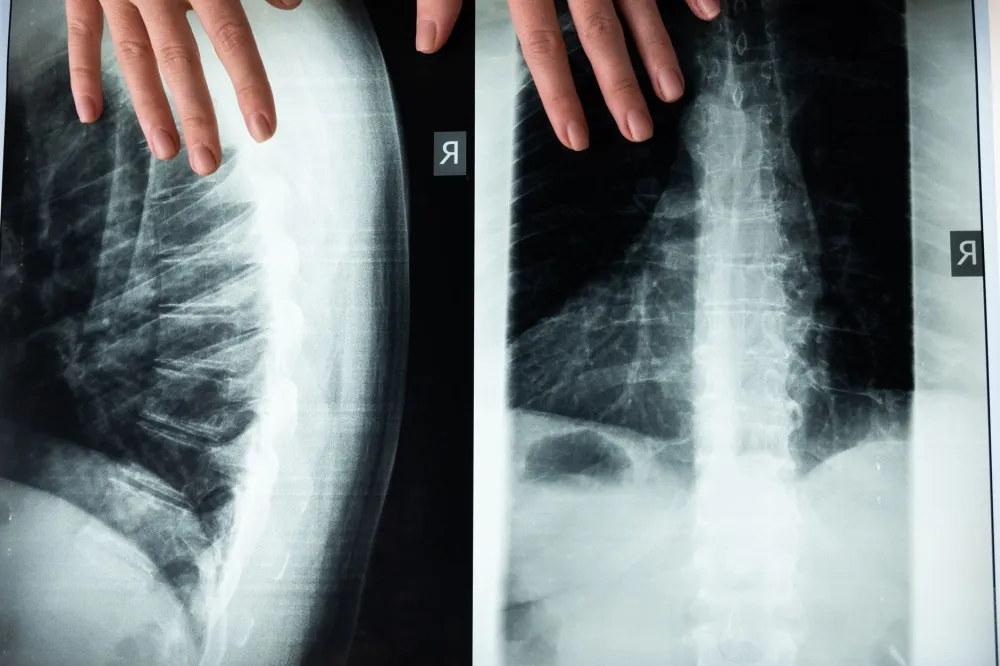
Other causes include bone spurs (extra bone growths on the vertebrae), spinal stenosis (a narrowing of the spinal canal), and piriformis syndrome, where a deep buttock muscle irritates the sciatic nerve. Tumors or infections are rare culprits, which is one reason persistent or severe symptoms deserve proper medical evaluation.
Who Gets Sciatica and Why?
Sciatica is surprisingly common. According to Harvard Health, roughly 40 percent of people will experience it at some point in their lives. It tends to peak in the 40s and 50s, largely because disc degeneration starts ramping up in middle age, but it can certainly hit younger people too, especially those who sit for long stretches or do heavy lifting with poor posture.
Several factors raise your risk. Prolonged sitting, particularly at a desk with poor posture, puts steady pressure on the lumbar discs. If you spend most of your day in that position, reading about desk posture and back pain from sitting all day can help you set up a better workstation. Excess body weight, a sedentary lifestyle, and smoking are also associated with higher rates of disc problems. So is diabetes, which affects nerve health over time.
Pregnancy can bring on sciatic pain as the growing uterus puts pressure on the nerve. Emotional stress can amplify how intensely you feel pain, even physical nerve pain, which is why sciatica sometimes flares during stressful periods at work or home.
What Does Sciatica Feel Like?
The hallmark symptom is pain that travels from the low back or buttock down into one leg, sometimes all the way to the calf or foot. People describe it as shooting, burning, electric, or like a jolt. That said, symptoms vary quite a bit from person to person.
Some people feel a constant dull ache. Others get sharp stabs only with certain movements, like sitting down, coughing, or bending forward. Numbness, tingling, or muscle weakness in the leg or foot can accompany the pain. In mild cases, standing up and walking around actually eases it. In severe cases, almost nothing does.
What the Research Actually Says About Treatment
Here’s the honest take: most cases of sciatica, somewhere between 80 and 90 percent according to many estimates, resolve on their own within six to twelve weeks with conservative care. That doesn’t mean you just have to white-knuckle through it. It means the right moves can make those weeks a lot more manageable and sometimes shorten the timeline.
Stay Moving (Yes, Really)
The instinct when your back is screaming is to lie down and not move. That instinct is almost always wrong. Research consistently shows that staying gently active speeds recovery compared to bed rest. Complete rest causes muscles to weaken and stiffen, which often makes things worse. The goal isn’t to push through severe pain but to keep moving within a comfortable range.
Short walks, gentle range-of-motion movements, and normal daily activity tend to keep blood flowing to the affected area and prevent the muscle stiffness that compounds nerve irritation. On the topic of walking specifically, the article on walking vs rest for back pain goes deeper on why movement tends to win.

Physical Therapy: The Strongest Tool You Have
Physical therapy (PT) is widely considered the most evidence-backed non-surgical treatment for sciatica. A good physical therapist won’t just hand you a generic sheet of exercises. They’ll assess which nerve root is involved, identify what’s compressing it, and design a program that addresses the root cause rather than just dulling the symptom.
Common PT approaches for sciatica include McKenzie method exercises (which often use extension movements to push disc material away from the nerve), core strengthening to stabilize the spine, and hands-on manual therapy. Many people notice meaningful improvement within four to six weeks of consistent PT, though individual results vary.
Stretches That May Actually Help
Certain stretches have good anecdotal and clinical support for easing sciatic nerve compression. The piriformis stretch is one of the most recommended: lying on your back, crossing the affected leg over the other at the knee, and gently pulling both legs toward your chest. The sciatic nerve glide, done seated by alternately straightening and lowering the affected leg, is another commonly used technique. Yoga-based movements can also offer relief for some people, and the yoga poses that ease lower back tension guide covers several beginner-friendly options worth trying.
A word of caution: not every stretch works for every type of sciatica. If a stretch makes your leg pain worse, stop. That’s a signal the movement is loading the nerve the wrong way, and a physical therapist can help you figure out which approach actually fits your situation.
Heat, Ice, and Over-the-Counter Options
Ice can reduce inflammation in the first 48 to 72 hours after a flare. After that, heat often feels better and helps relax muscle spasms around the irritated nerve. Alternating between the two works well for some people. Neither is a cure, but both can take the edge off while the nerve heals.
Over-the-counter nonsteroidal anti-inflammatory drugs (NSAIDs), like ibuprofen, are frequently recommended by doctors for short-term sciatica pain because they address both pain and inflammation. Always follow package directions and check with a pharmacist or your doctor if you take other medications or have conditions like kidney disease or stomach ulcers that might make NSAIDs unsuitable for you.
Common Sciatica Myths Worth Busting
| The Myth | What Research Actually Says |
|---|---|
| “Rest is the best medicine” | Bed rest typically prolongs recovery; gentle activity helps more |
| “You need an MRI right away” | For most new cases, imaging adds little in the first 4-6 weeks |
| “Surgery is inevitable” | Most cases resolve without surgery; fewer than 10 percent need it |
| “Pain equals damage” | Nerve pain can be intense without permanent nerve injury |
| “Stretching always helps” | Wrong stretches for your type of sciatica can make it worse |
| “Supplements can fix disc problems” | No supplement has strong evidence for disc-caused sciatica |

What About Injections and Prescription Treatments?
When conservative care isn’t working after several weeks, doctors may consider epidural steroid injections (ESIs). These deliver a corticosteroid, a powerful anti-inflammatory medication, directly into the space around the affected nerve root. ESIs don’t fix the underlying disc problem, but they can reduce inflammation enough to make physical therapy more tolerable and allow the nerve time to recover. According to the Mayo Clinic, relief from ESIs is often temporary, though it can be meaningful enough to help people get through a tough stretch.
Prescription muscle relaxants or nerve-specific pain medications may also be prescribed for short periods. These aren’t long-term solutions, and they carry side effects including drowsiness, so they’re typically used as a bridge while other treatments do the heavy lifting. Never adjust or stop a prescribed medication without talking to your prescribing doctor first.
For those dealing with chronic or complex cases, spinal decompression therapy is another option some providers offer. You can read more about what that involves at the spinal decompression therapy guide for a broader overview of what the treatment looks like.
When Does Sciatica Actually Need Surgery?
Surgery is reserved for a minority of cases, generally those where conservative treatment has failed after six to twelve weeks, or where there is significant or progressive nerve damage. The most common procedure is a discectomy, where the portion of the herniated disc pressing on the nerve is removed. For many people with clear-cut disc herniation, surgery does provide faster pain relief than continued conservative care. But the Mayo Clinic points out that by one year out, surgical and non-surgical outcomes tend to be similar for many patients.
Certain situations call for faster action. Cauda equina syndrome, which involves loss of bladder or bowel control along with leg weakness and numbness in the inner thighs, is a surgical emergency. Don’t wait and don’t search the internet. Get to an emergency room.
What Can You Do Starting Today?
You don’t have to wait for a doctor’s appointment to start feeling better. Here are practical steps grounded in what the evidence supports.

When Should You See a Doctor?
If your symptoms are new and mild, most guidelines suggest giving conservative care four to six weeks before pursuing imaging or specialist referrals, unless red-flag symptoms are present. If you’re still in significant pain after six weeks, or if your symptoms are worsening rather than slowly improving, that’s a clear signal to book an appointment with your primary care doctor or a spine specialist.
A physiatrist (a doctor who specializes in physical medicine and rehabilitation) or an orthopedic spine specialist can evaluate whether imaging is warranted, whether injections might help, and what type of PT program is most appropriate for your specific anatomy. For additional context on how to think about back pain care, Better Life Carez focuses on practical, evidence-aware guidance you can actually use.
It’s also worth mentioning that poor sleep and chronic stress can amplify nerve pain perception. If you’re finding the pain is worst at night, taking a look at sleep hygiene habits that genuinely improve rest may be a useful complementary step. The body heals better when it sleeps better, and that’s not just a nice idea; it has biological backing.
FAQ
The Bottom Line
Sciatica is irritation of the sciatic nerve, most often from a herniated disc in the lower spine, and it produces that distinctive shooting or burning pain down one leg. The good news: the majority of cases improve within six to twelve weeks with conservative care. Staying gently active, doing the right targeted stretches, and working with a physical therapist are your strongest tools. Bed rest, by contrast, typically slows things down. See a doctor promptly if symptoms are severe, worsening, accompanied by red flags like bladder changes or leg weakness, or simply aren’t improving after six weeks of reasonable effort.
This article is for informational purposes only and is not a substitute for professional medical advice, diagnosis, or treatment. Always consult a qualified healthcare provider about your specific situation. If you experience severe or sudden symptoms, seek medical care immediately.