Standing in the cereal aisle at 6 PM, tired and hungry, you grab the same box you always do. According to USDA dietary guidance, most Americans fall short on fiber, the food your gut bacteria live on. This page answers the question that matters at the store: what do you actually buy?
- The Gut Health Food List PDF: 45 Foods to Buy
- How to Use This Gut Health Food List PDF
- How Fast Should You Add Fiber Foods?
- How Do You Adjust the Gut Health Grocery List?
- What Mistakes Do People Make With Gut Health Foods?
- What Does the Research Say About Gut-Friendly Foods?
- Who Should Check With a Doctor or Dietitian First?
- FAQ
- The Bottom Line
Gut health refers to how well your digestive tract is working, including your microbiome, the trillions of bacteria living in your gut that help break down fiber. This list focuses on three kinds of food those bacteria seem to thrive on: high-fiber plants, prebiotic foods (fibers that feed helpful bacteria) and fermented foods with live cultures.
The Gut Health Food List PDF: 45 Foods to Buy
Fiber values are approximate, rounded from USDA FoodData Central. “Freely” means eat as often as you like. “Daily” means about one serving a day. “Moderation” means small portions, a few times a week.
The daily fiber goal for most adults is roughly 22 to 34 grams, depending on age and sex. Build up slowly and drink plenty of water.
Vegetables
| Food | Serving | Fiber (approx.) | How often | Note |
|---|---|---|---|---|
| Artichoke | 1 medium, cooked | ~7 g | Freely | Rich in prebiotic inulin |
| Broccoli | 1 cup, cooked | ~5 g | Freely | Steam or roast |
| Brussels sprouts | 1 cup, cooked | ~4 g | Freely | Best roasted |
| Carrots | 1 cup, cooked | ~5 g | Freely | Cheap year-round |
| Onions | 1/2 cup, chopped | ~1 g | Freely | Prebiotic; may bother IBS |
| Garlic | 2 cloves | Under 1 g | Freely | Prebiotic; may bother IBS |
| Leeks | 1/2 cup, chopped | ~1 g | Freely | Great in soups |
| Asparagus | 1 cup, cooked | ~3.5 g | Freely | Contains prebiotic inulin |
| Spinach | 1 cup, cooked | ~4 g | Freely | Frozen works fine |
| Sweet potato | 1 medium, with skin | ~4 g | Freely | Eat the skin too |
Fruits
| Food | Serving | Fiber (approx.) | How often | Note |
|---|---|---|---|---|
| Raspberries | 1 cup | ~8 g | Freely | Frozen is cheaper |
| Pear | 1 medium, with skin | ~5.5 g | Freely | Skin holds much fiber |
| Apple | 1 medium, with skin | ~4 g | Freely | Contains pectin, a soluble fiber |
| Banana, slightly green | 1 medium | ~3 g | Freely | Some resistant starch |
| Kiwi | 2 medium | ~4 g | Freely | May ease constipation |
| Blueberries | 1 cup | ~3.5 g | Freely | Rich in polyphenols |
| Orange | 1 medium | ~3 g | Freely | Whole fruit beats juice |
| Prunes | 5 prunes | ~3 g | Moderation | Natural laxative effect |
| Avocado | 1/2 fruit | ~5 g | Daily | Fiber plus healthy fat |
Beans and Legumes
| Food | Serving | Fiber (approx.) | How often | Note |
|---|---|---|---|---|
| Lentils | 1/2 cup, cooked | ~8 g | Freely | No soaking needed |
| Black beans | 1/2 cup, cooked | ~7.5 g | Freely | Rinse canned beans |
| Chickpeas | 1/2 cup, cooked | ~6 g | Freely | Roast for crunchy snacks |
| Split peas | 1/2 cup, cooked | ~8 g | Freely | Easy soup base |
| Kidney beans | 1/2 cup, cooked | ~5.5 g | Freely | Chili staple |
| Edamame | 1/2 cup, shelled | ~4 g | Freely | Frozen, ready in minutes |
Whole Grains
| Food | Serving | Fiber (approx.) | How often | Note |
|---|---|---|---|---|
| Rolled oats | 1/2 cup, dry | ~4 g | Daily | Contains beta-glucan fiber |
| Barley | 1 cup, cooked | ~6 g | Freely | Chewy swap for rice |
| Quinoa | 1 cup, cooked | ~5 g | Freely | Cooks in 15 minutes |
| Brown rice | 1 cup, cooked | ~3 g | Freely | Cooling may add resistant starch |
| Whole-wheat bread | 1 slice | ~2 g | Daily | Look for 100% whole wheat |
| Popcorn, air-popped | 3 cups | ~3.5 g | Freely | Whole grain snack |
Fermented Foods
| Food | Serving | Fiber (approx.) | How often | Note |
|---|---|---|---|---|
| Plain yogurt | 1 cup | 0 g | Daily | Check for live, active cultures |
| Plain kefir | 1 cup | 0 g | Daily | Tangy, drinkable |
| Sauerkraut, refrigerated | 1/4 cup | ~1 g | Daily | Shelf jars often pasteurized |
| Kimchi | 1/2 cup | ~1 g | Daily | Spicy; watch sodium |
| Miso | 1 Tbsp | ~1 g | Moderation | High in sodium |
| Kombucha | 8 oz (240 ml) | 0 g | Moderation | Check added sugar |
Nuts, Seeds and Extras
| Food | Serving | Fiber (approx.) | How often | Note |
|---|---|---|---|---|
| Chia seeds | 1 Tbsp | ~4 g | Daily | Stir into oats |
| Ground flaxseed | 1 Tbsp | ~2 g | Daily | Buy ground, not whole |
| Almonds | 1 oz (about 23) | ~3.5 g | Daily | Calorie dense; portion it |
| Walnuts | 1 oz | ~2 g | Daily | Plant omega-3 source |
| Pistachios | 1 oz | ~3 g | Daily | Shells slow snacking |
| Extra virgin olive oil | 1 Tbsp | 0 g | Daily | Contains polyphenols |
| Green tea | 1 cup | 0 g | Freely | Polyphenols; contains caffeine |
| Dark chocolate, 70%+ | 1 oz | ~3 g | Moderation | Treat-size portion |
Foods to Limit
- Sugary drinks: soda, sweet tea and energy drinks.
- Ultra-processed snacks low in fiber.
- Processed meats like hot dogs and deli meats.
- Alcohol, especially more than one or two drinks.
- Greasy fried foods if they upset your stomach.
Weekly target: buy at least 3 vegetables, 2 fruits, 1 bean, 1 whole grain and 1 fermented food.
How to Use This Gut Health Food List PDF
Don’t buy all 45 foods at once. The simplest approach is to pick a handful each week and build from there. Small, steady additions tend to stick, and they’re easier on your stomach.
- Print and circle: Mark 5 to 8 foods you already like. Familiar food gets eaten; the mystery vegetable gets composted.
- Shop by aisle: The groups roughly match the store layout: produce, canned and dry goods, grains, dairy and the refrigerated case.
- Add one new fiber food every few days: Lentils on Monday, chia in your oats on Thursday. Slow and boring works.
- Build half your plate from plants: Fill about half with vegetables and fruit, then add a whole grain and a protein, including beans.
- Count plant variety: Tally how many different plants you eat in a week, herbs and spices included.
If weeknights are chaotic, pair the list with a free meal prep planner template. That way the beans and grains you buy turn into actual lunches instead of pantry decorations.

How Fast Should You Add Fiber Foods?
Add fiber gradually over a few weeks, not overnight. The Mayo Clinic advises increasing fiber slowly and drinking plenty of water, because a sudden jump can cause gas, bloating and cramping while your gut bacteria adjust.
Here’s a realistic month using the list. Everyone responds differently, so treat this as a loose guide, not a promise.
| Week | What to add | What you might notice |
|---|---|---|
| Week 1 | One extra fruit and vegetable daily | Little change, maybe mild gas |
| Week 2 | Beans or lentils 3 times | Some bloating that usually settles |
| Week 3 | One fermented food most days | Bowel movements may feel more regular |
| Week 4 | Aim for 20+ different plants | Meals often feel more filling |
A little extra gas in weeks one and two is common. It’s a sign that fiber is reaching your gut bacteria. Pain, blood or symptoms that keep getting worse are a different story, and they deserve a call to your doctor.
How Do You Adjust the Gut Health Grocery List?
You can tailor the list to your budget, your diet or a sensitive stomach by swapping items within the same group. A lentil works much like a black bean, and frozen raspberries work like fresh ones.
On a Tight Budget
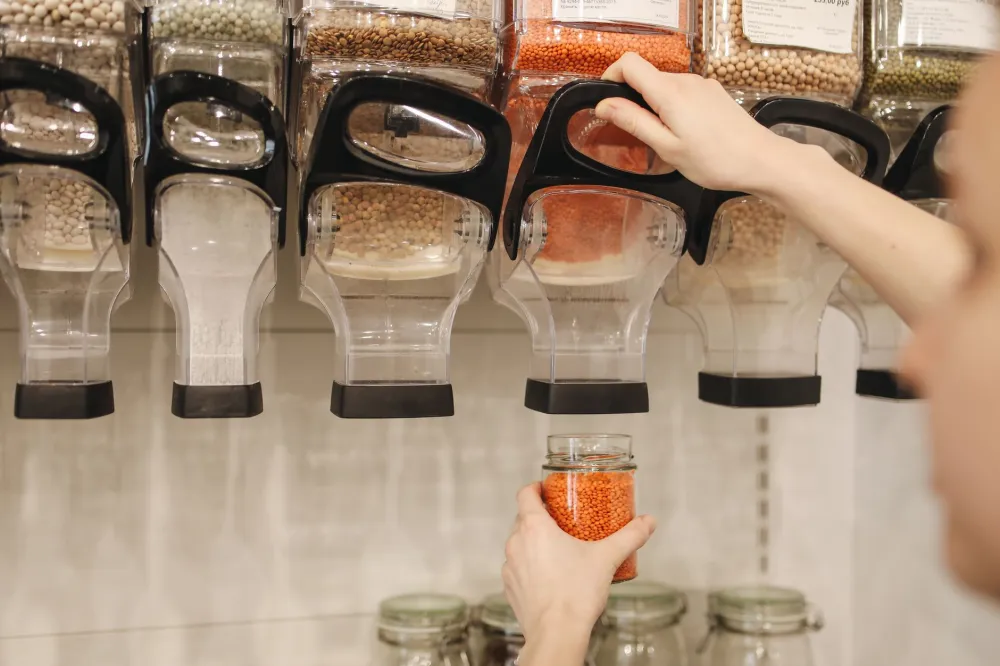
Dried lentils, split peas, oats, brown rice, bananas, carrots and frozen vegetables are some of the cheapest high-fiber foods in any US grocery store. Canned beans cost a little more but save time. Just rinse them to cut the sodium. Making your own yogurt or sauerkraut is cheap too, if you enjoy that kind of project.
Vegetarian or Vegan
This list is already plant-heavy. Vegans can swap dairy yogurt and kefir for unsweetened plant yogurts labeled with live cultures, and lean on tempeh, kimchi and sauerkraut for fermented options. Beans, edamame and nuts help cover protein.
If You Have IBS or a Sensitive Stomach
Some items here, like onions, garlic, beans and apples, are high in FODMAPs, short-chain carbs that ferment quickly and can trigger symptoms in people with irritable bowel syndrome (IBS). Oats, kiwi, carrots, spinach, quinoa and firm bananas are often better tolerated.
If your stomach churns under stress no matter what you eat, the gut-brain link may be part of it. Our piece on how stress affects gut health explains why.
What Mistakes Do People Make With Gut Health Foods?
The most common mistake is doing too much, too fast. A few others trip people up just as often.
- Going from 10 g to 35 g overnight: Expect a bloated, uncomfortable week if you do.
- Skipping water: Fiber works best with enough fluid. Without it, constipation can get worse.
- Buying sweetened “gut” products: Flavored yogurts and some kombuchas carry a lot of added sugar. Read the label.
- Chasing one superfood: Variety across many plants seems to matter more than any single item.
- Ignoring the rest of the cart: A diet heavy in ultra-processed foods can crowd out the fiber you’re trying to add.
Expecting overnight results is the quiet mistake. Gut bacteria respond to diet fairly quickly, but how you feel usually shifts over weeks, not days.
What Does the Research Say About Gut-Friendly Foods?
Research suggests that eating more fiber and more fermented foods is associated with a more diverse microbiome, which is generally seen as a sign of a healthy gut. The evidence is strongest for overall eating patterns, not for single foods or pills.
A small Stanford trial published in the journal Cell found that people who ate several servings of fermented foods daily for about 10 weeks showed greater microbiome diversity and lower markers of inflammation. That’s encouraging, but it was a short study in a small group. Separately, the American Gut Project, a large citizen-science study, linked eating 30 or more different plants a week with more diverse gut bacteria. It was observational, meaning it shows a link, not proof of cause and effect.
Harvard Health and other major health organizations consistently point to fiber-rich whole foods as the foundation of gut health. For a deeper look at the science behind each food type, read our guide on what feeds your microbiome.
Here’s where popular claims stand against the evidence:
| Myth | Fact |
|---|---|
| You need probiotic pills for gut health | Most people can start with food |
| All fermented foods have live cultures | Pasteurized or baked ones usually don’t |
| More fiber, faster, is always better | Sudden jumps often cause bloating |
| Any gas means a food is bad | Some gas is normal fermentation |
| A juice cleanse resets your gut | No good evidence supports gut resets |
Probiotic supplements deserve an honest note. Results are mixed and depend heavily on the strain and the condition. Supplements also aren’t regulated as tightly as medications in the US, and they can interact with some medicines.
The overall pattern on this list overlaps heavily with the Mediterranean diet, one of the best-studied eating patterns for long-term health. That overlap is a good sign.
Who Should Check With a Doctor or Dietitian First?
Most healthy adults can start using a gut health food list on their own. Some people, though, should talk to a doctor or registered dietitian before changing their fiber or fermented food intake.
- Digestive conditions: IBS, Crohn’s disease, ulcerative colitis, celiac disease or a recent diverticulitis flare.
- Kidney disease: Beans, potatoes and some fruits are high in potassium.
- Blood thinners: Leafy greens like spinach contain vitamin K, which can affect warfarin.
- Weakened immune system: Ask before adding live-culture foods or probiotics.
- Pregnancy or past bowel surgery: Your care team should guide diet changes.

Food can’t fix everything. Blood in your stool, unexplained weight loss, ongoing changes in bowel habits, trouble swallowing or severe belly pain mean seeing a doctor promptly, not tweaking your grocery list. Persistent bloating or discomfort that doesn’t ease with gentle changes also deserves a real medical evaluation.
FAQ
The Bottom Line
Your gut bacteria run mostly on fiber, and most Americans don’t get enough of it. Print this gut health food list PDF, circle a few foods you already enjoy, and add one new item every few days while drinking plenty of water. Aim for variety across vegetables, fruit, beans, whole grains and fermented foods rather than chasing a single superfood. If you have a digestive condition or worrying symptoms, start with your doctor, then bring the list along.
This article is for informational purposes only and is not a substitute for professional medical advice, diagnosis, or treatment. Always consult a qualified healthcare provider about your specific situation. If you experience severe or sudden symptoms, seek medical care immediately.

Weight Loss and Nutrition
Browse every related article on this topic in one place.