

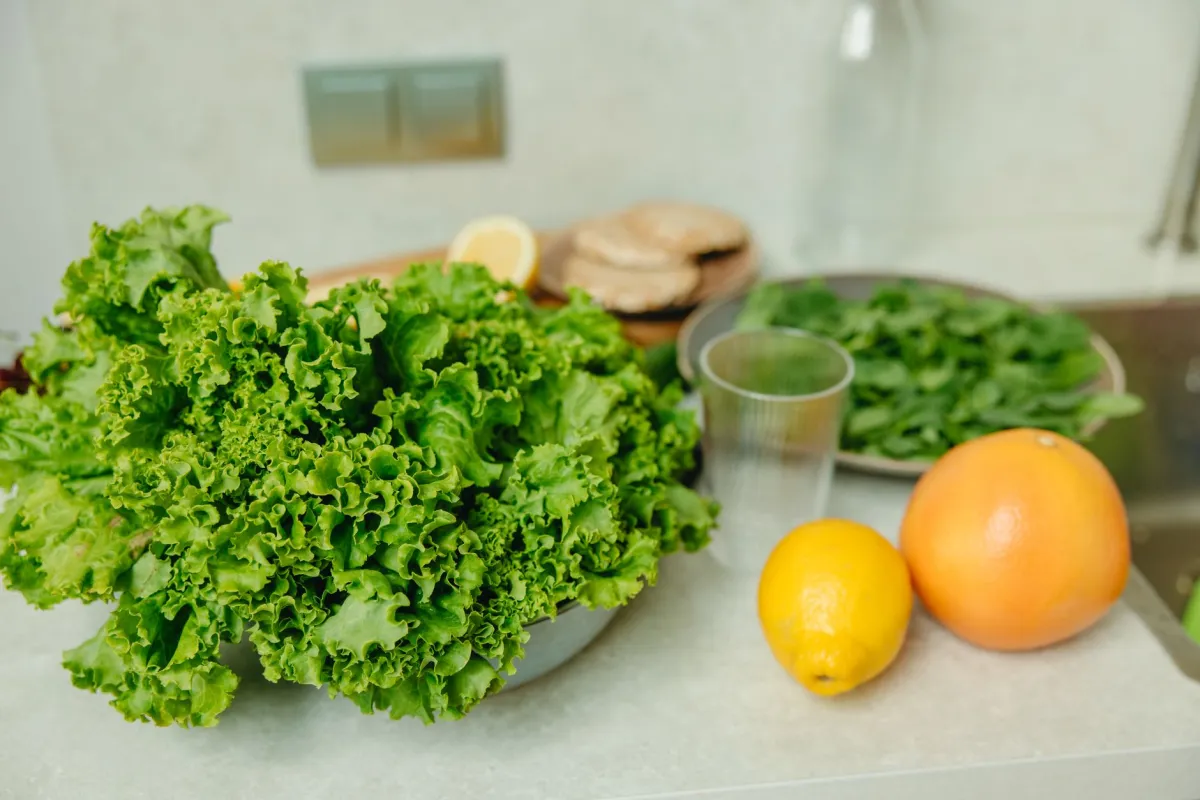
Your grocery cart is where most diet plans quietly win or lose. The hard decisions don’t happen in a meeting or at the gym. They happen at 9 PM in front of an open fridge, and the fastest way to win them is to never bring the family-size chips home. This calorie deficit grocery list helps you stock your kitchen with foods that fill you up for fewer calories.
- Calorie Deficit Grocery List: 45 Foods by Aisle
- How Do You Use This Calorie Deficit Grocery List?
- How Can You Adjust the List for Budget or Diet?
- What Grocery Mistakes Stall a Calorie Deficit?
- What Does the Research Say About Calorie Deficit Foods?
- Who Should Check With a Doctor or Dietitian First?
- FAQ
- The Bottom Line
Every food here earned its spot for one reason: it fills you up for a modest number of calories. Think of it as a shopping list you can actually use, not a diet manifesto. The numbers are rounded from USDA FoodData Central values, and brands vary, so treat them as a guide rather than gospel.
Calorie Deficit Grocery List: 45 Foods by Aisle
How to read the labels:
- Eat freely: non-starchy, high-volume foods. Pile them on.
- Everyday portion: core foods. One measured serving per meal.
- Moderate: nutritious but calorie-dense. Measure every time.
- Limit: lots of calories, little fullness. Occasional only.
All values are approximate, per the serving listed. Check your brand’s label.
1. Lean Proteins
| Item | Serving | Calories (approx.) | Protein g (approx.) | Label |
|---|---|---|---|---|
| Skinless chicken breast | 3 oz cooked | 140 | 26 | Everyday portion |
| Canned tuna in water | 3 oz drained | 100 | 22 | Everyday portion |
| Eggs | 1 large | 70 | 6 | Everyday portion |
| Plain nonfat Greek yogurt | 3/4 cup | 100 | 17 | Everyday portion |
| Low-fat cottage cheese | 1/2 cup | 90 | 12 | Everyday portion |
| Cod or tilapia | 3 oz cooked | 100 | 20 | Everyday portion |
| Shrimp | 3 oz cooked | 85 | 20 | Everyday portion |
| 93% lean ground turkey | 3 oz cooked | 170 | 22 | Everyday portion |
| Salmon | 3 oz cooked | 175 | 22 | Everyday portion |
A 3-ounce (about 85 g) portion is roughly the size of a deck of cards.
2. Non-Starchy Vegetables
| Item | Serving | Calories (approx.) | Protein g (approx.) | Label |
|---|---|---|---|---|
| Spinach | 2 cups raw | 15 | 2 | Eat freely |
| Romaine lettuce | 2 cups shredded | 15 | 1 | Eat freely |
| Broccoli | 1 cup raw | 30 | 3 | Eat freely |
| Cauliflower | 1 cup raw | 25 | 2 | Eat freely |
| Zucchini | 1 cup sliced | 20 | 1 | Eat freely |
| Bell pepper | 1 medium | 30 | 1 | Eat freely |
| Green beans | 1 cup | 35 | 2 | Eat freely |
| Mushrooms | 1 cup sliced | 15 | 2 | Eat freely |
| Cherry tomatoes | 1 cup | 25 | 1 | Eat freely |
Plain frozen bags count too. Skip the ones packed in butter or cheese sauce.
3. Fruits
| Item | Serving | Calories (approx.) | Protein g (approx.) | Label |
|---|---|---|---|---|
| Strawberries | 1 cup halves | 50 | 1 | Eat freely |
| Raspberries | 1 cup | 65 | 1 | Eat freely |
| Blueberries | 1 cup | 85 | 1 | Everyday portion |
| Apple | 1 medium | 95 | Under 1 | Everyday portion |
| Orange | 1 medium | 65 | 1 | Everyday portion |
| Banana | 1 medium | 105 | 1 | Everyday portion |
Raspberries carry about 8 grams of fiber per cup, which puts them among the highest-fiber fruits you can buy.
4. Whole Grains and Starchy Foods
| Item | Serving | Calories (approx.) | Protein g (approx.) | Label |
|---|---|---|---|---|
| Rolled oats | 1/2 cup dry | 150 | 5 | Everyday portion |
| Brown rice | 1/2 cup cooked | 110 | 2 | Everyday portion |
| Whole wheat bread | 1 slice | 80 | 4 | Everyday portion |
| Sweet potato | 1 medium baked | 105 | 2 | Everyday portion |
| Potato with skin | 1 medium baked | 160 | 4 | Everyday portion |
| Air-popped popcorn | 3 cups | 95 | 3 | Everyday portion |
Potatoes are fine. The sour cream and butter on top are where the calories pile up.
5. Beans and Plant Proteins
| Item | Serving | Calories (approx.) | Protein g (approx.) | Label |
|---|---|---|---|---|
| Canned black beans | 1/2 cup rinsed | 110 | 7 | Everyday portion |
| Lentils | 1/2 cup cooked | 115 | 9 | Everyday portion |
| Chickpeas | 1/2 cup cooked | 135 | 7 | Everyday portion |
| Extra-firm tofu | 3 oz | 90 | 9 | Everyday portion |
| Shelled edamame | 1/2 cup | 95 | 9 | Everyday portion |
Beans deliver protein and fiber together, a combination that many people find keeps them full.
6. Healthy Fats and Dairy Extras
| Item | Serving | Calories (approx.) | Protein g (approx.) | Label |
|---|---|---|---|---|
| Olive oil | 1 tbsp | 120 | 0 | Moderate |
| Avocado | 1/3 medium | 80 | 1 | Moderate |
| Almonds | 1 oz (about 23) | 165 | 6 | Moderate |
| Peanut butter | 2 tbsp | 190 | 7 | Moderate |
| Part-skim string cheese | 1 stick | 80 | 7 | Everyday portion |
| Skim milk | 1 cup | 85 | 8 | Everyday portion |
Measure oils and nut butters with a spoon. Free-pouring can easily double the calories.
7. Foods to Limit
| Item | Serving | Calories (approx.) | Protein g (approx.) | Label |
|---|---|---|---|---|
| Regular soda | 12 oz can | 150 | 0 | Limit |
| Orange juice | 8 oz (240 ml) | 110 | 2 | Limit |
| Potato chips | 1 oz | 150 | 2 | Limit |
| Bakery muffin | 1 large | 400 (varies) | 6 | Limit |
Limit doesn’t mean never. These are treats, not daily staples.
How Do You Use This Calorie Deficit Grocery List?
Treat the list as a meal template. Build each meal around one protein and a big pile of vegetables, then add a measured starch and a small amount of fat. That plate pattern keeps meals filling while trimming calories, and you don’t have to count every bite.
A calorie deficit simply means eating fewer calories than your body burns in a day, so your body draws on stored energy to make up the gap. That’s the only definition you need here. The hard part is making it feel livable, and that’s what the list is for.
- Start with protein: circle 3 or 4 proteins for the week, such as chicken, eggs, Greek yogurt and lentils.
- Double the vegetables: buy roughly twice what you think you need. Fresh for the first half of the week, frozen for the second.
- Pick two starches and two fruits: oats and sweet potatoes, berries and apples. Any more variety often ends up in the trash.
- Add fats on purpose: one oil, one nut or seed. Measure them at home.
- Shop the limit group last: if a treat makes the cart, pick a single-serving size.
- Check one label per trip: compare the serving size to what you actually eat.

A sample dinner from the list could look like 3 ounces of salmon, 2 cups of roasted broccoli and cauliflower, and a medium baked sweet potato. That plate lands somewhere around 350 to 400 calories, depending on the oil, and it still looks like a real meal. If you want the meals mapped out, our printable 1500 calorie meal plan pairs well with this shopping list.
What to expect in the first two weeks
Week one usually brings more chopping and a bit more hunger than you’re used to, especially in the evening. Many people see the scale drop early, though part of that is often water, not fat. By week two, shopping tends to go faster because you know your staples, and meals start to feel routine. Steady, small changes are the realistic goal.
How Can You Adjust the List for Budget or Diet?
The easiest adjustments are swapping fresh for frozen or canned to save money, leaning on the bean and dairy groups if you eat vegetarian, and scaling portions up if you’re taller or very active. The structure of the list stays the same either way.
On a tight budget
Eggs, canned tuna, dried or canned beans, oats, bananas and frozen vegetables are some of the cheapest low-calorie foods per serving in most US grocery stores. Store brands are usually nutritionally similar to name brands. Rinsing canned beans may also cut some of the added sodium.
Vegetarian or vegan
Vegetarians can lean on Greek yogurt, cottage cheese, eggs, tofu, edamame and lentils for protein. A vegan version drops the dairy and eggs and adds more soy and beans. If you’re fully plant-based, ask your doctor or a registered dietitian about vitamin B12, a nutrient found naturally in almost only animal foods. For more plant and animal options ranked by protein, see our high protein foods chart.
Portion sizes
The servings above are starting points, not rules. A tall, active person may need two servings of starch at dinner, while someone smaller may do well with one. If you’re hungry all day, the deficit may be too steep.
Small swaps add up across a week. Here’s how a few common choices compare:
| Instead of | Try | Approx. calories saved |
|---|---|---|
| 12 oz regular soda (150) | Sparkling water (0) | About 150 |
| 8 oz orange juice (110) | 1 whole orange (65) | About 45, plus fiber |
| 1 oz potato chips (150) | 3 cups popcorn (95) | About 55 |
| 2 tbsp ranch (about 130) | 2 tbsp salsa (about 10) | About 120 |
| Large bakery muffin (about 400) | Oats with berries (about 200) | About 200 |
None of these swaps requires a new personality. Pick the one you’d miss least and start there.
What Grocery Mistakes Stall a Calorie Deficit?
The most common grocery mistakes are buying “health halo” snacks that are calorie-dense, drinking calories without noticing, and shopping hungry. Each one can quietly erase a modest deficit, even when your meals look healthy.
- Trusting the health halo: granola, trail mix and smoothie bowls can pack as many calories as dessert. Check the serving size.
- Forgetting liquid calories: juice, sweetened coffee drinks and soda add up fast and barely touch hunger.
- Shopping hungry: a snack before the store may help you stick to your calorie deficit grocery list.
- Buying too little protein: meals without protein often leave you hunting the pantry an hour later.
- Overbuying fresh produce: wilted spinach is a budget leak. Mix fresh and frozen.
Heavily processed snack foods deserve a special mention, because they’re engineered to be easy to overeat. Our guide to ultra-processed foods and simple swaps covers the research in plain language.

One more sneaky one: buying “diet” versions of foods you don’t enjoy. If you hate fat-free cheese, you won’t eat it, and you’ll likely eat something else instead. Pick foods from the list you actually like.
What Does the Research Say About Calorie Deficit Foods?
Research suggests the best calorie deficit foods are high in volume, protein or fiber, since those traits are associated with feeling full on fewer calories. The evidence is strongest for eating fewer calories overall. No single “fat-burning” food has solid support.
The idea behind most of this list is energy density, meaning how many calories a food packs into each bite. The Mayo Clinic explains that foods with lots of water and fiber, like vegetables and fruit, let you eat satisfying portions for relatively few calories. Protein is also widely linked to greater fullness in short-term studies, which is why every meal on this list starts with it.
Processing matters too. In a small inpatient NIH study published in Cell Metabolism in 2019, people offered ultra-processed meals ate roughly 500 more calories a day than when they were offered minimally processed meals, even though the diets were matched for key nutrients. It was a short study with 20 adults, so it points in a direction rather than settling the question.
Pace is the other piece. According to the CDC, losing about 1 to 2 pounds per week is generally considered a safe, steady pace. A grocery list that keeps meals filling makes that slower approach easier to stick with.
Myth vs. fact
- Myth: “Negative-calorie” foods melt fat. Fact: celery and cucumber are very low in calories, but they don’t burn off meaningful extra energy.
- Myth: carbs stop weight loss. Fact: weight loss depends mainly on total calories, and whole grains and potatoes can fit.
- Myth: fruit is too sugary for a deficit. Fact: whole fruit brings fiber and water, and it’s usually far more filling than juice.
Who Should Check With a Doctor or Dietitian First?
Anyone with a chronic health condition, a history of disordered eating, or a prescription that affects blood sugar or appetite should talk with a doctor or registered dietitian before starting a calorie deficit. A professional can tailor the grocery list to your health needs safely.
- Diabetes: especially if you use insulin or other medicines that can cause low blood sugar.
- Kidney disease: protein and potassium needs may differ from this list.
- Blood thinners: people on warfarin are usually advised to keep leafy green intake consistent, so ask before changing it.
- Eating disorder history: calorie focus can be risky, so get support first.
- Pregnancy, breastfeeding, teens and older adults: needs are different, so get personal guidance.
- GLP-1 medicine users: your care team can help you set protein and portion targets.
Losing weight without trying is a different situation entirely. Unexplained weight loss, or symptoms like chest pain, trouble breathing, or sudden numbness or weakness, mean seeing a doctor promptly. For a wider look at healthy weight habits, browse our weight loss and nutrition guide.
Related reading: Meal Prep Planner Template Free Printable: Simple 7-Day PDF.
FAQ
The Bottom Line
A calorie deficit grocery list works because it shapes your meals before you’re hungry. Build each meal around a lean protein and a heap of vegetables, add a measured starch and a little fat, and keep the limit group for occasional treats. Print the list, circle a few favorites from each group, and bring it on your next shopping trip. Small, steady changes you can keep tend to beat dramatic ones you can’t.
This article is for informational purposes only and is not a substitute for professional medical advice, diagnosis, or treatment. Always consult a qualified healthcare provider about your specific situation. If you experience severe or sudden symptoms, seek medical care immediately.

Weight Loss and Nutrition
Browse every related article on this topic in one place.




1 thought on “Calorie Deficit Grocery List: 45 Simple Foods + Free PDF”
Comments are closed.