
Gastric sleeve and gastric bypass are the two most common weight loss operations in the world. Both lead to large, lasting weight loss and improve conditions like type 2 diabetes, high blood pressure and sleep apnea. But they work differently, carry different risks and suit different people.
This guide compares the two side by side, so you can go into your consultation knowing the right questions to ask.
How Each Surgery Works
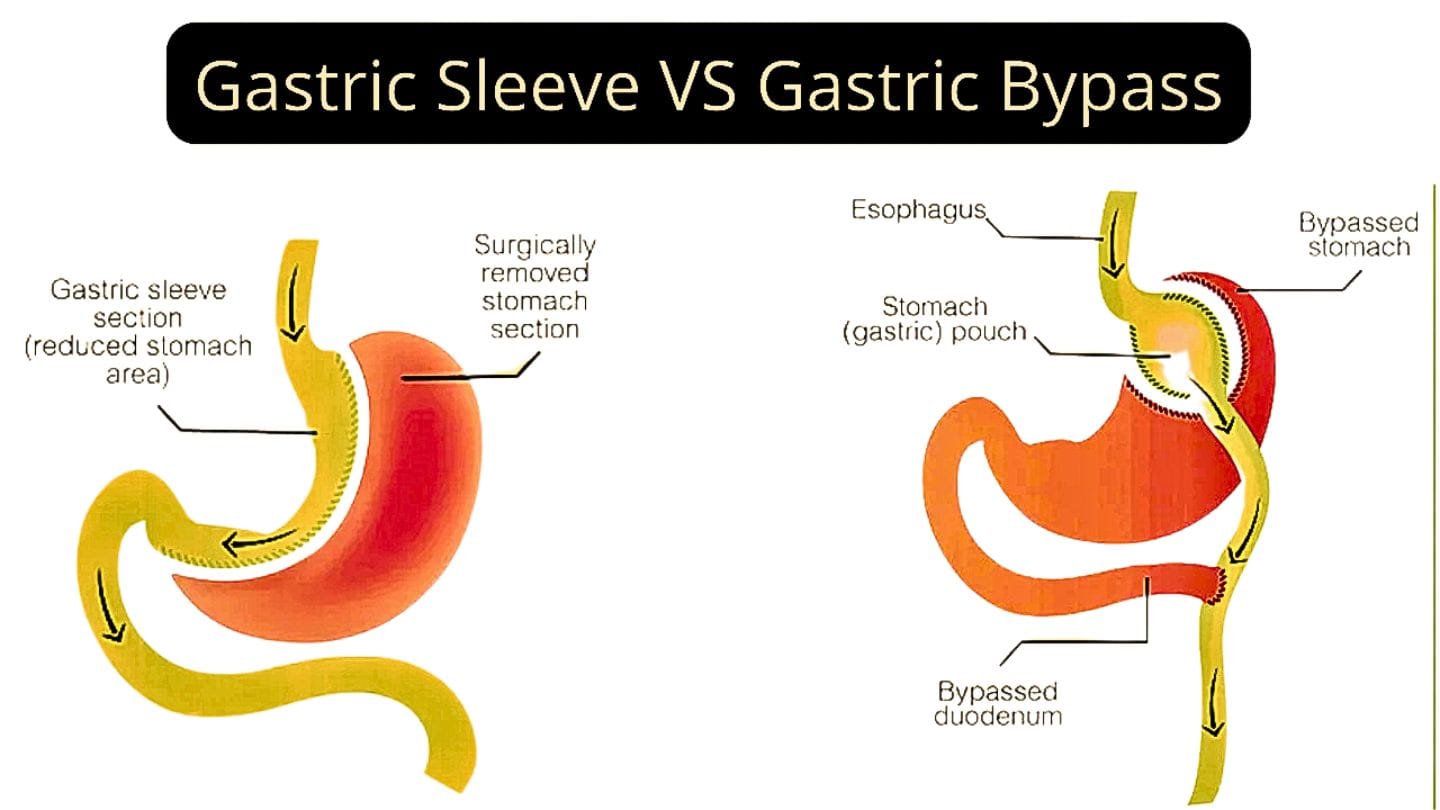
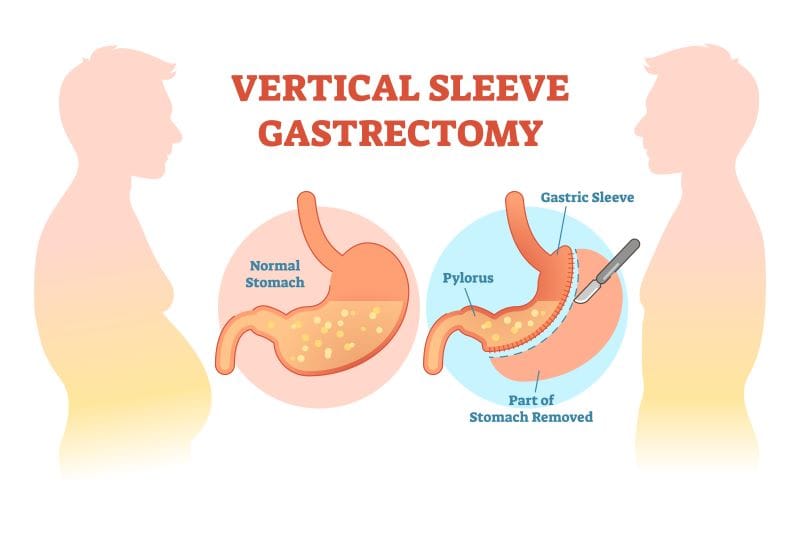
Gastric sleeve (sleeve gastrectomy)
The surgeon removes roughly 75 to 80 percent of the stomach, leaving a narrow tube or “sleeve” about the size of a banana. Food still passes through the normal route. You feel full sooner, and the operation lowers levels of ghrelin, a hormone that drives hunger. The sleeve cannot be reversed because the removed stomach is gone.
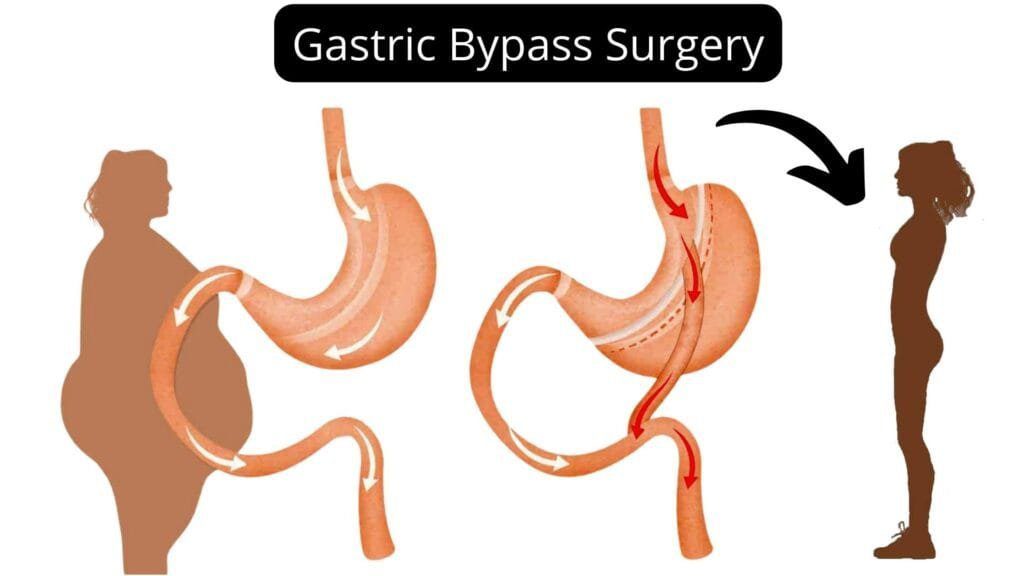
Gastric bypass (Roux-en-Y)
The surgeon divides the stomach to create a small pouch about the size of an egg, then connects it directly to a lower part of the small intestine. Food bypasses most of the stomach and the first section of the intestine. This limits how much you can eat, reduces the absorption of some calories and nutrients, and changes gut hormones that control appetite and blood sugar. It can technically be reversed, but this is rarely done.
Both are usually done by keyhole (laparoscopic or robotic) surgery under general anaesthetic. A sleeve generally takes a little less operating time than a bypass.
Gastric Sleeve vs Gastric Bypass at a Glance
| Gastric sleeve | Gastric bypass | |
|---|---|---|
| What is done | Most of the stomach removed | Small pouch joined to the small intestine |
| Reversible | No | Technically, but rarely done |
| Weight loss | Large | Large, slightly more on average |
| Type 2 diabetes | Often improves | Often improves, slightly more remission on average |
| Acid reflux | Can start or get worse | Usually improves |
| Vitamin deficiency risk | Moderate | Higher |
| Dumping syndrome | Uncommon | More common |
| Main surgical risks | Staple line leak, narrowing | Leak, ulcers at the join, internal hernia, bowel blockage |
| Lifelong supplements | Yes | Yes |
How Much Weight Will You Lose?
Both operations work well. Many people lose around 25 to 30 percent of their total body weight in the first one to two years, then some weight comes back over the following years.
Two large randomized trials published in JAMA in 2018, SLEEVEPASS from Finland and SM-BOSS from Switzerland, followed patients for five years. Bypass produced somewhat more weight loss on average, but the difference was modest, and both groups kept off a substantial amount of weight. Results depend heavily on what happens after surgery: eating habits, protein intake, activity and follow-up all matter.
Weight loss is also faster in the first 6 to 12 months for both procedures. Protecting muscle during that time matters. Our guide to protein for weight loss covers why.
Effects on Diabetes, Reflux and Other Conditions
- Type 2 diabetes. Both often improve blood sugar, sometimes within days, before much weight is lost. Bypass tends to produce slightly higher remission rates, which is one reason surgeons may suggest it for people with long-standing type 2 diabetes.
- Acid reflux (GERD). This is often the deciding factor. The sleeve creates a high-pressure tube that can cause new reflux or make existing reflux worse. Bypass usually relieves it. If you already have significant heartburn or a hiatal hernia, bypass is often favoured.
- Blood pressure, sleep apnea and joint pain commonly improve after both.
Risks and Side Effects
Serious complications are uncommon at experienced centres, but every major operation carries risk, including bleeding, infection and blood clots.
Gastric sleeve
- Leak from the long staple line, usually in the first weeks
- Narrowing of the sleeve, causing vomiting or trouble swallowing
- New or worse acid reflux, which sometimes leads to conversion to a bypass
- Vitamin and mineral deficiencies, though fewer than with bypass
Gastric bypass
- Dumping syndrome: nausea, cramps, sweating, a racing heart or diarrhea after sugary or fatty foods
- Marginal ulcers where the pouch joins the intestine. Smoking and anti-inflammatory painkillers such as ibuprofen raise the risk, so most surgeons advise avoiding both for life.
- Internal hernia or bowel blockage, which can happen years later
- Deficiencies in vitamin B12, iron, calcium, vitamin D and others, which can cause anaemia and weak bones if supplements are skipped
- Alcohol is absorbed faster, and studies have found a higher risk of alcohol problems after bypass
Who Qualifies for Weight Loss Surgery?
Current guidance from the American Society for Metabolic and Bariatric Surgery and the international society IFSO, updated in 2022, suggests surgery can be considered for:
- Adults with a BMI of 35 or more, whether or not they have related health problems
- Adults with a BMI of 30 to 34.9 who have type 2 diabetes or other metabolic disease that has not improved with other treatment
- Lower BMI thresholds for people of Asian descent, who face higher health risks at a lower weight
Older criteria, still used by many insurers and health services, required a BMI of 40, or 35 with a serious weight-related condition. Most programmes also need a medical and psychological assessment, a period of supported lifestyle change and a commitment to lifelong follow-up. Weight loss medicines are another option for many people. Our guide to affording GLP-1 drugs covers costs and coverage.
Recovery and Life After Surgery
Recovery is similar for both. Most people stay in hospital for one or two nights and go back to desk work within about two to four weeks, longer for physical jobs.
- Clear liquids for the first days
- Protein shakes and puréed food for a few weeks
- Soft food, then a gradual return to normal textures over about two months
Long term, you will eat small, protein-first meals, chew slowly, drink between rather than with meals, take daily vitamins and have blood tests at least yearly. Women are usually advised to avoid pregnancy for 12 to 18 months after surgery, while weight is changing quickly.
Surgical teams usually require you to stop nicotine before either operation. See how long nicotine stays in your system to plan your quit date.
After major weight loss, loose skin is common. A tummy tuck is one option people consider.
FAQ
Which is safer, gastric sleeve or bypass?
Both are considered safe at accredited centres. The sleeve has slightly fewer short-term complications and a simpler operation, while bypass has more long-term issues such as ulcers, hernias and deficiencies.
Which surgery is better for acid reflux?
Gastric bypass. The sleeve can cause or worsen reflux, so people with significant heartburn are often steered toward bypass.
Can you regain weight after either surgery?
Yes. Some regain is common after two years. Regular follow-up, protein-focused eating and activity limit it, and medication or revision surgery are options if regain is significant.
Can a sleeve be converted to a bypass?
Yes. Conversion is usually done for severe reflux or significant weight regain after a sleeve.
Do I need vitamins for life?
Yes, after both procedures. Bypass patients typically need more, including B12, iron, calcium and vitamin D.
The Bottom Line
Gastric sleeve and gastric bypass both lead to large, lasting weight loss and improve diabetes and other conditions. Bypass gives slightly more weight loss and diabetes remission on average and is better if you have reflux, but it brings more long-term risks and a greater need for supplements. The sleeve is simpler but permanent and can worsen heartburn. The right choice depends on your health, your history and an honest talk with an experienced bariatric team. See more guides in our weight loss and nutrition hub.
This article is for general information and is not a substitute for advice from your doctor or surgeon.
Sources
- American Society for Metabolic and Bariatric Surgery: Bariatric Surgery Procedures
- NIDDK: Bariatric Surgery
- NHS: Weight Loss Surgery
- Salminen et al., SLEEVEPASS Randomized Trial, JAMA 2018
- Peterli et al., SM-BOSS Randomized Trial, JAMA 2018
Medical disclaimer: This article is for general information only and is not a substitute for advice, diagnosis or treatment from a qualified health professional. If your symptoms are severe, sudden or getting worse, contact a doctor or emergency services.

Weight Loss and Nutrition
Browse every related article on this topic in one place.







Comments are closed.