

Eat a giant bowl of bran on Monday and you may spend Tuesday feeling like an overinflated beach ball. Most Americans fall well short of their daily fiber goal, but the fix isn’t one heroic meal. It’s spreading fiber across your day, at a gentle pace, with plenty of water.
- Your Printable High Fiber Diet Schedule: 4 Charts
- How Do You Use This High Fiber Diet Schedule?
- How Much Fiber Do You Need Each Day?
- How Can You Adjust the Schedule to Fit Your Life?
- Common High Fiber Diet Schedule Mistakes
- What Should You Expect in the First Two Weeks?
- Who Should Check With a Doctor or Dietitian First?
- What Does the Research Say About Fiber?
- FAQ
- The Bottom Line
Every meal and snack below has a clock time, a portion and an estimated fiber count based on USDA FoodData Central values, so you can see where each gram comes from. Pick the chart that fits your life today, not the one you hope to be eating next month.
Your Printable High Fiber Diet Schedule: 4 Charts
Fiber counts are rounded estimates from USDA data. Brands and portions vary, so check labels.
Chart 1: Gentle Starter Day (approx. 22 g)
Who it suits: people eating little fiber right now, or anyone prone to gas.
| Time | Eat or drink | Approx. fiber |
|---|---|---|
| 7:00 AM | Oatmeal (1/2 cup dry), half banana | 5 g |
| 10:00 AM | 1 medium apple, glass of water | 4 g |
| 12:30 PM | Whole-wheat turkey sandwich, baby carrots | 5 g |
| 3:30 PM | 1 oz almonds, glass of water | 3.5 g |
| 6:30 PM | Chicken, 1/2 cup brown rice, broccoli | 4 g |
| 8:00 PM | Water or herbal tea | 0 g |
| Daily total | Five eating times | approx. 22 g |
Chart 2: Standard Workday (approx. 33 g)
Who it suits: adults who already eat some whole grains and produce.
| Time | Eat or drink | Approx. fiber |
|---|---|---|
| 7:00 AM | Oatmeal with 1/2 cup raspberries | 8 g |
| 10:00 AM | 1 medium pear, glass of water | 5.5 g |
| 12:30 PM | Green salad with 1/2 cup chickpeas | 7 g |
| 3:30 PM | 3 cups air-popped popcorn | 3.5 g |
| 6:30 PM | Salmon, sweet potato with skin, broccoli | 9 g |
| 8:30 PM | Water or herbal tea | 0 g |
| Daily total | Five eating times | approx. 33 g |
Chart 3: Vegetarian Plant-Forward Day (approx. 37 g)
Who it suits: vegetarians, or people already comfortable eating beans daily. Vegans can swap in soy yogurt.
| Time | Eat or drink | Approx. fiber |
|---|---|---|
| 7:30 AM | 2 slices whole-grain toast, 1/2 avocado | 9 g |
| 10:30 AM | Plain yogurt, 1 tbsp chia seeds | 4 g |
| 1:00 PM | Lentil soup, small side salad | 9 g |
| 4:00 PM | Hummus with 1 cup baby carrots | 5 g |
| 7:00 PM | Black bean tacos, two corn tortillas | 10 g |
| 8:30 PM | Water or herbal tea | 0 g |
| Daily total | Five eating times | approx. 37 g |
Chart 4: 4-Week Ramp-Up Plan
Who it suits: anyone moving from a low-fiber diet to a high one.
| Week | Daily goal | Add this |
|---|---|---|
| Week 1 | Usual intake plus about 5 g | Whole-grain bread, one extra fruit |
| Week 2 | Usual intake plus about 10 g | Oatmeal or bran breakfast |
| Week 3 | Usual intake plus about 15 g | Beans or lentils once daily |
| Week 4 | Your target, approx. 22 to 34 g | Seeds or nuts, steady water |
Daily Habits for Every Chart
- Drink with fiber: a glass of water at most meals and snacks.
- Spread it out: eat fiber every 3 to 4 hours.
- Go slow: add about 5 g per week.
- Chew well: slow eating may ease gas.
- Move daily: a short walk helps digestion.
Want more? Browse all our free printables: meal plans, food lists, trackers and challenges, each with a PDF.
How Do You Use This High Fiber Diet Schedule?
The simplest approach is to start with the chart closest to what you eat now, follow it for about a week, and move up only if your stomach feels fine. Speed is the enemy here. Your microbiome, the trillions of bacteria living in your gut, needs time to adjust to the extra food you’re sending its way.

Here’s how to get started without guessing:
- Find your baseline: For two or three ordinary days, jot down what you eat and add up the “Dietary Fiber” grams on the labels. Most people are surprised by how low the number turns out to be.
- Pick one chart: Under about 15 g now? Start with Chart 1. Already eating fruit and whole grains? Chart 2 may fit. Mostly plant-based? Try Chart 3.
- Shift the clock, keep the spacing: The times are examples. Working nights or up at 5 AM? Slide everything over and keep roughly 3 to 4 hours between eating times.
- Use Chart 4 as your pacer: It tells you when to step up, so you aren’t guessing.
- Note how you feel: A quick line each evening about bloating, energy and bathroom habits shows whether to hold steady or move forward.
How Much Fiber Do You Need Each Day?
Most adults need roughly 22 to 34 grams a day, depending on age and sex, according to the Dietary Guidelines for Americans. The guidelines work out to about 14 grams for every 1,000 calories you eat, which is why bigger, more active people often land at the higher end.
Dietary fiber is the part of plant foods your body can’t fully digest. Soluble fiber, found in oats, beans and apples, forms a soft gel that slows digestion. Insoluble fiber, found in wheat bran, nuts and vegetable skins, adds bulk that helps stool move along. The schedules above mix both on purpose.
| Age group | Women (approx.) | Men (approx.) |
|---|---|---|
| 19 to 30 | 28 g per day | 34 g per day |
| 31 to 50 | 25 g per day | 31 g per day |
| 51 and older | 22 g per day | 28 g per day |
These targets are general guides for healthy adults, not personal prescriptions. For more background on how fiber fits into everyday digestion, MedlinePlus from the National Institutes of Health covers the basics in plain language.
How Can You Adjust the Schedule to Fit Your Life?
Swap foods with similar fiber counts, scale portions to your appetite, and move meal times around your day. The goal is the daily total and the even spacing, not the exact menu.
On a Tight Budget
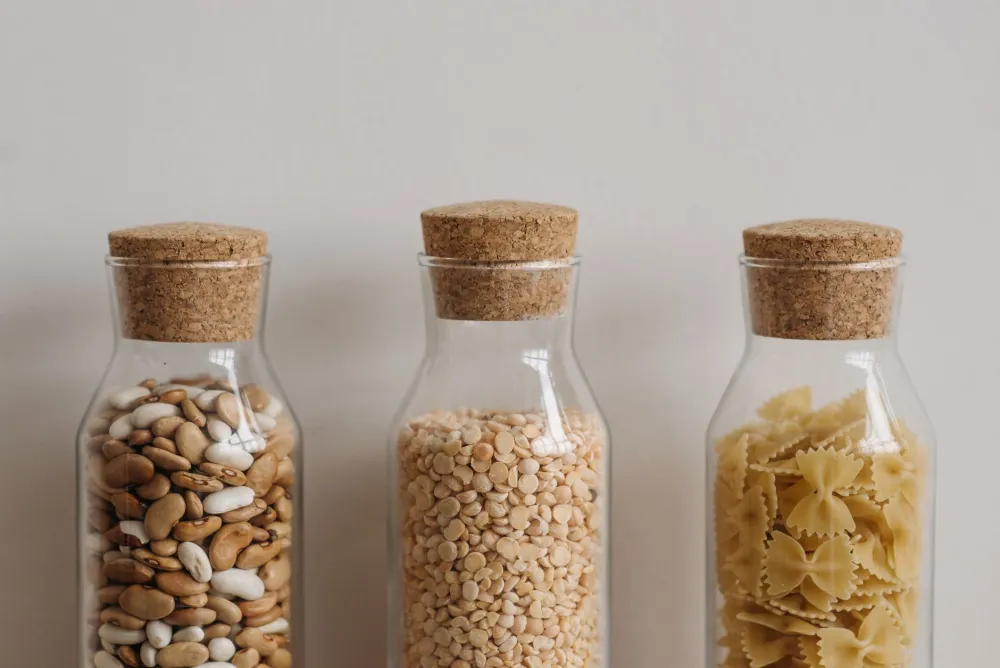
Fiber is one of the cheapest nutrients you can buy. Dried beans and lentils, a canister of old-fashioned oats, frozen broccoli, bananas and plain popcorn kernels are staples at nearly any grocery store. Frozen berries often cost less than fresh in winter and carry similar fiber.
For Vegetarian or Vegan Eating
Chart 3 is already meatless. Vegans can swap dairy yogurt for soy yogurt and add tofu or edamame for protein. New to eating beans daily? Run Chart 1 or Chart 2 with the meat swapped out first, then move up.
For Smaller or Larger Appetites
Women over 50 may only need something close to Chart 1 plus a little extra. A tall, active man might eat all of Chart 2 and add a snack. Trim or add portions until you land near the target for your age group.
For Hectic Weeks
Cook one pot of lentils and one tray of roasted sweet potatoes on Sunday, and half the week is covered. A free 7-day meal prep planner template pairs well with these charts if you like mapping your shopping list ahead of time.

Common High Fiber Diet Schedule Mistakes
The biggest mistake is adding too much fiber too fast, which can cause gas, cramping and bloating within a day or two. Most of the others are close cousins of that one.
- Skipping water: Fiber pulls water into your gut. Without enough fluid, many people end up more constipated, not less. Our guide on how much water you really need daily helps you find a sensible baseline.
- Loading it all at dinner: A 20-gram bean-heavy dinner is a recipe for a rough night. Spread it out.
- Counting juice as fruit: Juicing strips out most of the fiber. Eat the whole apple.
- Relying on fiber bars: Many bars use added fibers such as chicory root (inulin), which some people find especially gassy.
- No snacks on hand: The mid-afternoon slot is where plans fall apart. Keep a short list of simple high fiber snacks at your desk.
What Should You Expect in the First Two Weeks?
Many people notice extra gas or fullness at first, then more regular bathroom habits as the gut adjusts. Experiences vary, and mild changes are common. Pain is another story, and it’s not something to push through.
| Timeframe | What many people notice | What to do |
|---|---|---|
| Days 1 to 3 | Feeling fuller, a little gassy | Hold steady, drink water |
| Days 4 to 7 | Gas often easing, softer stools | Stay on your chart |
| Week 2 | More predictable regularity | Step up if comfortable |
If bloating stays bad after a week, drop back to the previous chart for another week. There’s no prize for finishing the ramp-up early.
Who Should Check With a Doctor or Dietitian First?
If you have a digestive condition, kidney disease, diabetes treated with medication, or a recent bowel surgery, talk with a doctor or registered dietitian before following a high fiber diet schedule. For these groups, the type and timing of fiber can matter a lot.
- Inflammatory bowel disease (IBD): During a flare of Crohn’s disease or ulcerative colitis, some people are advised to limit certain fibers for a time.
- Irritable bowel syndrome (IBS): Beans, apples and wheat are high in FODMAPs, fermentable carbs that can trigger symptoms in some people. A low FODMAP chart with serving sizes may help you talk through options with your clinician.
- Past bowel blockage or slow stomach emptying: Extra fiber may not be safe without guidance.
- Kidney disease or diabetes: Beans and whole grains change potassium, phosphorus and carb intake.
- Pregnancy or an upcoming colonoscopy: Ask your care team, since prep often calls for low-fiber eating.
Some symptoms shouldn’t wait. Blood in your stool, unexplained weight loss, severe or worsening belly pain, vomiting, or a swollen belly with no bowel movements means seeing a doctor promptly, not reading blogs. Any persistent change in bowel habits also deserves a real medical evaluation.

What Does the Research Say About Fiber?
Research consistently links higher fiber intake with better long-term health. Much of the evidence comes from observational studies, which follow people over time and show associations rather than proof of cause. Even so, the pattern is strong enough that major health bodies agree most of us should eat more.
A large analysis of many studies, published in The Lancet, found that people eating the most fiber had lower rates of heart disease, type 2 diabetes and colorectal cancer than people eating the least. The benefits showed up at intakes of roughly 25 to 29 grams a day, close to what the charts above deliver.
The Mayo Clinic notes that soluble fiber may help lower LDL cholesterol and slow the rise in blood sugar after meals. Fiber also feeds gut bacteria, which ferment it into compounds that may support the gut lining. Our piece on what actually feeds your microbiome explains this in more depth.
A few popular claims get ahead of the evidence:
- Myth: more is always better. Fact: very high amounts, especially added quickly, can cause discomfort without clear extra benefit.
- Myth: a supplement equals real food. Fact: whole foods bring vitamins, minerals and several fiber types that a single powder can’t match.
- Myth: fiber melts fat. Fact: fiber may help you feel full longer, which some people find useful, but it isn’t a fat burner.
FAQ
The Bottom Line
A high fiber diet schedule works best when it’s slow, spread out and backed by plenty of water. Start with the chart that matches what you eat now, follow it for a week, and step up about 5 grams at a time using the ramp-up plan. Most adults land somewhere around 22 to 34 grams a day. If you have a digestive condition or any red-flag symptom, check with a doctor before changing your fiber intake.
This article is for informational purposes only and is not a substitute for professional medical advice, diagnosis, or treatment. Always consult a qualified healthcare provider about your specific situation. If you experience severe or sudden symptoms, seek medical care immediately.

Weight Loss and Nutrition
Browse every related article on this topic in one place.