You printed a 1,200 calorie chart on Sunday night, and by Thursday it’s buried under takeout menus. The chart usually isn’t the problem. The problem is the 3 PM pantry moment, when you’re staring at a bag of almonds with no idea whether a handful is 80 calories or 300. (It’s closer to 165.)
- The 1200 Calorie Chart: 40 Foods and a Sample Day
- How Do You Use This 1200 Calorie Chart?
- How Can You Adjust the 1200 Calorie Diet Chart?
- Which Mistakes Make a 1200 Calorie Chart Harder to Follow?
- Who Should Check With a Doctor Before Starting?
- What Does the Research Say About 1,200 Calories?
- FAQ
- The Bottom Line
Everything here is grouped by food type and sorted so the most filling picks come first. The numbers are rounded from USDA FoodData Central, so you won’t be doing decimal math at the stove. Print it, tape it to the fridge, and build meals straight from it.
The 1200 Calorie Chart: 40 Foods and a Sample Day
Start with the daily budget, then fill each meal from the food groups below.
Your Daily Calorie Budget
| Meal | Approx. calories | Build it with |
|---|---|---|
| Breakfast | ~300 | Protein, fruit, small fat |
| Lunch | ~350 | Protein, 2 cups veggies, starch |
| Snack | ~150 | Protein plus fruit or veggies |
| Dinner | ~400 | Protein, veggies, starch, measured oil |
| Day total | ~1,200 | Protein at every meal |
Sample Day at About 1,200 Calories
| Meal | What to eat | Approx. calories |
|---|---|---|
| Breakfast | Greek yogurt, blueberries, peanut butter | ~280 |
| Lunch | Tuna, toast, salad, avocado, orange | ~360 |
| Snack | String cheese and an apple | ~175 |
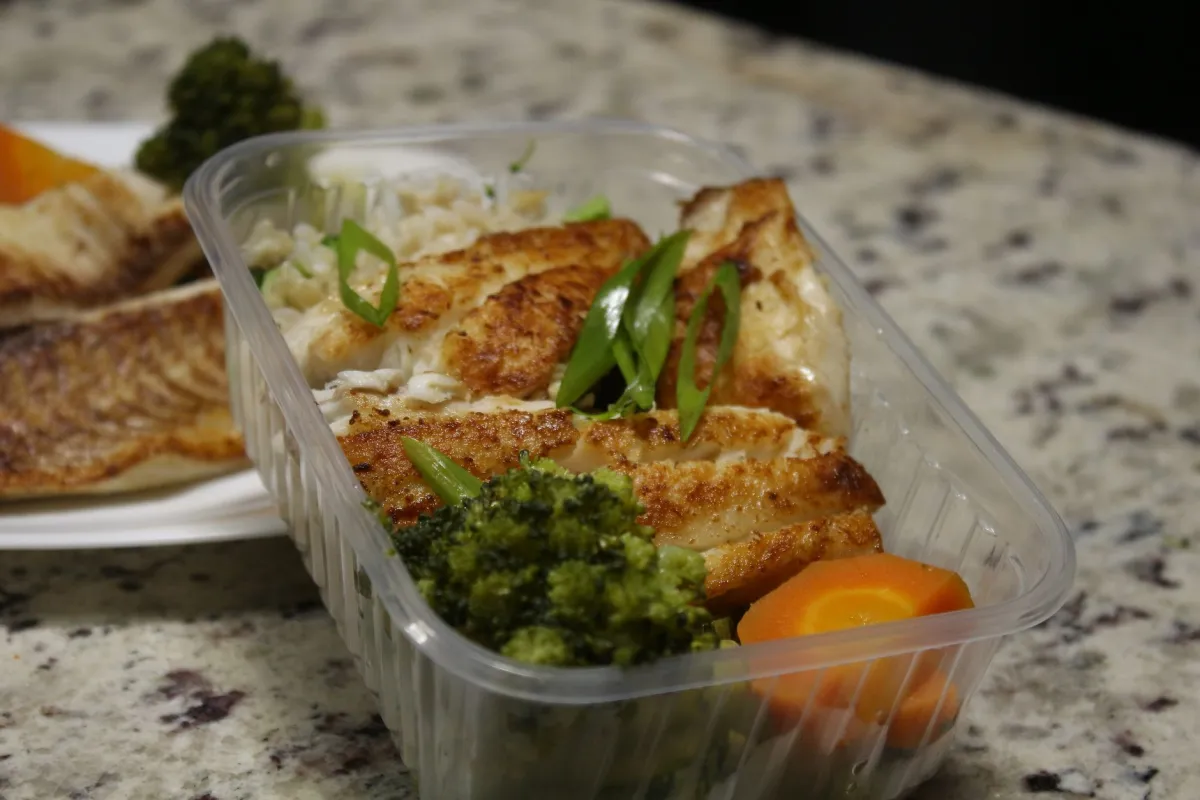
| Dinner | Chicken, brown rice, broccoli, peppers | ~360 |
| Day total | About 90 g protein | ~1,175 |
Portions used: 6 oz yogurt, 1 cup berries, 1 tbsp peanut butter, 3 oz tuna or chicken, 1 slice bread, 1/3 avocado, 1/2 cup rice, 1 tsp olive oil.
Proteins (Most Protein per Calorie First)
| Food | Serving | Approx. calories | Protein (g) |
|---|---|---|---|
| Shrimp, cooked | 3 oz | ~85 | ~20 |
| Egg whites | 3 large | ~50 | ~11 |
| Tuna in water, drained | 3 oz | ~100 | ~22 |
| Chicken breast, skinless | 3 oz | ~140 | ~26 |
| Nonfat plain Greek yogurt | 6 oz | ~100 | ~17 |
| Cottage cheese, 2% | 1/2 cup | ~90 | ~12 |
| Ground turkey, 93% lean | 3 oz | ~170 | ~22 |
| Firm tofu | 3 oz | ~80 | ~8 |
| Whole egg | 1 large | ~70 | ~6 |
Vegetables (Lowest Calorie First)
| Food | Serving | Approx. calories | Fiber (g) |
|---|---|---|---|
| Spinach, raw | 1 cup | ~7 | ~1 |
| Romaine lettuce | 1 cup | ~8 | ~1 |
| Cucumber, sliced | 1 cup | ~15 | ~0.5 |
| Zucchini, chopped | 1 cup | ~20 | ~1 |
| Cauliflower, raw | 1 cup | ~25 | ~2 |
| Cherry tomatoes | 1 cup | ~25 | ~2 |
| Broccoli, raw | 1 cup | ~30 | ~2.5 |
| Red bell pepper | 1 cup | ~40 | ~3 |
| Carrots, chopped | 1 cup | ~50 | ~3.5 |
Fruits (Lowest Calorie First)
| Food | Serving | Approx. calories | Fiber (g) |
|---|---|---|---|
| Watermelon, diced | 1 cup | ~45 | ~0.5 |
| Strawberries | 1 cup | ~50 | ~3 |
| Orange | 1 medium | ~60 | ~3 |
| Raspberries | 1 cup | ~65 | ~8 |
| Blueberries | 1 cup | ~85 | ~3.5 |
| Apple | 1 medium | ~95 | ~4.5 |
| Banana | 1 medium | ~105 | ~3 |
Grains, Beans and Starches (Most Fiber First)
| Food | Serving | Approx. calories | Fiber (g) |
|---|---|---|---|
| Lentils, cooked | 1/2 cup | ~115 | ~8 |
| Black beans, canned, rinsed | 1/2 cup | ~110 | ~7 |
| Popcorn, air-popped | 3 cups | ~95 | ~3.5 |
| Sweet potato, baked | 1 medium | ~105 | ~4 |
| Rolled oats, dry | 1/2 cup | ~150 | ~4 |
| Whole wheat bread | 1 slice | ~80 | ~2 |
| Brown rice, cooked | 1/2 cup | ~110 | ~2 |
Dairy, Fats and Extras (Measure These)
| Food | Serving | Approx. calories | Best use |
|---|---|---|---|
| Unsweetened almond milk | 1 cup | ~35 | Coffee, oats, smoothies |
| Hummus | 2 tbsp | ~70 | Veggie dip, wraps |
| String cheese, part-skim | 1 stick | ~80 | Portable protein snack |
| Avocado | 1/3 medium | ~80 | Salads, toast |
| Skim milk | 1 cup | ~85 | Cereal, lattes |
| Peanut butter | 1 tbsp | ~95 | Apple slices, oats |
| Olive oil | 1 tbsp | ~120 | Roasting, dressings |
| Almonds | 1 oz (~23) | ~165 | Split into two snacks |
- Fill half your plate with vegetables at lunch and dinner.
- Include a protein food at every meal.
- Measure oils, nut butters and nuts every time.
- Drink water through the day.
Legend: ~ = approx.; cal = calories; g = grams; oz = ounces; values rounded from USDA FoodData Central, meats cooked unless noted, brands vary.
How Do You Use This 1200 Calorie Chart?
Think of the chart as a menu builder. Anchor each meal with one protein, add vegetables freely, then spend what’s left on a starch, a fruit and a small, measured fat. Once the pattern clicks, many people can plan a whole day in about ten minutes without having the chart open the entire time.
- Start with the budget: Split 1,200 into roughly 300, 350, 150 and 400 for breakfast, lunch, snack and dinner. Shift the numbers to fit your life. If dinner is your big family meal, give it more.
- Anchor with protein: Pick one food from the protein table for each meal. Many people find a palm-size portion, about 3 ounces (85 grams) of cooked meat or fish, keeps them full noticeably longer than a carb-only meal.
- Pile on vegetables: Two cups of spinach and cucumber cost fewer calories than one tablespoon of peanut butter. Volume is your best friend when calories are tight.
- Add one starch or fruit, then measure fats: A tablespoon of olive oil is about 120 calories, so a casual pour can quietly eat a tenth of your day.
- Log for one week, then loosen up: A simple printable macro tracking sheet helps during the first week. After that, many people can eyeball portions with surprising accuracy.
What to Expect in the First Two Weeks
The first few days are often the hungriest. Your stomach is used to bigger portions, and that 3 PM slump at your desk may hit harder than usual. It tends to ease as protein and fiber start doing their job.
Early scale drops are partly water. When you eat less, your body draws on glycogen, the carbohydrate stored in your muscles and liver, and glycogen holds onto water as it goes. The CDC generally recommends losing weight gradually, about 1 to 2 pounds per week, and slower loss is more likely to stick. By week two, many people notice their appetite and energy settling into a steadier rhythm.
How Can You Adjust the 1200 Calorie Diet Chart?
You can adjust the 1200 calorie diet chart for vegetarian eating, a tight grocery budget or a higher calorie need by swapping foods within the same group. Keep the meal budget the same, trade like for like, and your daily total stays close to 1,200 calories.
Vegetarian or Plant-Forward
Swap meat for tofu, eggs, Greek yogurt, cottage cheese, lentils and black beans. Beans work in your favor here, since half a cup brings roughly 7 grams of protein along with a solid dose of fiber. If you skip dairy too, protein gets harder to hit, so a dietitian can help you plan around it.
On a Budget
Canned tuna, eggs, dry lentils, oats, frozen broccoli and bananas are among the cheapest foods on the chart. Frozen vegetables are typically frozen at peak ripeness and hold up well nutritionally. For a store-ready version, our calorie deficit grocery list groups staples by aisle.
When 1,200 Is Simply Too Low
For many people, it is. Many dietitians treat about 1,200 calories a day as a common floor for women and about 1,500 for men, and going lower generally calls for medical supervision. Taller, younger, very active or male readers will often do better starting with a 1500 calorie meal plan. A slower plan you can stick with beats a strict one you abandon by Wednesday.
Which Mistakes Make a 1200 Calorie Chart Harder to Follow?
The most common mistakes are skipping protein, guessing at fats, saving all your calories for night and treating the plan as permanent. Each one makes hunger worse, and hunger is what ends most diets.
- Eating “diet” carbs alone: A plain rice cake and black coffee for breakfast leaves you starving by 10 AM. Pair carbs with protein.
- Free-pouring oil and nut butter: These are the foods where eyeballing goes wrong most often. Measure them, even after you stop measuring everything else.
- Back-loading the day: Skipping breakfast and lunch to “save” calories often leads to an evening raid on the pantry.
- Drinking calories: Sweetened coffee drinks and juice can add 200 or more calories without making you feel full.
- Going lower when progress stalls: Cutting below 1,200 usually backfires. Our piece on why crash diets backfire explains the rebound pattern.
Slow weeks are normal. If the scale stalls for a few weeks, look at sleep, stress and portion creep before you cut food. Our guide to weight loss plateaus walks through gentler fixes.
Who Should Check With a Doctor Before Starting?
Anyone with a chronic health condition, anyone taking medication that affects blood sugar or appetite, and anyone with a history of disordered eating should talk to a doctor or registered dietitian before following a 1200 calorie chart. A low-calorie plan can interact with medications and conditions in ways a printable chart can’t account for.
- Diabetes: Some diabetes medications can cause low blood sugar when you eat less. A dedicated 1200 calorie diabetic diet PDF is a better starting point, used alongside your care team.
- Pregnancy or breastfeeding: Calorie needs rise during these times. Talk to your doctor before cutting anything.
- Eating disorder history: Counting calories can be triggering. A professional can suggest safer approaches.
- Teens and older adults: Growth and muscle maintenance change the math.
- Kidney, heart or gallbladder conditions: These may affect protein, sodium or fat targets.
- GLP-1 or other weight-loss medications: Appetite can drop so low that protein needs go unmet.
Watch your body as you go. Persistent dizziness, fainting, heart palpitations, hair shedding or constant exhaustion deserve a real medical evaluation. Red-flag symptoms such as chest pain, trouble breathing or unexplained rapid weight loss mean seeing a doctor promptly, not adjusting a chart.
What Does the Research Say About 1,200 Calories?
Research suggests that weight loss on any plan, including a 1200 calorie diet chart for weight loss, depends mainly on a sustained calorie deficit, meaning you take in fewer calories than your body burns. Which foods fill that budget matters more for hunger, energy and nutrition than it does for the scale.
A large randomized trial published in the New England Journal of Medicine in 2009 assigned adults to diets with different mixes of fat, protein and carbohydrates. After two years, weight loss was similar across the groups, which suggests the size of the calorie deficit matters more than the exact macro split. That’s freeing. You can eat foods you actually enjoy.
Protein looks helpful. Several trials suggest higher-protein, reduced-calorie diets may help people feel fuller and hold on to more lean muscle. The CDC also notes that losing a modest 5 to 10 percent of body weight is associated with improvements in blood pressure, cholesterol and blood sugar for many people with excess weight.
| Myth | What the evidence suggests |
|---|---|
| 1,200 calories suits everyone | Needs vary by size and activity |
| Eating less speeds results safely | Very low intake raises health risks |
| You must cut carbs to lose | The calorie deficit matters more |
| Metabolism “shuts down” completely | It slows modestly, not entirely |
The research doesn’t support going as low as possible, though. Losing weight very quickly is associated with a higher risk of gallstones, nutrient gaps and muscle loss. That’s why this 1200 calorie chart works best as a structured, short-term tool with professional input, not a forever plan.

FAQ
The Bottom Line
A 1200 calorie chart works best as a fridge-door menu builder: protein at every meal, vegetables piled high and fats measured. It suits smaller or less active adults best, while many men and active readers will do better at 1,500 calories or more. Print the PDF, build one sample day from the tables, and check with your doctor if you have a health condition or take regular medication. Aim for slow, steady progress you could keep up for months.
This article is for informational purposes only and is not a substitute for professional medical advice, diagnosis, or treatment. Always consult a qualified healthcare provider about your specific situation. If you experience severe or sudden symptoms, seek medical care immediately.

Weight Loss and Nutrition
Browse every related article on this topic in one place.