
You fall into bed around 11, stare at the ceiling until 1 AM, and then hit a wall at your desk around 3 PM. Sound familiar? A paper sleep log, the same basic tool many sleep clinics ask patients to fill in before a first visit, can show you why within about two weeks.
- Free Sleep Schedule Tracker Printable: 14-Day Sleep Log
- How Do You Use a Sleep Schedule Tracker Printable?
- What Should You Look For After Two Weeks?
- Is a Paper Sleep Log Printable Better Than an App?
- How Can You Adjust the Tracker for Your Life?
- Common Sleep Tracking Mistakes
- Who Should Talk to a Doctor First?
- What Does the Research Say About Sleep Logs?
- FAQ
- The Bottom Line
Fill in one row each morning. It takes about two minutes. After 14 days, patterns that are nearly impossible to spot night by night, like the weekend drift or the afternoon latte that keeps you wired, tend to jump off the page.
Free Sleep Schedule Tracker Printable: 14-Day Sleep Log
Log each night within 30 minutes of getting up. Best guesses are fine. Don’t check the clock during the night.
How to fill in each column
- Lights out: the time you put the phone down and tried to sleep.
- Fell asleep: your rough guess, such as 20 min.
- Wake-ups: how many times, and roughly how long you were awake.
- Up for day: the time you got out of bed for good.
- Total sleep: time in bed minus time spent awake.
- Extras: C = caffeine after noon, A = alcohol, N = nap, S = screens in bed, E = evening exercise.
- Rested 1 to 5: 1 = exhausted, 5 = refreshed.
Week 1
| Day | Lights out | Fell asleep | Wake-ups | Up for day | Total sleep | Extras | Rested 1 to 5 |
|---|---|---|---|---|---|---|---|
| Example: Mon | 11:15 PM | 25 min | 1 (10 min) | 6:45 AM | 6 h 55 min | C, S | 3 |
| Day 1 | |||||||
| Day 2 | |||||||
| Day 3 | |||||||
| Day 4 | |||||||
| Day 5 | |||||||
| Day 6 | |||||||
| Day 7 |
Week 2
| Day | Lights out | Fell asleep | Wake-ups | Up for day | Total sleep | Extras | Rested 1 to 5 |
|---|---|---|---|---|---|---|---|
| Day 8 | |||||||
| Day 9 | |||||||
| Day 10 | |||||||
| Day 11 | |||||||
| Day 12 | |||||||
| Day 13 | |||||||
| Day 14 |
Weekly review
| Question | Week 1 | Week 2 |
|---|---|---|
| Average total sleep | ||
| Earliest and latest lights out | ||
| Earliest and latest wake time | ||
| Best-rested day and its extras | ||
| Most common extra | ||
| One change to try next |
Week 1 is your baseline, so change nothing. In week 2, test one small change and compare.
How Do You Use a Sleep Schedule Tracker Printable?
Keep your habits steady during week 1, then change one thing in week 2. That’s the whole method. The power is in the comparison, and a log only works if it’s consistent, so rough estimates beat precise timestamps you never bother to write down.

Here’s a routine that tends to stick for most people:
- Park it by the coffee maker: not on your nightstand. Writing at night means checking the clock, and clock-watching can make it harder to drift off.
- Fill it in before your phone: morning memory fades fast once the inbox opens.
- Guess, don’t measure: “about 30 minutes” is plenty. The pattern matters more than the decimal point.
- Log the weekends too: Friday and Saturday nights often hold the biggest clues.
- Review on day 7 and day 14: use the weekly review table, then pick one thing to test.
Good week 2 experiments are small and specific. Try a fixed wake time every day, cutting caffeine after noon, or swapping the phone in bed for a paperback. If screens are the culprit, our guide to simple fixes for too much screen time covers evening habits that may help.
What Should You Look For After Two Weeks?
Four numbers matter most: your average sleep, how much your bedtime and wake time swing, how long it takes you to fall asleep, and which extras show up on your worst-rated days. Together they tell you far more than any single bad night.
Start with total sleep. The CDC recommends at least 7 hours a night for most adults, and 8 to 10 hours for teens ages 13 to 18. If your average sits at 6 hours and change, that alone may explain the 3 PM crash.
Next, check the swing. If lights out ranges from 10:30 PM on weeknights to 1 AM on Saturdays, your body clock is getting mixed signals. Researchers sometimes call this social jet lag, the jolt you feel when weekend schedules shift as much as a flight across time zones, then you’re expected to function on Monday.
Falling asleep is the third number. Taking roughly 20 to 30 minutes is common. If most nights take much longer, note it, especially if it’s been going on for months.
Finally, match your low ratings to your extras. If every “2” has an A beside it, that nightcap may not be as relaxing as it feels. Alcohol can make you drowsy early, but it’s linked with lighter, more broken sleep later in the night.
Is a Paper Sleep Log Printable Better Than an App?
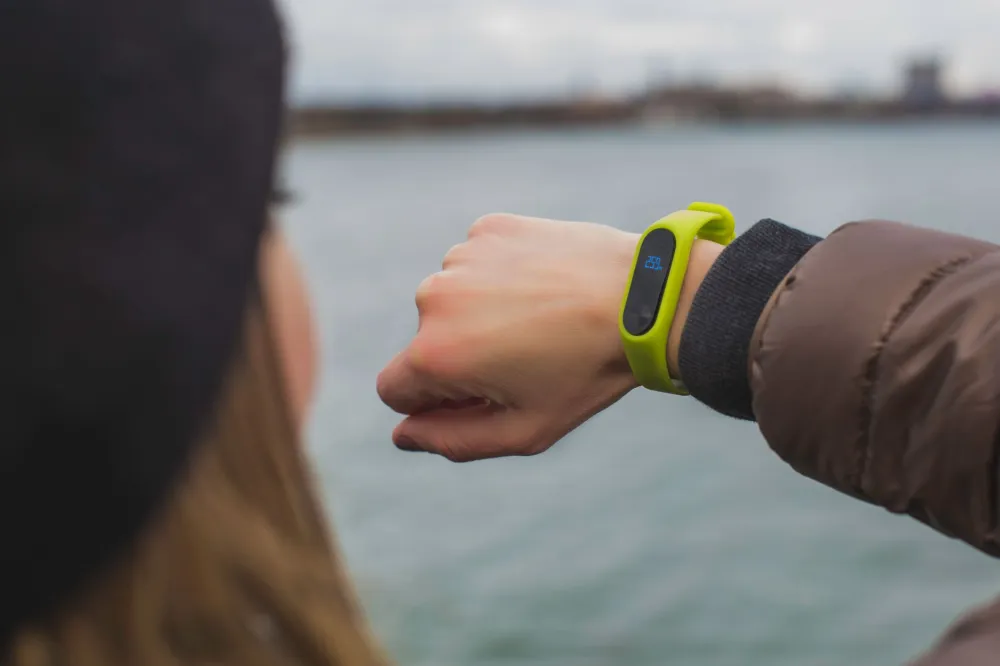
A paper log isn’t better at measuring sleep. It’s better at capturing how you feel and what you did, and it keeps your phone out of the bedroom. Wearables estimate movement and heart rate well enough to show trends, but their sleep-stage readings can be off. Many people get the most from using both.
| Feature | Paper log | Phone app | Wearable |
|---|---|---|---|
| Cost | Free | Free, some paid tiers | Often $100 or more |
| Records how rested you feel | Yes | Sometimes | Rarely |
| Tracks caffeine, alcohol, naps | Yes, easily | If you enter it | Usually not |
| Estimates sleep stages | No | Limited | Yes, accuracy varies |
| Screen near bed | No | Yes | Watch only |
| Easy to show a doctor | Very | Sometimes | Sometimes |
There’s a quirk worth knowing about. Some people get so fixated on a perfect sleep score that the worry itself keeps them awake. Researchers have even coined a name for it, orthosomnia. A simple paper log, filled in once and then put away, is less likely to feed that loop.
How Can You Adjust the Tracker for Your Life?
You can change what counts as “night” and which extras you log, so the sheet matches your real schedule instead of a textbook one. A few tweaks cover most situations.
Shift workers
Replace “Day 1” with the date and your shift type, like “Night shift” or “Off.” Log your main sleep wherever it falls, plus any naps. Check whether sleep after night shifts runs consistently shorter, which is common.
New parents and caregivers
Wake-ups will be high, and that’s not a personal failing. Use the Extras column for things you can control, such as caffeine timing or a nap while someone else takes a feed. Judge progress by the rested score.
Teens and college students
Teen body clocks tend to run later, which is one reason later school start times get so much research attention. Back-to-school weeks and finals are good times to keep a log, because the gap between weekday and weekend sleep often widens.
Daylight Saving Time weeks
The spring clock change costs many people an hour of sleep, and the effect can linger for days. Logging the week before and after shows how long your body takes to adjust. It also tells you whether shifting bedtime in 15-minute steps helps next time.
Common Sleep Tracking Mistakes
Most people trip over the same three things: changing several habits at once, skipping weekend entries, and checking the clock all night for “accurate” numbers. Each one makes two weeks of data harder to read.
- Testing three changes at once: if you cut coffee, add yoga, and buy blackout curtains in the same week, you won’t know which one helped.
- Clock-watching: turn the clock away. Rough estimates are what the log is built for.
- Filling in a week from memory: by Thursday, Monday night is a blur.
- Judging one bad night: everyone has them. Look at averages and trends.
- Chasing a perfect score: the goal is feeling better during the day, not flawless numbers.

If your log points to wind-down problems, a small bedtime routine may help. Gentle yoga poses for sleep are one low-effort option. Our roundup of sleep hygiene habits offers more ideas for your week 2 experiment.
Who Should Talk to a Doctor First?
If you have signs of a sleep disorder, ongoing insomnia, or a medical condition that affects sleep, talk to your doctor. Bring the completed log, since it’s a useful starting point. A tracker can show patterns, but it can’t diagnose what’s causing them.
Plan a visit if your log or your partner notices any of these:
- Loud snoring, gasping or choking: these can be signs of sleep apnea, a condition where breathing repeatedly pauses during sleep. Read more about sleep apnea warning signs.
- Nodding off while driving: or at your desk, even after a full night in bed.
- Insomnia most nights for months: trouble falling or staying asleep at least three nights a week for three months is how chronic insomnia is often described.
- Restless, creepy-crawly legs: sensations that keep you up at night.
- Mood changes: low mood, anxiety, or sleep problems that started with a new medication.
Don’t stop or change any prescribed medication because of what your log shows. Bring it to your doctor or pharmacist instead. If you ever have chest pain, trouble breathing, a sudden severe headache, or new numbness or weakness, get medical care promptly.
What Does the Research Say About Sleep Logs?
Sleep diaries are a standard, useful tool. They’re a core part of cognitive behavioral therapy for insomnia (CBT-I), a structured talk-therapy program that the American College of Physicians recommends as the first-line treatment for chronic insomnia in adults. A log alone isn’t treatment, but it’s the starting point clinicians rely on.
Large observational studies, which track people’s habits rather than assigning them to groups, have linked more regular sleep timing with better health outcomes. Some UK Biobank analyses using wrist-worn activity trackers found that people with more regular sleep had a lower risk of early death. Observational studies can’t prove cause and effect, though, so regularity is best seen as one piece of the puzzle.

The Sleep Foundation and most sleep experts consistently advise keeping a steady wake time, even on weekends. Morning light and a regular rise time help anchor your circadian rhythm, the internal 24-hour clock that times sleepiness and alertness.
Myth vs fact
- Myth: You can fully catch up on the weekend. Fact: extra weekend sleep may ease some tiredness, but it doesn’t appear to fully undo a week of short nights, and it can push your clock later.
- Myth: Everyone needs exactly 8 hours. Fact: needs vary. Most adults do best with at least 7, and your rested score is a helpful guide.
- Myth: Wearables know your sleep better than you do. Fact: they’re useful for trends, but how you feel the next day matters most, and that’s exactly what a paper log captures.
Sleep also seems tied to appetite and stress. If you’re working on weight goals, our piece on sleep and stress as hidden weight loss factors explains why a steadier schedule may help there, too.
FAQ
The Bottom Line
A sleep schedule tracker printable is a low-cost, low-effort way to turn foggy guesses about your nights into patterns you can actually see. Print the free 14-day log, fill in one row each morning, and change nothing in week 1. In week 2, test one small change, such as a fixed wake time, and compare your rested scores. If your log points to loud snoring, daytime dozing, or months of insomnia, take it to your doctor.
This article is for informational purposes only and is not a substitute for professional medical advice, diagnosis, or treatment. Always consult a qualified healthcare provider about your specific situation. If you experience severe or sudden symptoms, seek medical care immediately.

Everyday Health and Wellness
Browse every related article on this topic in one place.