

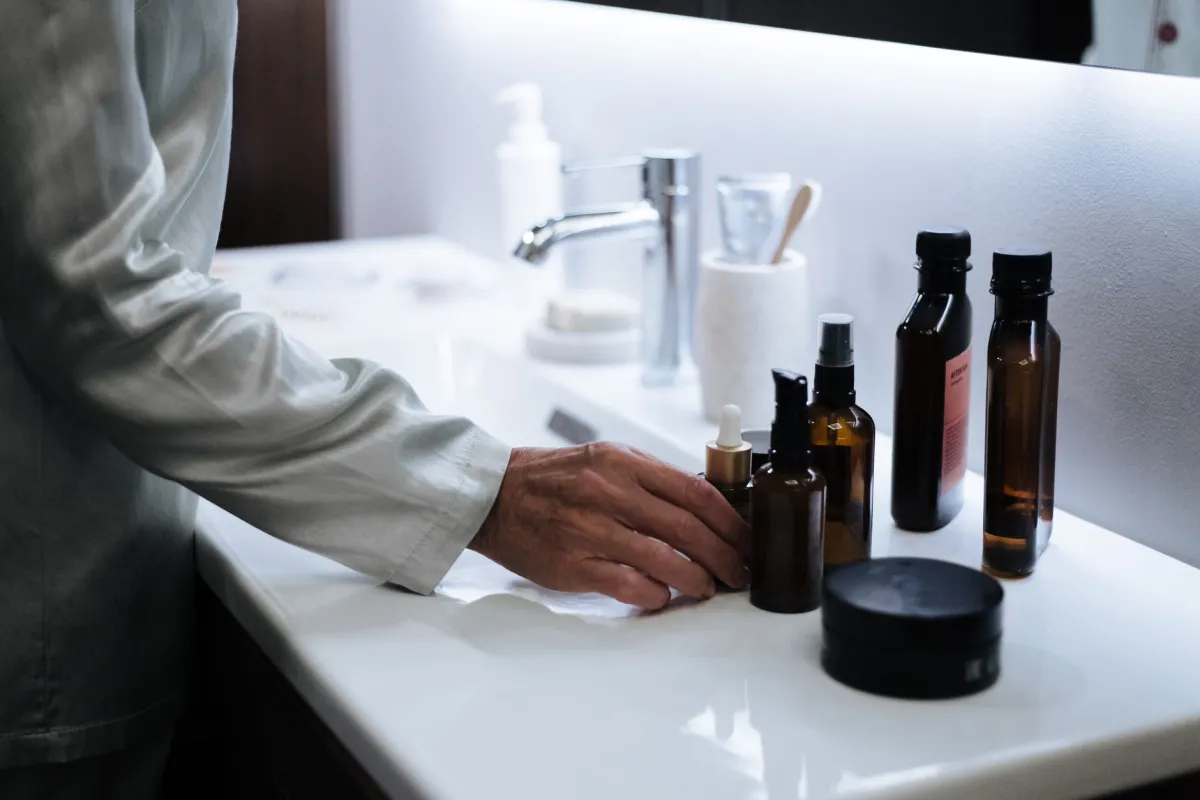
Why Does Skincare Order Actually Matter?
Your skincare routine only works if products actually reach your skin. When you stack them wrong, thicker formulas block thinner ones from absorbing. That expensive vitamin C serum you patted on over a heavy moisturizer? Most of it never got past the surface.
- Why Does Skincare Order Actually Matter?
- The Complete Morning Skincare Order, Step by Step
- Does the Nighttime Routine Follow the Same Order?
- Morning vs. Evening Routine: At a Glance
- Common Skincare Layering Myths, Debunked
- Which Ingredients Should NOT Be Layered Together?
- How Long Does It Take to See Results From the Right Routine Order?
- When Should You See a Dermatologist About Your Skin Routine?
- FAQ
- The Bottom Line
Here’s the science. Skin absorbs lightweight, water-based formulas first. Heavier creams and oils create a semi-occlusive seal, which means they slow down what can pass through. Apply a face oil before your serum and you’ve essentially put a lid on before adding the food. The American Academy of Dermatology keeps the basic order simple: cleanse, apply any treatment or medication, then moisturizer and sunscreen, with makeup last. Thinnest to thickest is a handy rule of thumb for the layers in between.

The Complete Morning Skincare Order, Step by Step
Morning routines are about protection. You’re prepping skin for UV exposure, pollution, and the general chaos of the day. Every step serves that goal.

Does the Nighttime Routine Follow the Same Order?
Mostly yes, with a few key differences. At night, your skin shifts into repair mode, so your evening routine can lean heavier on treatment ingredients and skip sunscreen entirely.
Start with a double cleanse if you wore sunscreen or makeup. The first cleanse, using an oil-based cleanser or a micellar water, lifts sunscreen and makeup. The second cleanse, with your regular gentle cleanser, actually cleans the skin underneath. Skip the double cleanse if you wore minimal product.
After toner, this is where the evening routine diverges. If you use retinol, a vitamin A derivative that research consistently supports for smoothing fine lines and increasing cell turnover, it goes on after toner, before moisturizer. Some people, especially those new to retinol or with sensitive skin, find the “sandwich” method helpful: apply a thin layer of moisturizer first, then retinol, then moisturizer again. This cushions the irritation that retinol can cause without completely blocking its effectiveness.
Facial oils, if you use them, go last in the evening routine. They’re occlusive, which means they help prevent water from evaporating out of the skin overnight. Think of them as a finishing seal. If you’re managing recurring breakouts alongside your routine, the guide on adult acne and why it keeps coming back may help you figure out which ingredients are worth keeping and which might be clogging your pores.
Morning vs. Evening Routine: At a Glance
Here’s how the two routines compare side by side so you can keep this open while you reorganize your shelf.
| Step | Morning | Evening | Why It Goes There |
|---|---|---|---|
| Cleanser | Gentle, once | Double cleanse if SPF worn | Removes overnight oil or daily buildup |
| Toner / Essence | Yes | Yes | Preps skin for absorption |
| Serum | Vitamin C or antioxidant | Retinol or repair serum | Targeted treatment layer |
| Eye Cream | Yes (optional) | Yes (optional) | Delicate orbital area needs lighter formula |
| Moisturizer | Lightweight | Richer cream acceptable | Seals hydration, supports barrier |
| Facial Oil | Optional, before SPF | Yes, last step | Occlusive; locks in everything below |
| Sunscreen (SPF 30+) | Yes, always last | No | UV protection; must sit on top |

Common Skincare Layering Myths, Debunked
A lot of well-meaning advice floating around online gets this wrong. Here are the ones worth clearing up.
Myth: More products means better skin. Research doesn’t support stacking ten serums. Too many active ingredients applied together can cancel each other out or cause irritation. A focused four-to-six step routine, done consistently, outperforms an overcomplicated one every time.
Myth: You should mix your serum into your moisturizer to save time. Don’t. Combining products changes their pH and concentration, which may reduce how well active ingredients work. Apply them in sequence instead.
Myth: Natural oils like coconut oil make a great moisturizer for all skin types. Coconut oil is highly comedogenic, meaning it tends to clog pores for a significant portion of people. It may work fine for some skin types, but it’s not a one-size answer. If blackheads are an ongoing issue, the breakdown of how to get rid of blackheads covers pore-clogging ingredients in more detail.
Myth: Sunscreen belongs under moisturizer. This is probably the most common ordering mistake. Chemical sunscreens, which absorb UV rays and release the energy as heat, work best as an even, unbroken film on top of your other products. Mineral sunscreens, which use zinc oxide or titanium dioxide to physically block UV rays, also need to stay on the surface. Either way, SPF goes last in your morning routine, after moisturizer, not under it.
Which Ingredients Should NOT Be Layered Together?
Some ingredient combinations genuinely do cause problems, and knowing these saves you from irritation, breakouts, or products simply not working.
- Retinol and AHAs/BHAs in the same step: Alpha-hydroxy acids (AHAs, like glycolic or lactic acid) and beta-hydroxy acids (BHAs, like salicylic acid) are chemical exfoliants. Layering them directly with retinol can cause significant irritation and disrupt your skin barrier. Use one on alternating nights instead.
- Vitamin C and retinol together: Both are potent actives. Using them simultaneously, especially at high concentrations, may overwhelm sensitive skin. A common approach is vitamin C in the morning, retinol at night.
- Benzoyl peroxide and retinol: Benzoyl peroxide, a common acne-fighting ingredient, can oxidize and deactivate retinol. Keep these on separate evenings or separate parts of your routine.
- Multiple physical exfoliants in one session: Using a scrub and an exfoliating pad in the same routine is too much. Stick to one exfoliation method per session, two to three times a week at most.
If your skin doesn’t respond to a consistent routine after several weeks, a board-certified dermatologist can assess what’s happening and tailor a prescription approach. Persistent redness, burning, or new rashes after starting a product are signs to pause and get a professional opinion rather than push through.

How Long Does It Take to See Results From the Right Routine Order?
Realistic timelines matter here, because most people give up just before things start working. Cell turnover, the process by which your skin sheds old cells and produces new ones, takes roughly 28 days in younger adults and slows with age. That means most skincare improvements show up on a four-to-twelve week timeline, not overnight.
Hydration improvements are often noticeable within a few days of applying products in the correct order, simply because serums and moisturizer are finally reaching the skin properly. Texture changes from exfoliants or retinol typically take four to eight weeks. Significant changes in hyperpigmentation, dark spots caused by excess melanin production, often takes several months of consistent use.
Consistency beats complexity. A five-step routine done every day will produce better results than a ten-step routine done sporadically. Yes, even on weekends when you’d rather just sleep in and skip it. The skin doesn’t take days off from losing moisture or encountering UV exposure.
For people managing dry or irritated skin through the colder months, getting the product order right is especially critical. The guide on fixing your dry winter skin routine pairs well with this one if you want to dial in your routine for the season ahead. And if you’re curious about which anti-aging steps are actually worth your time and money, the anti-aging basics that beat expensive creams piece cuts through a lot of the noise.
When Should You See a Dermatologist About Your Skin Routine?
A consistent, correctly layered routine handles a lot, but it has limits. See a board-certified dermatologist if you notice persistent redness or burning that doesn’t resolve after stopping a product, new moles or changes to existing ones, significant adult acne that isn’t responding to over-the-counter treatments after three months, or sudden changes in skin texture or color that you can’t explain. These deserve a real evaluation, not a new serum.
Over-the-counter routines can support healthy skin, but prescription-strength ingredients like tretinoin, a stronger form of vitamin A than retail retinol, or hydroquinone for hyperpigmentation require a professional to prescribe and monitor them safely. Good information helps you ask better questions at your appointment. It doesn’t replace the appointment.
FAQ
The Bottom Line
The right order to apply skincare products follows one simple rule: thinnest to thickest. Cleanser first, then toner, then serum, then eye cream, then moisturizer, and sunscreen last in the morning. At night, swap SPF for retinol, placed between toner and moisturizer, and finish with a facial oil if you use one. Getting this sequence right means your active ingredients actually reach your skin instead of sitting on top of a cream barrier doing very little. Pick a routine you’ll stick to, give it at least four to six weeks before judging results, and pause any new product that causes persistent irritation.
This article is for informational purposes only and is not a substitute for professional medical advice, diagnosis, or treatment. Always consult a qualified healthcare provider about your specific situation. If you experience severe or sudden symptoms, seek medical care immediately.
Sources

Skin and Beauty
Browse every related article on this topic in one place.