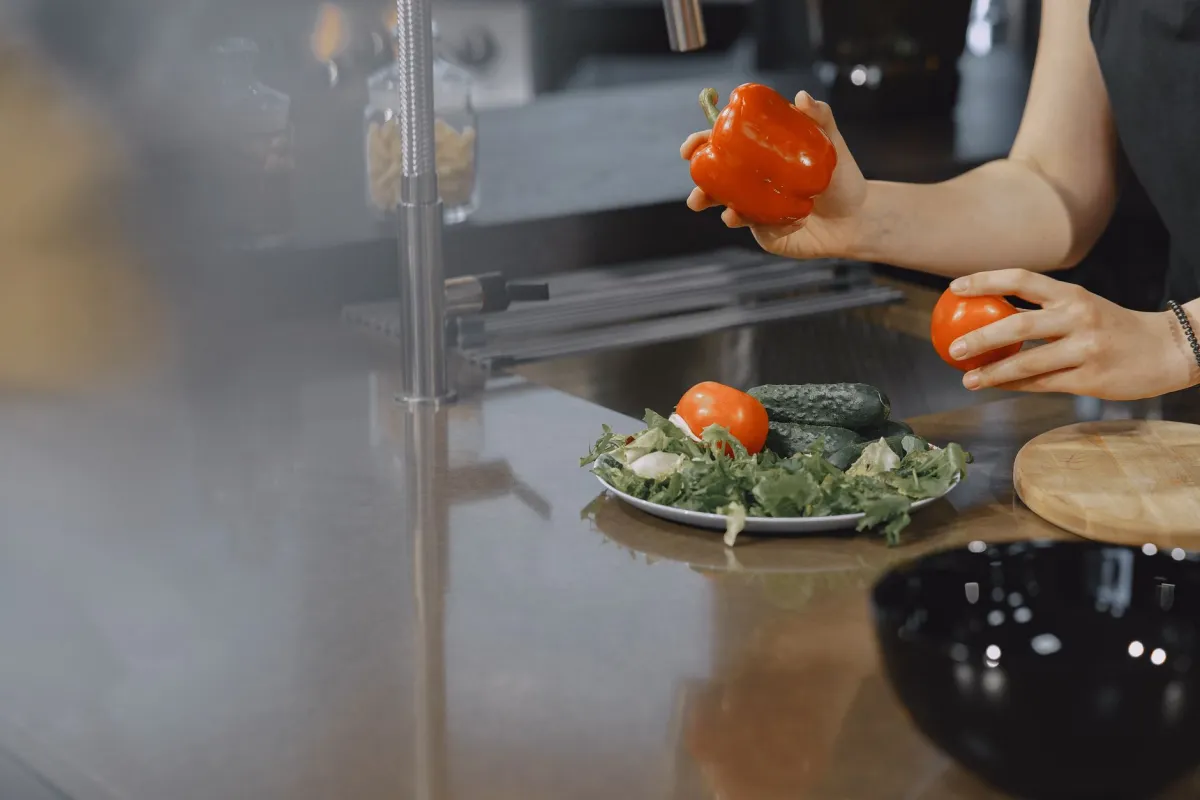
Print a low FODMAP chart PDF, stick it to the fridge, and dinner stops being a guessing game, at least if you live with irritable bowel syndrome (IBS). Here’s the catch most free lists miss: portion size matters as much as the food. A few extra bites of zucchini, or a banana with brown spots, can turn a “safe” food into a bloating trigger.
FODMAPs are fermentable carbohydrates, short for fermentable oligosaccharides, disaccharides, monosaccharides and polyols. In some people, the small intestine absorbs them poorly, so gut bacteria ferment them and produce gas. The low FODMAP diet, developed by researchers at Monash University in Australia, is a short-term plan that removes these carbs and then adds them back one group at a time. The serving sizes below follow Monash lab testing, rounded for American kitchens.
Low FODMAP Chart PDF: 44 Foods and Serving Sizes
Legend: Servings are approx. rounded from Monash University lab testing. Bigger portions may become moderate or high FODMAP.
Easiest, most flexible picks come first in each group. Stick to one portion per food per meal, and space meals and snacks a few hours apart.
Vegetables
| Food | Low FODMAP serving (approx.) | Watch out for |
|---|---|---|
| Carrots | 1 medium | Very low at most portions |
| Potatoes | 1 medium | Garlicky or oniony toppings |
| Baby spinach | 1.5 cups raw | Very low at usual portions |
| Cucumber | 1/2 cup sliced | Very low at usual portions |
| Bok choy | 1 cup chopped | Very low at usual portions |
| Broccoli florets | 3/4 cup | Stalks are higher FODMAP |
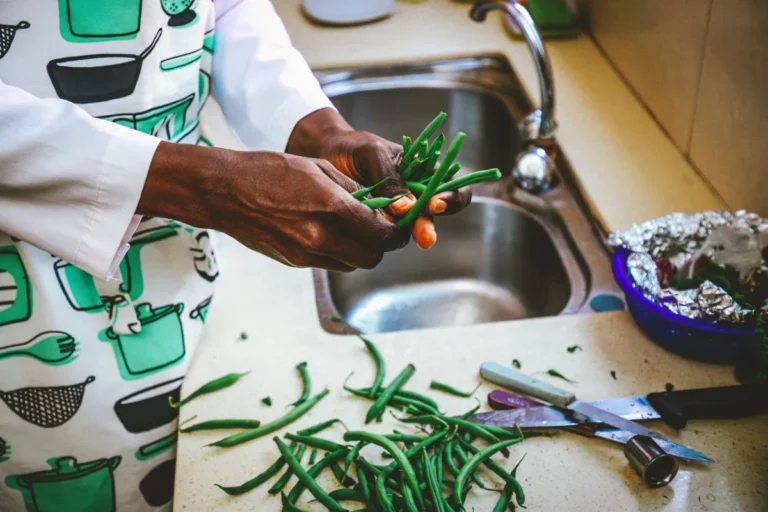
| Green beans | About 15 beans | Bigger plates add polyols |
| Eggplant | 1 cup cubed | Sorbitol rises above this |
| Zucchini | 1/3 cup chopped | Fructans rise at bigger portions |
Fruits (one serving per sitting)
| Food | Low FODMAP serving (approx.) | Watch out for |
|---|---|---|
| Orange | 1 medium | Juice is easy to overdo |
| Strawberries | About 5 medium | Big bowls add fructose |
| Pineapple | 1 cup chunks | Dried pineapple is higher |
| Firm banana | 1 medium | Ripe, spotty banana: 1/3 only |
| Kiwi | 2 small | Higher at larger portions |
| Cantaloupe | 3/4 cup diced | Higher at larger portions |
| Raspberries | About 30 berries | Fructose rises above this |
| Papaya | 1 cup diced | Keep to one fruit per meal |
Grains and Starches
| Food | Low FODMAP serving (approx.) | Watch out for |
|---|---|---|
| White rice | 1 cup cooked | Very low at usual portions |
| Brown rice | 1 cup cooked | Very low at usual portions |
| Quinoa | 1 cup cooked | Very low at usual portions |
| Rolled oats | 1/2 cup dry | Bigger bowls add fructans |
| Corn tortillas | 2 tortillas | Check for added bean flours |
| Wheat sourdough | 2 slices | Choose traditionally fermented loaves |
| Gluten-free bread | 2 slices | Labels with inulin or honey |
Meat, Fish, Eggs and Tofu
| Food | Low FODMAP serving (approx.) | Watch out for |
|---|---|---|
| Eggs | 2 large | FODMAP free; watch sauces |
| Chicken | 4 oz (about 115 g) | Marinades often hide garlic |
| Fish and shellfish | 4 oz (about 115 g) | Breaded coatings may contain wheat |
| Beef, pork, lamb | 4 oz (about 115 g) | Sausages often contain onion |
| Firm tofu | 2/3 cup cubed | Silken tofu is high FODMAP |
| Tempeh | About 3.5 oz (100 g) | Flavored versions with garlic |
Legumes, Nuts and Seeds
| Food | Low FODMAP serving (approx.) | Watch out for |
|---|---|---|
| Peanuts | About 1 oz (28 g) | Peanut butter: about 2 tbsp |
| Walnuts | About 10 halves | Cashews and pistachios are high |
| Canned lentils | 1/4 cup, rinsed | Canned and rinsed beats dried |
| Canned chickpeas | 1/4 cup, rinsed | Hummus usually contains garlic |
Dairy and Alternatives
| Food | Low FODMAP serving (approx.) | Watch out for |
|---|---|---|
| Lactose-free milk | 1 cup (about 240 ml) | Regular milk is high lactose |
| Cheddar cheese | 1.5 oz (about 40 g) | Soft fresh cheeses are higher |
| Butter | 1 tbsp | Very low lactose |
| Almond milk | 1 cup (about 240 ml) | Added inulin or chicory root |
| Lactose-free yogurt | About 6 oz | Honey or high FODMAP fruit |
Flavor Boosters
| Food | Low FODMAP serving (approx.) | Watch out for |
|---|---|---|
| Garlic-infused oil | 1 tbsp | Buy store-made, no garlic pieces |
| Scallion greens | Green tops only | White bulbs are high FODMAP |
| Fresh ginger | 1 tsp grated | Very low at usual portions |
| Soy sauce | 2 tbsp | Sodium if you limit salt |
| Maple syrup | 2 tbsp | Honey and agave are high |
Quick Swaps for Common Trigger Foods
- Onion: swap for scallion greens or chives.
- Garlic: swap for garlic-infused oil.
- Regular milk: swap for lactose-free milk.
- Apples or pears: swap for an orange or kiwi.
- Cashews: swap for walnuts or peanuts.
- Honey: swap for maple syrup.
How Do You Use a Low FODMAP Chart PDF?
Think of the chart as a short-term shopping and portion guide. Build meals from the listed foods at the listed amounts for roughly 2 to 6 weeks, then add higher FODMAP foods back one group at a time. It’s the first phase of a three-part plan, not a permanent menu.

Print one copy, stick it on the fridge, and snap a photo so it comes to the grocery store with you. Then work through these steps in order.
Here’s how the three phases usually compare, based on the approach Monash University teaches.
| Phase | Typical length | What you do | Goal |
|---|---|---|---|
| Elimination | About 2 to 6 weeks | Eat mostly chart foods | See if symptoms calm |
| Reintroduction | Several weeks | Test one FODMAP group | Find your personal triggers |
| Personalization | Long term | Add back tolerated foods | Widest diet you can handle |
If nothing shifts after about 6 weeks of careful elimination, that’s useful information too. It may mean FODMAPs aren’t your main trigger, and it’s a good time to check back in with your doctor rather than cutting even more foods.
How Can You Adjust the Chart for Your Life?
You can bend the chart to fit a tight budget, a plant-based diet or a busy family table without losing what makes it useful. Portions still matter, but the foods don’t need to be fancy.
On a Grocery Budget
Rice, oats, potatoes, carrots, eggs and canned lentils rank among the cheapest foods on the chart. Frozen strawberries, pineapple and spinach work just as well as fresh, and they won’t wilt in the crisper before you get to them. Store-brand lactose-free milk often costs less than name brands.
Vegetarian or Vegan
Plant-based eaters have fewer protein options on this diet, because many beans are high in galacto-oligosaccharides (GOS), a carb that feeds gas-producing bacteria. Lean on firm tofu, tempeh, eggs if you eat them, peanuts, walnuts and small portions of rinsed canned lentils or chickpeas. Rinsing may help, since some GOS seeps into the canning liquid.
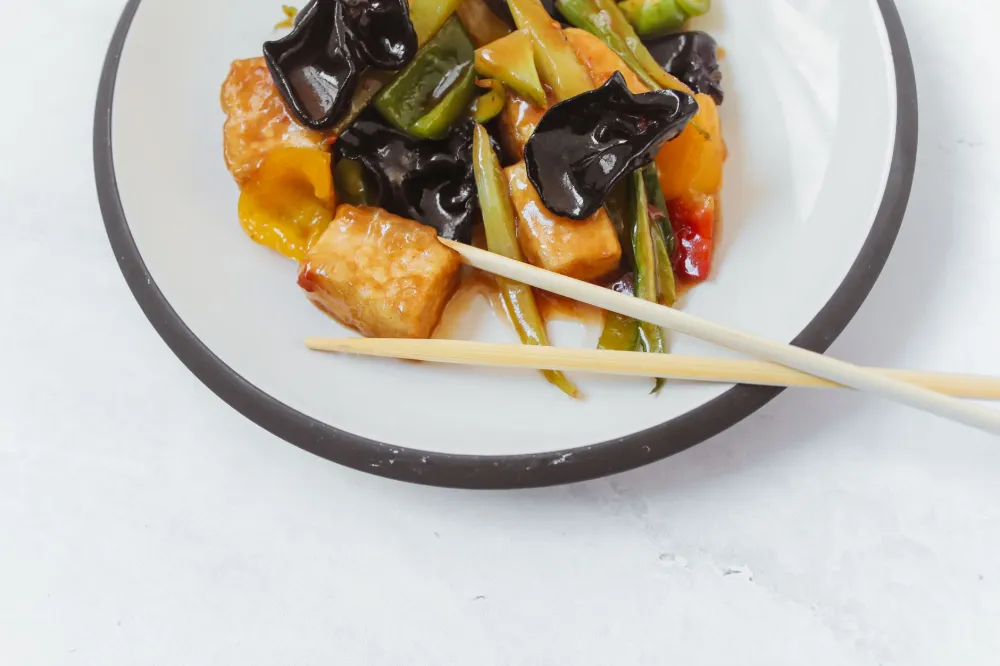
Vegans, in particular, should ask a dietitian about iron, calcium and vitamin B12, since cutting several food groups at once makes gaps more likely.
Family Meals and Holidays
Cook one base meal and add the high FODMAP extras at the table: garlic bread on the side, sautéed onions in a separate pan. Thanksgiving plates can stay on the chart too. Plain roast turkey, mashed potatoes made with lactose-free milk and butter, and green beans tossed in garlic-infused oil all fit. Stuffing made with sourdough and scallion greens can stand in for the onion-heavy classic.
A little planning goes a long way. Mapping a week of chart-friendly meals with a free meal prep planner template can cut down on the Tuesday-night scramble that ends in takeout full of garlic.
Common Mistakes With a Low FODMAP Diet
Most mistakes fall into three buckets: staying in the elimination phase too long, treating listed foods as unlimited, and missing hidden onion and garlic. Each one can make the diet feel harder than it needs to be, or blur what’s actually causing your symptoms.
- Treating it as forever: Elimination is a test, not a lifestyle. Staying strict for months shrinks your diet for no clear benefit.
- Eating unlimited safe foods: A 1/3 cup of zucchini is low; a whole zucchini is not. The portion column matters.
- Missing hidden onion and garlic: Broth, spice blends, salad dressings, deli meats and sauces often contain them, sometimes listed only as onion or garlic powder.
- Letting fiber crash: Swapping whole grains for white bread can cause constipation. Oats, brown rice, quinoa, kiwi and potatoes with skin help keep fiber up.
- Using an old printout: Lists from years ago may not reflect updated testing.
Here’s another trap: changing your diet during a brutal month and blaming, or crediting, food for everything. Your gut and brain talk constantly, and stress can affect gut health in ways that mimic a food reaction.
A simple fix is to log sleep and stress alongside your meals. If a flare lines up with a work deadline rather than a new food, that’s worth knowing before you cut anything else from your plan.
Who Should Check With a Doctor or Dietitian First?
Anyone with new, severe or worsening gut symptoms should see a doctor before starting, because IBS is diagnosed using symptom criteria plus limited testing to rule out other conditions, such as celiac disease or inflammatory bowel disease. A printed chart is a tool for managing diagnosed IBS, not a way to self-diagnose belly trouble.
If celiac disease is on the table, ask about testing before you cut wheat. Celiac blood tests generally require that you still eat gluten, so starting a low FODMAP diet first can muddy the results. MedlinePlus (NIH) has plain-language background on celiac disease and IBS if you want to read up before your appointment.
Skip the diet experiment and see a doctor promptly if you notice any of these red flags:
- Unexplained weight loss: losing weight without trying.
- Bleeding: blood in your stool or black, tarry stools.
- Night symptoms: pain or diarrhea that wakes you from sleep.
- Fever or ongoing vomiting: especially alongside belly pain.
- Later-life changes: new bowel changes after about age 50, or a family history of colon cancer or inflammatory bowel disease.
Sudden or severe belly pain needs prompt care, too. Our guide to lower abdominal pain causes and when to worry covers the warning signs. People who are pregnant, managing diabetes, have a history of disordered eating, or are planning this for a child should talk with their doctor first, and a registered dietitian trained in FODMAPs is the ideal guide for almost everyone.
What Does the Research Say About Low FODMAP?
Research suggests the low FODMAP diet may ease bloating, gas, belly pain and bowel changes in many adults with IBS. It was designed as a short-term tool, though, and strict long-term use has real downsides. Most of the trial evidence is for the elimination phase. Reintroduction and personalization are recommended mainly to limit the downsides of long-term restriction.
Monash University, where the diet was developed, reports that many people with IBS notice symptom relief. Several randomized trials, which compare a group on the diet against a group eating differently, have reported benefits for IBS symptoms. Major US gastroenterology guidelines suggest a limited trial of the diet for people with IBS. For more background on IBS treatment options, Mayo Clinic is a reliable general reference.

The concern is your microbiome, the trillions of bacteria living in your gut. Some short-term studies have found that strict FODMAP restriction may lower levels of helpful bacteria such as bifidobacteria. That’s why reintroduction matters, and why many of the foods you’ll test, like onions, beans and wheat, are also foods that feed your microbiome.
Myth vs. Fact
Myth: Low FODMAP is a weight loss diet. Fact: It wasn’t designed or well studied for weight loss, and following it without IBS may just make eating harder.
Myth: Low FODMAP means gluten-free. Fact: The diet limits fructans, carbs found in wheat, not gluten itself. Traditionally made wheat sourdough fits in small portions.
Myth: Trigger foods are off-limits for life. Fact: Many people find they tolerate several FODMAP groups well once they test them, and some handle small portions of their triggers.
FAQ
The Bottom Line
A low FODMAP chart works best as a short, structured experiment, not a permanent rulebook. Print it, measure portions for the first week, and log your IBS symptoms next to your meals for about 2 to 6 weeks. Then reintroduce foods one group at a time, ideally with a registered dietitian, so you land on the widest diet your gut can handle. If you notice red flags like weight loss or bleeding, see your doctor before changing anything else.
This article is for informational purposes only and is not a substitute for professional medical advice, diagnosis, or treatment. Always consult a qualified healthcare provider about your specific situation. If you experience severe or sudden symptoms, seek medical care immediately.

Weight Loss and Nutrition
Browse every related article on this topic in one place.