
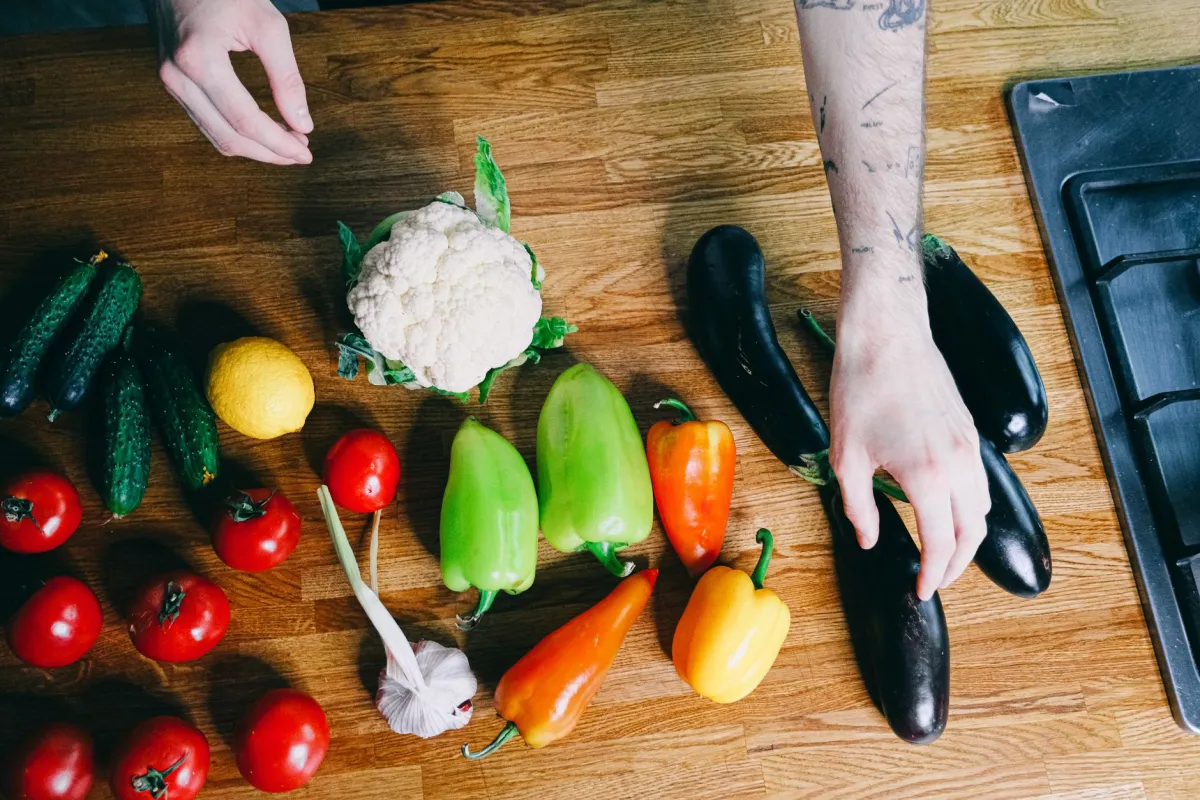
Most healthy eating charts end up taped to the fridge and forgotten by Wednesday. The usual reason? They say “eat more vegetables” without saying how much, or what a cup of broccoli actually gives you next to a handful of almonds.
- Your Healthy Eating Chart: 43 Foods by Group
- How Do You Use a Healthy Eating Chart Day to Day?
- Which Simple Swaps Make the Biggest Difference?
- How Can You Adjust the Chart for Your Life?
- What Are the Most Common Healthy Eating Chart Mistakes?
- Who Should Check With a Doctor or Dietitian First?
- What Does the Research Say About Balanced Eating?
- FAQ
- The Bottom Line
The numbers come from USDA FoodData Central and are rounded so you can read them at a glance. Use the chart to build a plate, plan a grocery run, or settle the 3 PM snack debate in about ten seconds.
Your Healthy Eating Chart: 43 Foods by Group
Legend: approximate values per serving from USDA FoodData Central, rounded. Cal = calories, g = grams, 0 = none or trace. The best picks sit at the top of each table.
Build Your Plate First
| Plate section | Share of plate | Easy portion guide | Pick from |
|---|---|---|---|
| Vegetables | About half, with fruit | 1 to 2 fists | Vegetables table |
| Protein | About one quarter | 1 palm (about 3 oz) | Protein table |
| Whole grains or starch | About one quarter | 1 cupped hand | Grains table |
| Fruit | Side or dessert | 1 fist | Fruits table |
| Dairy or fortified alternative | On the side | 1 cup or 1 oz cheese | Dairy table |
| Healthy fats | Small add-on | 1 thumb (about 1 tbsp) | Fats table |
Vegetables (Sorted by Fiber)
| Food | Serving | Cal | Protein (g) | Fiber (g) | Standout nutrient |
|---|---|---|---|---|---|
| Broccoli, cooked | 1 cup | ~55 | ~4 | ~5 | Vitamins C and K |
| Green peas, cooked | 1/2 cup | ~65 | ~4 | ~4 | Vitamin K |
| Brussels sprouts, cooked | 1 cup | ~55 | ~4 | ~4 | Vitamin K |
| Sweet potato, baked | 1 medium | ~105 | ~2 | ~4 | Vitamin A |
| Red bell pepper, raw | 1 cup chopped | ~40 | ~1.5 | ~3 | Vitamin C |
| Cauliflower, cooked | 1 cup | ~30 | ~2 | ~3 | Vitamin C |
| Carrot, raw | 1 medium | ~25 | ~0.5 | ~2 | Vitamin A |
| Spinach, raw | 1 cup | ~7 | ~1 | ~1 | Vitamin K, folate |
Fruits (Sorted by Fiber)
| Food | Serving | Cal | Protein (g) | Fiber (g) | Standout nutrient |
|---|---|---|---|---|---|
| Raspberries | 1 cup | ~65 | ~1.5 | ~8 | Vitamin C |
| Pear, with skin | 1 medium | ~100 | ~0.5 | ~5.5 | Fiber |
| Apple, with skin | 1 medium | ~95 | ~0.5 | ~4.5 | Fiber |
| Blueberries | 1 cup | ~85 | ~1 | ~3.5 | Vitamin K |
| Banana | 1 medium | ~105 | ~1.5 | ~3 | Potassium |
| Orange | 1 medium | ~60 | ~1 | ~3 | Vitamin C |
| Strawberries | 1 cup halves | ~50 | ~1 | ~3 | Vitamin C |
Whole Grains and Starches (Sorted by Fiber)
| Food | Serving | Cal | Protein (g) | Fiber (g) | Standout nutrient |
|---|---|---|---|---|---|
| Whole wheat pasta, cooked | 1 cup | ~175 | ~7.5 | ~6 | B vitamins |
| Barley, cooked | 1 cup | ~195 | ~3.5 | ~6 | Beta-glucan fiber |
| Quinoa, cooked | 1 cup | ~220 | ~8 | ~5 | Magnesium |
| Rolled oats, dry | 1/2 cup | ~150 | ~5 | ~4 | Beta-glucan fiber |
| Popcorn, air-popped | 3 cups | ~95 | ~3 | ~3.5 | Whole grain |
| Brown rice, cooked | 1 cup | ~220 | ~5 | ~3.5 | Magnesium |
| Whole wheat bread | 1 slice | ~80 | ~4 | ~2 | B vitamins |
Proteins (Sorted by Protein)
| Food | Serving | Cal | Protein (g) | Fiber (g) | Standout nutrient |
|---|---|---|---|---|---|
| Chicken breast, skinless, cooked | 3 oz | ~140 | ~26 | 0 | Niacin |
| Salmon, cooked | 3 oz | ~160 | ~20 | 0 | Omega-3 fats |
| Shrimp, cooked | 3 oz | ~85 | ~20 | 0 | Selenium |
| Tofu, firm | 1/2 cup | ~180 | ~20 | ~3 | Calcium (check label) |
| Tuna, canned light in water | 3 oz drained | ~75 | ~17 | 0 | Vitamin B12 |
| Lentils, cooked | 1/2 cup | ~115 | ~9 | ~8 | Folate, iron |
| Black beans, cooked | 1/2 cup | ~115 | ~7.5 | ~7.5 | Folate |
| Chickpeas, cooked | 1/2 cup | ~135 | ~7 | ~6 | Folate |
| Egg | 1 large | ~70 | ~6 | 0 | Choline |
Dairy and Alternatives (Sorted by Protein)
| Food | Serving | Cal | Protein (g) | Fiber (g) | Standout nutrient |
|---|---|---|---|---|---|
| Greek yogurt, plain nonfat | 6 oz | ~100 | ~17 | 0 | Calcium |
| Cottage cheese, 1% fat | 1/2 cup | ~80 | ~14 | 0 | Protein; watch sodium |
| Milk, 1% fat | 1 cup | ~100 | ~8 | 0 | Calcium, vitamin D |
| Soy milk, unsweetened | 1 cup | ~80 | ~7 | ~1 | Calcium if fortified |
| Cheddar cheese | 1 oz | ~115 | ~6.5 | 0 | Calcium |
Healthy Fats, Nuts and Seeds (Sorted by Fiber)
| Food | Serving | Cal | Protein (g) | Fiber (g) | Standout nutrient |
|---|---|---|---|---|---|
| Chia seeds | 1 tbsp | ~60 | ~2 | ~4 | Omega-3 (ALA) |
| Almonds | 1 oz (about 23) | ~165 | ~6 | ~3.5 | Vitamin E |
| Avocado | 1/3 medium | ~80 | ~1 | ~3.5 | Monounsaturated fat |
| Peanut butter, natural | 2 tbsp | ~190 | ~7 | ~2 | Niacin |
| Ground flaxseed | 1 tbsp | ~35 | ~1.5 | ~2 | Omega-3 (ALA) |
| Walnuts | 1 oz | ~185 | ~4 | ~2 | Omega-3 (ALA) |
| Olive oil, extra virgin | 1 tbsp | ~120 | 0 | 0 | Monounsaturated fat |
Daily Values Worth Knowing
These are FDA Daily Values used on US food labels, based on a 2,000-calorie diet.
- Fiber: about 28 g a day
- Sodium: less than 2,300 mg a day
- Added sugars: less than 50 g a day
- Water: sip through the day; needs vary with heat and activity
Want more? Browse all our free printables: meal plans, food lists, trackers and challenges, each with a PDF.
How Do You Use a Healthy Eating Chart Day to Day?
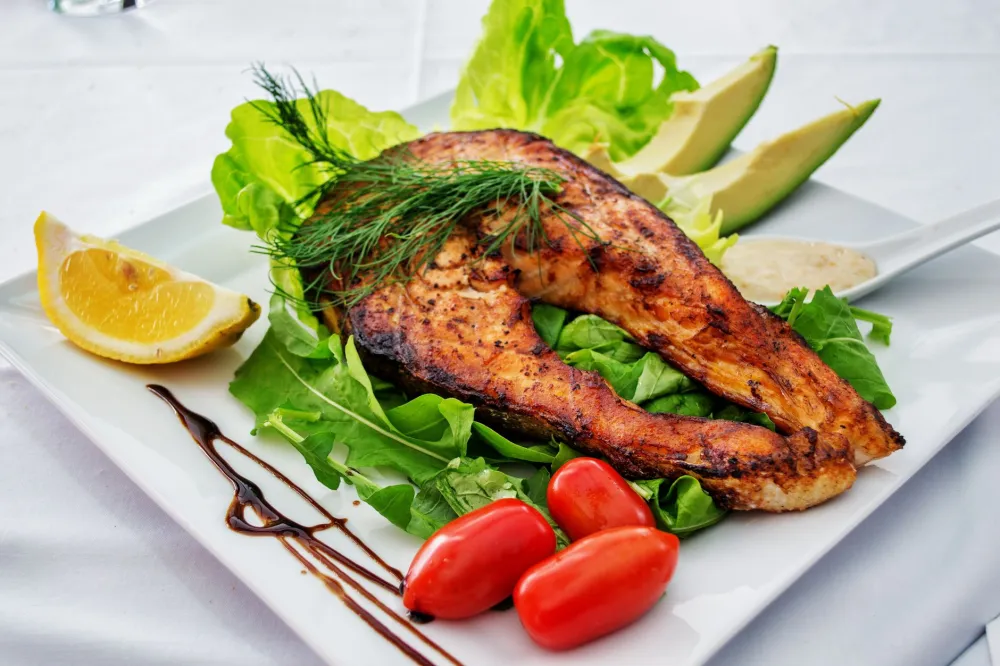
Building one meal at a time is the easiest way to use a healthy eating chart. Pick a protein, add one or two vegetables, choose a whole grain or starchy vegetable, then finish with a little healthy fat. You don’t need every group at every meal, and a balanced diet across the whole day is the real goal.
Many people find this routine easier to stick with than a strict meal plan:
- Print and post it: Put the PDF where you actually plan food, like the fridge door or the inside of a pantry cabinet.
- Circle 10 foods you already like: Start there. A chart full of foods you’d never eat is just wallpaper.
- Build one plate a day: Use the plate guide at dinner first, since it’s often the meal you have the most control over.
- Shop from the top rows: The highest-fiber and highest-protein picks sit at the top of each table on purpose.
- Check in after two weeks: Pay attention to hunger between meals, afternoon energy and how your digestion feels.
What should you expect early on? Many people notice they feel fuller for longer after meals built around protein and fiber, often within the first week or two. Some gas or bloating is common when fiber jumps quickly, and it tends to ease as your gut adjusts. Pairing the chart with a free meal prep planner template can turn it into a weekly menu in about 15 minutes.
Which Simple Swaps Make the Biggest Difference?
Small swaps between foods you already eat usually beat big overhauls, since they don’t ask you to rebuild your whole routine. Each swap below uses foods from the chart and keeps the meal familiar.
| Usual pick | Chart swap | What you gain |
|---|---|---|
| White toast | Whole wheat toast | More fiber, similar calories |
| Flavored yogurt | Plain Greek yogurt with berries | More protein, less added sugar |
| Chips at 3 PM | Air-popped popcorn | Whole grain, more fiber |
| Orange juice | A whole orange | Fiber and slower eating |
| White rice | Brown rice or quinoa | More fiber and magnesium |
| Creamy dressing | Olive oil and lemon | Mostly unsaturated fat |
Snacks are where swaps pay off fastest. If the afternoon vending machine keeps winning, our high fiber snacks you can print list has more ready-to-grab options built on the same idea.
How Can You Adjust the Chart for Your Life?
This chart adapts to most budgets, eating styles and appetites. You swap foods within each group rather than skipping groups, so the structure stays the same while the specific foods change.
On a Tight Budget
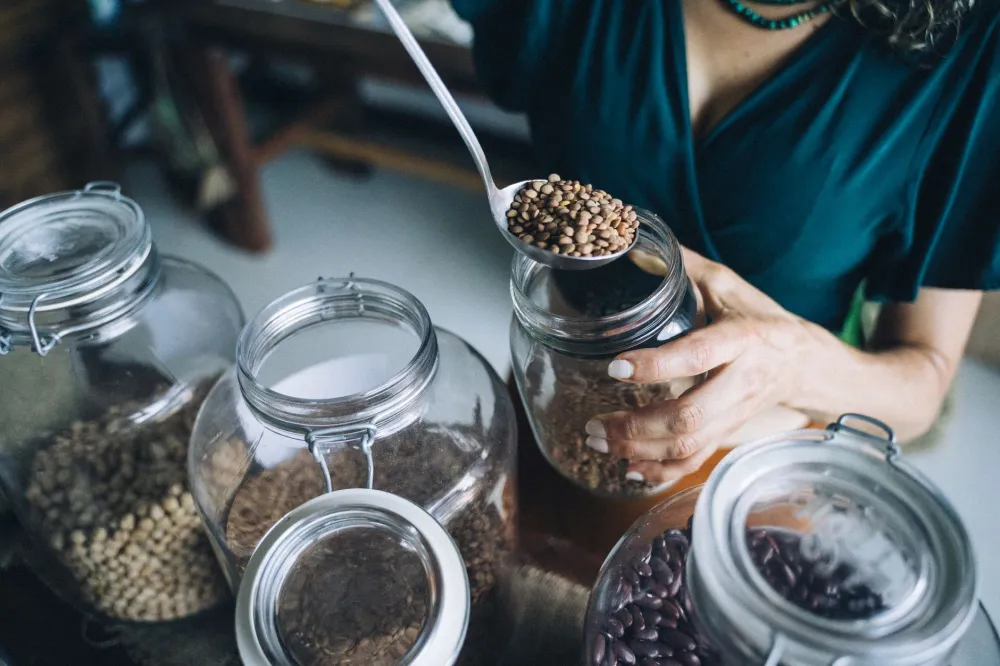
Dried lentils and beans, rolled oats, eggs, bananas, carrots and canned light tuna are among the cheapest rows on the chart. Frozen vegetables and berries are smart buys too, since they’re typically frozen soon after harvest and keep their nutrients well. Store-brand plain yogurt, oats and frozen produce are usually nutritionally similar to name brands.
Vegetarian or Vegan
Tofu, lentils, black beans and chickpeas carry most of the protein load, with Greek yogurt or eggs if you eat them. Our high protein foods chart sorts 42 options if you want a longer list. Vegans should know that vitamin B12 comes naturally almost only from animal foods, so a fortified food or supplement is usually needed. Ask your doctor or a pharmacist which option suits you.
Portion Sizes and Appetite
The hand-based portion sizes on the plate guide scale with you, since a taller, more active person tends to need more food. If you’re still hungry after a meal, add another fist of vegetables or a bit more protein before reaching for extra starch. Skip slashing portions to speed things up. Our piece on why crash diets backfire explains why steady habits tend to last longer.
What Are the Most Common Healthy Eating Chart Mistakes?
The biggest mistake is treating the numbers as exact rules instead of a rough guide. A few myths trip people up again and again, so here’s how they hold up against what nutrition experts generally recommend.

- Myth: the calorie numbers are precise. Fact: database and label values are estimates. Brand, ripeness, cooking method and portion all shift them.
- Myth: lower calories always means healthier. Fact: nuts and olive oil are calorie-dense, yet research links them with heart benefits, while a cup of spinach alone won’t keep you full.
- Myth: juice equals fruit. Fact: whole fruit keeps its fiber. USDA MyPlate counts 100% juice toward fruit but recommends choosing whole fruit more often.
- Myth: one bad meal ruins the plan. Fact: eating patterns over weeks matter far more than any single dinner.
- Mistake: forgetting drinks and sauces. Sweet coffee drinks, soda and creamy sauces can add a lot of added sugar and calories the chart doesn’t show.
Here’s the thing: the chart leans on whole and minimally processed foods on purpose. If much of your week comes from packaged snacks and ready meals, our look at ultra-processed foods and simple swaps is a useful next read.
Who Should Check With a Doctor or Dietitian First?
Most healthy adults can follow a general balanced diet chart safely. Some people need personal advice before changing how they eat, though. A registered dietitian, a nutrition professional with clinical training, can tailor the chart to a medical condition.
- Kidney disease: potassium, phosphorus and protein limits may apply to foods like bananas, beans and dairy.
- Diabetes on medication: changing carbs can shift blood sugar, so your medication plan may need review by your care team.
- Digestive conditions: people with irritable bowel syndrome (IBS) may react to some high-fiber foods on the chart.
- Pregnancy, food allergies or an eating disorder history: talk to your doctor before following any food chart.
Some symptoms call for a real medical evaluation, not a new food plan. Unexplained weight loss, trouble swallowing, ongoing stomach pain or blood in your stool mean seeing a doctor promptly. Chest pain or trouble breathing needs emergency care right away.
What Does the Research Say About Balanced Eating?
Research consistently links eating patterns rich in vegetables, fruits, whole grains, legumes and nuts with lower risk of heart disease and type 2 diabetes. Most of that evidence comes from observational studies, which track what people eat and how their health turns out. Those studies show associations, not proof of cause.
The gap between advice and reality is wide. The CDC has reported that only about 1 in 10 US adults eats enough fruits and vegetables, and the Dietary Guidelines for Americans note that most people fall short on fiber and whole grains. That’s why this chart sorts the highest-fiber picks to the top.

Plate-based eating has solid support too. Harvard Health has long recommended filling about half your plate with vegetables and fruits, a quarter with protein and a quarter with whole grains, which is the same split the plate guide uses above.
Processing seems to matter as well. In a small, tightly controlled NIH trial, adults offered ultra-processed meals ate roughly 500 more calories a day than when offered minimally processed meals, even with similar nutrients on offer. It involved about 20 people and was short, so it hints at a mechanism rather than settling the question.
So what doesn’t the research support? Single superfoods fixing a whole diet, detox claims, or the idea that you must hit exact numbers every day. A healthy eating chart works because it nudges your overall pattern, not because any one row is magic. For more tools in the same style, browse our free printables collection.
FAQ
The Bottom Line
A healthy eating chart is most useful when it tells you what to add to your plate, not just what to avoid. Start with the plate guide: half vegetables and fruit, a palm of protein, a cupped hand of whole grains and a thumb of healthy fat. Pick 10 foods you already enjoy from the top rows, add fiber slowly, and check in after two weeks. If you have a medical condition or take medications, run the chart past your doctor or a dietitian first.
This article is for informational purposes only and is not a substitute for professional medical advice, diagnosis, or treatment. Always consult a qualified healthcare provider about your specific situation. If you experience severe or sudden symptoms, seek medical care immediately.

Weight Loss and Nutrition
Browse every related article on this topic in one place.