

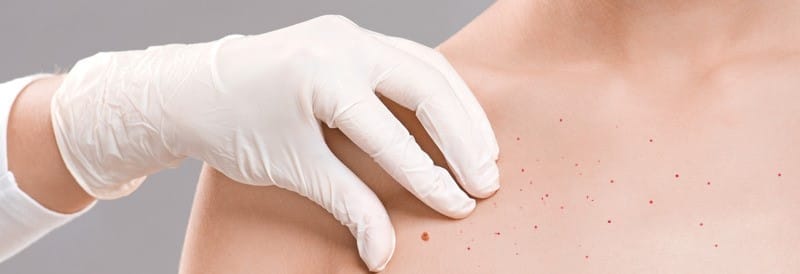
Breakouts on the chest are frustrating in their own way. They show up on the part of you that a V-neck, a swimsuit or a gym top puts on display, and the skin there behaves differently from your face. The good news is that chest acne usually responds well to the right routine. Knowing how to get rid of chest acne mostly comes down to a slightly different approach and a bit of patience.
Why You Get Acne on Your Chest
Chest acne forms the same way as facial acne. Hair follicles (pores) get clogged with oil and dead skin cells, a bacterium called Cutibacterium acnes multiplies inside the blocked pore, and inflammation follows. The result can be blackheads, whiteheads, red bumps, pus-filled spots or deeper, painful lumps.
The chest and upper back are a common spot because they have a high density of oil glands. On top of that, a few everyday triggers make breakouts there more likely:
- Sweat that sits on the skin. Staying in a damp workout top traps sweat, oil and bacteria against the pores.
- Friction and pressure. Tight sports bras, backpack straps and synthetic fabrics rub and irritate follicles. Dermatologists call this acne mechanica.
- Hormones. Androgens drive oil production, which is why chest breakouts often flare around periods, in the teen years and with conditions like PCOS.
- Hair and body products. Heavy conditioners, hair oils, thick body lotions and some sunscreens run down onto the chest and clog pores.
- Certain medicines, including corticosteroids, some hormone treatments and lithium.
- Genetics. If your parents had body acne, you are more likely to get it.
Diet plays a smaller role than most people think, but some research links high-sugar diets and, in some people, dairy or whey protein supplements with more breakouts. If you notice a pattern, it is worth testing a change for a couple of months.
Is It Acne or Fungal Acne?
Not every bumpy rash on the chest is acne. A common lookalike is Malassezia folliculitis, often called fungal acne, caused by an overgrowth of yeast that normally lives on the skin. It needs different treatment, and regular acne products will not clear it.
| Regular acne | Fungal acne | |
|---|---|---|
| Look | Mixed sizes: blackheads, whiteheads, red bumps, cysts | Small bumps of the same size, often in clusters |
| Itch | Usually not itchy | Often itchy |
| Blackheads | Common | Rare |
| Triggers | Hormones, oil, friction | Heat, humidity, sweating, recent antibiotics |
| Responds to | Benzoyl peroxide, salicylic acid, retinoids | Antifungal washes and creams |
According to DermNet, an antifungal shampoo such as ketoconazole 2% or selenium sulfide, used as a body wash and left on the skin for about five minutes before rinsing, often helps. If you are unsure which you have, a dermatologist can tell quickly.

How to Get Rid of Chest Acne at Home
For mild to moderate breakouts, over-the-counter products work well when you use them consistently.
1. Use a benzoyl peroxide wash
Benzoyl peroxide kills acne bacteria and helps unclog pores. The American Academy of Dermatology recommends a body wash with up to 10% benzoyl peroxide for body acne. Lather it on the chest and leave it for a minute or two before rinsing, so it has time to work. Rinse well and use white towels and T-shirts, because it bleaches fabric.
2. Or try salicylic acid
Salicylic acid washes and sprays exfoliate inside the pore and are good for blackheads and whiteheads. If benzoyl peroxide irritates your skin, this is a gentler place to start. Avoid using several strong exfoliants at once.
3. Add adapalene for stubborn breakouts
Adapalene 0.1% gel is a retinoid available without a prescription. It keeps pores from clogging in the first place. Apply a thin layer every other night at first, then nightly as your skin adjusts. Our guide to starting retinoids without irritation covers how to build up slowly.
4. Shower soon after sweating
Rinse off and change out of sweaty clothes as soon as you can after exercise. If you cannot shower straight away, a cleansing wipe is better than nothing.
5. Wear breathable, looser fabrics
Cotton and moisture-wicking workout tops reduce friction and trapped sweat. Wash gym clothes, bras and bedsheets regularly.
6. Rethink your hair and body products
Rinse conditioner off with your head tilted forward, then wash your chest afterwards. Choose body lotions and sunscreens labeled non-comedogenic or oil-free.
7. Hands off
Squeezing chest spots pushes inflammation deeper and raises the risk of scars and dark marks. If you are tempted, read why popping pimples backfires first.
Treatments a Dermatologist May Recommend
See a dermatologist if your chest acne is painful, leaves scars or dark marks, or has not improved after two to three months of over-the-counter treatment. Options include:
- Prescription topical treatments, such as stronger retinoids (tretinoin) or clindamycin combined with benzoyl peroxide.
- Oral antibiotics, such as doxycycline, for a few months to calm inflamed breakouts.
- Hormonal treatment for women, such as certain birth control pills or spironolactone, when breakouts follow the menstrual cycle.
- Isotretinoin for severe, scarring or persistent acne. It is very effective but needs close medical supervision.
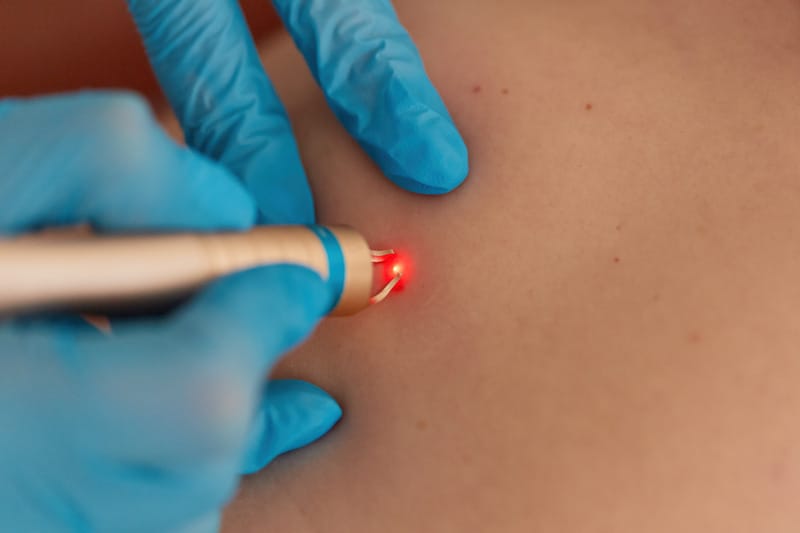
- Procedures such as chemical peels, light therapy or laser treatment, mainly for stubborn spots and scars.
Dealing With Dark Marks and Scars
Many people are left with flat brown or red marks after a breakout. These are not true scars and usually fade over several months. Daily sunscreen on exposed skin speeds this up, and retinoids, azelaic acid or niacinamide can help further. Raised or pitted scars do not fade on their own, but a dermatologist can treat them with options such as laser resurfacing or steroid injections.
FAQ
Why am I suddenly getting acne on my chest?
Common triggers are a new workout routine, sweaty or tight clothing, a new hair or body product, hormonal changes or a new medication. If the bumps are small, uniform and itchy, it may be fungal acne instead.
How long does chest acne take to clear?
With consistent treatment, most people see improvement in 6 to 8 weeks. Dark marks left behind can take 3 to 6 months to fade.
Can I use face acne products on my chest?
Yes. The same active ingredients work on the chest. The skin there is usually a little less sensitive than the face, so body washes with higher strengths are often fine.
Does chest acne mean a hormone problem?
Not usually. But if you also have irregular periods, excess hair growth or acne along the jawline, ask your doctor about checking for conditions like PCOS.
Is chest acne different in adults?
Adult breakouts are often more hormonal and slower to clear. Our article on why adult acne keeps coming back goes into the details.
The Bottom Line
Chest acne is common and very treatable. Start with a benzoyl peroxide or salicylic acid wash, shower soon after sweating, wear breathable clothing and give any routine at least 6 to 8 weeks. If the bumps are itchy and uniform, try an antifungal wash. If breakouts are painful, scarring or not improving, a dermatologist has stronger options that work.
This article is for general information and is not a substitute for advice from a doctor or dermatologist.
Sources
- American Academy of Dermatology: Back and Body Acne
- American Academy of Dermatology: Acne Treatment
- American Academy of Dermatology: Tips for Acne-Prone Skin
- DermNet: Malassezia Folliculitis
- Cleveland Clinic: Acne
- NHS: Acne
Medical disclaimer: This article is for general information only and is not a substitute for advice, diagnosis or treatment from a qualified health professional. If your symptoms are severe, sudden or getting worse, contact a doctor or emergency services.

Skin and Beauty
Browse every related article on this topic in one place.



Comments are closed.