
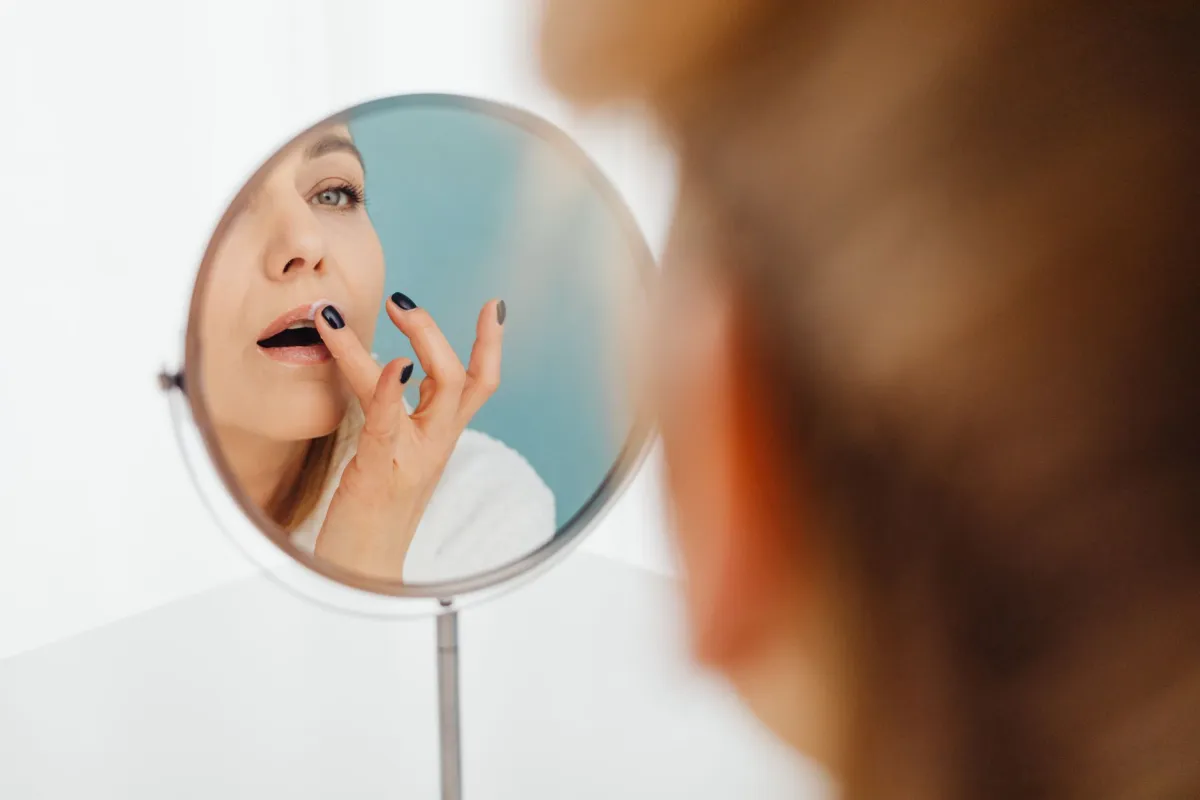
Your lip stings, a bump is forming, and you have a big meeting on Thursday. Is it a pimple you can ignore, or a cold sore you need to handle carefully? Most people can tell the difference in under a minute once they know what to check.
- Pimple vs Cold Sore: What's the Real Difference?
- How Do You Tell a Pimple vs Cold Sore Apart?
- What Sets Off a Cold Sore vs a Lip Pimple?
- What Does a Cold Sore Look Like Day by Day?
- Think It's a Cold Sore? What to Do in the First 48 Hours
- How Do You Treat a Pimple on Your Lip?
- How Do You Treat a Cold Sore?
- Pimple vs Cold Sore Myths: What the Evidence Says
- Could Your Lip Bump Be Something Else?
- When Should You See a Doctor About a Lip Bump?
- How Can You Prevent the Next Outbreak or Breakout?
- FAQ
- The Bottom Line
Below, you’ll find seven clues, a side-by-side table, a day-by-day cold sore timeline and the warning signs that mean it’s time to stop guessing.
Pimple vs Cold Sore: What’s the Real Difference?
A pimple and a cold sore can look alike on day one, but they start from different places. One is a clogged pore. The other is a virus that has woken up. That gap affects how long the bump lasts and whether you can pass it along.
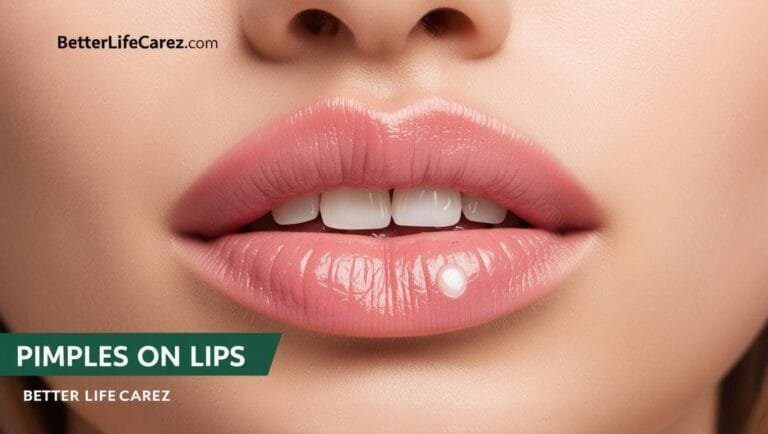
A lip pimple is a clogged pore. Oil (doctors call it sebum) and dead skin cells plug the opening, acne bacteria multiply and the spot swells. It isn’t contagious, and it usually settles on its own within about a week.
A cold sore, also called a fever blister, is a flare-up of the herpes simplex virus, most often herpes simplex virus type 1 (HSV-1). After the first infection, the virus hides in nerve cells and can reactivate later, causing a cluster of small blisters on or around the lip. The virus can’t be cleared from your body, but outbreaks can be managed.
HSV-1 is far more common than most people realize. The World Health Organization (WHO) estimates that roughly two-thirds of people under 50 worldwide carry it. Many of them picked it up in childhood from an ordinary kiss on the cheek, and plenty never get a single sore.
How Do You Tell a Pimple vs Cold Sore Apart?
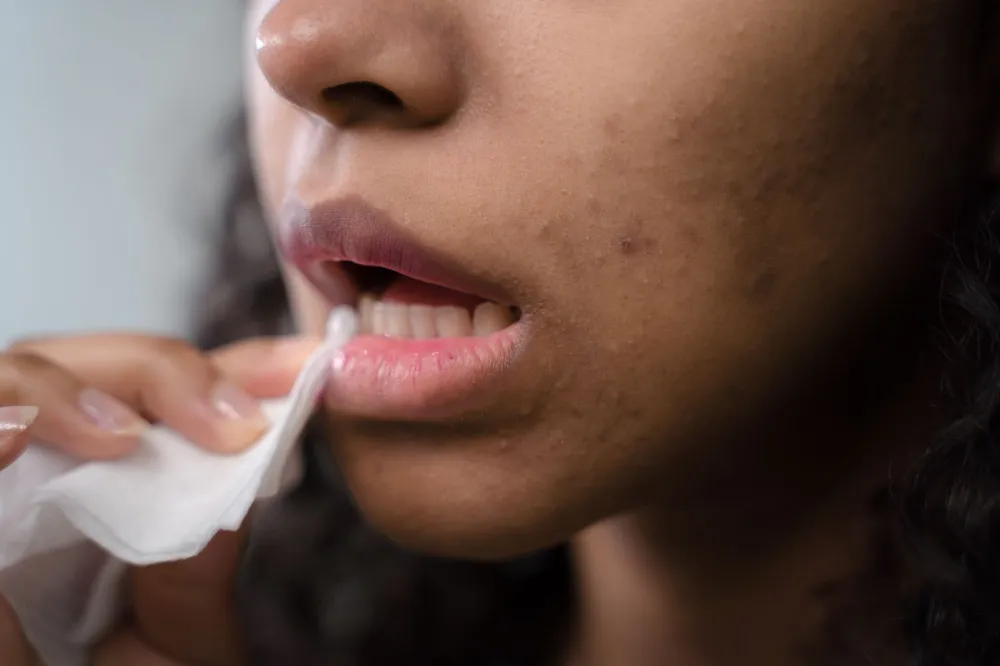
The fastest check comes down to three questions: Did you feel tingling first? Is it one bump or a cluster? And exactly where is it sitting on your lip? The seven clues below cover the same features a doctor would look at.
Clue 1: Did it tingle before it showed up?
This is the most telling clue. Many people feel tingling, itching or burning in one small spot for a day or so before a cold sore appears. Doctors call this early warning phase the prodrome.
A pimple rarely gives you that heads-up. You’re more likely to notice a tender, slightly swollen spot that aches when you smile, chew or brush past it.
Clue 2: Is it one bump or a cluster?
Pimples tend to work solo: one raised, rounded bump. A cold sore usually appears as a group of tiny blisters packed together, sometimes merging into one larger, irregular sore. If you can count several pinhead-sized bubbles, lean toward cold sore.
Clue 3: Where exactly is it?
Cold sores favor the lip border, the edge where the red part of your lip meets the surrounding skin. They often return to the same spot each time, and they can also pop up near the nostrils or on the chin.
Pimples usually form on the skin around the mouth or right at the lip line. The smooth, red part of your lip has few oil glands, so a bump squarely in the middle of it is less likely to be a classic pimple.
Clue 4: What’s inside it?
A pimple that has come to a head has a white or yellow center and feels firm underneath. Cold sore blisters hold clear to straw-colored fluid under a paper-thin roof, and that roof breaks easily, often within a day or two.
Clue 5: How does it change over a few days?
A pimple swells, may come to a head, then flattens and fades, often within three to seven days. A cold sore follows a more dramatic arc. Blisters form, burst and weep, then dry into a yellowish or brown crust before the skin heals underneath.
Clue 6: How does it feel?
Pimples are tender when pressed, a bit like a small bruise. Cold sores are more likely to burn, sting or itch, and they can hurt even when nothing is touching them.
Clue 7: Has this happened before?
Your history counts. If you’ve had a sore in the same spot after a cold, a sunburn or a brutal week at work, the virus is a likely culprit. If you’re also breaking out on your chin or jawline, or you just switched lip products, a pimple fits better.
Here’s the full comparison in one table, handy for a quick mirror check.
| Feature | Lip pimple | Cold sore |
|---|---|---|
| Early warning | Tenderness, slow swelling | Tingling, burning or itching |
| Shape | Single raised bump | Cluster of tiny blisters |
| Contents | White or yellow pus | Clear or straw-colored fluid |
| Usual spot | Skin around the lip line | Lip border, often same spot |
| Typical duration | About 3 to 7 days | About 1 to 2 weeks |
| Contagious? | No | Yes, until fully healed |
| Cause | Clogged pore | Herpes simplex virus |
What Sets Off a Cold Sore vs a Lip Pimple?
Cold sores tend to be triggered by things that strain your immune system or irritate your lips. Lip pimples come from oil, clogged pores and friction. Knowing your usual triggers can be another useful tell, because the timing often gives the answer away.
Common cold sore triggers
The Mayo Clinic lists several well-known triggers that can wake up the dormant virus:
- Illness and fever: a cold or flu is the classic setup, which is how the fever blister got its nickname.
- Sun and wind: a ski trip or a long beach day can leave lips burned and vulnerable.
- Stress and fatigue: outbreaks often land during exam weeks, deadlines and short nights.
- Hormonal shifts: some people notice outbreaks around their period.
- Lip injury: chapped, cracked lips, dental work or cosmetic procedures near the mouth.
Common lip pimple triggers
Lip pimples have more everyday causes. Heavy, waxy lip balms and some lipsticks can clog pores along the lip line, and many people notice breakouts after switching products. Resting your chin in your hand at your desk, pressing a phone to your face or shaving around the mouth can all add friction and bacteria.
Hormones play a role too, especially for breakouts along the chin and jaw. If bumps around your mouth keep returning month after month, our guide to why adult acne keeps coming back explains the usual culprits and what tends to help.
What Does a Cold Sore Look Like Day by Day?
A typical cold sore moves through five stages, from tingling to crusting, and usually heals within about one to two weeks without leaving a scar. First-ever outbreaks tend to be the roughest and can drag on longer.
| Stage | Typical days | What you notice |
|---|---|---|
| Tingle | Days 1 to 2 | Itching, burning, slight swelling |
| Blisters | Days 2 to 4 | Cluster of tiny fluid bubbles |
| Weeping | Days 4 to 5 | Blisters break, sore looks raw |
| Crusting | Days 5 to 8 | Yellow-brown scab forms |
| Healing | Days 8 to 14 | Scab flakes, pink skin underneath |
Your own timeline may run faster or slower. Cold sores are most contagious from the blister stage through the open, weeping stage, but the virus can still spread until the skin has fully healed.
A pimple rarely follows this path. If you’re still unsure after day two, watch what happens next. A bump that blisters, weeps clear fluid and crusts over is almost certainly a cold sore.
Think It’s a Cold Sore? What to Do in the First 48 Hours
The first day or two matter most, because treatment tends to work best when started at the first tingle. If the clues point to a cold sore, these steps may help shorten the outbreak and protect the people around you.
Most cold sores clear up with this kind of basic care. If yours is spreading, unusually painful or not improving after about a week, check in with a doctor rather than waiting it out.
How Do You Treat a Pimple on Your Lip?
A lip pimple usually clears on its own within a week. The best approach is gentle: a warm compress, a careful spot treatment and your fingers kept away. Aggressive fixes tend to backfire on the thin skin around your mouth.
Start with a warm, clean washcloth pressed against the bump for about 10 minutes, two or three times a day. The warmth may help the pimple come to a head and drain on its own. For a fuller rundown of quick fixes, see our guide on how to get rid of a pimple fast.
Spot treatments with benzoyl peroxide or salicylic acid can help. Use a tiny dab on the bump itself and keep it off the red part of your lip. Both can dry and sting delicate skin, and benzoyl peroxide can bleach towels and pillowcases. Hydrocolloid pimple patches are another option many people like, partly because they keep you from fiddling with the spot.
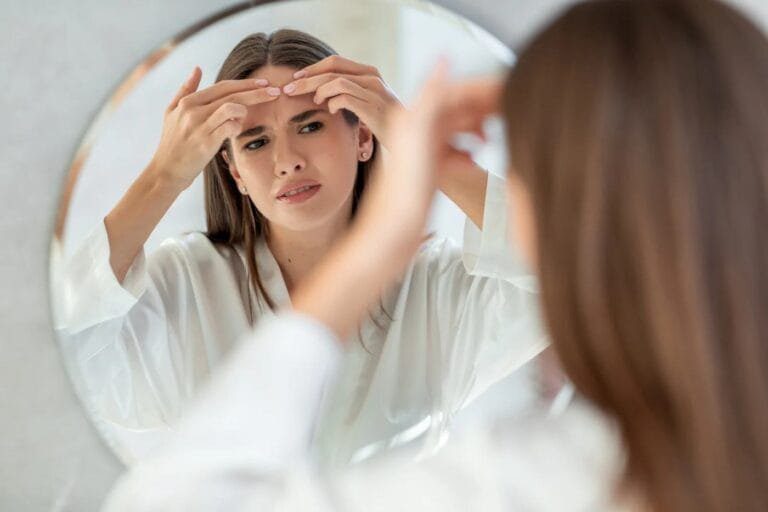
Resist the urge to squeeze. Popping can push bacteria deeper, cause swelling and leave a dark mark that outlasts the pimple itself. Our article on why you shouldn’t pop a pimple explains what to do instead. If a bump is large, deep and painful, a dermatologist can treat it safely in the office.
For more on lip-specific breakouts, including why they form where they do, our full guide to a pimple on the lip covers causes and treatment in more detail.
How Do You Treat a Cold Sore?
There’s no cure for the virus behind cold sores. Antiviral medicines and simple home care can shorten outbreaks and ease the pain, though. Untreated cold sores usually heal on their own, so treatment mainly helps them clear faster and hurt less.
Prescription antivirals such as acyclovir, valacyclovir and famciclovir are the most effective tools available. They work by slowing the virus’s ability to copy itself, which is why timing matters so much. Starting them at the first tingle tends to bring the best results.
If you get cold sores often, talk to your doctor about your options. Some people keep a prescription on hand so they can start it the moment symptoms begin. Others with frequent outbreaks take an antiviral daily under a doctor’s guidance. Your doctor will decide the right medicine and dose for you.
Over-the-counter docosanol cream is a reasonable choice if you can’t see a doctor quickly. The benefit appears modest, so think of it as a small head start rather than a fix. Applying it with a cotton swab, not a fingertip, helps keep the virus off your hands.
Pimple vs Cold Sore Myths: What the Evidence Says
Several popular beliefs about lip bumps are wrong or unsupported by good research, and a few can make things worse. Here are the myths worth dropping:
- Myth, a pimple can turn into a cold sore: Fact: they have different causes. A clogged pore can’t become a viral infection, although a cold sore can be mistaken for a pimple on day one.
- Myth, you’re only contagious with a visible sore: Fact: cold sores are most contagious when blisters are present, but HSV-1 can spread even when there’s no sore at all.
- Myth, toothpaste dries it right up: Fact: there’s no good evidence that toothpaste, rubbing alcohol or lemon juice helps either bump, and they often irritate the skin.
- Myth, cold sores mean poor hygiene or an STI: Fact: most people catch HSV-1 in childhood through everyday contact. It says nothing about how clean or careful you are.
- Myth, lysine reliably prevents outbreaks: Fact: research on lysine, lemon balm and similar remedies is small and mixed. Supplements aren’t tightly regulated and can interact with medications, so check with a pharmacist first.
Early antiviral treatment and keeping your hands off have real evidence behind them. Most kitchen-cabinet remedies, on the other hand, are mostly hope.
Could Your Lip Bump Be Something Else?
Yes, several other conditions can look like a pimple or a cold sore, and most are harmless. A sore that doesn’t follow the usual pattern is worth a closer look.
Tiny, painless, pale yellow or white dots on the lips are often Fordyce spots, which are visible oil glands and completely normal. Our guide to Fordyce spots vs pimples on the lip shows how to tell them apart. Canker sores, by contrast, form inside the mouth, aren’t contagious and aren’t caused by the cold sore virus.
Red, cracked corners of the mouth usually point to angular cheilitis, which is often linked to saliva pooling, dryness or a yeast or bacterial infection. Honey-colored crusts that spread quickly, especially in kids, may be impetigo, a contagious bacterial skin infection that usually needs a doctor’s treatment. A soft, painless bubble on the inner lip may be a mucocele, a small blocked salivary gland.
One more possibility deserves mention. A sore, scaly patch or lump on the lip that doesn’t heal within a few weeks, especially on a sun-exposed lower lip, should be checked by a doctor to rule out skin cancer. It’s rare, but it’s exactly the kind of thing that’s easiest to treat when caught early.
When Should You See a Doctor About a Lip Bump?
Most lip pimples and cold sores heal at home, but some situations call for a prompt medical evaluation instead of more mirror-checking. See a doctor soon if you notice any of these:
- A sore near your eye: eye pain, redness or light sensitivity during an outbreak needs same-day care, because herpes in the eye can damage vision.
- A weakened immune system: from cancer treatment, an organ transplant, HIV or immune-suppressing medicines.
- Eczema with spreading sores: people with eczema can develop a widespread herpes infection that needs urgent treatment.
- Fever and spreading redness: warmth, swelling or red streaks may signal a bacterial skin infection.
- Slow healing or frequent returns: a sore lasting more than about two weeks, or outbreaks several times a year.
- A painful first outbreak: fever, swollen gums or trouble eating and drinking, especially in children.
If you’re pregnant or caring for a newborn and think you have a cold sore, talk to your doctor for advice specific to your situation. And if you have severe or sudden symptoms, such as trouble breathing or rapid swelling of the face or lips, get medical care immediately.
If the question still isn’t settled after a few days, a doctor can usually tell just by looking. When there’s doubt, they may swab a fresh blister and send it for a lab test that detects the herpes virus, which gives you a clear answer.
How Can You Prevent the Next Outbreak or Breakout?
You can’t erase the cold sore virus, but you can lower the odds of an outbreak by protecting your lips from the sun and supporting your immune system. Lip pimples respond best to cleaner habits and lighter products.
For cold sores, sun protection is the easiest win. The American Academy of Dermatology (AAD) recommends lip balm with SPF 30 or higher, reapplied often, especially on ski slopes, at the beach and on windy hikes. Good sleep, stress breaks and the basics in our guide to daily habits that support immunity may help too, since outbreaks often follow illness and exhaustion.
Keeping a simple log can pay off. If a fever blister shows up every time you get sick or skip sleep, you’ll know to keep treatment ready and start it at the very first tingle.
For lip pimples, try switching to a lighter, non-comedogenic lip product (one designed not to clog pores) and wiping away lip balm residue before bed. Wash your face after sweaty workouts, clean your phone screen regularly and keep your hands away from your chin during long desk days.
Related reading: Pimple on Foreskin or Shaft: Causes, Warning Signs, Tests.
FAQ
The Bottom Line
A tingle before the bump appeared, plus a cluster of tiny blisters, points to a cold sore. A single tender bump with a white center points to a lip pimple. Treat a cold sore early, ideally at the first tingle, and keep it to yourself until the skin fully heals. Treat a pimple gently and skip the squeezing. If a sore is near your eye, keeps coming back or won’t heal within about two weeks, have a doctor take a look.
This article is for informational purposes only and is not a substitute for professional medical advice, diagnosis, or treatment. Always consult a qualified healthcare provider about your specific situation. If you experience severe or sudden symptoms, seek medical care immediately.

Skin and Beauty
Browse every related article on this topic in one place.