
A useful PCOS diet chart should answer one question fast: what goes on your plate tonight? Polycystic ovary syndrome (PCOS, a common hormone condition) can make meal planning feel like guesswork, and most charts online are either a scary list of foods to fear or a rigid plan that falls apart by Wednesday. This one shows you what to add instead, with real numbers.
- Your PCOS Diet Chart PDF: 42 Foods at a Glance
- Why Does This Chart Focus on Fiber and Protein?
- How Do You Use This PCOS Diet Chart?
- Can You Adjust the Chart to Fit Your Life?
- What Mistakes Do People Make With a PCOS Diet?
- What Does the Research Say About PCOS and Diet?
- Who Should Check With a Doctor or Dietitian First?
- FAQ
- The Bottom Line
Every food here is something you’ll find at a regular American supermarket, from canned tuna to frozen broccoli. Print the chart, tape it inside a cabinet door, and use it to build meals that pair carbs with protein and fiber.
Your PCOS Diet Chart PDF: 42 Foods at a Glance
Legend: values are approximate per serving, rounded, from USDA FoodData Central. Cal = calories; g = grams. Rows run from the most protein or fiber to the least.
Build Your Plate
- Half the plate: non-starchy vegetables.
- One quarter: a lean protein or tofu.
- One quarter: whole grains, beans or starchy vegetables.
- Add a small portion: of healthy fat.
- Save fruit: for a snack or dessert, where it works well.
Lean Proteins (sorted by protein)
| Food | Serving | Cal | Protein | Carbs | Fiber |
|---|---|---|---|---|---|
| Chicken breast, roasted | 3 oz | 140 | 26 g | 0 g | 0 g |
| Turkey breast, roasted | 3 oz | 125 | 25 g | 0 g | 0 g |
| Canned tuna in water | 3 oz | 100 | 22 g | 0 g | 0 g |
| Firm tofu | 1/2 cup | 180 | 22 g | 4 g | 3 g |
| Salmon, cooked | 3 oz | 175 | 19 g | 0 g | 0 g |
| Plain nonfat Greek yogurt | 6 oz | 100 | 17 g | 6 g | 0 g |
| Eggs, large | 2 eggs | 145 | 12 g | 1 g | 0 g |
Beans, Lentils and Soy (sorted by fiber)
| Food | Serving | Cal | Protein | Carbs | Fiber |
|---|---|---|---|---|---|
| Lentils, cooked | 1/2 cup | 115 | 9 g | 20 g | 8 g |
| Split peas, cooked | 1/2 cup | 115 | 8 g | 21 g | 8 g |
| Pinto beans, cooked | 1/2 cup | 120 | 8 g | 22 g | 8 g |
| Black beans, cooked | 1/2 cup | 115 | 8 g | 20 g | 7 g |
| Kidney beans, cooked | 1/2 cup | 110 | 8 g | 20 g | 6 g |
| Chickpeas, cooked | 1/2 cup | 135 | 7 g | 22 g | 6 g |
| Edamame, shelled | 1/2 cup | 95 | 9 g | 7 g | 4 g |
Non-Starchy Vegetables (sorted by fiber)
| Food | Serving | Cal | Protein | Carbs | Fiber |
|---|---|---|---|---|---|
| Broccoli, cooked | 1 cup | 55 | 4 g | 11 g | 5 g |
| Brussels sprouts, cooked | 1 cup | 55 | 4 g | 11 g | 4 g |
| Green beans, cooked | 1 cup | 45 | 2 g | 10 g | 4 g |
| Cauliflower, cooked | 1 cup | 30 | 2 g | 5 g | 3 g |
| Red bell pepper, raw | 1 cup | 40 | 1 g | 9 g | 3 g |
| Spinach, cooked | 1/2 cup | 20 | 3 g | 3 g | 2 g |
| Zucchini, cooked | 1 cup | 25 | 2 g | 5 g | 2 g |
Whole Grains and Starchy Vegetables (sorted by fiber)
| Food | Serving | Cal | Protein | Carbs | Fiber |
|---|---|---|---|---|---|
| Rolled oats, dry | 1/2 cup | 150 | 5 g | 27 g | 4 g |
| Sweet potato, baked | 1 medium | 105 | 2 g | 24 g | 4 g |
| Barley, cooked | 1/2 cup | 95 | 2 g | 22 g | 3 g |
| Whole wheat pasta, cooked | 1/2 cup | 85 | 4 g | 19 g | 3 g |
| Quinoa, cooked | 1/2 cup | 110 | 4 g | 20 g | 3 g |
| Brown rice, cooked | 1/2 cup | 110 | 2 g | 22 g | 2 g |
| Whole wheat bread | 1 slice | 80 | 4 g | 14 g | 2 g |
Fruits (sorted by fiber)
| Food | Serving | Cal | Protein | Carbs | Fiber |
|---|---|---|---|---|---|
| Raspberries | 1 cup | 65 | 1 g | 15 g | 8 g |
| Blackberries | 1 cup | 60 | 2 g | 14 g | 8 g |
| Pear | 1 medium | 100 | 1 g | 27 g | 6 g |
| Apple | 1 medium | 95 | 0 g | 25 g | 4 g |
| Blueberries | 1 cup | 85 | 1 g | 21 g | 4 g |
| Orange | 1 medium | 60 | 1 g | 15 g | 3 g |
| Strawberries | 1 cup | 50 | 1 g | 12 g | 3 g |
Healthy Fats, Nuts and Seeds (sorted by fiber)
| Food | Serving | Cal | Protein | Carbs | Fiber |
|---|---|---|---|---|---|
| Chia seeds | 1 oz (2 tbsp) | 140 | 5 g | 12 g | 10 g |
| Ground flaxseed | 2 tbsp | 75 | 3 g | 4 g | 4 g |
| Almonds | 1 oz | 165 | 6 g | 6 g | 4 g |
| Avocado | 1/3 medium | 80 | 1 g | 4 g | 3 g |
| Walnuts | 1 oz | 185 | 4 g | 4 g | 2 g |
| Pumpkin seeds, hulled | 1 oz | 160 | 9 g | 3 g | 2 g |
| Extra-virgin olive oil | 1 tbsp | 120 | 0 g | 0 g | 0 g |
Tip: pair any carb row with a protein or fat row at each meal.
Want more? Browse all our free printables: meal plans, food lists, trackers and challenges, each with a PDF.
Why Does This Chart Focus on Fiber and Protein?
The chart leans on fiber and protein because both slow how quickly carbs reach your bloodstream, and that may matter a lot with PCOS. Fiber is the part of plant foods your body doesn’t fully digest. Many people with PCOS also have insulin resistance, which means the body needs extra insulin (the hormone that moves sugar out of the blood) to do its job.
The CDC notes that PCOS is linked with insulin resistance and a higher risk of type 2 diabetes. That’s why the chart lists carbs and fiber side by side. A cup of raspberries and a cup of blueberries look alike in the produce aisle, but the raspberries carry about twice the fiber.
No food on this list is magic, and that’s the point. The payoff comes from pairing high-fiber foods with a protein at most meals. You’re then less likely to hit the 3 PM crash that sends you wandering toward the office vending machine.
How Do You Use This PCOS Diet Chart?
Think of the chart as a mix-and-match menu. For each meal, pick one protein, a big serving of vegetables, one portion of grains or beans, and a little fat. You don’t need to count anything. The numbers are there to help you compare, not to turn dinner into a math test.
- Print and post it: Put it where you plan meals, like the fridge door or the pantry.
- Circle your favorites: Mark two or three foods per table you already like. Start there, not with the foods you dread.
- Shop from the chart: Build your grocery list from the circled rows so the healthy options are already in the house.
- Follow the plate guide: Half vegetables, a quarter protein, a quarter grains or beans, plus a little fat.
- Check in after two weeks: Notice your energy, your hunger between meals and your cravings. Small shifts are a good sign.
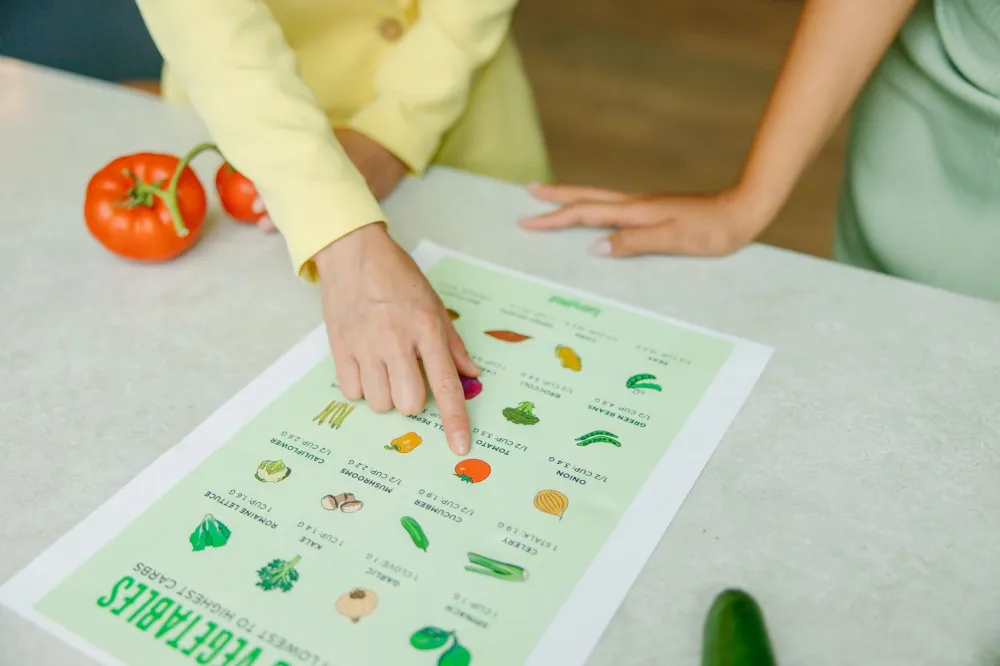
Here’s what one day can look like using only foods from the chart. Treat it as an example, not a prescription.
| Meal | Chart picks |
|---|---|
| Breakfast | Greek yogurt, raspberries, chia seeds |
| Lunch | Tuna, chickpeas, spinach, olive oil |
| Snack | Apple with almonds |
| Dinner | Salmon, broccoli, quinoa |
Notice that every carb (fruit, chickpeas, quinoa) travels with a protein or a fat. That pairing is the habit worth building first. Many people find it keeps them fuller for longer than a plain bagel or a bowl of sugary cereal.
Can You Adjust the Chart to Fit Your Life?
Yes, and that’s what it’s built for. Swap within the same table and the balance of the meal stays roughly the same. Tofu can stand in for chicken, and barley can replace brown rice without throwing anything off.
Vegetarian or Vegan
Lean on tofu, edamame, lentils and the bean table for protein. A plant-based plate can cover your protein needs if you combine sources, like tofu with a side of lentils or quinoa with chickpeas. If you skip all animal foods, ask your doctor whether your vitamin B12 should be checked.
Tight Budget
Dried lentils, canned beans, eggs, oats, frozen broccoli and frozen berries are some of the cheapest rows on the chart. Frozen produce is often frozen soon after harvest, so it can be a solid stand-in for fresh. Store-brand canned tuna and bags of brown rice keep costs down, too.
Portion Sizes
Serving sizes on the chart are starting points, not limits. A tall, active person may need larger portions, and someone with a smaller appetite may need less. Your hand works as a rough guide: a palm of protein, a fist of grains, two cupped hands of vegetables, and a thumb of fat.
What Mistakes Do People Make With a PCOS Diet?
The most common mistake is cutting too much, too fast. Strict rules can backfire, especially with PCOS, where hunger and cravings may already feel louder than usual. A chart works best when it adds good food instead of banning everything else.
- Going ultra-low calorie: Very low intake is hard to keep up and often leads to rebound eating. Our guide to why crash diets backfire explains the pattern.
- Fearing all carbs: Oats, beans and berries are carbs too. The goal is pairing them with protein, not dropping them.
- Skipping breakfast, then crashing: Long gaps can lead to a ravenous late afternoon. A protein-rich breakfast may help.
- Ignoring added sugar in drinks: Sweet coffee drinks and sodas add up quietly.
- Expecting fast results: Changes in cycles or skin, if they happen, usually take months, not days.
One more trap is printing the chart and then trying every unfamiliar food at once. Swap one meal a day for the first week, then two. Slow change tends to stick better than a total kitchen overhaul.
What Does the Research Say About PCOS and Diet?
Research suggests that overall eating patterns matter more than any single superfood, and no one diet has been proven best for PCOS. The international evidence-based PCOS guideline, led by experts at Monash University, recommends healthy eating and regular physical activity for people with PCOS. It doesn’t crown a single winning diet.
For people with a higher body weight, modest weight loss may improve insulin resistance and cycle regularity for some. Many clinicians describe a gradual target of about 5 to 10 percent of body weight as a reasonable starting point, and it’s a pace to build on, not a race. Several small trials suggest that low glycemic index eating (choosing carbs that raise blood sugar more slowly) may help insulin levels, but the overall evidence is limited.
| Myth | What the evidence suggests |
|---|---|
| Everyone with PCOS must quit gluten | Not supported unless you have celiac |
| Dairy causes PCOS | No good evidence; plain options can fit |
| Keto is the only PCOS diet | Not shown better long term |
| Inositol fixes PCOS | Evidence mixed; still considered experimental |
| Fruit is off-limits | Whole, high-fiber fruit fits well |
Supplements deserve extra caution. In the US, the FDA doesn’t review supplements for effectiveness before they’re sold, quality varies from brand to brand, and some can interact with medications. Talk to your doctor or pharmacist before adding inositol, spearmint tea capsules or anything else marketed for PCOS. For more on cravings, see our piece on cutting added sugar without feeling deprived.
Who Should Check With a Doctor or Dietitian First?
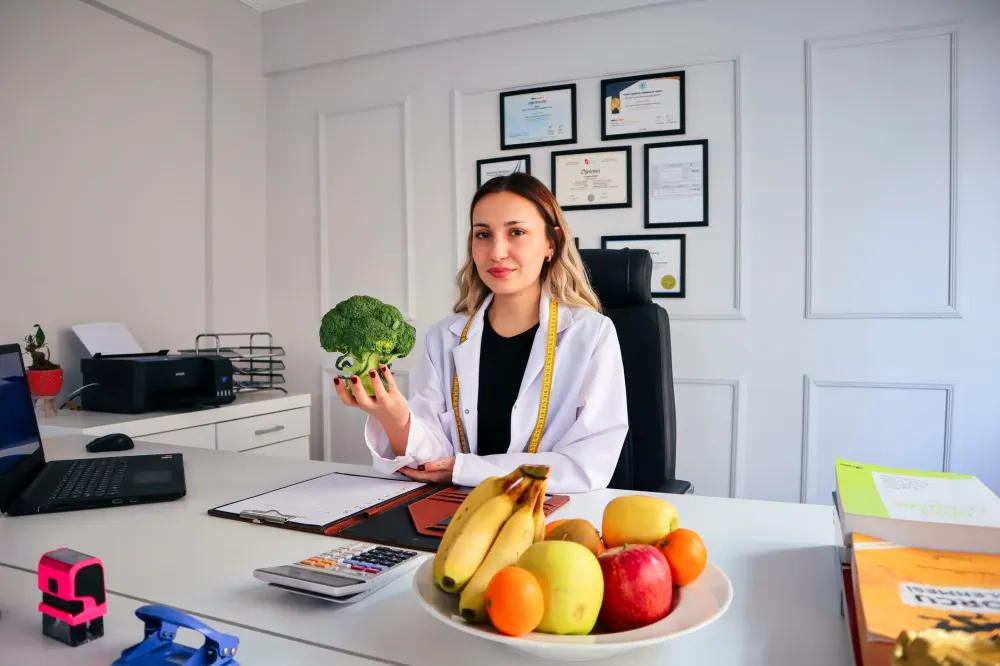
Anyone with PCOS who takes medication, is pregnant or trying to conceive, or has a history of disordered eating should check with a doctor or registered dietitian before changing how they eat. A food chart is a general tool, and your situation may call for a plan built around you.
- On diabetes or PCOS medication: Diet changes can affect blood sugar. Don’t adjust or stop prescriptions on your own.
- Pregnant or trying to conceive: Your nutrition needs are different, so talk to your OB-GYN.
- History of eating disorders: Research suggests people with PCOS may be more prone to disordered eating, so any food chart should come with support.
- Kidney disease or other conditions: Protein and potassium needs can change, so ask first.
Haven’t been diagnosed but suspect PCOS? Our women’s health guide covers common cycle and hormone concerns worth raising at your next appointment. You’ll find more food lists and trackers on our free printables page.
FAQ
The Bottom Line
A PCOS diet chart is most useful when it helps you add steadying foods, not when it turns into a list of rules. Start by pairing every carb with a protein or healthy fat, and fill half your plate with vegetables. Pick two or three favorites from each table, shop from them this week, and give it a few weeks before judging. For anything beyond everyday healthy eating, especially medication, pregnancy or big weight changes, bring the chart to your doctor or dietitian and build from there.
This article is for informational purposes only and is not a substitute for professional medical advice, diagnosis, or treatment. Always consult a qualified healthcare provider about your specific situation. If you experience severe or sudden symptoms, seek medical care immediately.

Weight Loss and Nutrition
Browse every related article on this topic in one place.