
Searched for a high fiber snacks PDF lately? You’ve probably already been burned by a granola bar that looks wholesome but has barely 2 grams of fiber and a candy bar’s worth of sugar. Most American adults fall short on fiber, and the 3 PM vending machine run isn’t helping. A few smart swaps can close a real chunk of that gap.
- High Fiber Snacks PDF: 44 Snacks With Fiber Grams
- How Much Fiber Do You Need Each Day?
- How Do You Use This High Fiber Snacks PDF?
- How Can You Adjust the List for Your Needs?
- What Mistakes Make High Fiber Snacks Backfire?
- Who Should Check With a Doctor or Dietitian First?
- What Does the Research Say About Fiber and Snacking?
- FAQ
- The Bottom Line
The fiber numbers come from USDA FoodData Central values, rounded and marked “approx.” because real foods vary by size and brand. Print the chart and tape it inside a cabinet door. The guides below the list show how to add fiber without the bloating that trips up so many people.
High Fiber Snacks PDF: 44 Snacks With Fiber Grams
Each snack lists a typical serving and approximate grams of dietary fiber. Eat freely means a whole-food pick that works most days in normal portions. Moderation means measure it, since it’s calorie-dense, sugary, or gas-prone. Limit means it looks healthier than its fiber count suggests.
Fruits
| Snack | Serving | Fiber (approx g) | Status | Note |
|---|---|---|---|---|
| Raspberries | 1 cup | 8 | Eat freely | Top fruit for fiber |
| Blackberries | 1 cup | 8 | Eat freely | Frozen works just as well |
| Pear, skin on | 1 medium | 5.5 | Eat freely | Most fiber is near the skin |
| Apple, skin on | 1 medium | 4 | Eat freely | Don’t peel it |
| Kiwi | 2 medium | 4 | Eat freely | Scoop with a spoon |
| Banana | 1 medium | 3 | Eat freely | Pairs well with nut butter |
| Prunes | 5 prunes | 3 | Moderation | May loosen stools quickly |
| Dried figs | 1/4 cup | 4 | Moderation | Sweet and calorie-dense |
| Avocado | 1/2 medium | 5 | Moderation | Filling, rich in healthy fats |
Vegetables
| Snack | Serving | Fiber (approx g) | Status | Note |
|---|---|---|---|---|
| Jicama sticks | 1 cup | 6 | Eat freely | Crunchy, mild, low calorie |
| Edamame, shelled | 1/2 cup | 4 | Eat freely | Brings protein too |
| Baby carrots | 10 carrots | 3 | Eat freely | Easy hummus dipper |
| Red bell pepper strips | 1 cup | 3 | Eat freely | Packed with vitamin C |
| Raw broccoli florets | 1 cup | 2 | Eat freely | Good with yogurt dip |
| Baked sweet potato, skin on | 1 small | 3 | Eat freely | Great as a leftover |
Beans and Legumes
| Snack | Serving | Fiber (approx g) | Status | Note |
|---|---|---|---|---|
| Lentil salad | 1/2 cup cooked lentils | 8 | Eat freely | Batch-prep on Sunday |
| Black beans, rinsed | 1/2 cup | 7 | Eat freely | Top with salsa |
| Roasted chickpeas | 1/2 cup cooked, roasted | 6 | Eat freely | Crunchy chip swap |
| Hummus | 1/4 cup | 3 | Eat freely | Check sodium on label |
Nuts and Seeds
| Snack | Serving | Fiber (approx g) | Status | Note |
|---|---|---|---|---|
| Almonds | 1 oz (about 23) | 3.5 | Moderation | Measure; easy to overeat |
| Pistachios | 1 oz (about 49) | 3 | Moderation | Shelling slows you down |
| Peanuts | 1 oz | 2 | Moderation | Budget-friendly pick |
| Walnuts | 1 oz (about 14 halves) | 2 | Moderation | Plant omega-3 fats |
| Peanut butter | 2 tbsp | 2 | Moderation | Choose no added sugar |
| Chia seeds | 1 tbsp | 4 | Moderation | Soak first; never eat dry |
| Ground flaxseed | 1 tbsp | 2 | Eat freely | Stir into yogurt or oats |
| Pumpkin seeds, hulled | 1 oz | 2 | Moderation | Good source of magnesium |
Whole Grains
| Snack | Serving | Fiber (approx g) | Status | Note |
|---|---|---|---|---|
| Air-popped popcorn | 3 cups | 3.5 | Eat freely | Go easy on butter |
| Rolled oats | 1/2 cup dry | 4 | Eat freely | Overnight oats work well |
| Bran cereal | Per label | 5 to 10 | Eat freely | Pick low added sugar |
| Whole wheat English muffin | 1 muffin | 4 | Eat freely | Top with nut butter |
| Rye crispbread | 2 slices | 4 | Eat freely | Brands vary; check label |
| Whole grain crackers | About 1 oz | 3 | Moderation | Whole grain listed first |
Easy Combo Snacks
| Snack | Serving | Fiber (approx g) | Status | Note |
|---|---|---|---|---|
| Apple with peanut butter | 1 apple, 2 tbsp | 6 | Eat freely | Fiber plus protein |
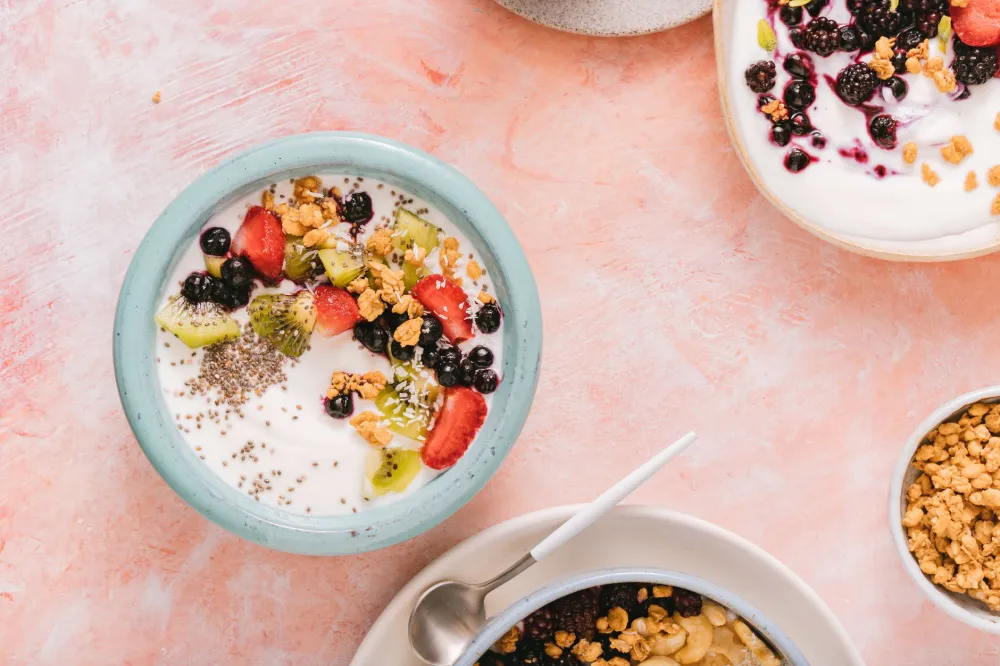
| Greek yogurt, raspberries, chia | 3/4 cup, 1/2 cup, 1 tbsp | 8 | Eat freely | Plain yogurt keeps sugar low |
| Overnight oats with chia | 1/2 cup oats, 1 tbsp chia | 8 | Eat freely | Make three jars at once |
| Avocado on rye crispbread | 1/2 avocado, 2 slices | 9 | Moderation | Filling mini meal |
| Hummus veggie plate | 1/4 cup hummus, 1 cup veg | 6 | Eat freely | Mix carrots and peppers |
| Popcorn with pumpkin seeds | 3 cups, 1/2 oz | 4 | Eat freely | Salty, crunchy, satisfying |
Easy to Overrate
| Snack | Serving | Fiber (approx g) | Status | Note |
|---|---|---|---|---|
| Fruit juice | 1 cup | Under 1 | Limit | Eat whole fruit instead |
| Veggie straws or chips | 1 oz | About 1 | Limit | Mostly potato starch |
| Plain rice cakes | 2 cakes | About 1 | Moderation | Add nut butter for fiber |
| Granola | 1/4 cup | 2 | Moderation | Often high in added sugar |
| Fiber-added snack bars | 1 bar | Per label | Moderation | Added chicory fiber may cause gas |
Quick rules for using this list
- Go slow: add one fiber-rich snack a day, then build over a few weeks.
- Drink up: pair extra fiber with extra water.
- Aim for 5 to 8 grams: per snack is a realistic target.
- Pair it: fiber plus protein tends to keep you fuller.
Want more? Browse all our free printables: meal plans, food lists, trackers and challenges, each with a PDF.
How Much Fiber Do You Need Each Day?
Most adults need roughly 22 to 34 grams a day, depending on age and sex. The Dietary Guidelines for Americans set that goal at about 14 grams per 1,000 calories, and they note that most adults come up short.
Dietary fiber is the part of plant foods your body can’t fully break down. Soluble fiber, found in oats, beans and apples, turns into a soft gel as it moves through you. Insoluble fiber, found in wheat bran, nuts and vegetable skins, adds bulk that helps keep things moving. Your microbiome, the trillions of bacteria living in your gut, ferments some of these fibers for fuel.
| Age group | Women (approx g/day) | Men (approx g/day) |
|---|---|---|
| 19 to 30 | 28 | 34 |
| 31 to 50 | 25 | 31 |
| 51 and older | 22 | 28 |
Here’s why snacks matter. Two snacks from the high fiber snacks PDF at 6 to 8 grams each can cover roughly half of a typical adult’s daily goal, and you don’t have to overhaul a single meal to get there. That’s the quiet power of the list. It targets the part of the day that usually runs on crackers and chips.
How Do You Use This High Fiber Snacks PDF?
Treat the list as a menu, not a rulebook. Pick one or two snacks you already like, add them a little at a time, and drink more water as your fiber goes up. Most people do best by changing one snack slot first, usually mid-afternoon.
Here’s a simple way to put the list to work:
- Circle five favorites: choose snacks from at least three groups so you get both soluble and insoluble fiber.
- Shop for one week only: buy just those five, so nothing goes soft in the crisper.
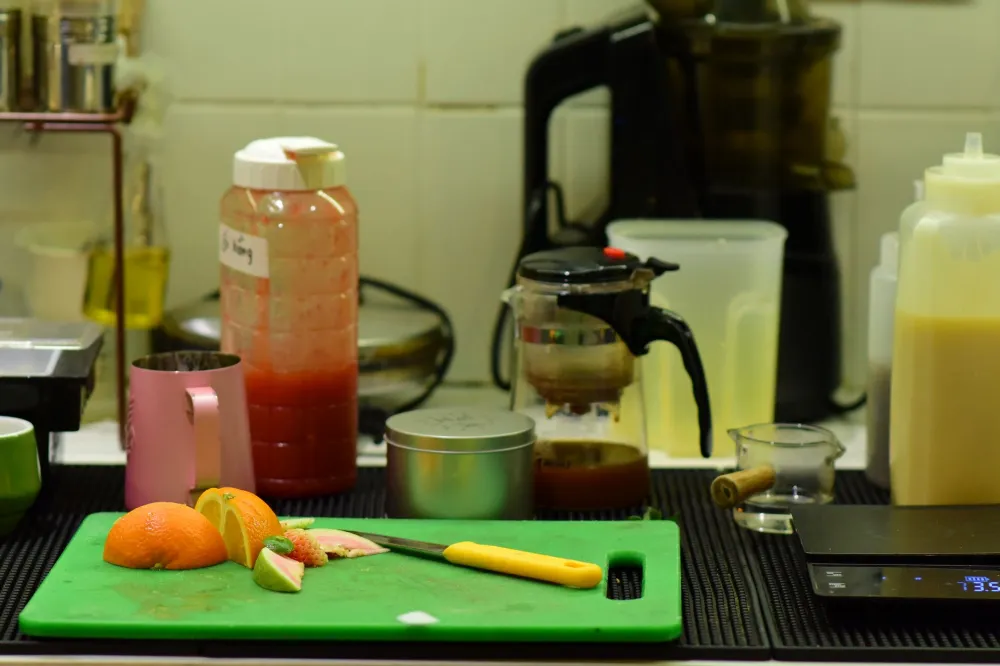
- Prep in ten minutes: cut jicama and peppers, portion nuts into small containers, and mix two jars of overnight oats.
- Swap one snack daily: replace your usual afternoon pick with a list item for the first week.
- Add a second slot: in week two, if your stomach feels fine, add a morning or evening snack.
What should you expect? A bit more gas or fullness in the first week is common as your gut bacteria adjust. For many people, that settles within about two weeks. If you want more ideas for steady afternoons, our guide to preventing afternoon energy crashes pairs nicely with this list.
How Can You Adjust the List for Your Needs?
The list bends easily. Lean on beans, oats and popcorn if money is tight, skip dairy for vegan eating, and choose certified gluten-free oats if you avoid gluten. Portions can shrink or grow with your appetite.
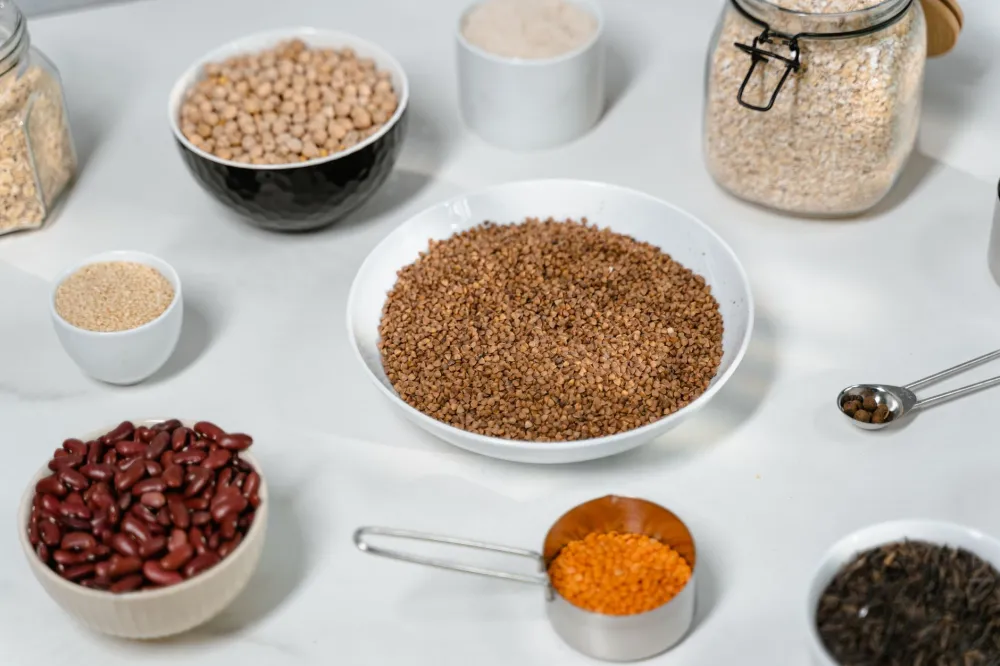
- Tight budget: dry or canned beans, rolled oats, popcorn kernels, bananas, carrots, peanuts and frozen berries are some of the cheapest high fiber snacks you’ll find in any grocery store.
- Vegetarian or vegan: everything works except Greek yogurt, so swap in a fortified soy yogurt.
- Gluten-free: popcorn, fruit, vegetables, beans, nuts and seeds are naturally gluten-free. Choose oats labeled gluten-free.
- Sensitive gut: beans, prunes and dried figs can be rough if you have irritable bowel syndrome (IBS). Our low FODMAP chart shows gentler serving sizes.
- Smaller appetites: halve any serving. A half cup of raspberries still gives about 4 grams.
Want the bigger picture beyond snacks? Our gut health food list PDF covers fermented foods and meal staples, and the free printables library has matching meal plans and trackers.
What Mistakes Make High Fiber Snacks Backfire?
The biggest mistake is adding too much fiber too fast, which can bring bloating, cramps and gas. The Mayo Clinic advises increasing fiber gradually over a few weeks and drinking plenty of water, and that’s exactly how this list is meant to be used.
A few other common slip-ups:
- Jumping from 12 to 35 grams: your gut needs time. Add roughly 3 to 5 grams every few days instead.
- Skimping on fluids: fiber pulls water into your gut, so more fiber with too little fluid can make constipation worse. See how much water you really need for realistic targets.
- Eating chia dry: chia swells a lot. Soak it in liquid first.
- Trusting the front of the box: “made with whole grains” can mean very little. Check grams of fiber on the Nutrition Facts panel.
- Living on fiber bars: added fibers like inulin can cause gas in some people, and bars skip the vitamins whole foods bring.

Myth: more fiber is always better. Fact: past your daily goal, extra fiber rarely adds benefit and can leave you uncomfortable. Myth: juice counts as fruit for fiber. Fact: juicing removes most of it, which is why juice sits in the limit row.
Who Should Check With a Doctor or Dietitian First?
Most healthy adults can add high fiber snacks safely, but some people should get personal advice first. That includes anyone with a digestive disease, kidney problems, swallowing trouble, or a medically prescribed diet.
- Inflammatory bowel disease (IBD): Crohn’s disease or ulcerative colitis, especially during flares or with a narrowed bowel.
- Gastroparesis: a condition where the stomach empties slowly, which high-fiber foods can worsen.
- Recent bowel surgery: follow your surgical team’s diet plan.
- Chronic kidney disease or fluid limits: nuts, beans and some fruits are high in potassium or phosphorus.
- Pregnancy, children or fiber supplements: ask your doctor, and ask a pharmacist about spacing supplements from medications.
If your stomach still feels off after two to three weeks of slow, steady changes, it’s worth a conversation with your doctor or a registered dietitian. Symptoms that persist deserve a real look, not more trial and error with a snack chart.
What Does the Research Say About Fiber and Snacking?
Studies keep linking higher fiber intake with better health, though much of that evidence is observational. That means it shows associations, not proof of cause. The strongest support is for soluble fiber, which can modestly lower LDL (“bad”) cholesterol.
A large 2019 review published in The Lancet pooled many studies and found that people eating roughly 25 to 29 grams of fiber a day had lower rates of heart disease, stroke, type 2 diabetes and colorectal cancer than people eating much less. The FDA has also approved heart health claims for soluble fiber from oats and psyllium, based on its cholesterol-lowering effect.
Fullness is a likely reason fiber helps with appetite. Fibrous foods take longer to chew and digest, so many people find a pear keeps them going longer than a handful of pretzels. Fiber alone tends to produce modest weight changes, and results vary from person to person.
Gut health is the newer frontier. When your gut bacteria ferment fiber, they make short-chain fatty acids, small compounds that may help keep the gut lining healthy. Our piece on what feeds your microbiome goes deeper.
The research doesn’t support two popular claims: that fiber bars equal whole foods, or that fiber detoxes your body. Harvard Health and other mainstream sources generally favor getting fiber from whole foods, which also deliver vitamins, minerals and plant compounds. The Mayo Clinic likewise treats supplements as a backup, not the main plan.
Related reading: High Fiber Diet Schedule: 4 Simple Printable Plans + PDF.
FAQ
The Bottom Line
Most adults fall short on fiber, and snacks are the easiest place to close the gap. Print the list, circle five favorites, and swap one daily snack this week, aiming for about 5 to 8 grams per snack. Add fiber slowly and drink more water as you go. If you have a digestive condition or symptoms that won’t settle, talk with your doctor or a dietitian before ramping up.
This article is for informational purposes only and is not a substitute for professional medical advice, diagnosis, or treatment. Always consult a qualified healthcare provider about your specific situation. If you experience severe or sudden symptoms, seek medical care immediately.

Weight Loss and Nutrition
Browse every related article on this topic in one place.