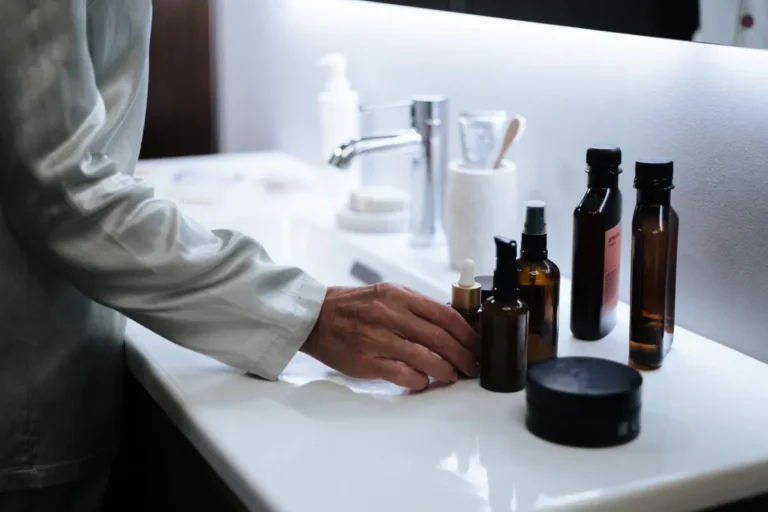

Half the bottles on your bathroom shelf have probably been opened twice, and you couldn’t say which ones are still doing anything. Most routines don’t fail because the products are bad. They fail because nobody remembers what went on, when, or how the skin responded afterward.
- Your Printable Skincare Routine Template (28-Day Tracker)
- How Do You Use a Printable Skincare Routine Template?
- Which Skincare Routine Level Should You Start With?
- How Can You Adjust the Template for Your Skin?
- What Mistakes Make a Skincare Routine Template Useless?
- When Should You See a Dermatologist First?
- What Does the Research Say About Tracking Skincare?
- FAQ
- The Bottom Line
Print it, stick it near your mirror, and give it four weeks. That’s about how long many people need before patterns start showing up on paper.
Your Printable Skincare Routine Template (28-Day Tracker)
Fill in Part 1 once. Use Part 2 every day, morning and night.
How to use this template
- Write each product you use in Part 1.
- Tick AM and PM each day you finish.
- Tick SPF on days you wore sunscreen.
- Note dryness, redness, breakouts or “calm” in a few words.
- Mark the day you start any new product.
- Answer the check-in questions at the end of each week.
Part 1: My Routine Setup
| Step | Morning product | Evening product | How often |
|---|---|---|---|
| Cleanse | Gentle gel cleanser | Same cleanser | Daily |
Part 2: Week 1
| Day | Date | AM done | PM done | SPF worn | Skin notes |
|---|---|---|---|---|---|
| Example | Mon | ✓ | ✓ | ✓ | Dry patch on chin |
| Day 1 | |||||
| Day 2 | |||||
| Day 3 | |||||
| Day 4 | |||||
| Day 5 | |||||
| Day 6 | |||||
| Day 7 |
Part 2: Week 2
| Day | Date | AM done | PM done | SPF worn | Skin notes |
|---|---|---|---|---|---|
| Day 8 | |||||
| Day 9 | |||||
| Day 10 | |||||
| Day 11 | |||||
| Day 12 | |||||
| Day 13 | |||||
| Day 14 |
Part 2: Week 3
| Day | Date | AM done | PM done | SPF worn | Skin notes |
|---|---|---|---|---|---|
| Day 15 | |||||
| Day 16 | |||||
| Day 17 | |||||
| Day 18 | |||||
| Day 19 | |||||
| Day 20 | |||||
| Day 21 |
Part 2: Week 4
| Day | Date | AM done | PM done | SPF worn | Skin notes |
|---|---|---|---|---|---|
| Day 22 | |||||
| Day 23 | |||||
| Day 24 | |||||
| Day 25 | |||||
| Day 26 | |||||
| Day 27 | |||||
| Day 28 |
Weekly check-in questions
- Which days did I skip, and why?
- Did anything sting, burn or itch?
- Did breakouts follow a new product?
- How did my skin feel by evening?
- What one step will I keep or drop?
Want more? Browse all our free printables: meal plans, food lists, trackers and challenges, each with a PDF.
How Do You Use a Printable Skincare Routine Template?
Write your products down once, then tick off your morning and evening steps each day and jot a few words about how your skin looks. After a week or two, the notes column starts doing the real work. It helps you connect what you used with how your skin reacted.
Here’s a simple way to start tonight:
- Empty the shelf first: Line up everything you currently use. If a product hasn’t been opened in months, leave it off Part 1.
- Fill in the setup chart: Write products in the order you apply them. Thinnest to thickest is a good general rule, and our guide to the right order to apply skincare products covers the details.
- Keep the pen nearby: Tape the sheet inside a cabinet door with a pen on a string. If it lives in a drawer, it won’t get filled in.
- Write short notes: “Tight after washing” or “two new bumps on jaw” is plenty. You’re logging patterns, not writing a diary.
- Review on Sunday night: Answer the check-in questions and decide on one change, if any, for the coming week.
That last step matters more than it looks. Change one thing at a time. Swap your cleanser and add a serum in the same week, and the tracker can’t tell you which one caused the redness.

Which Skincare Routine Level Should You Start With?
Most people do best with a basic three-step routine (cleanse, moisturize, protect) and add one targeted product only after a few steady weeks. The American Academy of Dermatology (AAD) generally recommends gentle products and daily broad-spectrum sunscreen as the foundation for nearly every skin type.
The table below compares three common setups you can copy straight into Part 1 of the template.
| Routine level | Morning steps | Evening steps | Best for |
|---|---|---|---|
| Minimal | Rinse, moisturizer, SPF 30+ | Cleanser, moisturizer | Beginners, sensitive or busy |
| Standard | Cleanser, moisturizer, SPF 30+ | Cleanser, serum, moisturizer | Most adults with mild concerns |
| Targeted | Cleanser, antioxidant, moisturizer, SPF | Cleanser, active, moisturizer | Acne, dark spots, aging concerns |
A “targeted” routine usually means adding an active ingredient, meaning a product that changes how skin behaves, such as a retinoid, benzoyl peroxide or an exfoliating acid. These can help, but they’re also the most common source of irritation. If you’re thinking about one, the retinol for beginners guide explains how to start slowly.
Want a pre-built schedule instead of a blank one? Our skincare routine PDF with four AM and PM schedules pairs well with this tracker.
How Can You Adjust the Template for Your Skin?
Change what you watch for in the notes column and how often each step happens, based on your skin type and budget. The template stays the same. What you pay attention to is what shifts.
Oily or acne-prone skin
Note new breakouts by location (jaw, forehead, cheeks) rather than just “broke out.” Location patterns can hint at things like phone screens, hair products or a heavy moisturizer. Acne treatments are slow, and many people need several weeks before they see real improvement, so try not to judge a product in week one.
Dry or winter-stressed skin
Rate tightness after cleansing on a 1 to 5 scale in your notes. When the furnace kicks on in winter, many people find that a richer moisturizer or skipping the morning cleanse helps. Our piece on fixing dry winter skin goes deeper.

Sensitive or reactive skin
Use the “How often” column to schedule actives on specific nights only, such as Monday and Thursday. Write “sting,” “itch” or “red” plainly so you can spot trends. Fragrance-free basics tend to be a gentler starting point.
On a tight budget
The good news is that the minimal routine can be built from drugstore staples for well under the price of one luxury serum. The tracker helps here too. It shows which pricey product you actually reach for and which one just sits on the shelf.
Before you add anything new, though, there’s one habit that may save you a rough week.
What Mistakes Make a Skincare Routine Template Useless?
The biggest mistake is changing several products at once, which makes it impossible to tell what helped or hurt. A close second is quitting after a few days, before any pattern has had time to appear.
A few other traps to watch for:
- Over-exfoliating: Stacking acids, scrubs and retinoids can damage your skin barrier, the outer layer that holds moisture in and irritants out. If you’ve gone too far, see our guide to skin barrier repair after over-exfoliating.
- Only tracking bad days: “Calm” and “clear” are data too. Without them, the chart looks worse than your skin really is.
- Forgetting sunscreen on cloudy days: That’s why SPF gets its own column. Ultraviolet (UV) rays reach skin through clouds.
- Ignoring life factors: A rough night of sleep, a stressful week or your menstrual cycle can all show up on your face. Jot them in the notes.
And one more trap, the one everybody falls into. You expect overnight results. Skin renews itself slowly, and that’s normal.
When Should You See a Dermatologist First?
Talk to a dermatologist or your doctor before building a new routine if you have painful cystic acne, a rash that keeps spreading, or any mole or spot that’s changing. A tracker can support medical care, but it can’t replace an exam.
Book a real evaluation if any of these apply:
- Changing spots: A mole that grows, bleeds, itches or changes color or shape deserves prompt attention.
- Severe reactions: Swelling, blistering, hives or a burning rash after a product means you should stop using it. Seek urgent care right away if you have trouble breathing or facial swelling.
- Persistent problems: Acne, redness or flaking that hasn’t improved after a couple of months of consistent care.
- Pregnancy or breastfeeding: Some ingredients, including retinoids, are generally avoided. Ask your doctor before starting any active.
- Prescription treatments: If you already use a prescribed cream, check with your doctor or pharmacist before adding over-the-counter actives.
Bring your filled-in sheet to the appointment. A month of daily notes gives a clinician far more to work with than “it’s been bad lately.”
What Does the Research Say About Tracking Skincare?
Studies don’t test skincare trackers directly. They do support the habits a tracker encourages: consistency, daily sunscreen and patience. The strongest evidence points to sunscreen, while claims about complex ten-step routines are far less supported.
On sunscreen, a randomized trial in Australia, published in the Annals of Internal Medicine in 2013, found that adults assigned to daily sunscreen use showed no detectable increase in skin aging over about four and a half years. The group using sunscreen at their own discretion did not fare as well. The American Academy of Dermatology recommends a broad-spectrum sunscreen with SPF 30 or higher, reapplied about every two hours when you’re outdoors.
On habits, a University College London study found that it took people a median of about 66 days to make a new behavior feel automatic, with wide variation between individuals. In plain terms, four weeks may not make your routine effortless, but it’s a solid start. Writing things down is one simple way to stay consistent during that stretch.
Here’s a quick myth-versus-fact check on common routine beliefs.
| Myth | What evidence suggests |
|---|---|
| More steps mean better skin | Simple, consistent routines often work well |
| Tingling means it’s working | Stinging often signals irritation |
| SPF is only for sunny days | UV exposure happens year-round |
| Results show in one week | Most changes take several weeks |
For more on sun protection beliefs that don’t hold up, see our breakdown of common sunscreen myths. The Mayo Clinic also publishes clear, general skin care guidance that makes a solid second source.
Put simply, a printable skincare routine template turns good intentions into a record you can learn from.

FAQ
The Bottom Line
A printable skincare routine template works because it makes your habits visible. Start with a simple cleanse, moisturize and sunscreen routine, log it daily for four weeks, and change only one product at a time. Patch test anything new, give treatments several weeks before judging them, and bring your sheet to a dermatologist if problems persist or a spot changes. Print it tonight and fill in Part 1 before bed.
This article is for informational purposes only and is not a substitute for professional medical advice, diagnosis, or treatment. Always consult a qualified healthcare provider about your specific situation. If you experience severe or sudden symptoms, seek medical care immediately.

Skin and Beauty
Browse every related article on this topic in one place.