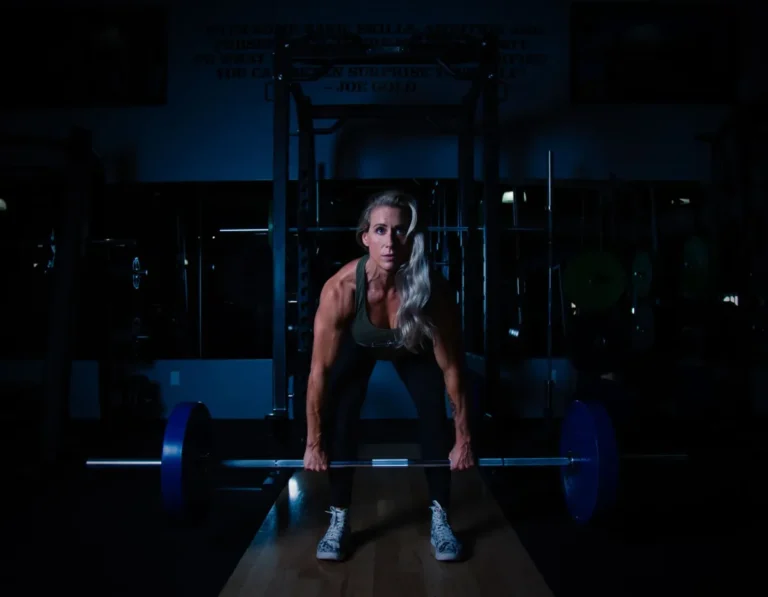
Your saved workout videos are probably buried in a playlist you never open. A printed plan taped to the fridge is much harder to ignore, and it tells you what to do today without a single search. This free beginner calisthenics plan gives you two bodyweight workouts, a four-week progression and a short equipment list. Here’s the whole plan first, then the details that help it stick.
- Your Calisthenics Workout Plan for Beginners Printable: 7 Days
- How to Make the Printable Work for You
- How Hard Should Beginner Calisthenics Feel?
- How Do You Make the Plan Easier or Harder?
- What Mistakes Do Beginners Make With Calisthenics?
- Who Should Check With a Doctor First?
- What Does the Research Say About Calisthenics?
- What Can You Expect in the First 4 Weeks?
- FAQ
- The Bottom Line
Each session uses beginner-friendly moves like incline push-ups, squats and planks, with rest and walking days built in so your muscles have time to recover. The plan follows general CDC advice for adults: muscle-strengthening work on at least two days a week, alongside regular moderate activity.
Your Calisthenics Workout Plan for Beginners Printable: 7 Days
Do Workout A and Workout B on the days shown. Rest 60 to 90 seconds between sets.
Week Schedule
| Day | Workout | Time or reps | Notes |
|---|---|---|---|
| Day 1 | Workout A | About 20 to 25 min | Warm up first |
| Day 2 | Brisk walk | 20 to 30 min | Easy pace, can still talk |
| Day 3 | Workout B | About 20 to 25 min | Slow, clean reps |
| Day 4 | Rest or stretch | 10 min | Gentle mobility only |
| Day 5 | Workout A | About 20 to 25 min | Try one extra rep |
| Day 6 | Walk or bike | 20 to 30 min | Any steady cardio counts |
| Day 7 | Full rest | Day off | Note how you feel |
Workout A: Push, Legs, Core
| Move | Sets x reps | Notes |
|---|---|---|
| Incline push-up | 2 x 8-10 | Hands on counter or table |
| Bodyweight squat | 2 x 10 | Sit back toward a chair |
| Glute bridge | 2 x 12 | Squeeze at top, 1 sec |
| Bird dog | 2 x 6 per side | Keep hips level |
| Forearm plank | 2 x 15-20 sec | Knees down is fine |
Workout B: Pull, Legs, Core
| Move | Sets x reps | Notes |
|---|---|---|
| Reverse lunge | 2 x 6 per leg | Hold a wall for balance |
| Doorframe row | 2 x 8-10 | Sturdy frame, small lean back |
| Wall sit | 2 x 15-20 sec | Stay higher if knees complain |
| Dead bug | 2 x 6 per side | Low back stays down |
| Calf raise | 2 x 12 | Hold a wall |
Warm-Up and Cool-Down
- Warm-up: march in place for 1 minute
- Warm-up: 10 arm circles each direction
- Warm-up: 10 hip hinges, then 5 easy squats
- Cool-down: chest stretch against a doorframe, 20 seconds
- Cool-down: hamstring stretch, 20 seconds per leg
- Cool-down: 5 slow, deep breaths
4-Week Progression
| Week | What changes | Target |
|---|---|---|
| Week 1 | Learn the moves | 2 sets each |
| Week 2 | Add 1 to 2 reps | 2 sets each |
| Week 3 | Add a third set | 3 sets each |
| Week 4 | Try harder versions | Lower incline, longer plank |
Equipment List
| Item | Needed? | Notes |
|---|---|---|
| Sturdy chair | Yes | Squat target, balance support |
| Kitchen counter or table | Yes | For incline push-ups |
| Solid doorframe | Helpful | For rows |
| Exercise mat or rug | Optional | Cushions knees and back |
| Supportive sneakers | Helpful | For walking days |
| Water bottle | Yes | Sip between sets |
| Phone timer | Yes | Rest periods and planks |
| Printed plan and pen | Yes | Tick off each day |
Stop and get medical help for chest pain, trouble breathing or dizziness.
How to Make the Printable Work for You
The easiest approach is to print the sheet, pick three fixed workout days, and repeat the same week four times while following the progression chart. During the first month, showing up matters far more than how hard any single session feels.
- Pick anchor days: Monday, Wednesday and Friday work for many people, but any three non-consecutive days will do. Block them on your calendar like appointments.
- Warm up every time: Five minutes of marching, arm circles and easy squats warms you up and gets stiff joints moving.
- Learn form before reps: Slow, controlled reps through a comfortable range beat fast, sloppy ones. If you’re not sure how your form looks, film one set on your phone.
- Log it: Tick the box and jot down your reps. Watching 8 push-ups climb to 11 is a surprisingly good reason to come back.
- Progress only when ready: If you finish every set with two or three good reps left in the tank, move to the next row of the progression chart.
Tracking body measurements too? The free 12-week weight loss tracker printable sits nicely next to this sheet on the fridge.
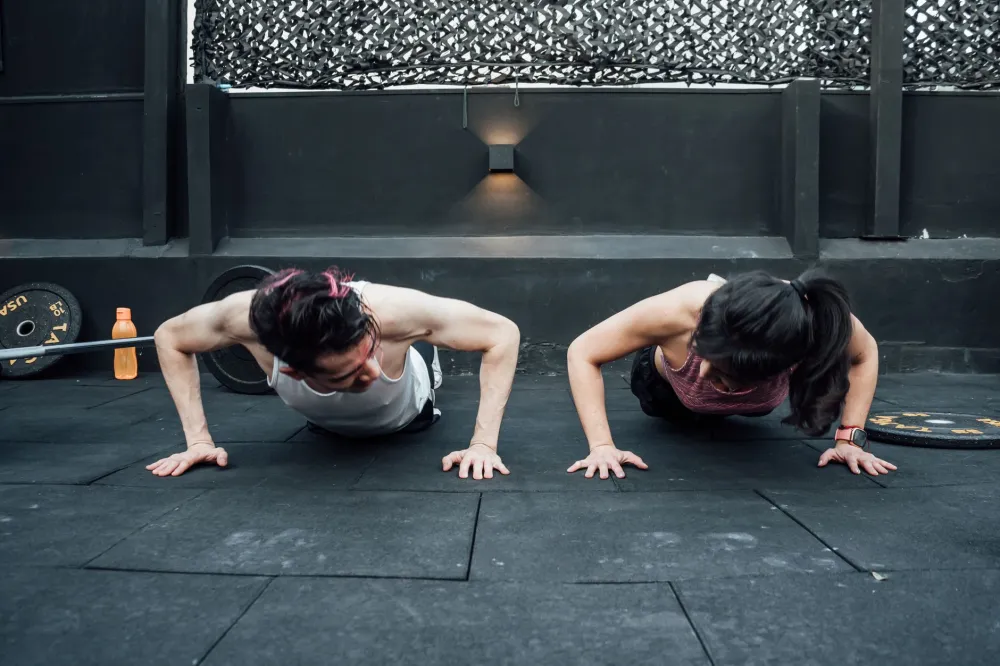
How Hard Should Beginner Calisthenics Feel?
It should feel challenging by the last few reps of each set, but never painful, and you should be able to keep good form the whole way through. On a 1 to 10 effort scale, aim for about a 6 or 7 during the first few weeks.
Some soreness a day or two after a new workout is common, especially after squats and lunges. This is delayed onset muscle soreness (DOMS), the stiff, achy feeling that usually peaks one to three days after unfamiliar exercise and fades on its own. Sharp or worsening pain is a different story.
| What you notice | Likely meaning | What to do |
|---|---|---|
| Dull muscle ache next day | Normal soreness (DOMS) | Keep moving gently |
| Soreness lasting over a week | Too much, too soon | Cut sets, rest more |
| Sharp pain mid-rep | Possible strain | Stop that move today |
| Joint pain or swelling | Possible irritation or injury | Rest, get it checked |
| Chest pain or breathlessness | Medical warning sign | Stop, seek care now |
If your lower back is the part complaining, this guide to back pain after exercise and soreness versus injury warning signs goes into more detail.
How Do You Make the Plan Easier or Harder?
Every move has an easier and a harder version, so you can change the difficulty without changing the schedule. Adjust the angle, the range of motion or the speed of the lowering phase before you pile on more reps.
| Move | Easier | Harder |
|---|---|---|
| Incline push-up | Wall push-up | Knee push-up on floor |
| Bodyweight squat | Squat to a high chair | 3-second slow lowering |
| Reverse lunge | Split squat holding wall | Step-up onto a stair |
| Glute bridge | Smaller range | Single-leg bridge |
| Forearm plank | Knees down | Add 5 seconds |
| Doorframe row | Stand more upright | Feet closer to frame |
Short on time?
Do one set of each move back to back as a circuit. That takes roughly 10 to 12 minutes, and a short session you actually finish beats a long one you skip.
Sore knees or wrists?
Wall or counter push-ups put less load on your wrists, and squats only need to go as low as feels comfortable. Joint pain that lingers for more than a week or two deserves a check with a doctor or physical therapist.
Training for weight loss?
Calisthenics builds muscle, but changes on the scale often depend more on eating patterns and how much you move each day. Our comparison of strength training vs cardio for weight loss explains why many people do best with a mix of both.
Need something for Days 2 and 6? A structured walking plan for weight loss slots right in.
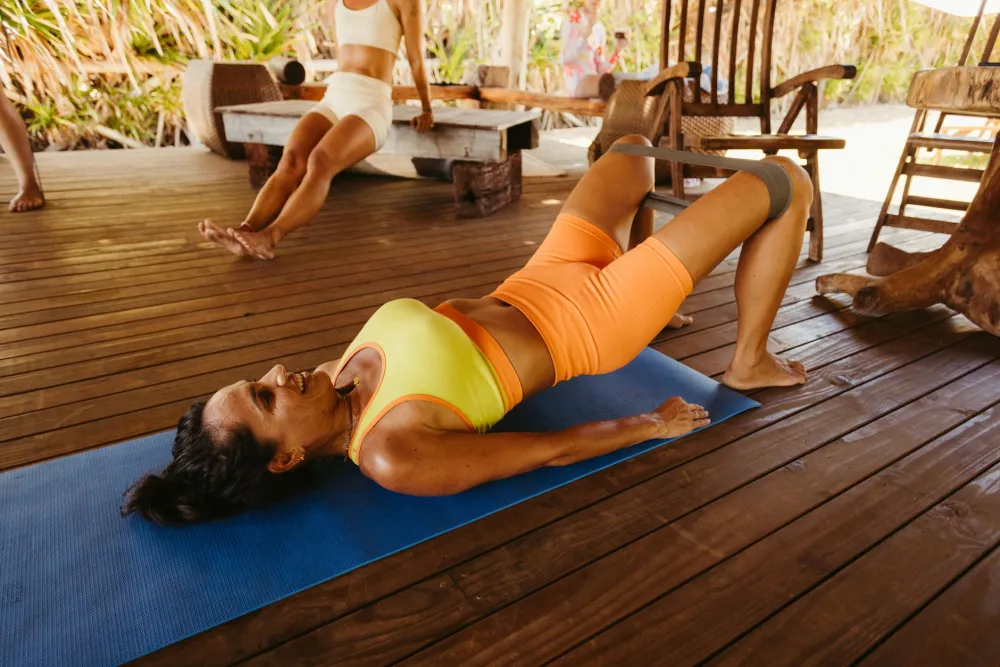
What Mistakes Do Beginners Make With Calisthenics?
The most common mistake is doing far too much in week one and quitting by week two. Most other errors come from rushing reps or skipping rest days.
- Going to failure every set: Grinding out reps until you can’t move leaves you sore for days. Stop with a couple of good reps still in reserve.
- Sagging hips: In planks and push-ups, a dipping lower back shifts strain onto your spine. Squeeze your glutes and shorten the set instead.
- Holding your breath: Breathe out on the hard part, like pushing up or standing up.
- Skipping rest days: Muscles repair and adapt between sessions, so rest is part of the program.
- Copying advanced athletes: Pull-ups and handstands take months to build. Mastering the basics first makes them realistic later.
Treat the printable as your minimum, not a test you have to ace. A boring week you complete beats a heroic week you abandon.
Who Should Check With a Doctor First?
Most healthy adults can start light bodyweight exercise safely, but some people should talk with a doctor before beginning any new strength routine. That includes anyone with these situations:
- Heart or blood pressure issues: Including heart disease or high blood pressure that isn’t well controlled.
- Diabetes: Especially if you take medication that can lower blood sugar.
- Recent surgery or injury: Particularly to the back, shoulders, hips or knees.
- Pregnancy or postpartum recovery: Your care team can help tailor safe moves.
- Bone or balance concerns: Such as osteoporosis or a history of falls.
Stop exercising and get prompt medical care for chest pain or pressure, trouble breathing that doesn’t settle with rest, fainting, or sudden numbness or weakness. Those aren’t signs to push through. The printable can’t replace that conversation, but it’s handy to bring to an appointment so your clinician sees exactly what you plan to do.

What Does the Research Say About Calisthenics?
Calisthenics is strength training that uses your own body weight for resistance, through moves like push-ups, squats, lunges and planks. Bodyweight work counts toward the muscle-strengthening activity that public health guidelines recommend for adults.
The CDC advises adults to do muscle-strengthening activities that work all major muscle groups at least two days a week, plus a weekly total of moderate aerobic activity such as brisk walking. That’s the logic behind this plan: three full-body sessions and two walking days give you a realistic starting point to build from.
Harvard Health notes that adults tend to lose muscle gradually with age unless they actively work to maintain it. Large observational studies have also linked regular muscle-strengthening activity with lower risk of heart disease and early death, though that kind of research shows links rather than proving cause.
Here’s where the hype outruns the evidence:
- Myth: You need a pull-up bar to start. Fact: Rows, squats and push-up variations cover the major muscle groups with household furniture.
- Myth: Bodyweight training can’t build muscle. Fact: For beginners it can, as long as the moves keep getting harder over time.
- Myth: Planks burn belly fat. Fact: Research doesn’t support spot reduction. Planks strengthen your core, but fat loss happens across the whole body.

What Can You Expect in the First 4 Weeks?
Early progress mostly comes from your nervous system learning the moves, so reps often climb before muscles visibly change. Here’s a realistic, hedged picture of how it often goes:
- Week 1: Moves feel awkward, and you’ll probably be sore after the first two sessions.
- Week 2: Soreness usually eases, and many people add a rep or two without trying.
- Week 3: The third set makes workouts feel harder again. That’s expected.
- Week 4: Harder versions arrive, and everyday tasks like stairs or grocery bags may start to feel a little easier.
Visible muscle changes usually take longer, often several weeks to a few months. Sleep, enough protein and steady consistency all play a part, and results vary from person to person.
FAQ
The Bottom Line
This printable works best when it’s simple enough to repeat: three short full-body sessions, two walking days and real rest. Print it, pick your three days, and start Workout A at an effort you could repeat tomorrow. Add reps or sets only when the current week feels comfortable. If anything causes sharp pain, chest discomfort or breathlessness, stop and talk to a doctor before continuing.
This article is for informational purposes only and is not a substitute for professional medical advice, diagnosis, or treatment. Always consult a qualified healthcare provider about your specific situation. If you experience severe or sudden symptoms, seek medical care immediately.

Everyday Health and Wellness
Browse every related article on this topic in one place.