
Finding mold on a bathroom ceiling or behind a wardrobe is unsettling, and a quick online search can make it frightening. Lists of “warning signs of mold toxicity” blame it for almost everything: memory loss, mood swings, fatigue, weight gain. The real picture is more useful. Damp and mold do cause genuine health problems, mainly in the nose, eyes, skin and lungs, and some people are much more vulnerable than others. Many of the dramatic claims, though, are not supported by good evidence.
This guide covers the mold exposure symptoms that are well established, who is most at risk, what to make of “toxic mold” and mycotoxin testing, how to fix damp at home and when to see a doctor.
How Mold Affects Your Health
Molds are fungi that grow wherever there is moisture: around leaks, on walls with condensation, in poorly ventilated bathrooms and on damp fabrics. They release tiny spores and fragments into the air. When you breathe these in, or they land on your skin or eyes, your body can react.
A major review by the World Health Organization concluded that living in damp, moldy buildings is linked to more respiratory symptoms, more respiratory infections, and both the development and worsening of asthma. The NHS gives similar advice: damp and mold make you more likely to have respiratory problems, infections, allergies or asthma.
It helps to think of mold affecting people in four main ways: allergy, irritation, asthma, and, much less commonly, infection or lung inflammation.
Common Mold Exposure Symptoms
Most symptoms look like hay fever or a lingering cold, and they tend to be worse at home and better when you are away for a while.
- Sneezing, runny or blocked nose. If congestion drags on, see our guide to sinus congestion remedies.
- Itchy, red or watery eyes
- Sore or scratchy throat and post-nasal drip that makes you keep clearing your throat
- Coughing, often worse at night or in the morning
- Wheezing, chest tightness or shortness of breath, especially in people with asthma
- Skin rash or itching, and flares of eczema
- Frequent chest or sinus infections in some people
These symptoms are not unique to mold. Colds, flu, pollen and dust mites cause the same things, and our guide to telling flu, cold and COVID apart can help with infections. The clue that points to mold is the pattern: symptoms that track with time spent in a particular damp building.
Who Is Most at Risk?
Many healthy adults have few or no symptoms around small amounts of mold. Others react strongly. According to the NHS, people more likely to be affected include:
- Babies and young children
- Older adults
- People with asthma, allergies or other lung conditions, such as COPD or cystic fibrosis
- People with eczema or other skin conditions
- People with a weakened immune system, for example during chemotherapy, after an organ transplant or with poorly controlled HIV
Less common but more serious conditions
- Mold allergy and allergic asthma. Cleveland Clinic notes that an allergy to mold spores is common and can trigger asthma attacks in sensitised people.
- Hypersensitivity pneumonitis. Repeatedly breathing in large amounts of mold spores can inflame the small air sacs of the lungs in some people. It causes cough, breathlessness, fever and tiredness, and long-term exposure can scar the lungs. MedlinePlus lists moldy hay and fungi growing in humidifiers, heating and air conditioning systems among the triggers.
- Fungal infections. Molds such as Aspergillus can cause serious lung or invasive infections, but this happens almost only in people with a severely weakened immune system or existing lung disease.
Toxic Mold Claims: What the Evidence Says
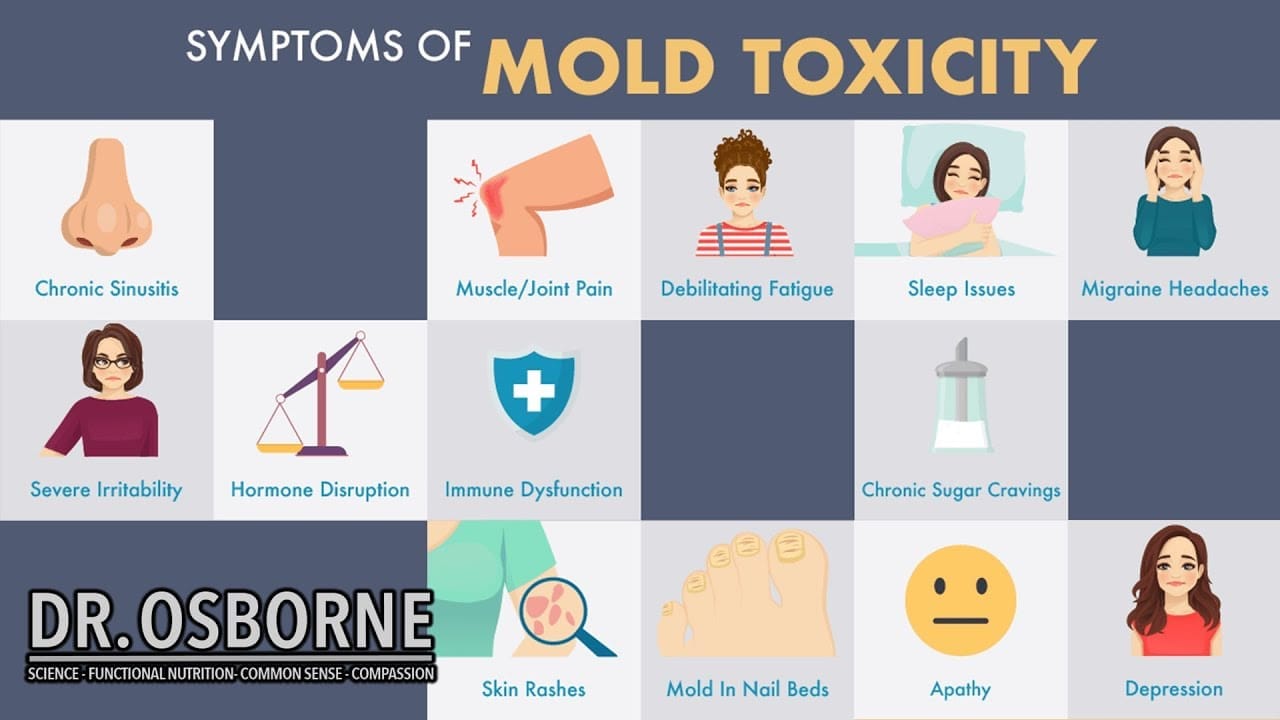
Some molds, including Stachybotrys (often called “black mold”), can produce chemicals called mycotoxins. That fact has grown into a set of popular claims about “mold toxicity”, “toxic mold syndrome” or “chronic inflammatory response syndrome” (CIRS), said to cause brain fog, memory loss, depression, anxiety, joint pain, weight gain and fatigue.
The evidence does not support these claims as established diagnoses. Cleveland Clinic states there is no evidence that black mold causes memory loss, body aches or mood disorders, and that you do not need to “detox” after exposure. Black mold is not uniquely dangerous either: it causes the same kinds of allergy and irritation as other molds.
- Urine mycotoxin tests, sold directly or through some private clinics, have not been validated for diagnosing illness from household mold. Mycotoxins are found in common foods, so many people without symptoms test positive.
- Detox protocols, binders and long courses of antifungals for “mold illness” lack good evidence and can cause side effects and cost a lot.
None of this means your symptoms are not real. Fatigue, poor concentration and low mood deserve proper attention, but they have many possible causes, such as thyroid problems, anaemia, sleep disorders, depression or long COVID. Pinning them on mold without a proper assessment can delay the right diagnosis.
Finding and Fixing Damp and Mold
The most effective treatment for mold-related symptoms is removing the mold and the moisture that feeds it. As the US Environmental Protection Agency (EPA) puts it, the key to mold control is moisture control.
Control moisture
- Fix leaks in roofs, pipes, windows and gutters promptly.
- Dry wet materials within 24 to 48 hours of a leak or spill. The EPA says that in most cases this stops mold from growing.
- Keep indoor humidity below 60 percent, ideally 30 to 50 percent. An inexpensive hygrometer from a hardware store will tell you where you stand.
- Ventilate: use extractor fans or open a window when cooking, showering and drying clothes indoors.
- Wipe condensation off windows and sills, and leave a gap between furniture and cold outside walls.
Clean up safely
| Situation | What to do |
|---|---|
| Small patch on a hard surface (under about 10 square feet, roughly 3 by 3 feet) | You can usually clean it yourself with water and detergent, then dry the area fully. |
| Mold on porous items (carpet, ceiling tiles, plasterboard, mattresses) | These often cannot be cleaned properly and may need to be thrown away. |
| Larger areas, mold inside walls or ducts, or after sewage or flood water | Use a professional mold remediation contractor. |
| You have asthma, a lung condition or a weak immune system | Ask someone else to do the cleaning and stay out of the room while it is done. |
When cleaning, wear gloves, goggles and ideally an N95 or FFP2 mask, and keep the room ventilated. Do not just paint over mold. The EPA does not recommend bleach as a routine cleaner, since dead mold can still cause allergies and the moisture problem remains, and you should never mix bleach with ammonia or other cleaners. Testing the air is rarely needed: if you can see or smell mold, the priority is to remove it and fix the cause.
If you rent, report damp and mold to your landlord in writing. In many places, including the UK, landlords have a legal duty to deal with serious damp and mold.
When to See a Doctor
Book an appointment if you have allergy or breathing symptoms that are not settling, especially if they are worse at home. A doctor can check for asthma, arrange allergy testing (skin prick or blood tests) and adjust treatment such as antihistamines, steroid nasal sprays or inhalers. Mention the damp, as it helps with diagnosis and can support a request for repairs.
Day to day, the basics that support your immune health also help you recover from frequent infections, but they work best alongside fixing the damp.
Related reading: Toothache Relief: Safe Ways to Ease the Pain Until You See a Dentist.
Related reading: How to Remove Tartar From Teeth: What Works at Home and What Needs a Dentist.
Related reading: How Long Does Nicotine Stay in Your System? Urine, Saliva, Blood and Hair.
Related reading: Heel Pain: Common Causes, Treatment and Is It Ever Serious?.
FAQ
What are the first signs of mold exposure?
The most common early signs are a runny or blocked nose, sneezing, itchy eyes, a scratchy throat and coughing. People with asthma may notice more wheezing or need their reliever inhaler more often.
How long do mold exposure symptoms last?
Allergy and irritation symptoms usually improve within days to a few weeks once the mold and damp are dealt with or you leave the affected building. Ongoing symptoms should be checked by a doctor.
Can mold cause memory loss or brain fog?
There is no good evidence that household mold causes memory loss or mood disorders. Poor sleep from a blocked nose or night-time cough can make you feel foggy, and other causes should be looked into.
Is black mold more dangerous than other mold?
Not in the way it is often described. Black mold can trigger the same allergy and breathing symptoms as other molds. All indoor mold should be removed and the damp fixed, whatever its colour.
Should I get a mycotoxin urine test?
Mainstream medical bodies do not recommend these tests for diagnosing illness from mold at home, because they are not validated and many healthy people test positive. Allergy testing and lung function tests from your doctor are more useful.
The Bottom Line
Mold exposure mostly causes allergy-like symptoms, irritation and breathing problems, and it can worsen or help bring on asthma. Children, older adults and people with lung conditions or weak immune systems are most at risk. Claims that household mold causes memory loss, mood swings or a whole-body “toxicity” are not supported by good evidence, and urine mycotoxin tests are not a reliable guide. The most effective step is fixing the moisture problem and removing the mold, then seeing a doctor if symptoms continue.
This article is for general information and is not a substitute for advice from your doctor.
Sources
- NHS: Can Damp and Mould Affect My Health?
- WHO: Guidelines for Indoor Air Quality: Dampness and Mould
- US EPA: A Brief Guide to Mold, Moisture and Your Home
- Cleveland Clinic: Black Mold Exposure
- Cleveland Clinic: Mold Allergy
- MedlinePlus: Hypersensitivity Pneumonitis
Medical disclaimer: This article is for general information only and is not a substitute for advice, diagnosis or treatment from a qualified health professional. If your symptoms are severe, sudden or getting worse, contact a doctor or emergency services.

Everyday Health and Wellness
Browse every related article on this topic in one place.