

By 3 PM, your neck feels like it’s been clamped in a vice. If you spend most of your workday staring at a screen, neck pain is almost guaranteed, but it doesn’t have to stay that way.
- Why Desk Workers Get Neck Pain So Often
- Do Neck Stretches Actually Help?
- The Best Neck Stretches for Desk Workers
- How to Build Stretches Into a Real Workday
- Quick Comparison: Common Neck Stretches at a Glance
- Myths About Neck Pain and Stretching You Should Stop Believing
- Setting Up Your Desk to Support What You're Stretching
- When Should You See a Doctor for Neck Pain?
- FAQ
- The Bottom Line
Why Desk Workers Get Neck Pain So Often
Prolonged sitting combined with a forward head position is the most common cause of desk-related neck pain. When your head drifts forward in front of your shoulders, even by just 2 inches (about 5 cm), the load on your cervical spine (the seven bones that make up your neck) roughly doubles, according to research reviewed by Mayo Clinic. Do that for six to eight hours a day, and you’ve set the stage for chronic tightness.
The muscles that suffer most are the upper trapezius (the broad muscles across your upper back and neck), the levator scapulae (which run along the side of your neck to your shoulder blade), and the suboccipital muscles (the small, deep muscles at the base of your skull). These get locked in a shortened, overworked state when you sit hunched over a laptop. The result is aching, stiffness, and sometimes headaches that creep up from the base of the skull.

One pattern worth knowing about is called “tech neck”, a term physical therapists use to describe the postural strain from looking down at phones and screens for extended periods. It overlaps closely with desk-related neck pain, and the same stretches help both.
Do Neck Stretches Actually Help?
Yes, with realistic expectations. A growing body of research supports regular neck stretching and strengthening for office workers, though results vary by person and consistency matters a great deal.
A systematic review in occupational health literature found that workplace exercise programs targeting the neck and shoulders were associated with meaningful reductions in pain intensity among office workers. The catch? The benefit was most pronounced in people who stuck with the routine for at least four weeks. A single stretch session won’t fix weeks of tension, but a daily habit very likely will over time.
Stretching works by increasing blood flow to tight muscles, temporarily reducing muscle tone (the background tension your muscles carry), and improving range of motion in the joints of your cervical spine. It won’t rebuild poor posture overnight, but it interrupts the “tighten and stay tight” cycle that makes desk neck pain feel permanent.
The Best Neck Stretches for Desk Workers
These are the stretches most commonly recommended by physical therapists for people spending long hours at a desk. You don’t need a gym, a mat, or special equipment. Your chair will do just fine.
1. Chin Tuck (Cervical Retraction)
This is the single most recommended stretch for forward head posture, and for good reason. Sit tall, then gently pull your chin straight back like you’re making a double chin on purpose. You should feel a mild stretch at the base of your skull and the back of your neck. Hold for five seconds, release, and repeat ten times. Do this every hour if you can.
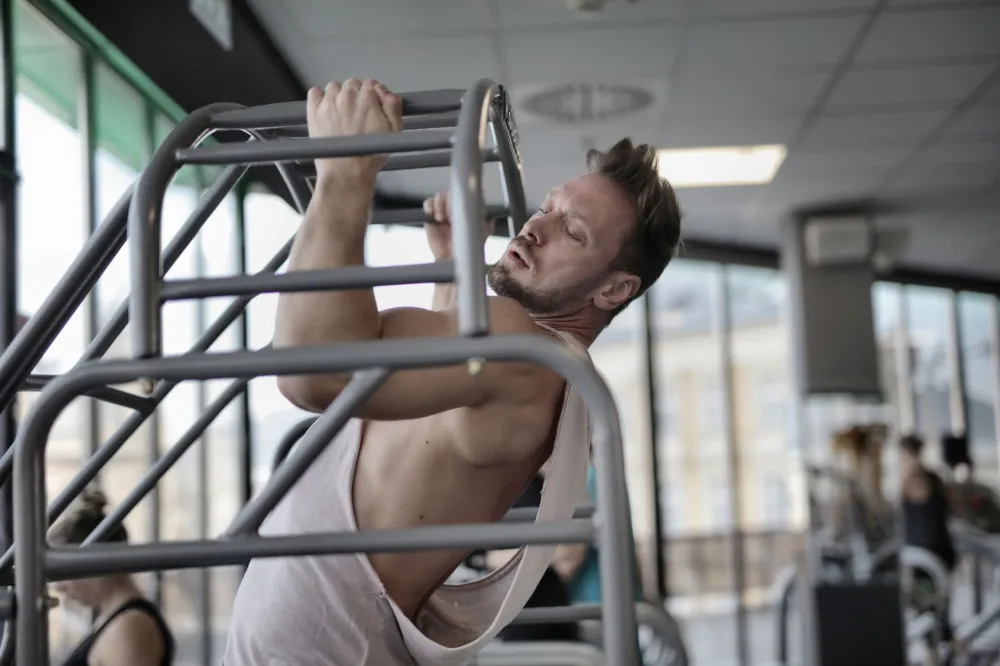
The chin tuck directly counters the forward-head position your screen pushes you into. Over weeks, many people find it starts to feel more natural to sit with their head in a neutral position rather than jutting forward.
2. Lateral Neck Side Bend (Upper Trapezius Stretch)
Sit or stand upright. Drop your right ear toward your right shoulder without forcing it, let gravity do the work. For a deeper stretch, gently place your right hand on the left side of your head and apply very light pressure. Hold for 20 to 30 seconds, then switch sides. Repeat two to three times per side.
This stretch targets the upper trapezius muscle, which is almost always the first muscle to complain in desk workers. If you feel any sharp or shooting pain down your arm, stop immediately and see a healthcare provider.
3. Neck Rotation Stretch
Sitting tall, slowly turn your head to look over your right shoulder as far as is comfortable. Hold for 20 to 30 seconds. Return to center, then repeat on the left. Do two to three repetitions per side. This addresses stiffness in the joints and muscles responsible for turning your head, which often get neglected entirely during a workday.
4. Levator Scapulae Stretch
This one sounds technical but it’s easy. Sit up straight and look diagonally down toward your right knee. Tilt your head slightly forward in that direction, then gently place your right hand on the back of your head to add a light stretch. Hold 20 to 30 seconds, then switch sides. This targets the levator scapulae, a muscle that runs from the top of your shoulder blade to the upper cervical spine and is a major source of that “knot” feeling near your neck and shoulder.
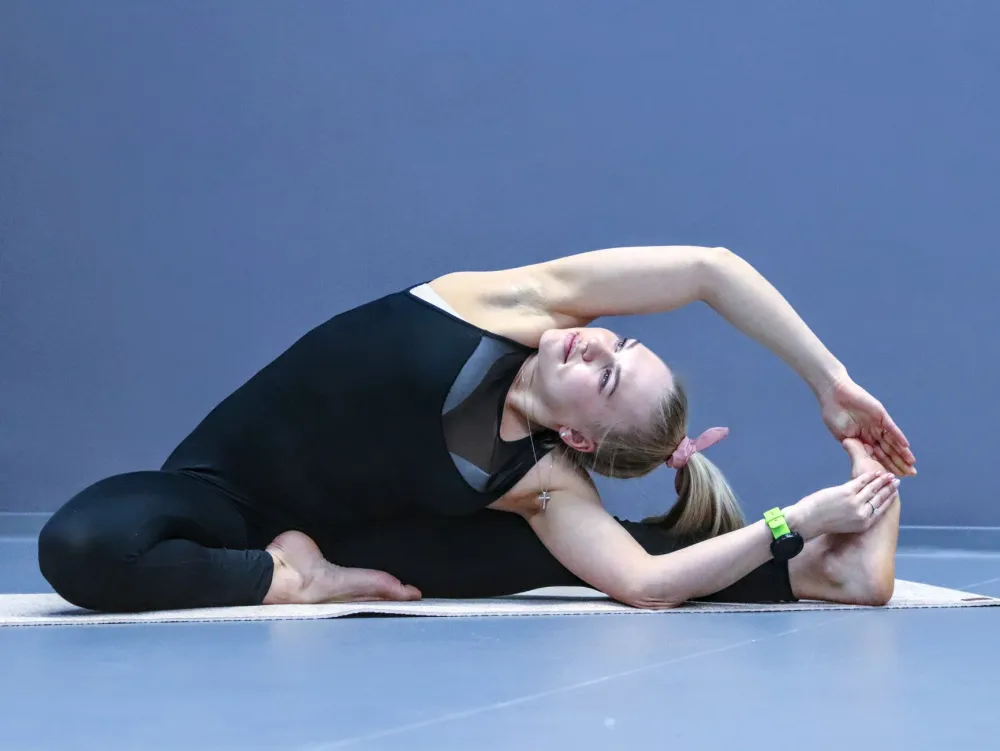
5. Chest Opener / Shoulder Roll
Neck pain rarely lives in isolation. Tight chest muscles pull your shoulders forward, which pulls your neck out of alignment. Roll your shoulders back and down five to ten times, then clasp your hands behind your back and gently open your chest toward the ceiling. Hold for ten to fifteen seconds. Simple works.
How to Build Stretches Into a Real Workday
Knowing the stretches is one thing. Actually doing them at 2 PM on a Tuesday is another. Here’s what tends to work in practice.
Quick Comparison: Common Neck Stretches at a Glance
| Stretch | Target Muscle | Hold Time | Reps Per Side | Best For |
|---|---|---|---|---|
| Chin Tuck | Suboccipitals, deep neck flexors | 5 seconds | 10 reps | Forward head posture |
| Lateral Side Bend | Upper trapezius | 20 to 30 seconds | 2 to 3 | Shoulder and neck tension |
| Neck Rotation | Sternocleidomastoid, scalenes | 20 to 30 seconds | 2 to 3 | Rotation stiffness |
| Levator Scapulae Stretch | Levator scapulae | 20 to 30 seconds | 2 to 3 | Deep neck-shoulder knot |
| Chest Opener | Pectorals, anterior shoulders | 10 to 15 seconds | 3 to 5 | Rounded shoulder correction |
Myths About Neck Pain and Stretching You Should Stop Believing
There’s a lot of bad advice floating around on this topic. Let’s clear up the most common ones.
- “Cracking your neck relieves tension”: Self-manipulating your neck by twisting it forcefully may feel satisfying in the moment, but it doesn’t address the underlying muscle tightness, and done repeatedly or aggressively, it can irritate the joints. Gentle stretching is a much safer route.
- “Neck pain always means something is seriously wrong”: For most desk workers, neck pain is a musculoskeletal issue related to posture and muscle fatigue, not a sign of a serious underlying condition. That said, persistent pain or pain with other symptoms always warrants a medical check, more on that below.
- “You need to rest and avoid all movement”: Complete rest is rarely the right answer for typical desk neck pain. Gentle, controlled movement and stretching are generally more helpful than going completely still. Mayo Clinic notes that staying gently active tends to support recovery better than prolonged rest for most neck strains.
- “A new ergonomic chair will fix everything”: Ergonomics matter, but a $900 chair won’t undo six hours of forward head posture. The chair is a piece of the puzzle; consistent movement and stretching are others. Speaking of which, desk-neck pain often travels downward, and if you’re also dealing with lower back complaints, the article on spinal decompression therapy for back pain relief may be worth reading alongside this one.
Setting Up Your Desk to Support What You’re Stretching
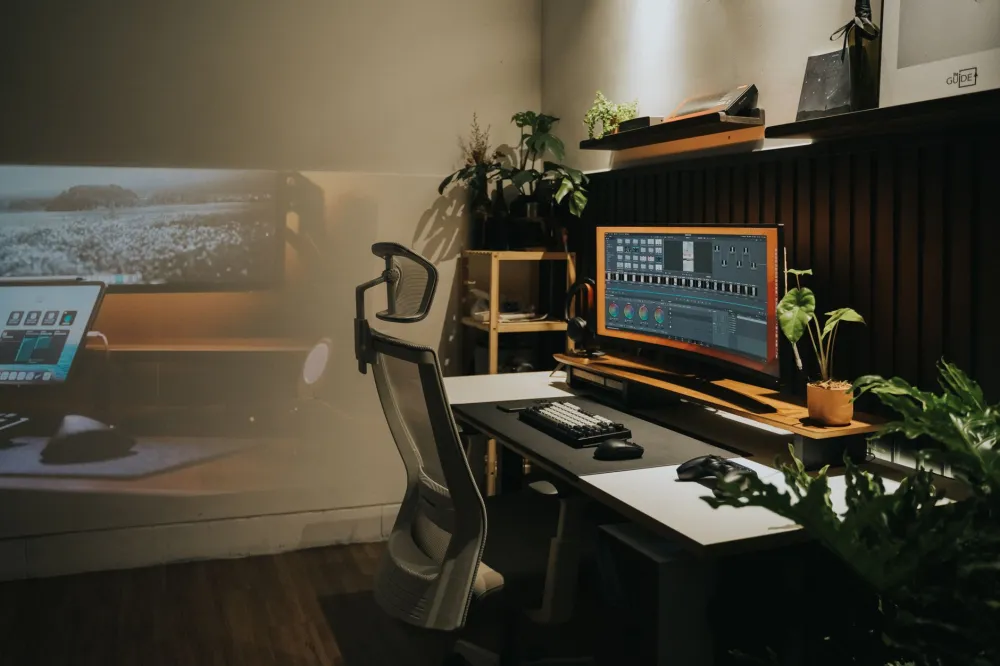
Stretching into a setup that keeps recreating the problem is a bit like mopping around a leaking pipe. The setup itself matters. A few quick adjustments can make your stretches far more effective.
Your monitor should be at roughly arm’s length away, with the top of the screen at or just below eye level. If you’re working on a laptop exclusively, a laptop stand and an external keyboard are among the most practical investments you can make for your neck. Your chair height should allow your feet to rest flat on the floor and your knees to sit at roughly a 90-degree angle. If your screen sits too low or too far to one side, your neck compensates with every minute of screen time.
Muscle tension and stress are also closely related. Chronic stress can drive muscle bracing that makes neck tightness significantly worse. This connection between body tension and broader health patterns is something researchers continue to explore, and it’s a good reminder that sleep, hydration, and stress management all feed into how your neck feels by end of day. If stress seems to play a role in your discomfort, the piece on stress and gut health explores how whole-body stress affects your physical experience in ways that might surprise you.
When Should You See a Doctor for Neck Pain?
Most desk-related neck pain responds well to stretching, movement, and ergonomic improvements over time. But some symptoms signal that you need a professional evaluation, not a blog article.
See a doctor promptly if your neck pain comes with any of the following:
- Numbness or tingling running down your arms or into your hands
- Weakness in your arms, hands, or grip strength
- Sudden, severe neck pain that came on with no clear cause
- Pain after a fall or accident, even a minor one
- Fever or unexplained weight loss alongside neck pain
- Headache described as the worst of your life, which can indicate a medical emergency
Radiating arm pain in particular suggests that a nerve may be involved, a condition sometimes called cervical radiculopathy, or nerve irritation in the neck. That’s a different situation from simple muscle tightness and needs proper diagnosis. Don’t stretch aggressively through that kind of pain.
If you’ve been consistently doing these stretches for four to six weeks and your pain hasn’t improved, or if it’s getting worse, bring that up with your doctor or a physical therapist. Persistent pain always deserves a real medical look. You can find more practical everyday health guidance across a wide range of topics at Better Life Carez.
FAQ
The Bottom Line
Neck stretches for desk workers are one of the most practical, evidence-supported tools you have for managing the stiffness and pain that screen time creates. The chin tuck, lateral side bend, neck rotation, levator scapulae stretch, and chest opener are the five moves most likely to make a real difference, especially when done consistently two to three times a day. Start with just two stretches anchored to an existing habit, pair them with basic ergonomic adjustments to your screen height, and give it at least four weeks before judging the results. If pain is severe, radiates into your arms, or doesn’t improve with time, see a healthcare provider rather than pushing through.
This article is for informational purposes only and is not a substitute for professional medical advice, diagnosis, or treatment. Always consult a qualified healthcare provider about your specific situation. If you experience severe or sudden symptoms, seek medical care immediately.

1 thought on “Neck Stretches for Desk Workers: What Actually Works”
Comments are closed.