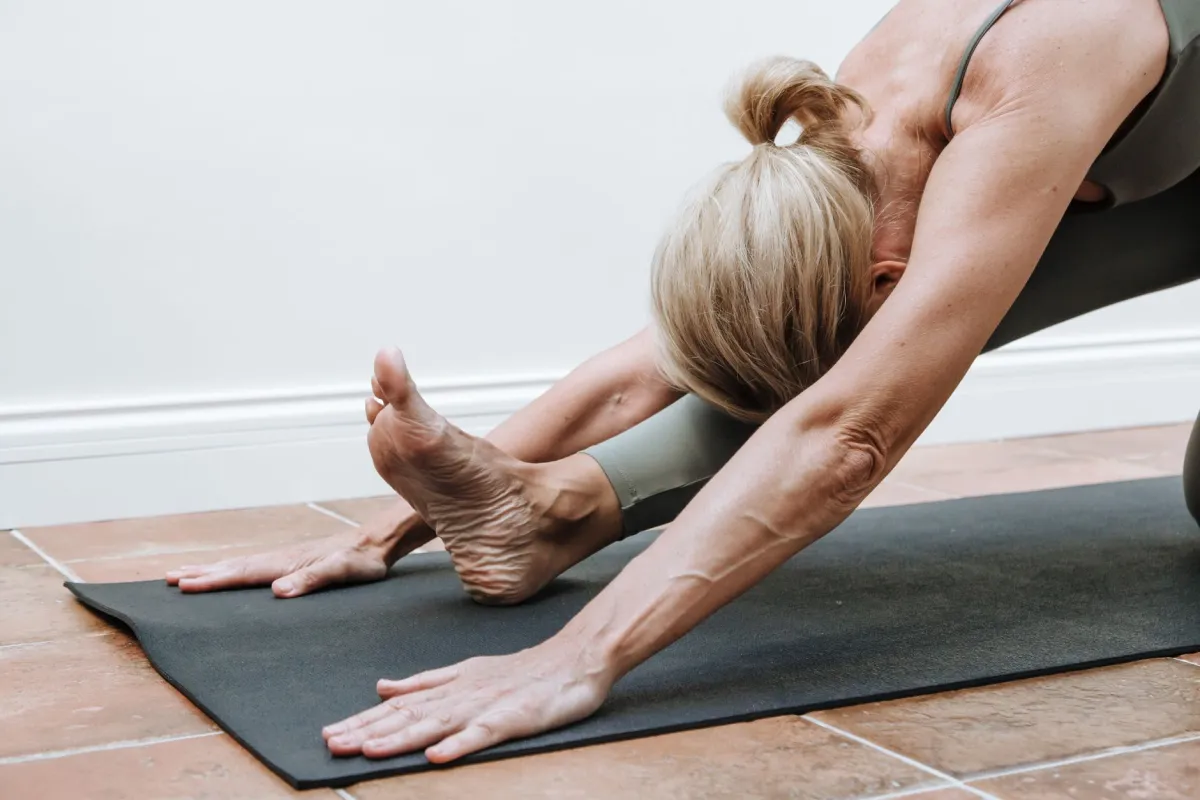
Bend down to tie your shoes after a long day at your desk, and your lower back may tell you no. That tight, creaky band across your belt line is common, and for many people a few minutes of gentle movement helps. Here’s what to try, how often to try it, and when stiffness is worth a doctor’s visit.
- What Causes a Stiff Lower Back?
- Do Lower Back Stretches Actually Help?
- How Do You Stretch a Stiff Lower Back Safely?
- 8 Gentle Lower Back Stretches to Try Today
- How Often Should You Do Lower Back Stretches?
- Which Back Stretching Myths Should You Drop?
- What Else Helps a Stiff Lower Back?
- When Should You See a Doctor for Back Stiffness?
- FAQ
- The Bottom Line
What Causes a Stiff Lower Back?
Usually, a stiff lower back comes from muscles and joints that haven’t moved enough, not from serious damage. Long hours of sitting, sleeping in one position, a sudden burst of yard work and normal age-related changes in the spine are the most common culprits.
Your lumbar spine is the lower section of your back, made up of five vertebrae (the spine bones) that curve gently inward just above your hips. When it’s stiff, it feels tight, achy, and hard to bend. Most people describe a dull band of tension rather than a stabbing pain. And it often loosens once you get moving.
Why your back feels worst after waking up
Between your vertebrae sit discs, rubbery cushions that act like shock absorbers. Overnight, those discs take on a bit of fluid and swell slightly, which is one reason your spine can feel tighter first thing in the morning. Add several hours of stillness, and the surrounding muscles and joints stay stiff until blood flow picks up.
If your back hurts when you wake up but feels fine by mid-morning, you’re seeing a very common pattern. Your mattress and the way you lie down can matter too. Our breakdown of the best and worst sleeping positions for back pain covers small changes that may help.
How sitting tightens the lower back
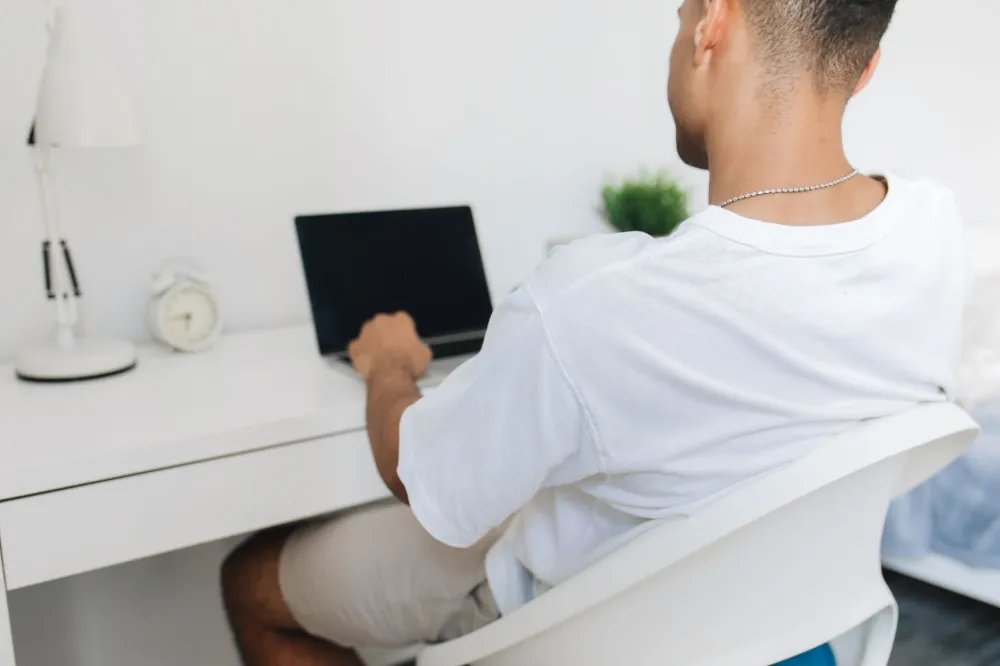
Sitting keeps your hips bent and your back muscles parked in one position for hours. Many people notice tightness in the hip flexors (the muscles at the front of your hips), the hamstrings (the muscles along the back of your thighs) and the glutes. All of these attach near the pelvis, so they can tug on the lower back. That ache that shows up by lunch often follows this exact pattern.
Your setup plays a role, too. If you work at a computer, our guide to desk posture and back pain from sitting all day walks through chair height, screen position and break timing.
Other everyday triggers include a weekend of raking leaves, a brand-new workout, and stress that has you clenching your muscles without noticing. Osteoarthritis, the gradual wear of joint cartilage that becomes more common with age, can also play a part.
Do Lower Back Stretches Actually Help?
For most people with everyday stiffness, yes. Gentle stretches can loosen tight muscles and make moving more comfortable. They work best as part of a more active day, though, not as a stand-alone fix.
Major guidelines lean heavily on movement. The American College of Physicians, which issues treatment guidance for internal medicine doctors in the US, suggests trying non-drug options first for many people with low back pain. For short flare-ups, that can mean heat. For pain that hangs around longer, it can mean exercise, yoga or tai chi.
The research on exercise is fairly consistent. A large Cochrane review, which pools results from many randomized controlled trials (studies that assign people to different treatments by chance), found that exercise therapy probably reduces pain modestly in chronic low back pain compared with no treatment. No single style of exercise clearly beat the others.
But stretching on its own has thinner evidence than general exercise. It won’t rebuild strength or undo eight hours at a desk. Where stretching shines is stiffness itself. It may help a tight back feel more ready to move, and staying gently active is what the evidence supports.
So here’s our take: use stretches as a daily warm-up and maintenance routine, then add walking and a little gentle strengthening. Mayo Clinic back pain guidance includes several of the same moves you’ll find below, such as the knee-to-chest stretch and a lower back rotation.
How Do You Stretch a Stiff Lower Back Safely?
Warm up first, move slowly, breathe steadily and stay in a comfortable range. Gentle, steady holds are safer and more effective for most people than forcing a deep position or bouncing into one.
A few ground rules go a long way:
- Warm up first: Walk around the house for five minutes, or stretch after a warm shower, when muscles tend to feel looser.
- Skip the bounce: Bouncing (called ballistic stretching) can trigger a protective muscle tightening and may strain tissue. Ease in and hold.
- Breathe out into it: Exhaling as you settle into a stretch helps many people relax the muscles they’re targeting.
- Use a soft surface: A yoga mat, a rug or even a firm bed works. Cold tile floors don’t help anyone relax.
- Respect a fresh tweak: If you hurt your back in the last day or two, keep movements small and stay well within comfort.
You don’t need special gear. A bath towel or an old belt can stand in for a yoga strap, and a pillow under your head or knees is perfectly fine.
8 Gentle Lower Back Stretches to Try Today
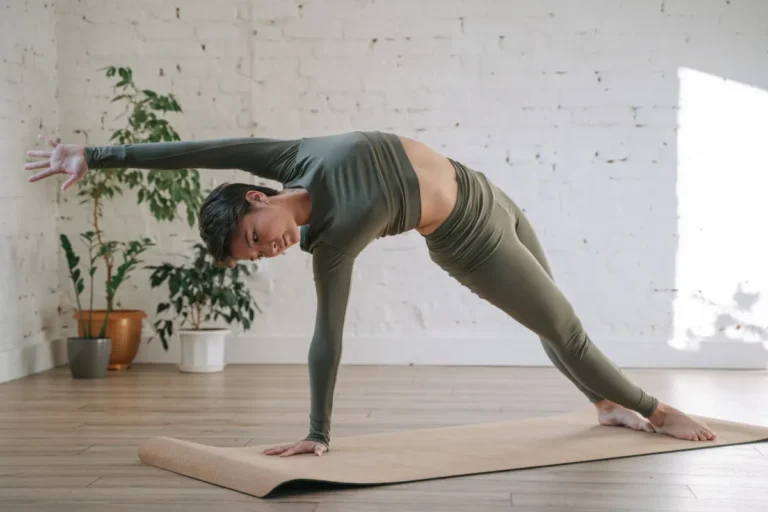
These eight stretches make a beginner-friendly routine that takes about 8 to 12 minutes. Do them in order, since the early moves warm up the area before the deeper positions. Skip any stretch that pinches or aggravates your symptoms.
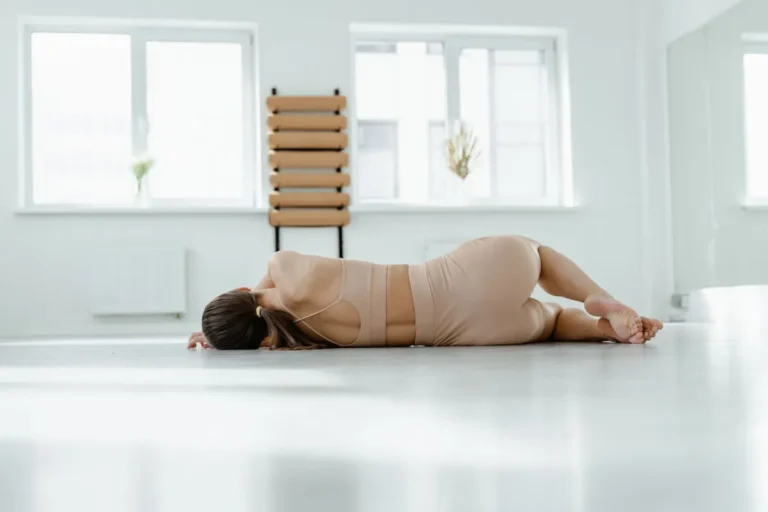
Lying on your back
Start on your back with your knees bent and your feet flat. This position supports your spine fully, which makes it the gentlest place to begin.
Take a breath here before rolling onto your side and pushing up onto your hands and knees. Rolling first, rather than sitting straight up, tends to feel much kinder on a stiff back.

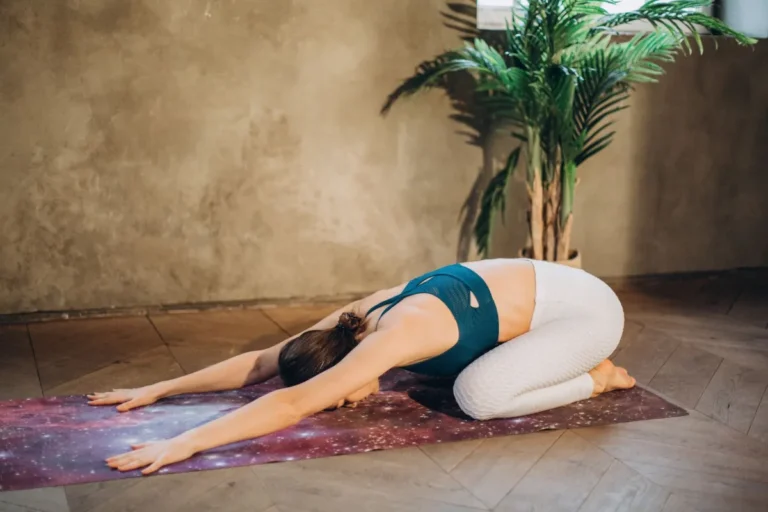
On hands and knees, then on your belly
These last three moves bring your spine through gentle bending and arching. If the floor feels hard, fold a towel under your knees.
Can’t get down on the floor? Many of these work on a firm bed. A seated figure-four (ankle over the opposite knee while sitting tall in a chair) is a handy desk-friendly swap. If these moves feel good, our guide to yoga poses that ease lower back tension offers a few next steps.
How Often Should You Do Lower Back Stretches?
Most people do well with gentle lower back stretches once or twice a day, most days of the week. Short, regular sessions of 5 to 10 minutes tend to help stiffness more than one long session on the weekend.
Consistency beats intensity every time. Flexibility gains fade quickly when you stop, so treat stretching like brushing your teeth: brief, a little boring, and done every day. Pairing it with something you already do, like waiting for your coffee to brew or sitting down to the evening news, makes the habit much easier to keep.
What should you expect? Results vary a lot from person to person, but this is a realistic picture for everyday stiffness:
| Timeframe | What many people notice | Focus |
|---|---|---|
| First session | Slight looseness afterward | Go gentle, learn the moves |
| Days 2 to 4 | Mild muscle awareness | Keep holds short and easy |
| End of week 1 | Easier morning bending | Add a daily walk |
| Week 2 | Stiffness fades faster | Add bridges or bird dogs |
| Weeks 3 to 6 | Looseness lasts longer | Mix stretching and strength |
If your stiffness isn’t improving at all after two to three weeks of steady effort, or it’s getting worse, pay attention. That’s a good time to check in with your doctor or a physical therapist instead of stretching harder.

Which Back Stretching Myths Should You Drop?
The biggest myths say that rest fixes stiffness, that stretching should hurt, and that stretching alone solves back problems. Research points the other way. Staying gently active, stretching to mild tension and adding some strength work tend to serve a stiff back best.
| Myth | What research suggests | Do this instead |
|---|---|---|
| Rest in bed until it’s gone | Staying active usually helps recovery | Keep moving gently |
| Stretch through the pain | Sharp pain signals overload | Stop at mild tension |
| Bouncing deepens a stretch | Bouncing may strain muscles | Hold steady 20 to 30 seconds |
| Stiffness means serious damage | Usually tight muscles or joints | Watch for red flags |
| You must touch your toes | Flexibility varies widely | Aim for comfort, not range |
| Stretching alone fixes it | Strength and activity matter too | Add walking and core work |
What the research doesn’t support
Plenty of products promise to “realign” your spine overnight. Pricey stretching gadgets, magnetic belts and viral hacks rarely have solid trial evidence behind them. None has been shown to beat free, regular movement. A towel and a patch of carpet will do the job for most people.
The same goes for the idea that you need an hour of stretching to see any difference. Short daily sessions are easier to stick with, and sticking with it is what counts.
What Else Helps a Stiff Lower Back?
Stretching isn’t the whole story. Regular walking, heat, frequent breaks from sitting and gentle core strengthening all help many people with a stiff lower back. These habits keep your muscles and joints moving between stretching sessions.
A few additions pair well with your routine:
- Walk most days: Even 10 to 20 minutes gets blood flowing to stiff tissue. Our look at walking vs rest for back pain explains why gentle movement usually wins.
- Use warmth: A heating pad on a low setting or a warm shower for 15 to 20 minutes may relax tight muscles. Never sleep on a heating pad.
- Break up sitting: Stand, walk to refill your water or do a few standing back bends every 30 to 60 minutes.
- Build some strength: Glute bridges and bird dogs train the muscles that support your spine, which may reduce how often stiffness comes back.
For more ideas you can try in your living room, our guide to lower back pain relief at home covers heat, ice, positioning and over-the-counter options to discuss with a pharmacist.

When Should You See a Doctor for Back Stiffness?
See a doctor if back stiffness lasts more than a few weeks, keeps getting worse, or comes with numbness, weakness, fever, unexplained weight loss or trouble controlling your bladder or bowels. Those signs point to something stretching can’t fix.
The good news first. According to Cleveland Clinic, most cases of low back pain get better with time and self-care. Still, certain symptoms mean you should stop reading and get checked promptly:
- Numbness in the groin or inner thighs: Especially with new bladder or bowel problems, this needs emergency care right away.
- Leg weakness or spreading numbness: This may signal a pinched nerve that needs evaluation.
- Fever or unexplained weight loss: These can point to infection or other conditions beyond a tight muscle.
- Pain after a fall or accident: Get checked for injury, particularly if you’re older or have weaker bones.
- Night pain that rest doesn’t ease: Pain that wakes you and doesn’t settle when you lie still deserves a look.
One more pattern is worth knowing. If your stiffness lasts longer than about 30 minutes most mornings, improves with exercise but not with rest, and started before age 45, ask your doctor about inflammatory back pain. One example is axial spondyloarthritis, a form of arthritis that affects the spine. It’s treatable, and catching it early matters.
Pain that shoots down one leg is a different problem from simple stiffness. Our guide to sciatica pain and what helps explains how nerve-related pain is usually managed.
FAQ
The Bottom Line
For everyday stiffness, gentle lower back stretches done slowly for 5 to 10 minutes once or twice a day may help your back feel looser and move more easily. Start with pelvic tilts and knee-to-chest stretches, hold each position 20 to 30 seconds without bouncing, and stop at a mild pull. Pair stretching with daily walks and a little strength work for the best odds of lasting relief. If stiffness drags on for weeks or comes with numbness, weakness, fever or bladder changes, see a doctor promptly.
This article is for informational purposes only and is not a substitute for professional medical advice, diagnosis, or treatment. Always consult a qualified healthcare provider about your specific situation. If you experience severe or sudden symptoms, seek medical care immediately.

Back and Neck Pain
Browse every related article on this topic in one place.