

Heel pain is one of the most common foot complaints doctors see. It can make the first steps out of bed feel like walking on a bruise, or turn a regular run into a limp. The good news is that most heel pain comes from overloaded tissue rather than anything sinister, and it usually settles with simple changes and a bit of patience.
This guide explains the usual causes, how to tell them apart by where and when it hurts, what you can do at home, which treatments help when self care is not enough, and the honest answer to a question many people search late at night: can heel pain be a sign of cancer?
Common Causes of Heel Pain
Your heel bone (the calcaneus) takes your full body weight with every step. Several structures attach to it or sit around it, and any of them can become irritated.
Plantar fasciitis
This is by far the most common cause in adults. The plantar fascia is a thick band of tissue running from the heel to the toes that supports the arch. When it is overloaded, the area where it attaches to the heel becomes painful. It is more likely if you are on your feet a lot, have recently increased walking or running, carry extra weight, have tight calves, or wear flat, unsupportive shoes. It is most common between the ages of about 40 and 60.
Achilles tendinopathy
The Achilles tendon joins the calf muscles to the back of the heel. Overuse, a sudden jump in training or tight calves can make it painful and stiff, either in the middle of the tendon or right where it attaches to the bone.
Heel pad syndrome
A cushion of fat under the heel absorbs shock. It can thin with age or become bruised from hard surfaces, causing a deep ache in the centre of the heel that is worse on hard floors or barefoot.
Stress fracture
Repeated impact, especially in runners, military recruits or people with thinning bones, can cause a small crack in the heel bone. The pain builds with activity, and squeezing the sides of the heel often hurts.
Sever’s disease in children
In active children aged roughly 8 to 14, the growth plate at the back of the heel can become irritated. Despite the name, it is not a disease and it settles once growth finishes. Rest from running and jumping, calf stretches and good shoes usually help.
Nerve problems
Burning, tingling or numbness suggests a nerve is involved. Tarsal tunnel syndrome is a squeezed nerve on the inner side of the ankle. Pain can also travel from the lower back, as in sciatica. People with diabetes can develop nerve damage in the feet, which is one reason our type 2 diabetes guide stresses regular foot checks.
Arthritis and other causes
Inflammatory types of arthritis, such as psoriatic arthritis, reactive arthritis and ankylosing spondylitis, can cause heel pain, often in both heels and alongside stiffness elsewhere. Bursitis, heel spurs and bone bruises are other possibilities.
Where and When It Hurts: Clues to the Cause
The pattern of your pain says a lot. This table is a rough guide, not a diagnosis.
| Cause | Where it hurts | Typical pattern |
|---|---|---|
| Plantar fasciitis | Underneath the heel, toward the inner side and arch | Worst with the first steps in the morning or after sitting, eases as you move, returns after long standing |
| Achilles tendinopathy | Back of the heel or just above it | Stiff in the morning, sore at the start of exercise, tendon may feel thickened |
| Heel pad syndrome | Centre of the heel | Deep bruised ache, worse barefoot or on hard floors |
| Stress fracture | Whole heel, painful to squeeze from the sides | Builds with activity, may ache at rest, often after a training increase |
| Sever’s disease | Back and sides of the heel in a child | Worse during and after sport, eases with rest |
| Nerve entrapment | Inner heel, may spread into the sole | Burning, tingling or numbness, sometimes worse at night |
Self Care for Heel Pain
For plantar fasciitis and most overuse problems, the NHS recommends starting with these steps:
- Ease off what aggravates it. You do not need total rest, but cut back on running, long walks and standing for hours while it settles. Cycling or swimming can keep you fit.
- Wear supportive shoes with a cushioned heel and good arch support. Avoid flat shoes, flip-flops, worn-out trainers and walking barefoot on hard floors.
- Try heel cups or insoles. Off-the-shelf cushioned heel pads or arch supports are inexpensive and help many people. Custom orthotics are an option if these do not.
- Stretch your calves and the sole of your foot every day. See the stretches below.
- Use ice wrapped in a cloth for up to 20 minutes at a time. Rolling the sole over a frozen water bottle combines cold with a gentle stretch.
- Take short-term pain relief such as paracetamol (acetaminophen) or ibuprofen if needed, following the label.
- Work toward a healthy weight if you carry extra. Every kilo you lose takes load off your heels with each step.
A warm foot bath may feel soothing, but there is no evidence that salts or soaks treat the underlying problem. Think of them as comfort, not cure.
Simple stretches
- Calf stretch against a wall. Put your hands on a wall, the painful foot back, heel down and knee straight. Lean forward until you feel the stretch in the calf. Hold 30 seconds, repeat 3 times, then do it again with the back knee slightly bent.
- Plantar fascia stretch. Sit, cross the affected foot over your other knee, and pull your toes back toward your shin until you feel a stretch along the arch. Hold 10 to 30 seconds, several times. Doing this before your first steps in the morning often helps.
- Towel stretch. Sit with your leg straight, loop a towel around the ball of your foot and gently pull it toward you.
Most people notice improvement within a few weeks, but plantar fasciitis can take several months to settle fully. Keep the stretches going even after the pain fades. If you are building up walking again, our piece on how many steps a day you really need may help you set a sensible target.
Medical Treatments When Self Care Is Not Enough
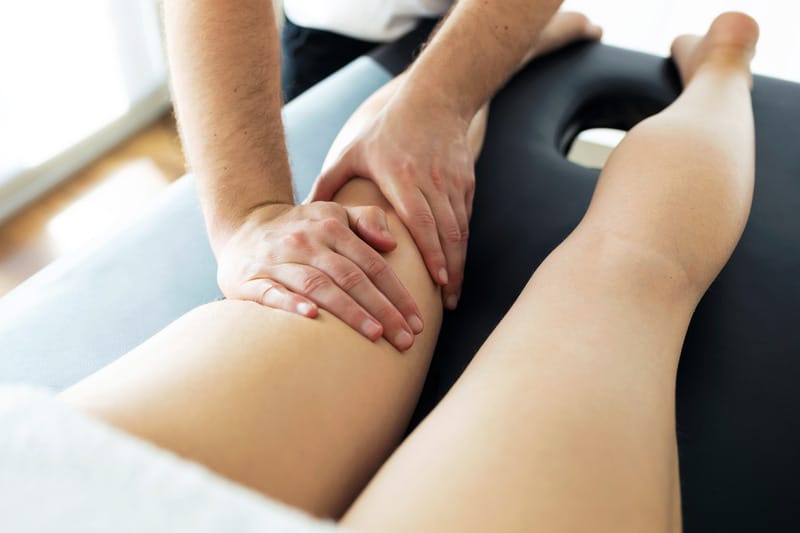
If home care has not helped after a few weeks, a GP, physiotherapist or podiatrist can confirm the cause and suggest the next step.
- Physiotherapy. A structured programme of stretching and strengthening for the calf and foot is the backbone of treatment for both plantar fasciitis and Achilles tendinopathy.
- Night splints. These hold the foot gently flexed overnight so the fascia does not tighten, which can reduce morning pain.
- Taping. Strapping the arch can offload the fascia in the short term.
- Steroid injection. Can ease plantar fasciitis pain for a few weeks, but the benefit is often short-lived and repeated injections carry a small risk of fat pad thinning or fascia rupture. Steroid is generally not injected into the Achilles tendon.
- Shockwave therapy. Pulses of sound energy aimed at the heel are offered for stubborn plantar fasciitis or Achilles pain. Evidence is mixed but some people with long-standing symptoms benefit.
- Surgery. Rarely needed, and only considered after 6 to 12 months of well-done treatment has failed.
Scans are not usually needed. An X-ray may be used if a fracture or arthritis is suspected, and an MRI or ultrasound if the diagnosis is unclear or symptoms are unusual.
Is Heel Pain Ever a Sign of Cancer?
Very rarely. The overwhelming majority of heel pain is caused by the mechanical problems above. Bone tumours in the heel are uncommon, and cancer that spreads to the foot bones from elsewhere (metastasis) is rarer still, usually in people who already know they have cancer.
What separates a worrying pain from an ordinary one is the pattern. Overuse pain changes with activity and improves with rest. Pain from a bone tumour tends to be persistent, gets steadily worse over weeks, and often aches at night or at rest. Infection in the bone is another uncommon but serious cause that can look similar.
Swelling around the ankle and heel together can also come from problems outside the foot, such as fluid build-up or circulation issues. Our article on swollen legs covers those.
FAQ
Why does my heel hurt most in the morning?
The plantar fascia tightens overnight. When you stand, it is stretched suddenly, which causes the sharp first-step pain typical of plantar fasciitis. Stretching before you get out of bed can soften it.
How long does plantar fasciitis last?
Many people improve within weeks, but it commonly takes several months, and occasionally a year, to settle completely. Most cases get better without surgery.
Are heel spurs the cause of my pain?
Not usually. Heel spurs are common on X-rays in people with no pain at all. Treatment focuses on the soft tissue problem, not removing the spur.
Should I keep exercising with heel pain?
Switch to activities that do not hurt, such as swimming or cycling, and build back up gradually. Pushing through sharp pain tends to prolong recovery.
The Bottom Line
Heel pain is common and usually mechanical, with plantar fasciitis the leading cause. Supportive shoes, insoles, daily calf and foot stretches, easing off aggravating activity and patience fix most cases, with physiotherapy, night splints, injections or shockwave therapy for pain that lingers. Cancer is a rare cause. Pain that is constant, worse at night, getting steadily worse or paired with a lump, fever or weight loss deserves a prompt medical check.
This article is for general information and is not a substitute for advice from your doctor.
Sources
- NHS: Plantar Fasciitis
- Cleveland Clinic: Heel Pain
- Cleveland Clinic: Plantar Fasciitis
- Cleveland Clinic: Heel Fat Pad Syndrome
- NHS: Symptoms of Bone Cancer
Medical disclaimer: This article is for general information only and is not a substitute for advice, diagnosis or treatment from a qualified health professional. If your symptoms are severe, sudden or getting worse, contact a doctor or emergency services.

Everyday Health and Wellness
Browse every related article on this topic in one place.