
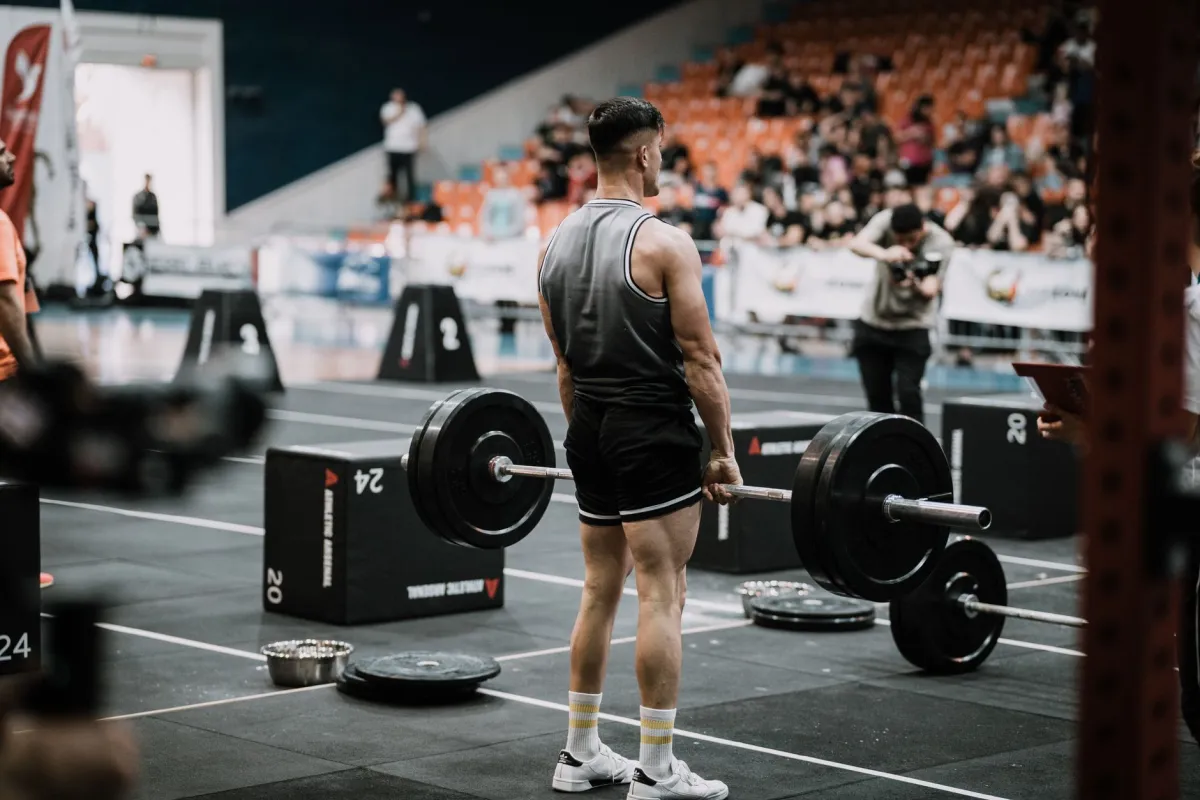
Why Does Your Back Hurt After the Gym?
You finished a solid workout, felt great walking out the door, and then woke up the next morning barely able to roll out of bed. Back pain after the gym is one of the most frustrating things that can happen to someone genuinely trying to stay healthy.
- Why Does Your Back Hurt After the Gym?
- The Most Common Causes of Post-Gym Back Pain
- Is Your Back Pain Normal or Something More Serious?
- Common Myths About Post-Gym Back Pain
- What You Can Actually Do About It Today
- When Should You See a Professional?
- What the Research Actually Supports
- FAQ
- The Bottom Line
The good news is that most post-gym back pain is not a sign of serious damage. But understanding why it happens is the key to stopping it from becoming a pattern. Let’s break it down properly.

The Most Common Causes of Post-Gym Back Pain
Post-gym back pain almost always traces back to one of a handful of root causes. Knowing which one you’re dealing with changes everything about how you respond to it.
Muscle Strain and Delayed Onset Muscle Soreness (DOMS)
Delayed onset muscle soreness (DOMS) is the stiff, achy feeling that peaks around 24 to 48 hours after exercise. It happens because intense or unfamiliar movement creates tiny microscopic tears in muscle fibers, and your body’s inflammatory repair response kicks in. According to the American College of Sports Medicine, DOMS is a normal part of adaptation, especially when you try a new exercise or ramp up intensity too quickly.
The back muscles, particularly the erector spinae (the long muscles running alongside your spine) and the quadratus lumborum (a deep muscle connecting your lower ribs to your pelvis), are heavily recruited in exercises like deadlifts, rows, squats, and even overhead presses. If those muscles aren’t used to that load, DOMS in the lower or mid back is almost guaranteed.
Poor Form Under Load
This one is blunt but true: bad form is the number one preventable cause of gym-related back pain. Rounding your lower back during a deadlift, arching excessively during a squat, or jerking through a bent-over row all place the lumbar spine (the five vertebrae in your lower back) under shear stress it’s not designed to handle repeatedly.
The intervertebral discs, the cushion-like pads sitting between each vertebra, are particularly vulnerable. Harvard Health notes that the lumbar discs bear the most compression force in the entire spine, especially when the back is rounded and loaded simultaneously. Even a single rep with bad form can trigger inflammation or, in worse cases, a disc irritation that nags for weeks.
Weak Core and Hip Muscles
Your core isn’t just your abs. It’s a whole system of muscles wrapping around your trunk, including the deep transverse abdominis (think of it as your body’s natural weight belt), the multifidus muscles along the spine, your glutes, and your hip flexors. When any of these are weak or not activating properly, your lower back compensates, taking on load it shouldn’t.
Tight hip flexors, which are extremely common in people who sit at a desk all day, tilt the pelvis forward and create an exaggerated lower back arch. That position, called anterior pelvic tilt, concentrates stress on the lumbar spine during almost every gym exercise. If your desk job has you sitting for hours before you even get to the gym, this might be your culprit. The article on desk posture and back pain from sitting all day goes deeper on this connection.
Jumping Into Too Much, Too Fast
Returning to the gym after a break, starting a new program, or suddenly increasing your training volume can overwhelm tissues that need time to adapt. This is called overloading, and the spine is particularly unforgiving about it. Tendons, ligaments, and discs adapt more slowly than muscle does, so you might feel muscularly capable of a heavier lift long before your connective tissues are truly ready for it.
Is Your Back Pain Normal or Something More Serious?
Most gym-related back pain falls into the “annoying but benign” category. But some symptoms are red flags that mean you should stop guessing and talk to a doctor or physical therapist promptly.
| Symptom | Likely Explanation | What to Do |
|---|---|---|
| Dull, achy soreness 24-48h after workout | DOMS or mild muscle strain | Rest, gentle movement, hydration |
| Sharp pain during a specific movement | Possible muscle or ligament strain | Stop that exercise, monitor for 48h |
| Pain that shoots down one leg | Possible nerve irritation or disc issue | See a doctor or physio soon |
| Numbness, tingling, or weakness in legs | Possible nerve compression | See a doctor promptly |
| Pain that doesn’t improve after 1-2 weeks | Unclear without evaluation | Get a professional assessment |
| Pain with fever, unexplained weight loss | Requires medical evaluation | See a doctor right away |
Pain that radiates down your leg, causes numbness or tingling, or comes with weakness in the lower limbs should never be dismissed. These symptoms may suggest irritation of the sciatic nerve, a disc herniation, or another structural issue that needs professional attention, not another set of stretches you found online.

Common Myths About Post-Gym Back Pain
There’s a lot of bad advice floating around about back pain after exercise. Some of it sounds reasonable. Some of it can actually make things worse.
Myth: You should stay in bed and rest completely. This was the standard advice for decades, and research has since moved firmly away from it. Complete bed rest for more than a day or two is now associated with slower recovery from non-specific lower back pain, according to guidance from the Mayo Clinic. Gentle, pain-free movement is generally better than lying still.
Myth: If it hurts, it must be serious damage. Pain is not a reliable indicator of structural damage. You can have significant pain from muscle spasm with no structural injury at all. Conversely, imaging studies sometimes find disc bulges or other changes in people who feel completely fine. Pain perception is complicated, and mild to moderate post-gym soreness is rarely a sign of something dangerous.
Myth: You just need to stretch more. Stretching alone isn’t the answer. If your back hurts because of weak stabilizing muscles or faulty movement patterns, stretching provides temporary relief at best. Strengthening the muscles that support the spine is typically what creates lasting change.
Myth: Back pain means you should quit lifting. For most people with non-specific back pain, this is the opposite of true. Appropriately dosed strength training is one of the better-researched tools for reducing chronic low back pain over time. The key phrase there is “appropriately dosed,” meaning the right exercises, loads, and form for where you are right now.
What You Can Actually Do About It Today
Here’s the practical part. Most cases of post-gym back pain respond well to a combination of smart recovery and small but meaningful technique changes.
Start with your recovery in the first 48 to 72 hours after the pain starts. Gentle movement like short walks, hip circles, or a supine knee-to-chest stretch (lying on your back and slowly pulling both knees toward your chest) can help keep blood flowing to the area without adding strain. Ice in the first 24 to 48 hours may help reduce acute inflammation, while heat tends to work better for muscle stiffness after the initial phase. Many people find a combination useful, but responses vary.
For building habits that prevent the next flare-up, a structured approach matters more than any single trick.

For those whose back pain seems tied to hours of sitting before or after the gym, a yoga-style morning routine may also help loosen things up. Research from a 10-minute morning yoga practice suggests that even brief daily movement has measurable benefits for musculoskeletal comfort over time.
When Should You See a Professional?
Most mild to moderate post-gym back pain improves within a few days. But there are clear situations where self-management isn’t enough and a professional evaluation is the right call.
See a doctor or physical therapist if your pain hasn’t improved after two weeks of sensible self-care. Go sooner if you have any of the red-flag symptoms listed in the table above, particularly nerve symptoms like shooting leg pain, numbness, or weakness. And definitely seek care immediately if you experience back pain accompanied by loss of bladder or bowel control, which, while rare, can indicate a serious spinal emergency called cauda equina syndrome.
A physical therapist can assess your movement patterns, identify specific muscle weaknesses, and build a program tailored to your body. If imaging is needed, your doctor will order it. Many people are surprised to find that a spinal decompression approach or targeted physiotherapy resolves what months of self-managed stretching never could.

What the Research Actually Supports
It’s worth being honest about what the science clearly backs versus what remains more speculative. The evidence is genuinely strong for progressive strength training reducing chronic low back pain over time, for core stability work as a preventive tool, and for staying active rather than resting completely.
The evidence is weaker, or more mixed, for specific supplements marketed for muscle recovery. Magnesium, for example, is sometimes promoted for reducing soreness, and while magnesium deficiency is associated with muscle cramps, supplementing in people who aren’t deficient hasn’t been convincingly shown to speed gym recovery. As with most supplements, they’re not tightly regulated, and they can interact with medications, so it’s worth checking with a pharmacist before adding anything new.
Foam rolling gets a lot of attention in gym culture. Research from institutions including Harvard Health suggests it may reduce the perception of muscle soreness in the short term, though it likely doesn’t meaningfully speed up tissue repair. Think of it as useful for comfort, not a substitute for actual recovery or fixing the underlying movement issue.
If stress is also a factor in your life, it may be worth knowing that psychological stress genuinely amplifies pain perception. The connection between stress and physical health is well-documented, and high-stress periods often coincide with increased injury rates at the gym, partly because stress impairs sleep and partly because tense muscles are less resilient under load.
FAQ
The Bottom Line
Back pain after the gym is usually a signal, not a catastrophe. In most cases it traces back to muscle strain, form breakdown, or doing too much too soon, and it responds well to sensible recovery and small technical fixes. Start with a proper warm-up, take your form seriously even on light days, and build core stability work into your routine consistently. If the pain is severe, involves nerve symptoms, or simply won’t budge after two weeks, that’s your cue to stop self-treating and get a real evaluation. Your back is doing a lot of work for you every single day at the gym and outside it. Taking it seriously, rather than pushing through pain or avoiding the gym entirely, is what keeps you training for the long run.
This article is for informational purposes only and is not a substitute for professional medical advice, diagnosis, or treatment. Always consult a qualified healthcare provider about your specific situation. If you experience severe or sudden symptoms, seek medical care immediately.
Keep exploring
- Desk Posture and Back Pain From Sitting All Day: What Works
- Spinal Decompression Therapy Back Pain, Lower Back Pain Relief
- Neck Stretches for Desk Workers: What Actually Works
This article is part of our Back and Neck Pain guide, where you can browse every related topic in one place.