
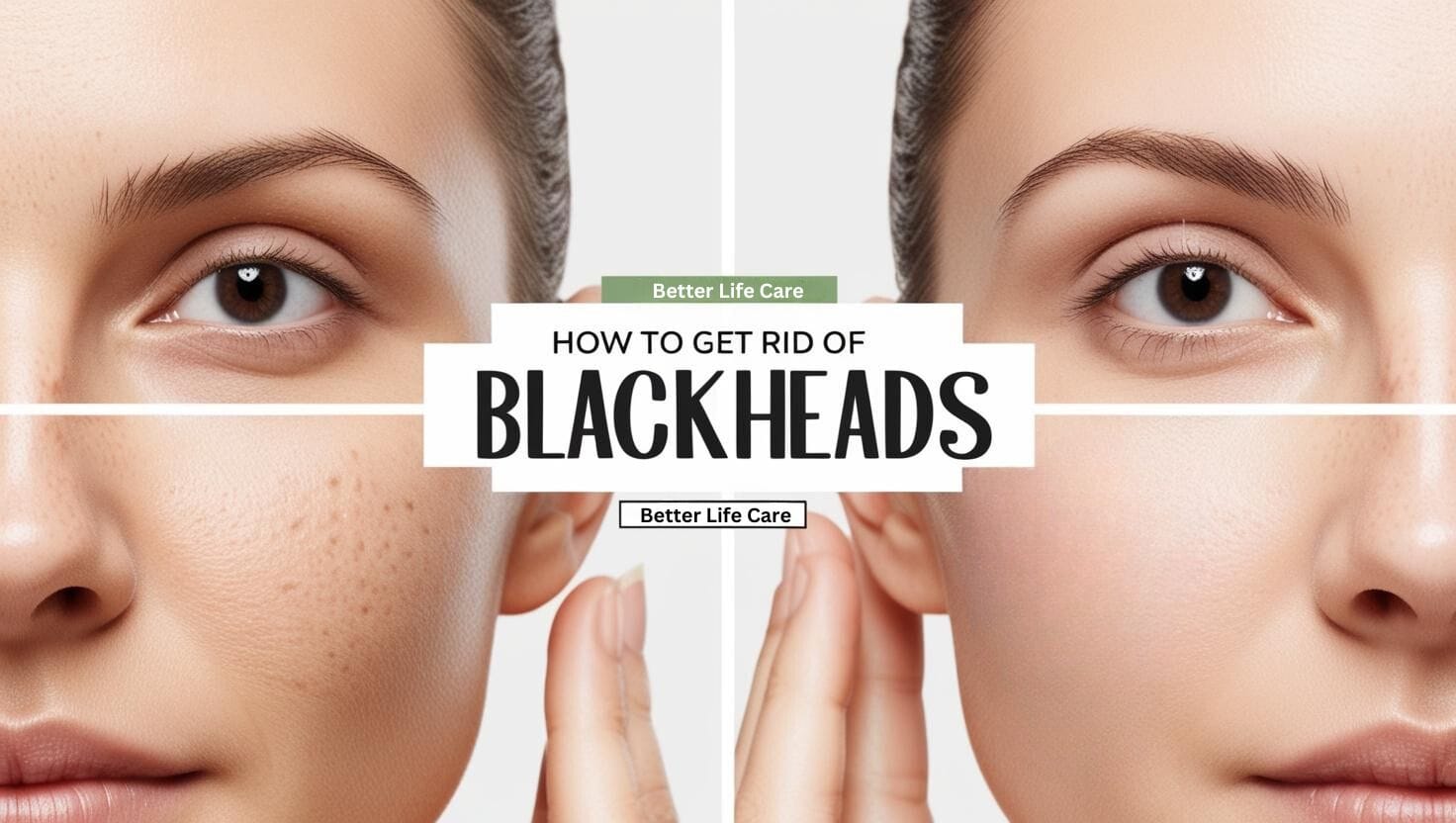
Blackheads are one of the most common skin complaints there is, and one of the most misunderstood. They are not dirt, scrubbing harder will not remove them, and a pore strip only gives you a few days of relief. The treatments that actually work are slow and steady: ingredients that keep pores from clogging in the first place.
Here is how to get rid of blackheads: what they are, what causes them, which treatments have good evidence, and what to skip.
What Are Blackheads?
A blackhead is a mild type of acne called an open comedone. It forms when a pore (the opening of a hair follicle) gets plugged with oil, called sebum, and dead skin cells. Because the top of the pore stays open, the plug is exposed to air.
The dark color is not dirt. It comes from the way the plug’s oil and skin pigment change when exposed to air, along with the way light reflects off the open pore. That is why washing more often does not make blackheads disappear.
When the same kind of plug is covered by a thin layer of skin, it stays white and is called a whitehead, or closed comedone. Both are non-inflamed acne. They can turn into red, sore pimples if bacteria multiply inside, which our guide on whether to pop a pimple covers.
Blackheads vs Sebaceous Filaments
Many people who think they have blackheads on their nose actually have sebaceous filaments. These are a normal part of skin: thin columns of oil and cells that line every pore and help move oil to the surface. They look like tiny grey or tan dots, all about the same size, often in an even pattern across the nose and cheeks.
| Feature | Blackhead | Sebaceous filament |
|---|---|---|
| Color | Dark brown or black | Grey, tan or skin-colored |
| Look | Raised or plugged dot, varies in size | Flat, even dots of similar size |
| When squeezed | A firm plug may come out | A thin, pale thread, which refills within days |
| Is it acne? | Yes, a mild form | No, a normal skin structure |
| Can it be removed for good? | Can be cleared and prevented | No, but can be made less visible |
The same treatments below help both look less noticeable, but sebaceous filaments will always come back, because your skin needs them.
What Causes Blackheads?
- Extra oil production. This is the main driver, which is why blackheads cluster on the nose, forehead and chin, where oil glands are most active.
- Hormones. Androgen hormones increase oil production during puberty, around periods, and with conditions like polycystic ovary syndrome. Our article on adult acne explains why breakouts continue past the teenage years.
- Dead skin cells that do not shed properly. Cells lining the pore can stick together and form a plug.
- Heavy or oily products. Thick creams, oily sunscreens, hair products and some makeup can clog pores.
- Genetics. If your parents had oily skin or acne, you are more likely to as well.
Blackheads are not caused by poor hygiene. Over-washing and scrubbing can irritate your skin and make it look worse.

How to Get Rid of Blackheads: Treatments That Work
The American Academy of Dermatology recommends treating blackheads with ingredients that unclog pores and stop new plugs forming. Give any treatment at least six to eight weeks before deciding whether it works.
Retinoids
Retinoids are the most effective treatment for blackheads and whiteheads. They speed up skin cell turnover and stop cells sticking together inside the pore. Adapalene 0.1 percent gel is available without a prescription in many countries. Stronger options such as tretinoin need a prescription. Start every second or third night with a pea-sized amount for the whole face, then build up. Mild dryness and peeling are common in the first few weeks. Our guide to retinol for beginners explains how to start without irritation. Retinoids are not recommended during pregnancy.
Salicylic acid
Salicylic acid is a beta hydroxy acid that dissolves in oil, so it can work inside the pore. It is found in cleansers, toners and leave-on gels at 0.5 to 2 percent. A leave-on product generally does more than a wash-off cleanser.
Benzoyl peroxide
Benzoyl peroxide is best for red, inflamed pimples, but it can help if you have a mix of blackheads and spots. It pairs well with adapalene.
Professional treatments
A dermatologist can remove blackheads with sterile tools and the right technique, which is far less likely to damage skin than squeezing at home. Chemical peels and prescription treatments can help stubborn cases.
What to Skip
- Squeezing with fingers. Pressing hard can damage the pore, push contents deeper and lead to red pimples, dark marks or scars.
- Harsh scrubs. Grainy scrubs and brushes cannot reach inside a pore and can irritate the skin. If you have overdone it, our guide to repairing your skin barrier can help.
- Pore strips. They pull out the top of some plugs, but the pores refill within days, and they can irritate sensitive skin.
- Baking soda, lemon juice and toothpaste. These are often recommended online, but they can disrupt the skin’s natural pH and cause irritation without treating the cause.
- Peel-off charcoal masks. There is little evidence they do more than any other peel-off product, and some can be painful to remove.
- Steaming to “open pores”. Pores do not open and close. Gentle warmth may soften skin slightly, but very hot steam can cause irritation or burns.
How to Prevent Blackheads
- Wash your face twice a day and after sweating with a gentle cleanser.
- Use products labeled non-comedogenic or oil-free, including sunscreen and makeup.
- Remove makeup fully before bed.
- Keep a retinoid or salicylic acid in your routine even after your skin clears, because blackheads return when you stop.
- Keep hair products away from your forehead and hairline.
- Change pillowcases regularly and avoid resting your hands on your face.
Blackheads on the back and chest respond to the same ingredients. See our guide to chest acne for body-specific tips.
FAQ
Why do blackheads come back after I remove them?
Removing a plug does not change the oil production and skin shedding that caused it. Ongoing use of a retinoid or salicylic acid is what keeps pores clear.
Are blackheads dirt?
No. The dark color comes from the plug being exposed to air and light, not from dirt.
How long does it take to clear blackheads?
Most people see improvement after six to eight weeks of daily treatment, and it can take three months for the full effect.
Can I use a retinoid and salicylic acid together?
Yes, but start slowly, as using both can dry out the skin. Many people use salicylic acid in the morning and a retinoid at night. Our skincare order guide explains how to layer them.
Do blackheads cause permanent large pores?
Pore size is mostly set by genetics and age, but clearing plugs can make pores look smaller.
The Bottom Line
Blackheads are plugged pores, not dirt, and they are best treated with patience rather than force. A nightly retinoid such as adapalene and a leave-on salicylic acid product are the most reliable options, together with non-comedogenic products and a gentle routine. Skip squeezing, harsh scrubs and kitchen remedies, and see a dermatologist if your skin is not improving after a few months.
This article is for general information and is not a substitute for advice from your dermatologist.
Sources
- Cleveland Clinic: Blackheads
- American Academy of Dermatology: How to Treat Different Types of Acne
- NHS: Acne
- National Institute of Arthritis and Musculoskeletal and Skin Diseases: Acne
Medical disclaimer: This article is for general information only and is not a substitute for advice, diagnosis or treatment from a qualified health professional. If your symptoms are severe, sudden or getting worse, contact a doctor or emergency services.

Skin and Beauty
Browse every related article on this topic in one place.